Anticorps Polyclonal de lapin anti-CPN1
CPN1 Polyclonal Antibody for WB, IHC, IF/ICC, Indirect ELISA
Hôte / Isotype
Lapin / IgG
Réactivité testée
Humain
Applications
WB, IHC, IF/ICC, Indirect ELISA
Conjugaison
Non conjugué
N° de cat : 13385-1-PBS
Synonymes
Galerie de données de validation
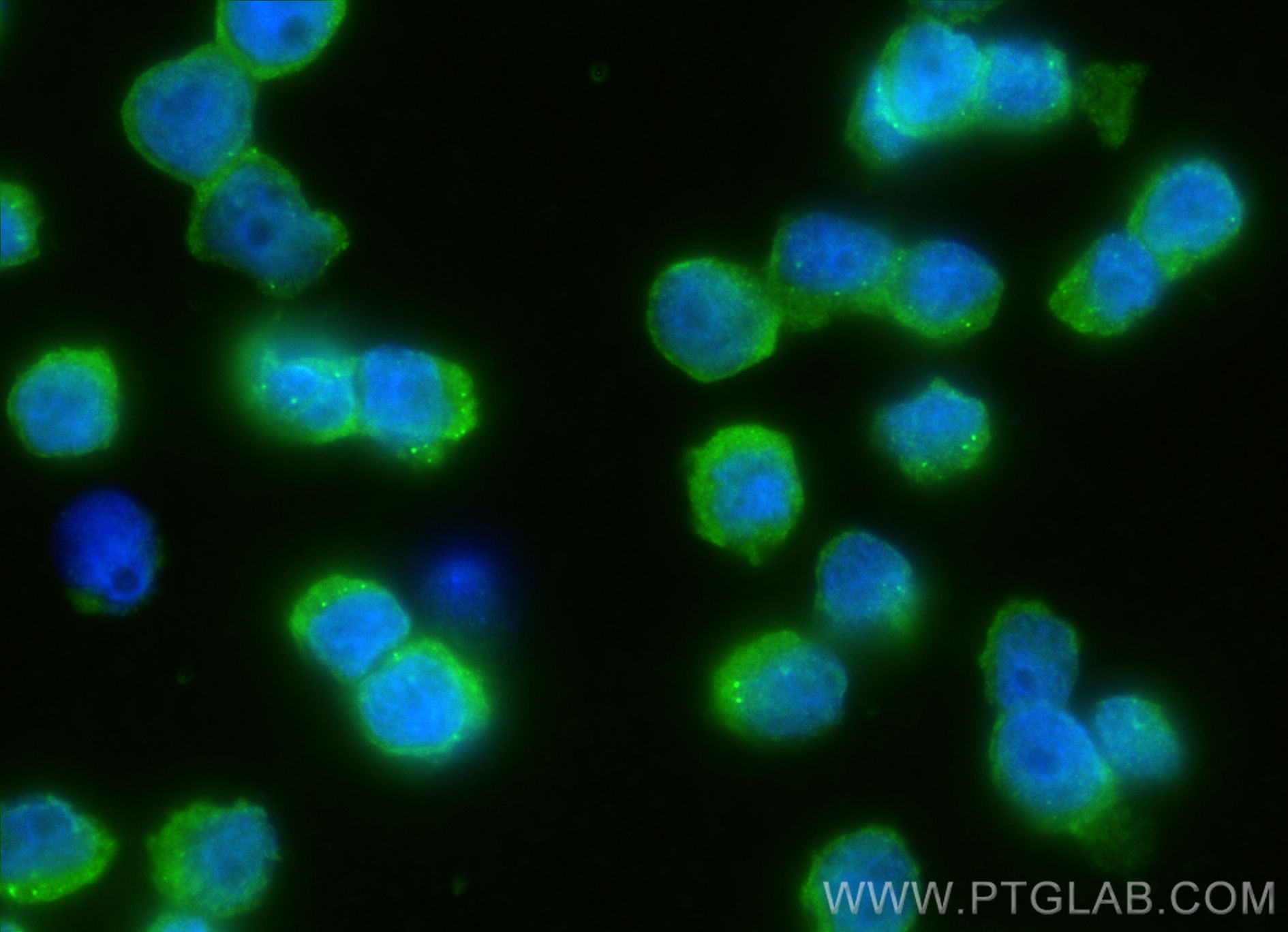
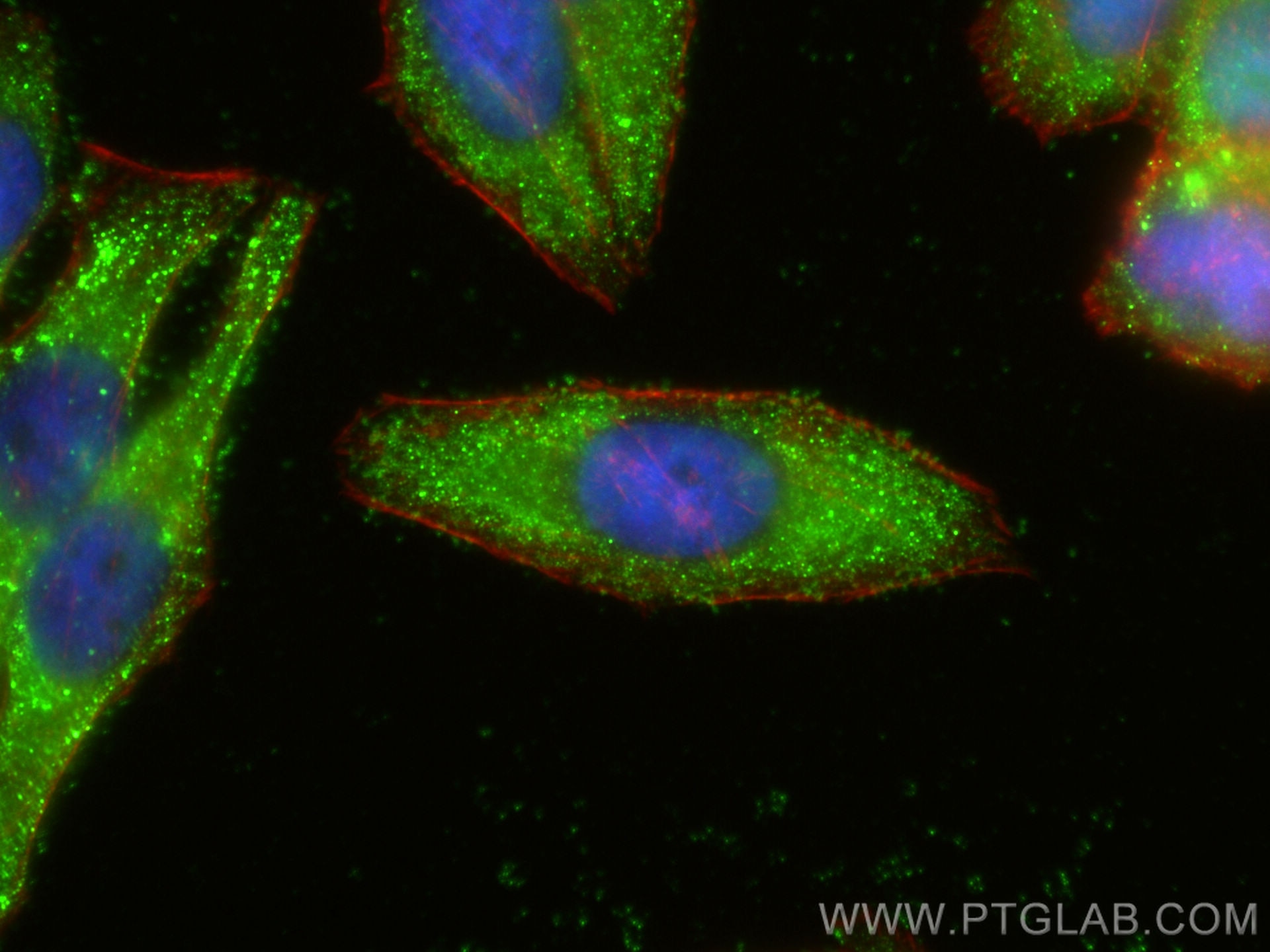
Informations sur le produit
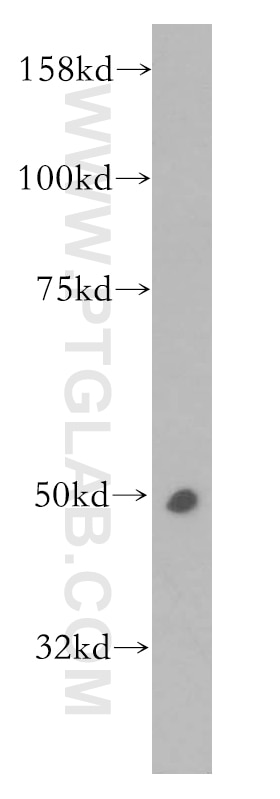
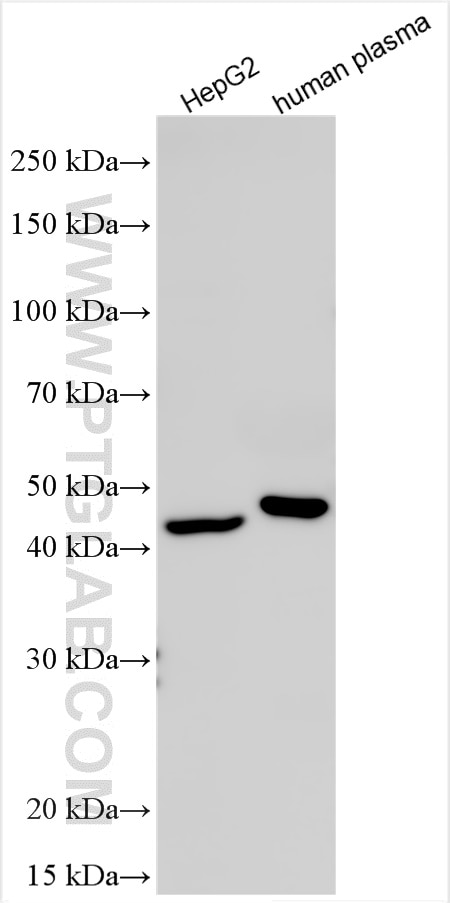
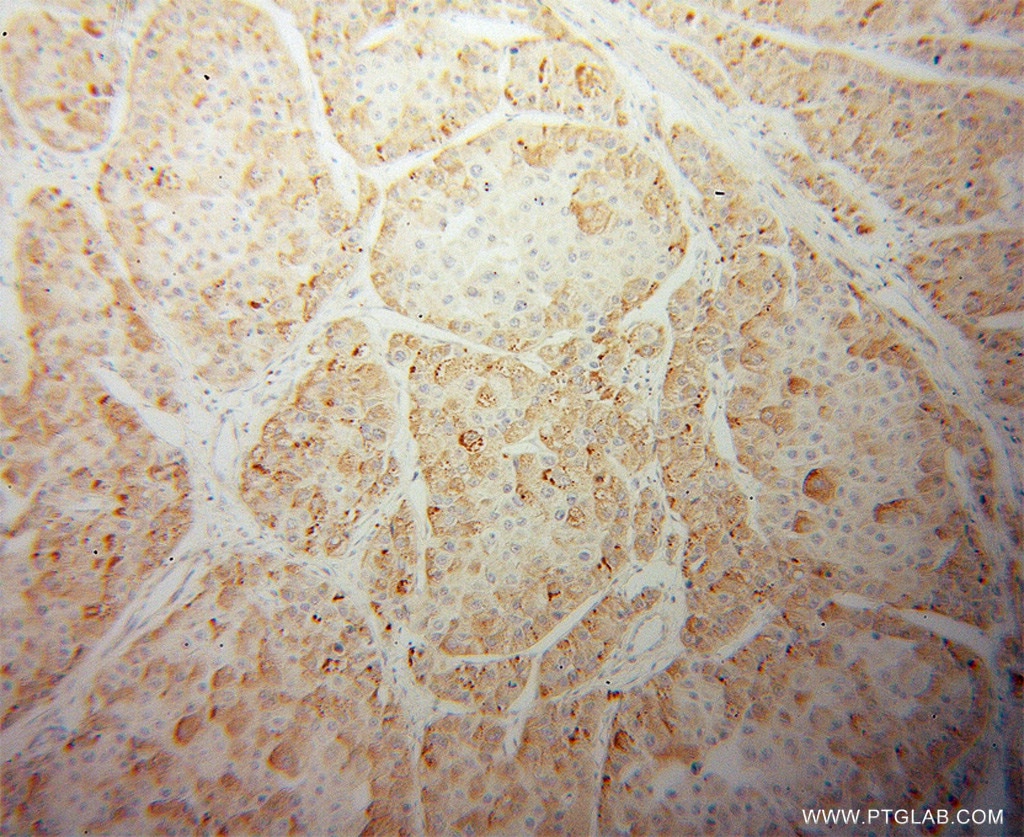
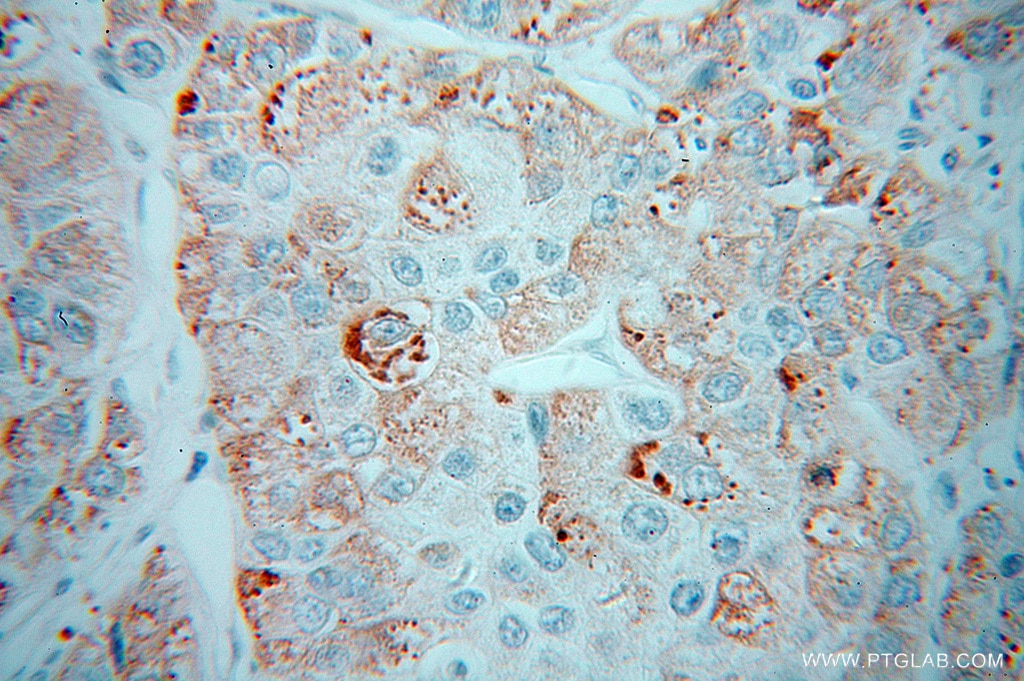
13385-1-PBS cible CPN1 dans les applications de WB, IHC, IF/ICC, Indirect ELISA et montre une réactivité avec des échantillons Humain
| Réactivité | Humain |
| Hôte / Isotype | Lapin / IgG |
| Clonalité | Polyclonal |
| Type | Anticorps |
| Immunogène | CPN1 Protéine recombinante Ag4035 |
| Nom complet | carboxypeptidase N, polypeptide 1 |
| Masse moléculaire calculée | 458 aa, 52 kDa |
| Poids moléculaire observé | 40~50 kDa |
| Numéro d’acquisition GenBank | BC027897 |
| Symbole du gène | CPN1 |
| Identification du gène (NCBI) | 1369 |
| Conjugaison | Non conjugué |
| Forme | Liquide |
| Méthode de purification | Purification par affinité contre l'antigène |
| Tampon de stockage | PBS only |
| Conditions de stockage | Store at -80°C. 20ul contiennent 0,1% de BSA. |
Informations générales
Human carboxypeptidase N (CPN), a member of the CPN/E subfamily of "regulatory" metallo-carboxypeptidases, is an extracellular glycoprotein synthesized in the liver and secreted into the blood, where it controls the activity of vasoactive peptide hormones, growth factors and cytokines by specifically removing C-terminal basic residues. Normally, CPN circulates in blood plasma as a hetero-tetramer consisting of two 83 kDa (CPN2) domains each flanked by a 48 to 55 kDa catalytic (CPN1) domain. The C terminal region of the CPN1 subunit differs from all other family members in that it contains numerous basic residues. Proteolysis at these sites apparently happens either constitutively in the blood or during processing and secretion from the liver.


