Anticorps Polyclonal de lapin anti-CX3CR1
CX3CR1 Polyclonal Antibody for WB, IF-P, Indirect ELISA
Hôte / Isotype
Lapin / IgG
Réactivité testée
Humain, souris
Applications
WB, IF-P, Indirect ELISA
Conjugaison
Non conjugué
N° de cat : 29819-1-PBS
Synonymes
Galerie de données de validation
Informations sur le produit
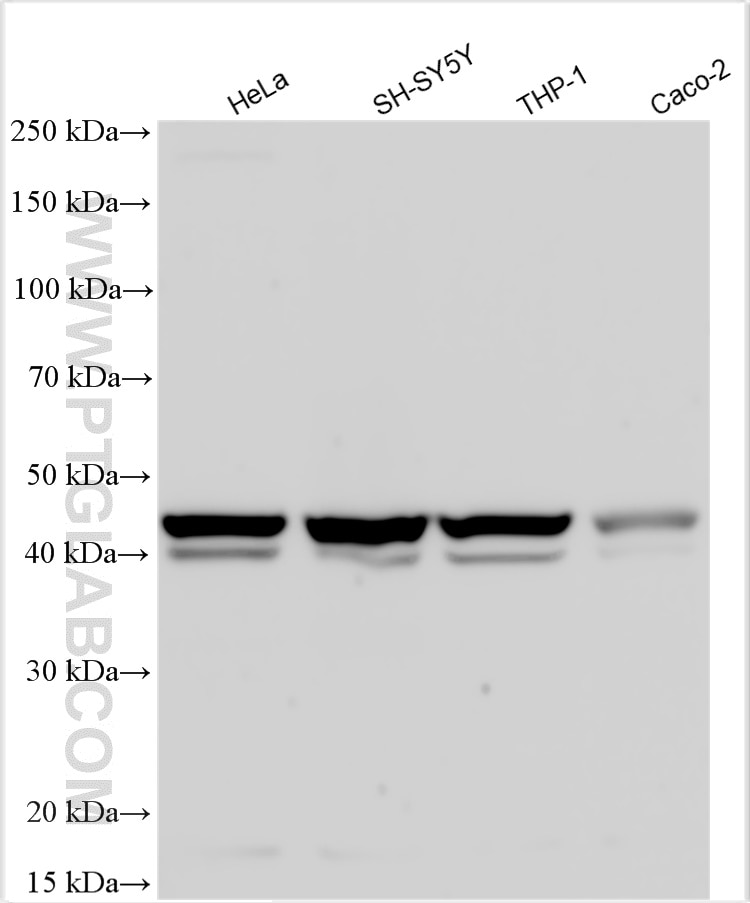
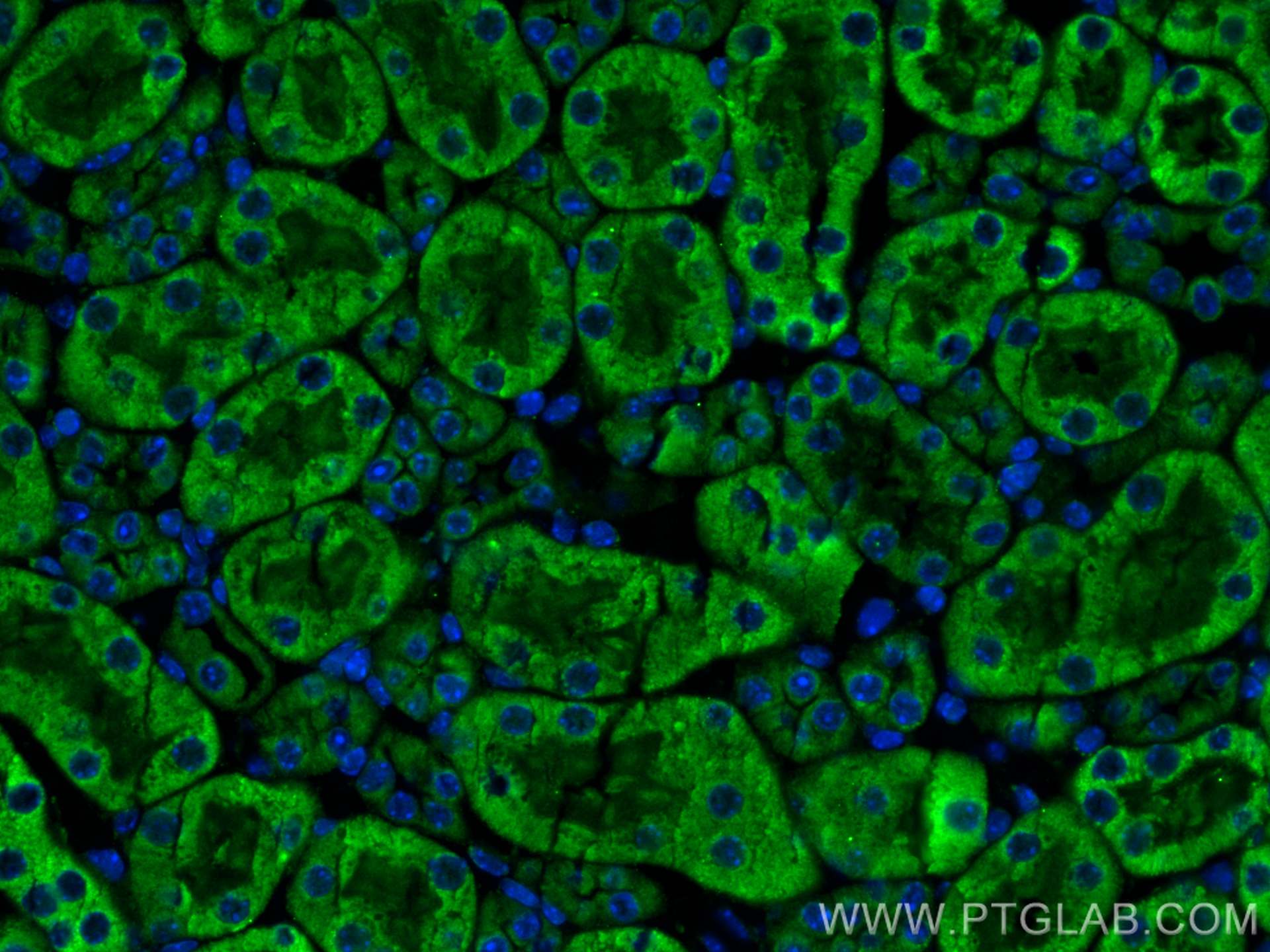
29819-1-PBS cible CX3CR1 dans les applications de WB, IF-P, Indirect ELISA et montre une réactivité avec des échantillons Humain, souris
| Réactivité | Humain, souris |
| Hôte / Isotype | Lapin / IgG |
| Clonalité | Polyclonal |
| Type | Anticorps |
| Immunogène | CX3CR1 Protéine recombinante Ag27698 |
| Nom complet | chemokine (C-X3-C motif) receptor 1 |
| Masse moléculaire calculée | 40 kDa |
| Poids moléculaire observé | 40 kDa, 44 kDa |
| Numéro d’acquisition GenBank | BC028078 |
| Symbole du gène | CX3CR1 |
| Identification du gène (NCBI) | 1524 |
| Conjugaison | Non conjugué |
| Forme | Liquide |
| Méthode de purification | Purification par affinité contre l'antigène |
| Tampon de stockage | PBS only |
| Conditions de stockage | Store at -80°C. 20ul contiennent 0,1% de BSA. |
Informations générales
CX3CR1, also known as GPR13, V28 and fractalkine receptor, belongs to the 7-transmembrane G protein-coupled receptor (GPCR) family. It is expressed on microglia, astrocytes, NK cells, monocytes/macrophages, and a subpopulation of T cells. CX3CR1 is the receptor for fractalkine (CX3CL1) and mediates both its adhesive and migratory functions. It also acts as coreceptor with CD4 for HIV-1 virus envelope protein (in vitro), and some variations in the gene of CX3CR1 lead to increased susceptibility to HIV-1 infection and rapid progression to AIDS. Defects in CX3CR1 are a cause of susceptibility to age-related macular degeneration type 12 (ARMD12). The two CX3CR1 bands exhibited can be attributed to various factors (PMID: 30628679).


