Anticorps Monoclonal anti-CXCL8/IL-8
CXCL8/IL-8 Monoclonal Antibody for Sandwich ELISA, Indirect ELISA, Sample test
Hôte / Isotype
Mouse / IgG2a
Réactivité testée
Humain
Applications
Sandwich ELISA, Indirect ELISA, Sample test
Conjugaison
Non conjugué
CloneNo.
3D11D5
N° de cat : 60141-2-PBS
Synonymes
Galerie de données de validation
Informations sur le produit
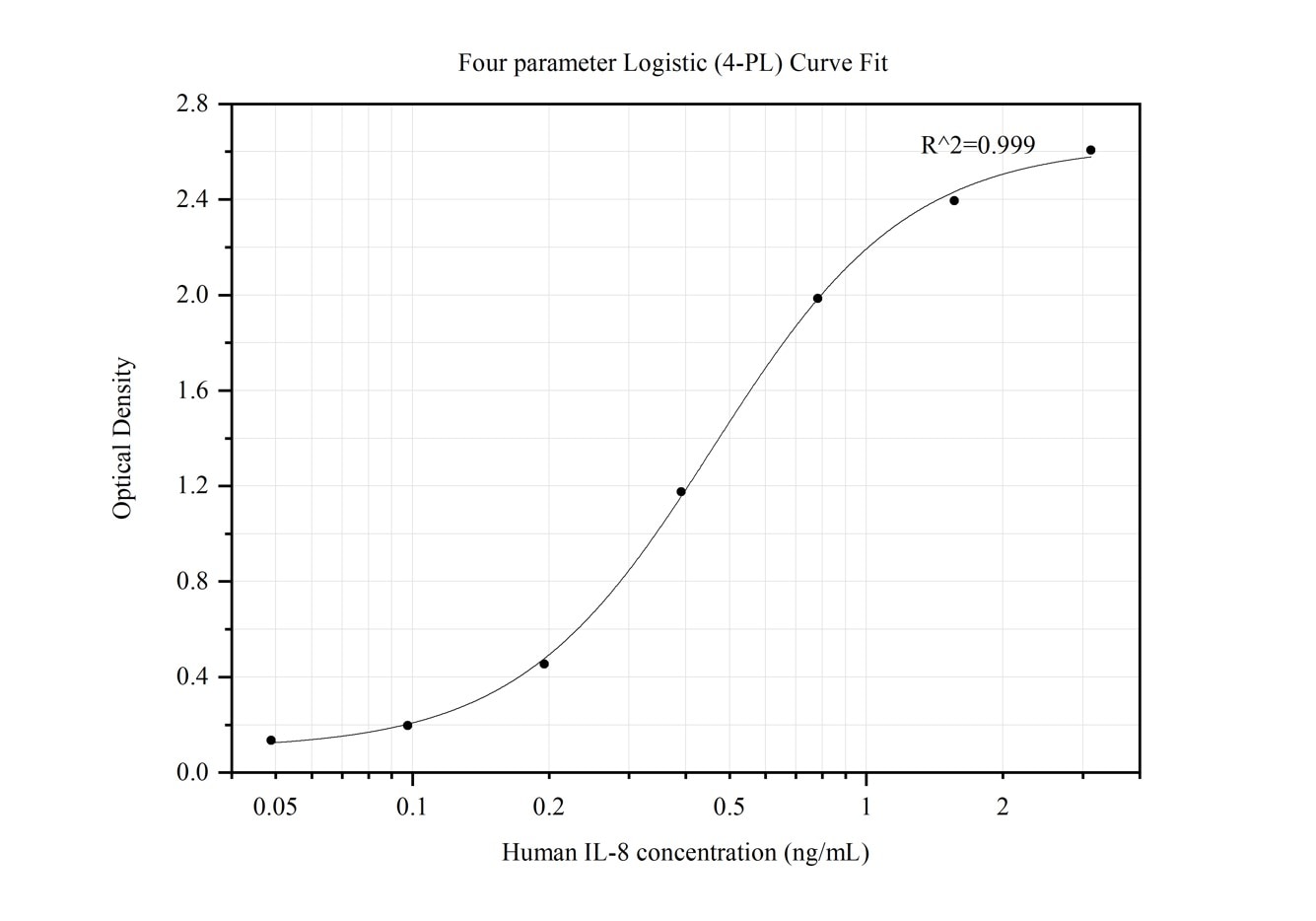
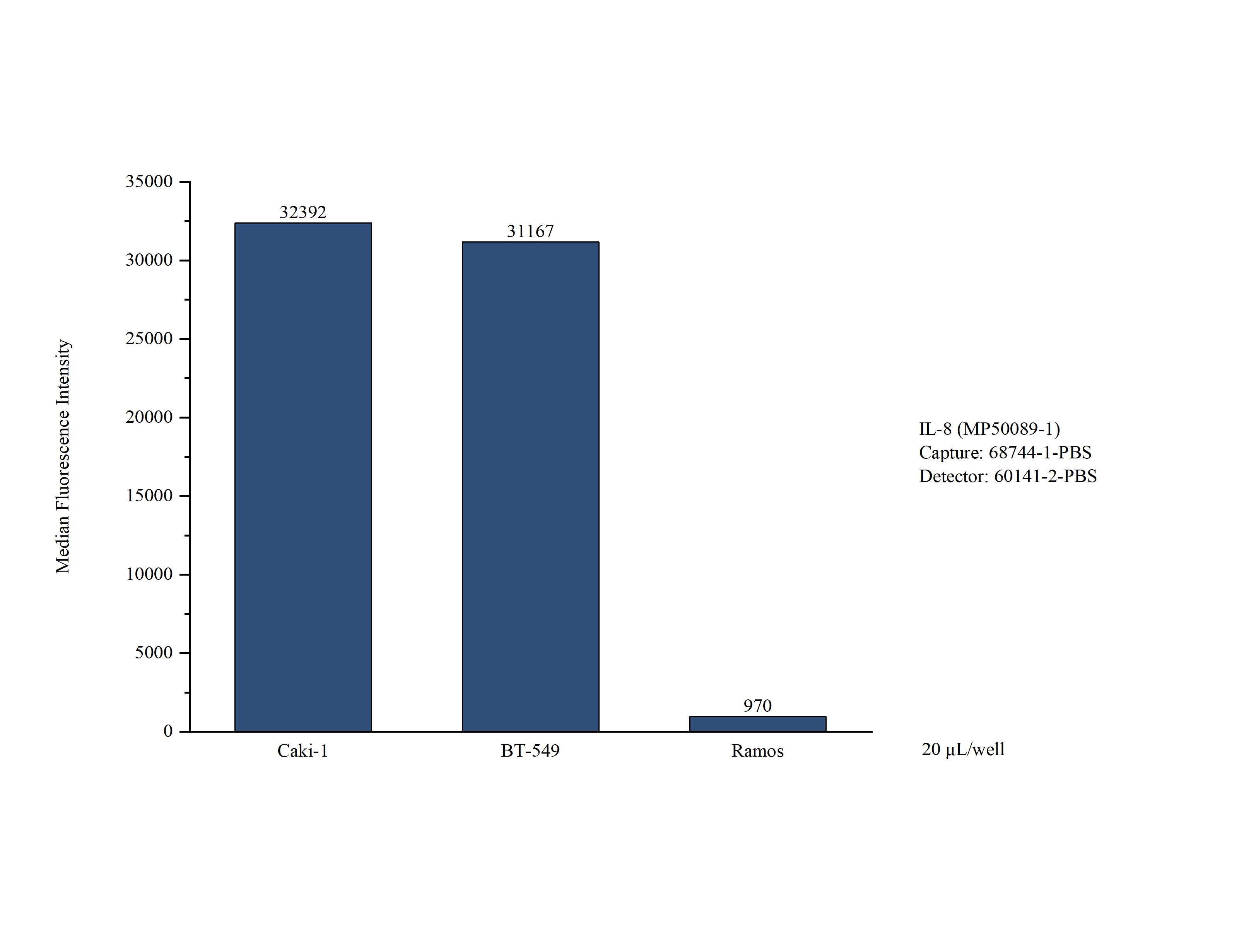
60141-2-PBS cible CXCL8/IL-8 dans les applications de Sandwich ELISA, Indirect ELISA, Sample test et montre une réactivité avec des échantillons Humain
| Réactivité | Humain |
| Hôte / Isotype | Mouse / IgG2a |
| Clonalité | Monoclonal |
| Type | Anticorps |
| Immunogène | CXCL8/IL-8 Protéine recombinante Ag10552 |
| Nom complet | interleukin 8 |
| Masse moléculaire calculée | 99 aa, 11 kDa |
| Numéro d’acquisition GenBank | BC013615 |
| Symbole du gène | IL-8 |
| Identification du gène (NCBI) | 3576 |
| Conjugaison | Non conjugué |
| Forme | Liquide |
| Méthode de purification | Purification par protéine A |
| Tampon de stockage | PBS only |
| Conditions de stockage | Store at -80°C. 20ul contiennent 0,1% de BSA. |
Informations générales
Interleukin 8 (IL-8), also known as CXCL8, which is a member of the CXC chemokine family. This chemokine is secreted by a variety of cell types including monocyte/macrophages, T cells, neutrophils, fibroblasts, endothelial cells, and various tumor cell lines in response to inflammatory stimuli. IL-8 has two primary functions. It induces chemotaxis in target cells, primarily neutrophils but also other granulocytes, causing them to migrate toward the site of infection. IL-8 also induces phagocytosis once they have arrived. This gene is believed to play a role in the pathogenesis of bronchiolitis, a common respiratory tract disease caused by viral infection. IL-8 is also known to be a potent promoter of angiogenesis. IL-8 has been associated with tumor angiogenesis, metastasis, and poor prognosis in breast cancer. IL-8 may present a novel therapeutic target for estrogen driven breast carcinogenesis and tumor progression. The human IL-8 cDNA sequence predicts a protein of 99 amino acids. Removal of a 22-residue signal peptide generates a mature protein of 77 amino acids (~ 8 kDa).


