Anticorps Polyclonal de lapin anti-CXCR5
CXCR5 Polyclonal Antibody for WB, IHC, Indirect ELISA
Hôte / Isotype
Lapin / IgG
Réactivité testée
Humain, rat, souris
Applications
WB, IHC, Indirect ELISA
Conjugaison
Non conjugué
N° de cat : 28239-1-PBS
Synonymes
Galerie de données de validation
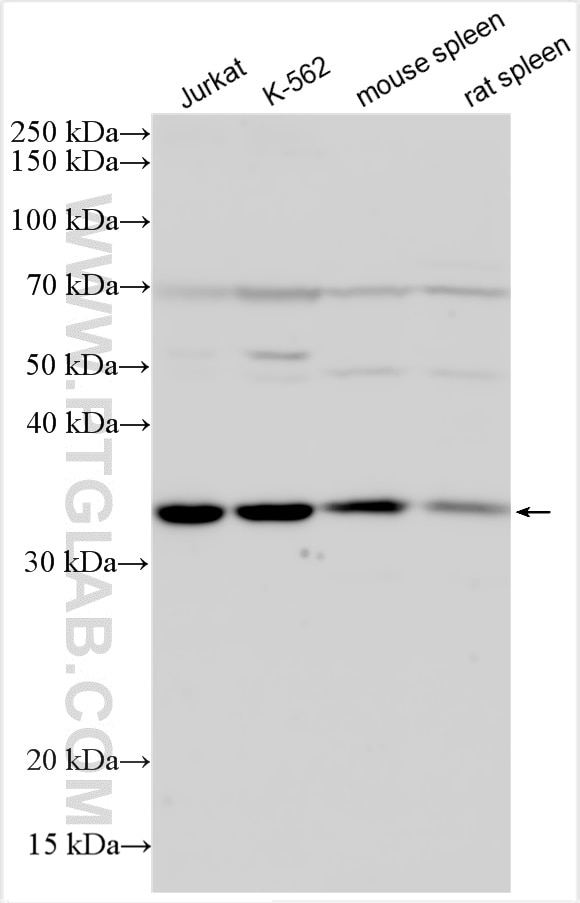
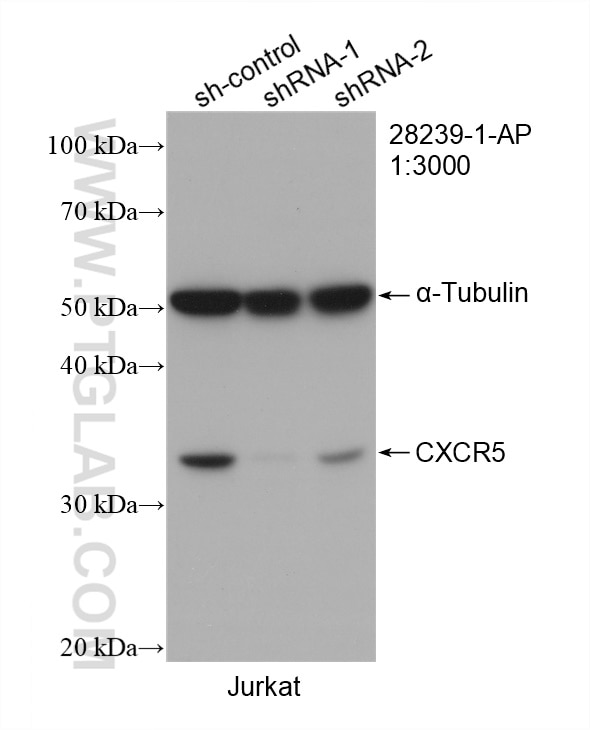
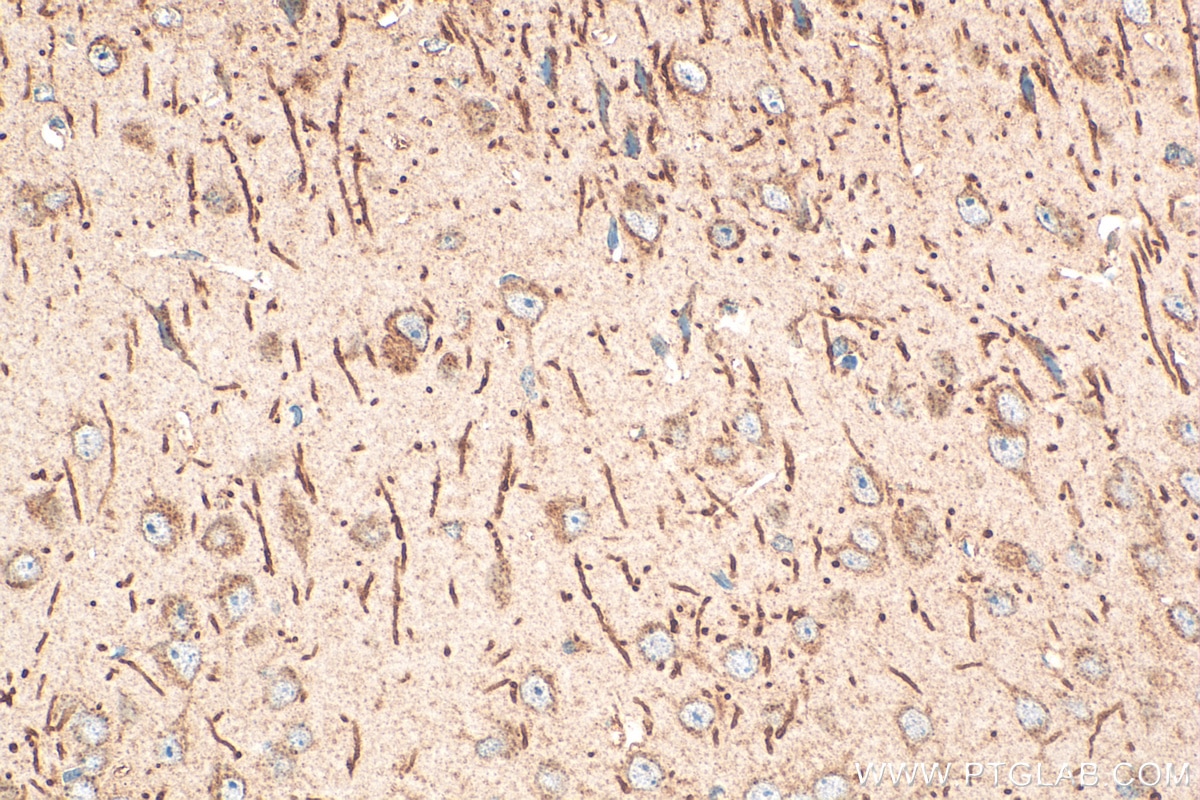
Informations sur le produit
28239-1-PBS cible CXCR5 dans les applications de WB, IHC, Indirect ELISA et montre une réactivité avec des échantillons Humain, rat, souris
| Réactivité | Humain, rat, souris |
| Hôte / Isotype | Lapin / IgG |
| Clonalité | Polyclonal |
| Type | Anticorps |
| Immunogène | CXCR5 Protéine recombinante Ag28271 |
| Nom complet | chemokine (C-X-C motif) receptor 5 |
| Masse moléculaire calculée | 42 kDa |
| Poids moléculaire observé | 33 kDa |
| Numéro d’acquisition GenBank | NM_001716 |
| Symbole du gène | CXCR5 |
| Identification du gène (NCBI) | 643 |
| Conjugaison | Non conjugué |
| Forme | Liquide |
| Méthode de purification | Purification par affinité contre l'antigène |
| Tampon de stockage | PBS only |
| Conditions de stockage | Store at -80°C. 20ul contiennent 0,1% de BSA. |
Informations générales
Initially discovered in 1992 as Burkitt's lymphoma receptor 1, CXCR5 (chemokine receptor 5, also known as CD185) is a seven-transmembrane G protein-coupled receptor (GPCR) protein (PMID: 32994482). CXCR5 is essential for naïve B-cell migration to and maturation in the lymph nodes and spleen, as well as for cluster of differentiation 4 T-cell (TFH and TCM) homing and interaction with B cells (PMID: 21471443). Moreover, CXCR5 is involved in the regulation of neural stem cells (NSC) and neuronal regeneration in the mouse brain, neuronal differentiation, neurogenesis, gliogenesis, and synaptogenesis (PMID: 37460877).


