Anticorps Recombinant de lapin anti-CYP1A2-Specific
CYP1A2-Specific Recombinant Antibody for WB, IHC, ELISA
Hôte / Isotype
Lapin / IgG
Réactivité testée
Humain, souris
Applications
WB, IHC, ELISA
Conjugaison
Non conjugué
CloneNo.
241922C4
N° de cat : 84751-1-RR
Synonymes
Galerie de données de validation
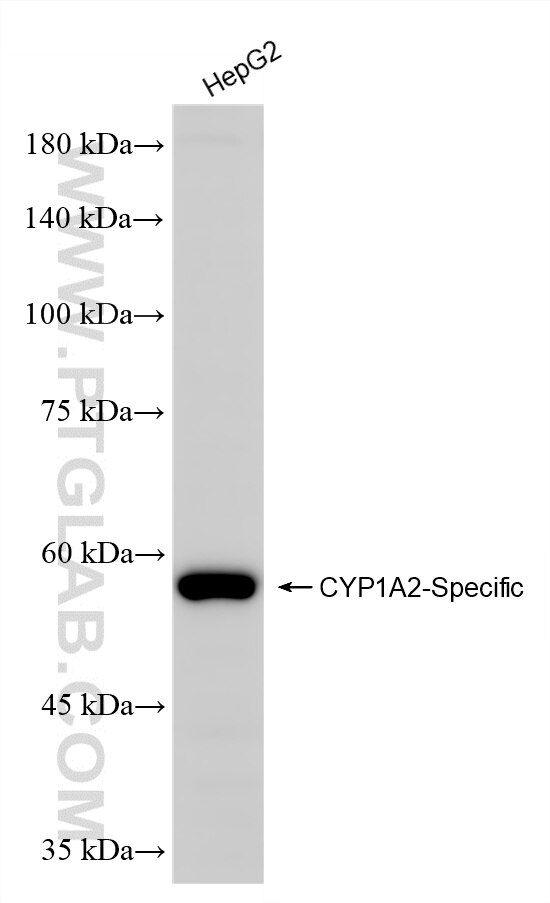
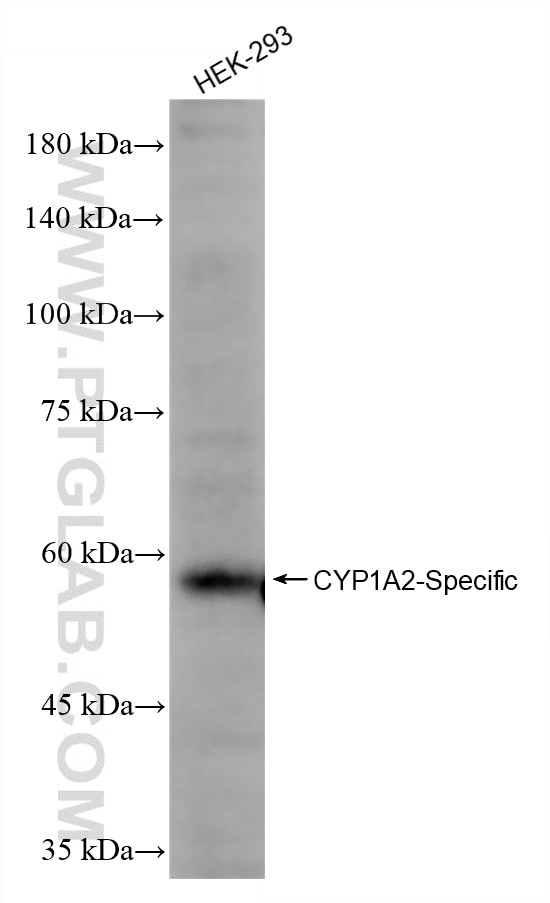
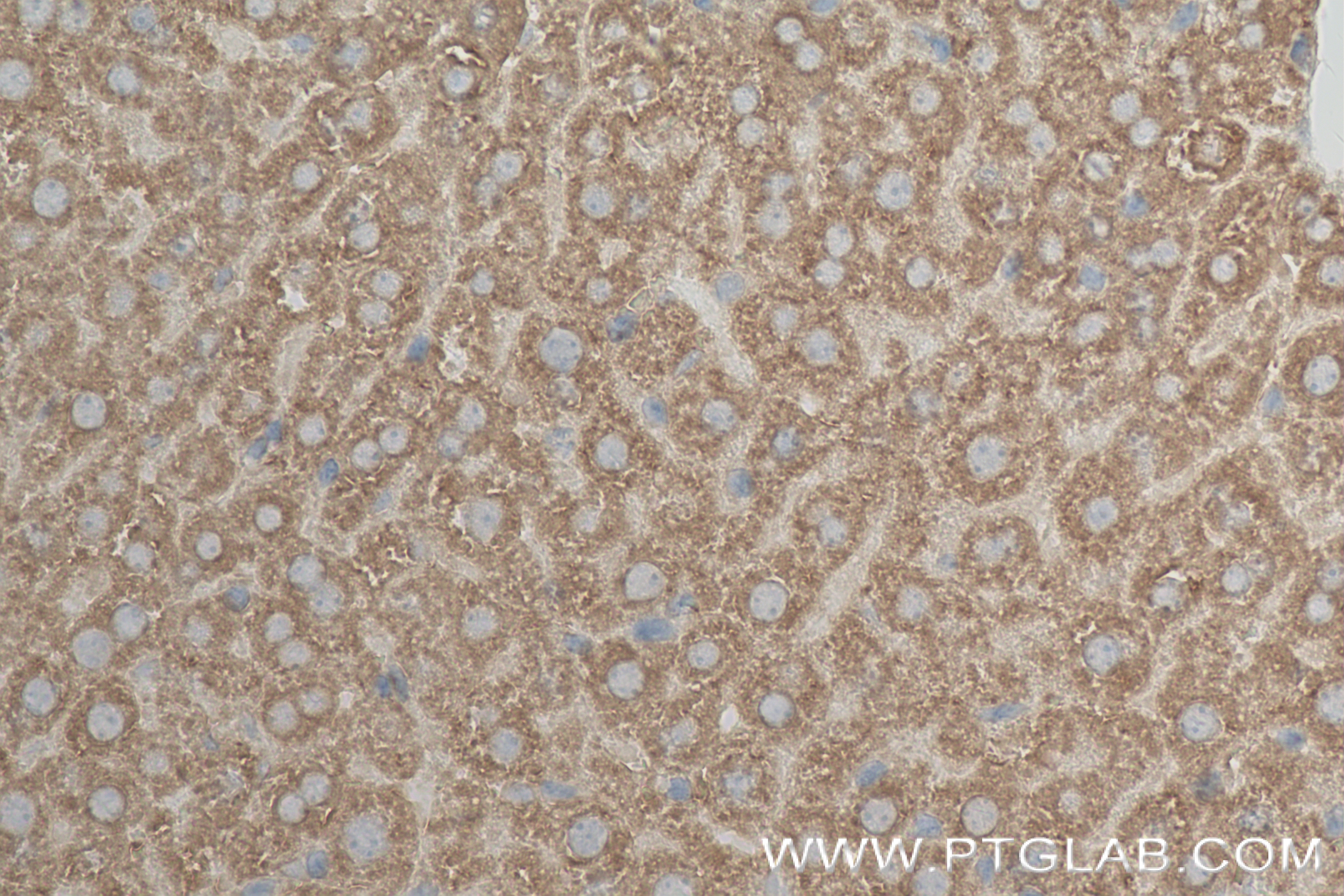
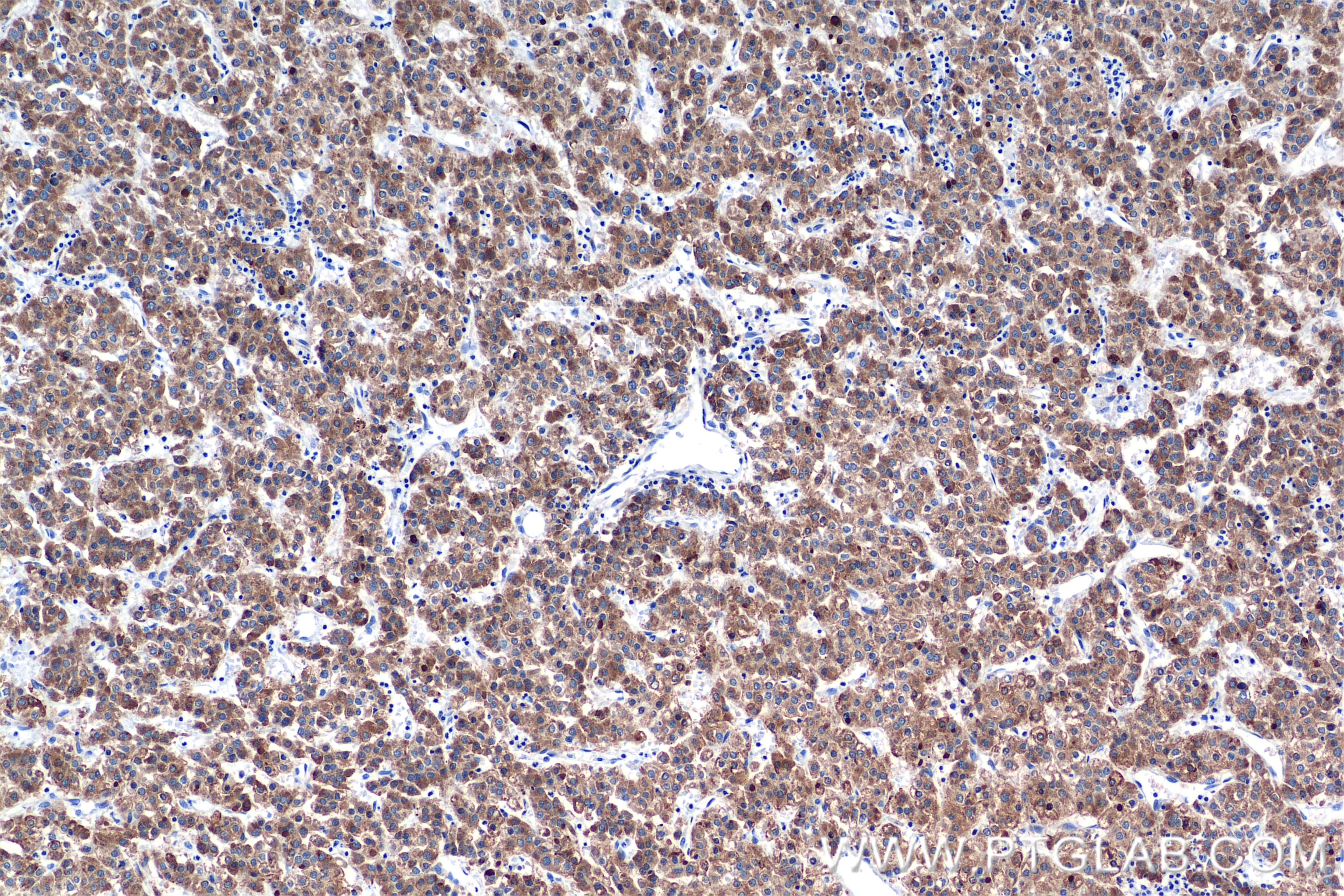
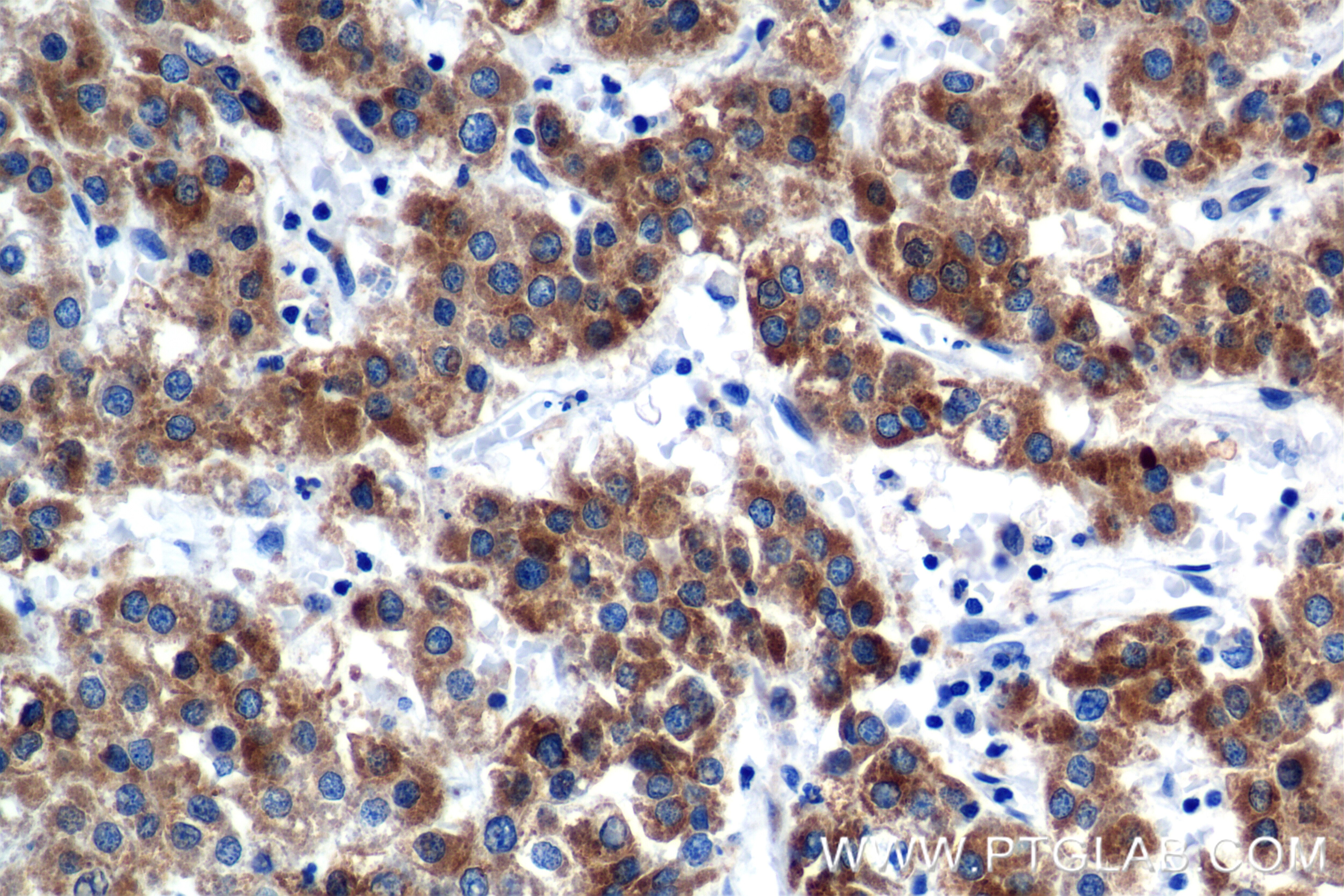
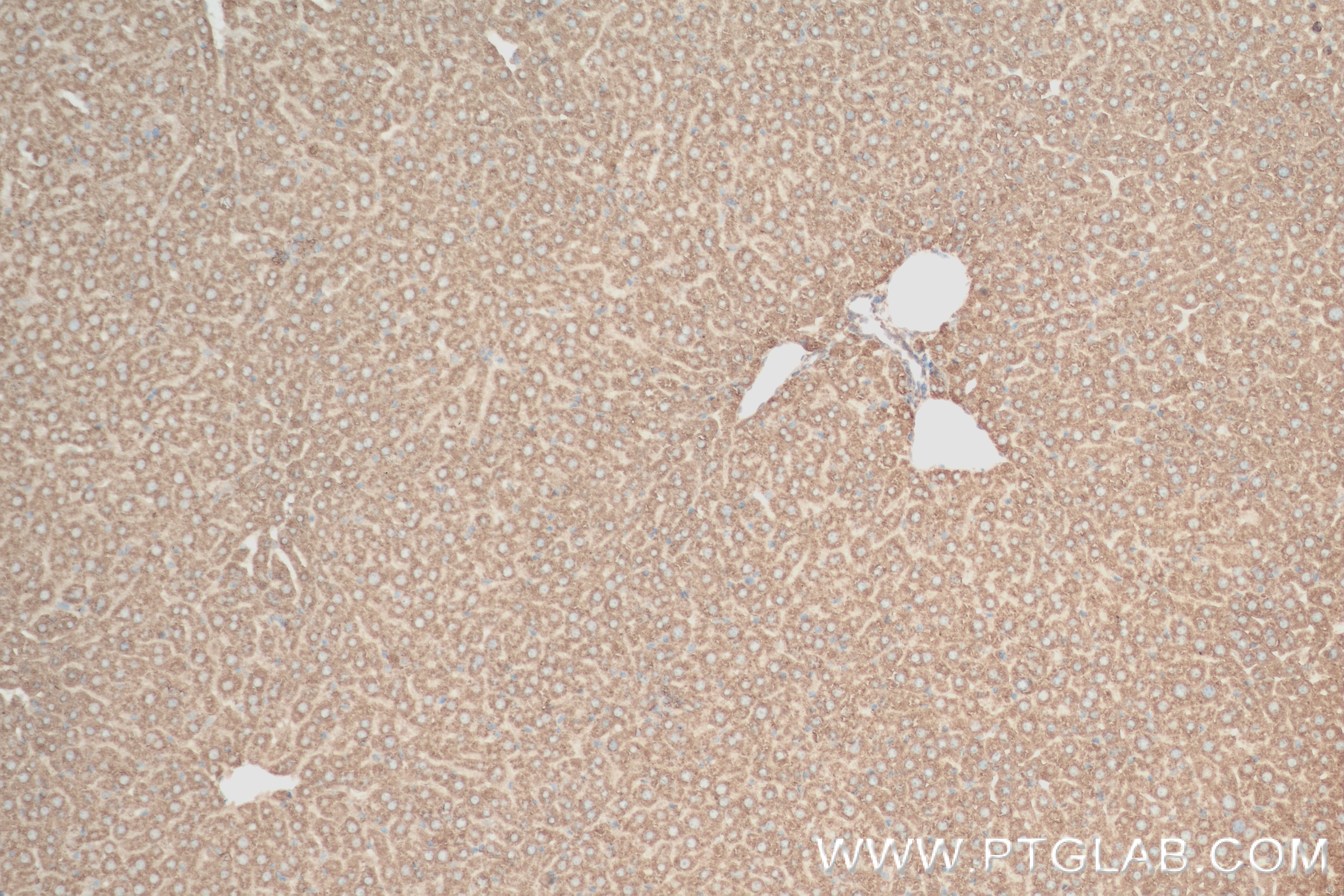
Applications testées
| Résultats positifs en WB | cellules HepG2, cellules HEK-293 |
| Résultats positifs en IHC | Human Hepatocellular cancer tissue, tissu hépatique de souris il est suggéré de démasquer l'antigène avec un tampon de TE buffer pH 9.0; (*) À défaut, 'le démasquage de l'antigène peut être 'effectué avec un tampon citrate pH 6,0. |
Dilution recommandée
| Application | Dilution |
|---|---|
| Western Blot (WB) | WB : 1:500-1:2000 |
| Immunohistochimie (IHC) | IHC : 1:200-1:800 |
| It is recommended that this reagent should be titrated in each testing system to obtain optimal results. | |
| Sample-dependent, check data in validation data gallery | |
Informations sur le produit
84751-1-RR cible CYP1A2-Specific dans les applications de WB, IHC, ELISA et montre une réactivité avec des échantillons Humain, souris
| Réactivité | Humain, souris |
| Hôte / Isotype | Lapin / IgG |
| Clonalité | Recombinant |
| Type | Anticorps |
| Immunogène | Peptide |
| Nom complet | cytochrome P450, family 1, subfamily A, polypeptide 2 |
| Masse moléculaire calculée | 58 kDa |
| Poids moléculaire observé | 58 kDa |
| Numéro d’acquisition GenBank | NM_000761 |
| Symbole du gène | CYP1A2 |
| Identification du gène (NCBI) | 1544 |
| Conjugaison | Non conjugué |
| Forme | Liquide |
| Méthode de purification | Protein A purfication |
| Tampon de stockage | PBS with 0.02% sodium azide and 50% glycerol |
| Conditions de stockage | Stocker à -20°C. Stable pendant un an après l'expédition. L'aliquotage n'est pas nécessaire pour le stockage à -20oC Les 20ul contiennent 0,1% de BSA. |
Informations générales
CYP1A2, also named as CP12; P3-450 and P450(PA), belongs to the cytochrome P450 family. Cytochromes P450 are a group of heme-thiolate monooxygenases. In liver microsomes, CYP1A2 is involved in an NADPH-dependent electron transport pathway. It oxidizes a variety of structurally unrelated compounds, including steroids, fatty acids, and xenobiotics. Most active of CYP1A2 is in catalyzing 2-hydroxylation. Caffeine is metabolized primarily by cytochrome CYP1A2 in the liver through an initial N3-demethylation. It also acts in the metabolism of aflatoxin B1 and acetaminophen. CYP1A2 participates in the bioactivation of carcinogenic aromatic and heterocyclic amines. It catalizes the reaction: RH + reduced flavoprotein + O2 = ROH + oxidized flavoprotein + H2O. The antibody is specific to CYP1A2.
Protocole
| Product Specific Protocols | |
|---|---|
| WB protocol for CYP1A2-Specific antibody 84751-1-RR | Download protocol |
| IHC protocol for CYP1A2-Specific antibody 84751-1-RR | Download protocol |
| Standard Protocols | |
|---|---|
| Click here to view our Standard Protocols |

