Anticorps Polyclonal de lapin anti-Cyclin A1
Cyclin A1 Polyclonal Antibody for WB, IHC, Indirect ELISA
Hôte / Isotype
Lapin / IgG
Réactivité testée
Humain, rat, souris
Applications
WB, IHC, Indirect ELISA
Conjugaison
Non conjugué
N° de cat : 13295-1-PBS
Synonymes
Galerie de données de validation
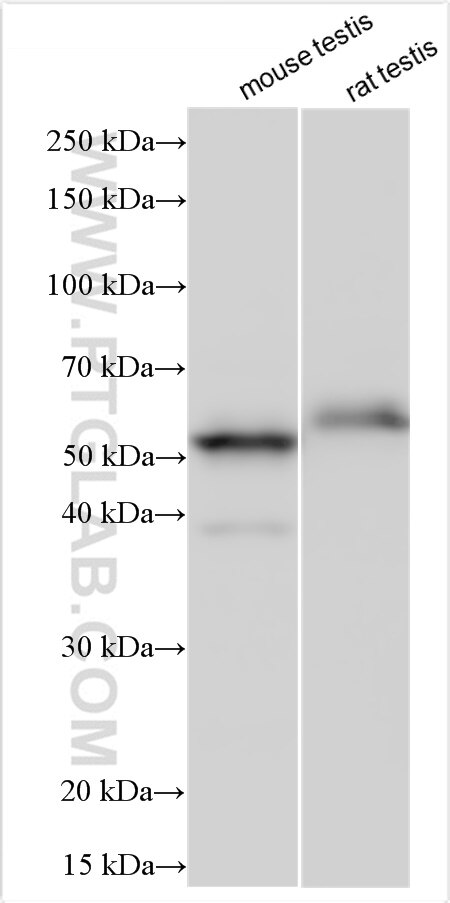
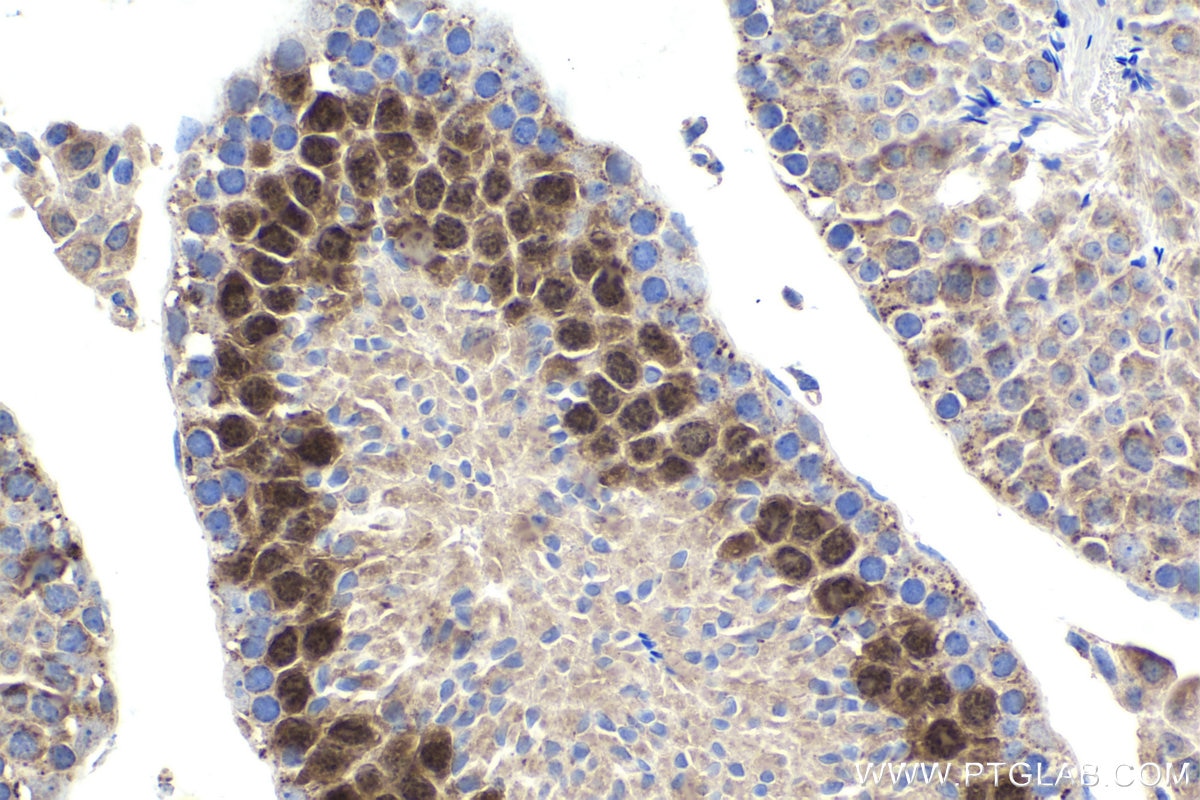
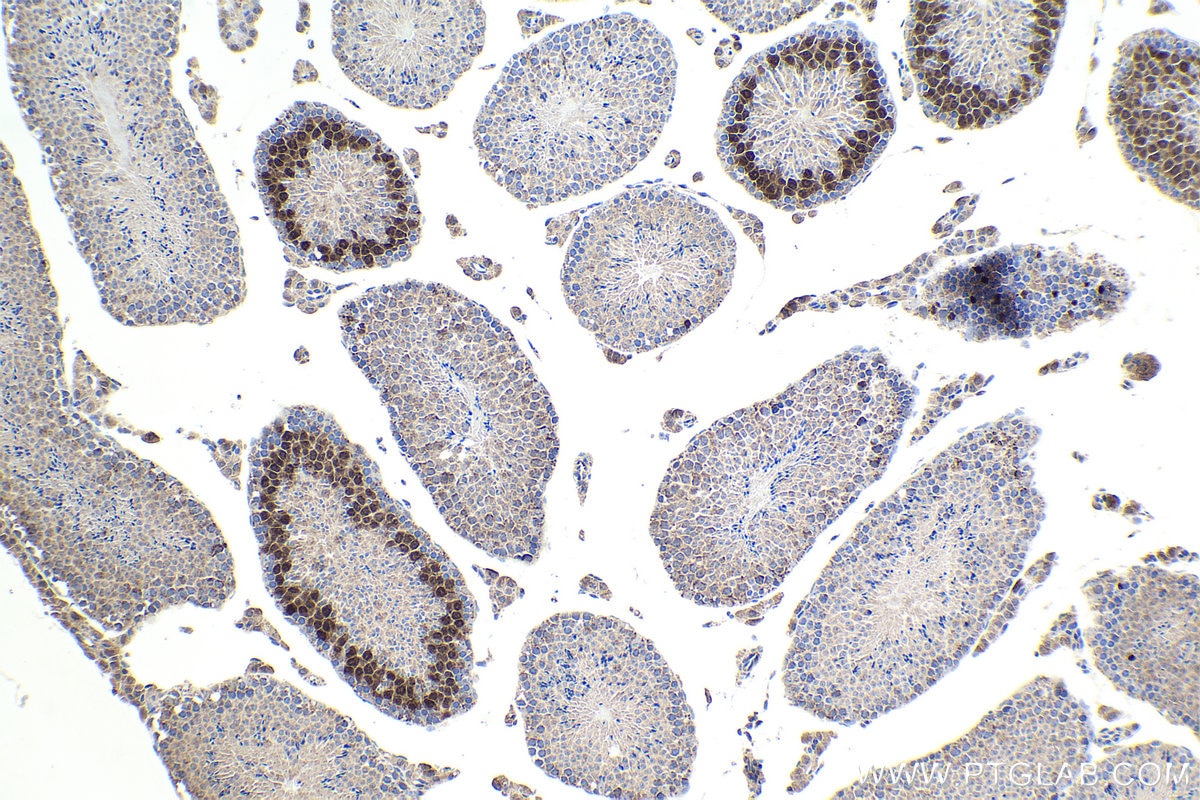
Informations sur le produit
13295-1-PBS cible Cyclin A1 dans les applications de WB, IHC, Indirect ELISA et montre une réactivité avec des échantillons Humain, rat, souris
| Réactivité | Humain, rat, souris |
| Hôte / Isotype | Lapin / IgG |
| Clonalité | Polyclonal |
| Type | Anticorps |
| Immunogène | Cyclin A1 Protéine recombinante Ag4005 |
| Nom complet | cyclin A1 |
| Masse moléculaire calculée | 464 aa, 52 kDa |
| Poids moléculaire observé | 52 kDa |
| Numéro d’acquisition GenBank | BC036346 |
| Symbole du gène | Cyclin A1 |
| Identification du gène (NCBI) | 8900 |
| Conjugaison | Non conjugué |
| Forme | Liquide |
| Méthode de purification | Purification par affinité contre l'antigène |
| Tampon de stockage | PBS only |
| Conditions de stockage | Store at -80°C. 20ul contiennent 0,1% de BSA. |
Informations générales
CCNA1 belongs to the highly conserved cyclin family, whose members are characterized by a dramatic periodicity in protein abundance through the cell cycle. CCNA1 binds both CDK2 and CDC2 kinases, which give two distinct kinase activities, one appearing in S phase, the other in G2, and thus regulate separate functions in cell cycle. CCNA1 was found to bind to important cell cycle regulators, such as Rb family proteins, transcription factor E2F-1, and the p21 family proteins. In general, the expression of CCNA1 is tissue-specific and high CCNA1 expression is limited to testis; besides, lower levels of CCNA1 expression are also observed in other human cell lines and in healthy brain. Currently, CCNA1 expression has been illustrated to be downregulated in various tumors, including head and neck squamous-cell cancer (HNSCC) and nasopharyngeal carcinoma; and the promoter of the CCNA1 gene is found to be frequently methylated in colon cancer and HNSCC.


