Anticorps Polyclonal de lapin anti-Cystatin S
Cystatin S Polyclonal Antibody for WB, IHC, Indirect ELISA
Hôte / Isotype
Lapin / IgG
Réactivité testée
Humain
Applications
WB, IHC, Indirect ELISA
Conjugaison
Non conjugué
N° de cat : 26979-1-PBS
Synonymes
Galerie de données de validation
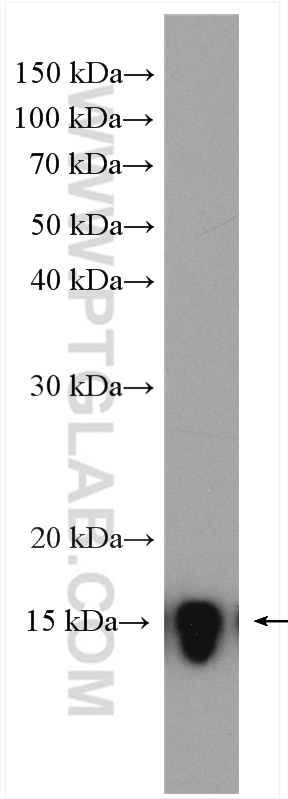
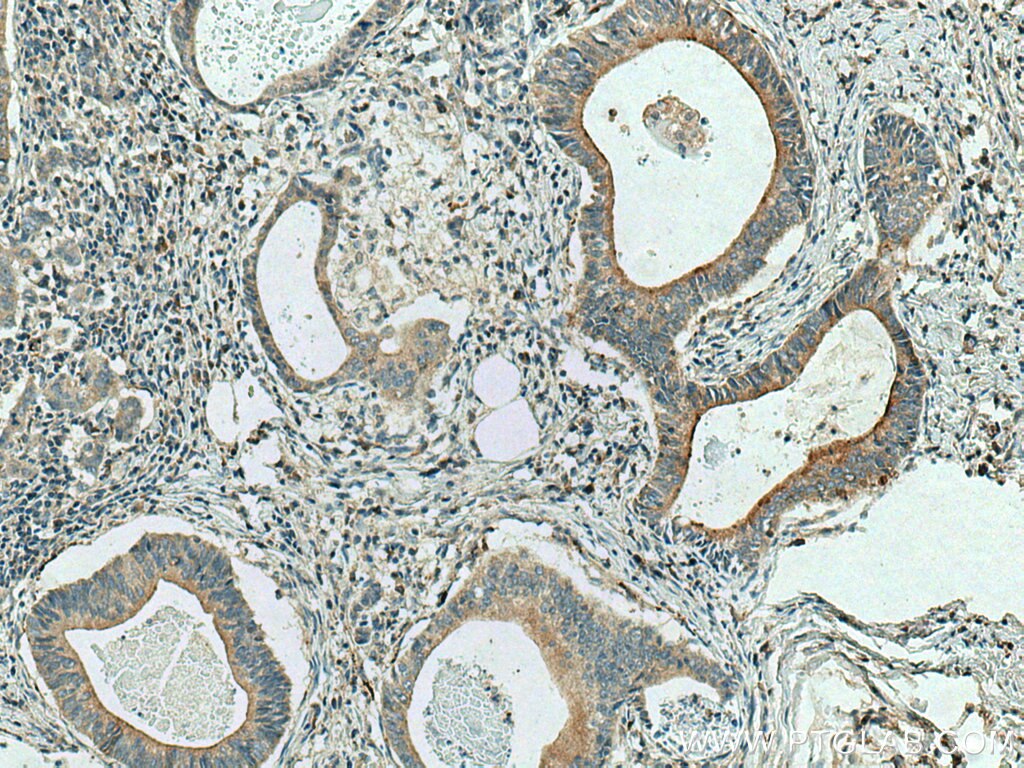
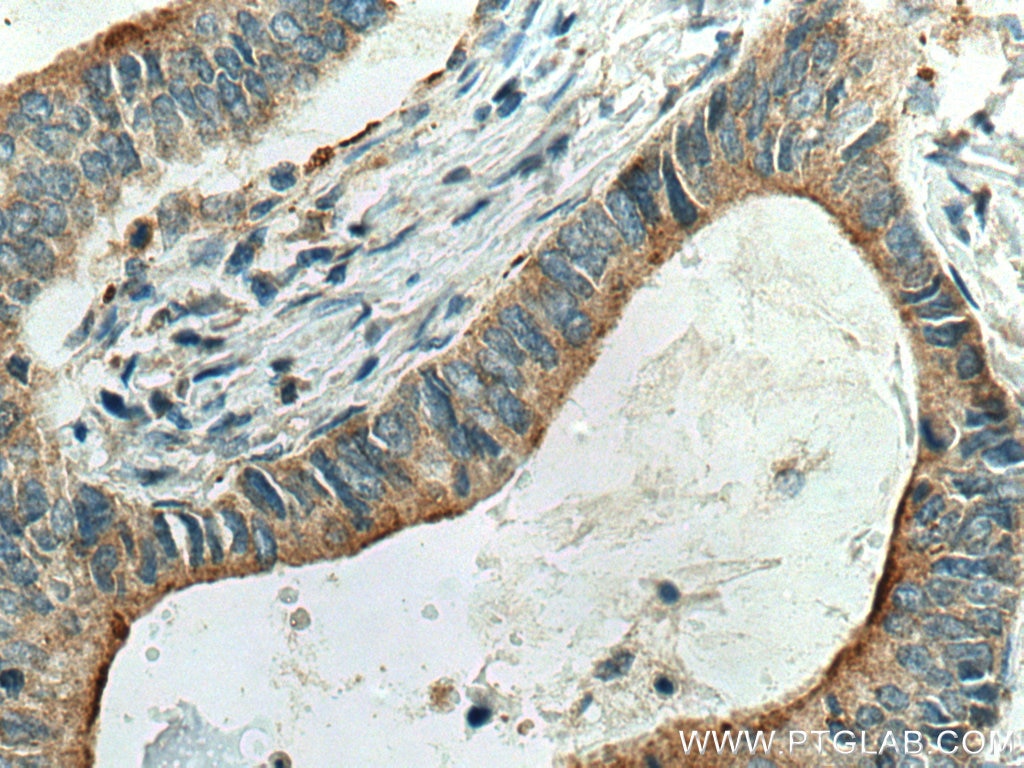
Informations sur le produit
26979-1-PBS cible Cystatin S dans les applications de WB, IHC, Indirect ELISA et montre une réactivité avec des échantillons Humain
| Réactivité | Humain |
| Hôte / Isotype | Lapin / IgG |
| Clonalité | Polyclonal |
| Type | Anticorps |
| Immunogène | Cystatin S Protéine recombinante Ag25619 |
| Nom complet | cystatin S |
| Poids moléculaire observé | 16 kDa |
| Numéro d’acquisition GenBank | BC065714 |
| Symbole du gène | Cystatin S |
| Identification du gène (NCBI) | 1472 |
| Conjugaison | Non conjugué |
| Forme | Liquide |
| Méthode de purification | Purification par affinité contre l'antigène |
| Tampon de stockage | PBS only |
| Conditions de stockage | Store at -80°C. 20ul contiennent 0,1% de BSA. |
Informations générales
Cystatins are a family of inhibitors of cysteine peptidases that comprises the salivary cystatins D and S-type (including CST5 and CST4,1,2) and cystatin C-type (CST3) (PMID: 25329717). The D and S-type cystatin have also been detected in seminal plasma, tears, and tracheobronchial fluid but not in other fluids and secretions where cystatin C is found. And the CST4 was expressed in the serous acinar and demilune cells of the human submandibular gland and at lower levels in the serous acini of the parotid gland (PMID:11879580). CST4 specifically combines with cysteine protease to regulate its activity, thus preventing hydrolysis of the extracellular matrix. And some studies propose that CST4 might be a biomarker for gastrointestinal cancer (PMID:29218251; PMID:29636621).


