Anticorps Recombinant de lapin anti-Cystatin SN/CST1
Cystatin SN/CST1 Recombinant Antibody for WB, ELISA
Hôte / Isotype
Lapin / IgG
Réactivité testée
Humain
Applications
WB, ELISA
Conjugaison
Non conjugué
CloneNo.
242888B3
N° de cat : 85403-1-RR
Synonymes
Galerie de données de validation
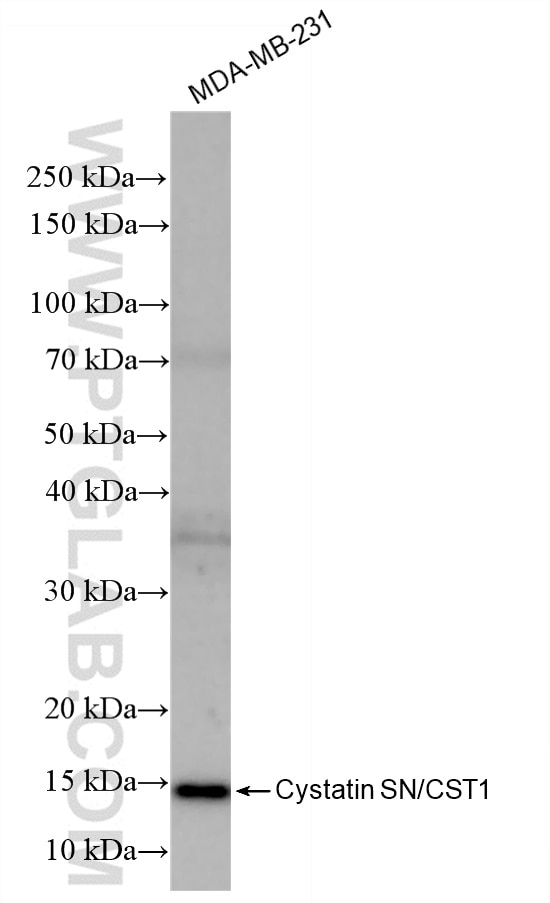
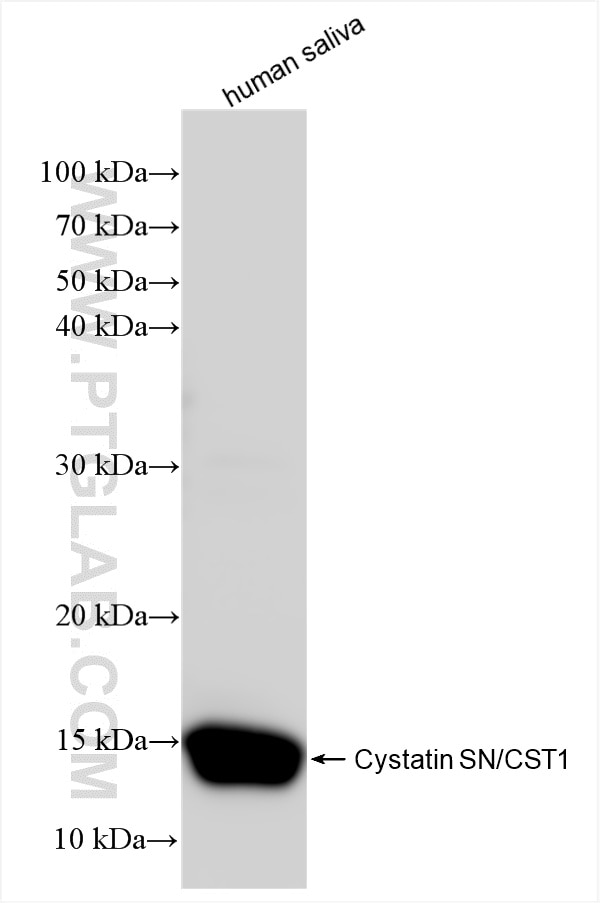
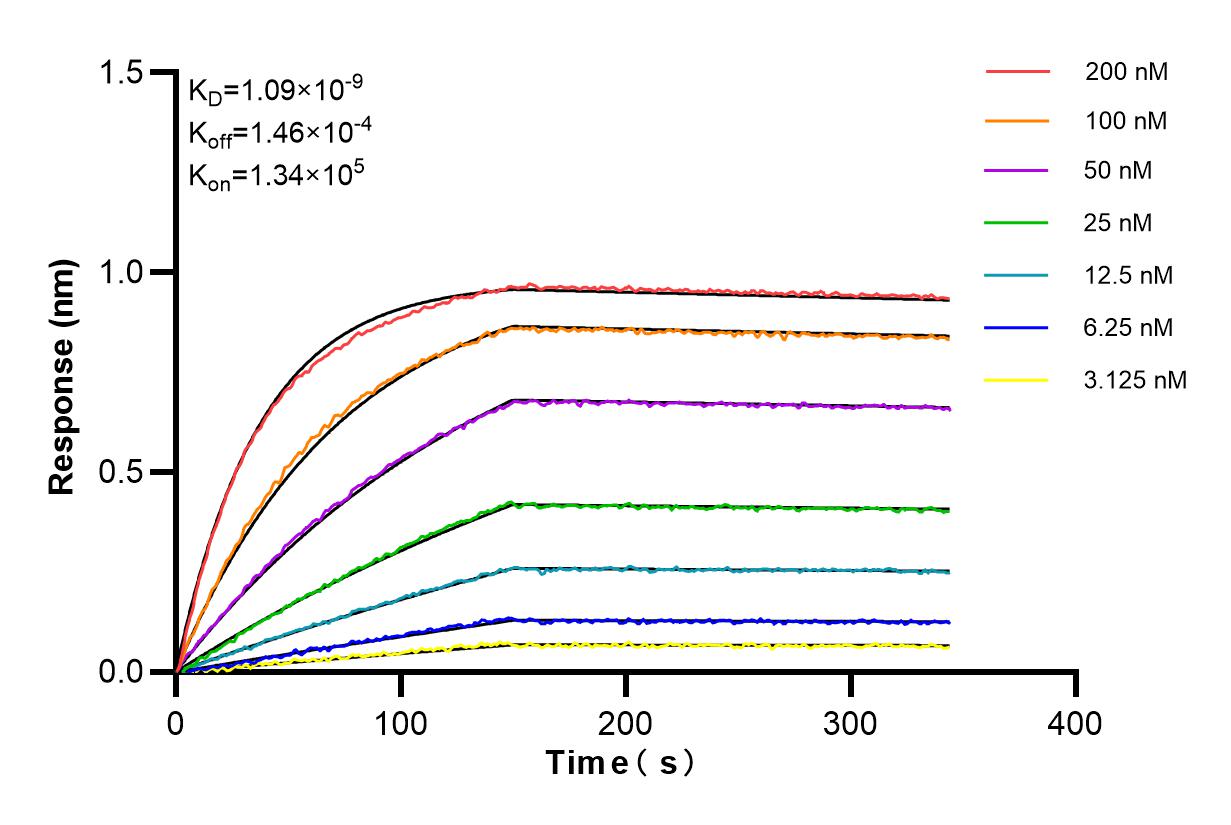
Applications testées
| Résultats positifs en WB | cellules MDA-MB-231, salive humain, salive humaine |
Dilution recommandée
| Application | Dilution |
|---|---|
| Western Blot (WB) | WB : 1:5000-1:50000 |
| It is recommended that this reagent should be titrated in each testing system to obtain optimal results. | |
| Sample-dependent, check data in validation data gallery | |
Informations sur le produit
85403-1-RR cible Cystatin SN/CST1 dans les applications de WB, ELISA et montre une réactivité avec des échantillons Humain
| Réactivité | Humain |
| Hôte / Isotype | Lapin / IgG |
| Clonalité | Recombinant |
| Type | Anticorps |
| Immunogène | Cystatin SN/CST1 Protéine recombinante Ag8862 |
| Nom complet | cystatin SN |
| Masse moléculaire calculée | 141 aa, 16 kDa |
| Poids moléculaire observé | 14-16 kDa |
| Numéro d’acquisition GenBank | BC021225 |
| Symbole du gène | CST1 |
| Identification du gène (NCBI) | 1469 |
| Conjugaison | Non conjugué |
| Forme | Liquide |
| Méthode de purification | Purification par protéine A |
| Tampon de stockage | PBS with 0.02% sodium azide and 50% glycerol |
| Conditions de stockage | Stocker à -20°C. Stable pendant un an après l'expédition. L'aliquotage n'est pas nécessaire pour le stockage à -20oC Les 20ul contiennent 0,1% de BSA. |
Informations générales
CST1, or cystatin SN, is a gene in humans that encodes a secreted protein belonging to the type 2 cystatin superfamily, which includes CST1, CST2, CST3, CST4, and CST5. These proteins are cysteine proteinase inhibitors found in various human fluids and secretions, where they appear to provide protective functions . CST1 is specifically found in saliva, tears, urine, and seminal fluid, and it plays a role in inhibiting the activity of cysteine proteases. CST1 has been implicated in various pathological processes, including tumor invasion and metastasis. Overexpression of CST1 has been observed in several types of cancer, such as lung, breast, colorectal, and gastric cancer, suggesting its role in the proliferation, invasion, and metastasis of these tumors.
Protocole
| Product Specific Protocols | |
|---|---|
| WB protocol for Cystatin SN/CST1 antibody 85403-1-RR | Download protocol |
| Standard Protocols | |
|---|---|
| Click here to view our Standard Protocols |


