Anticorps Polyclonal de lapin anti-DIDO1
DIDO1 Polyclonal Antibody for WB, IHC, IF/ICC, Indirect ELISA
Hôte / Isotype
Lapin / IgG
Réactivité testée
Humain, rat, souris
Applications
WB, IHC, IF/ICC, Indirect ELISA
Conjugaison
Non conjugué
N° de cat : 10183-1-PBS
Synonymes
Galerie de données de validation
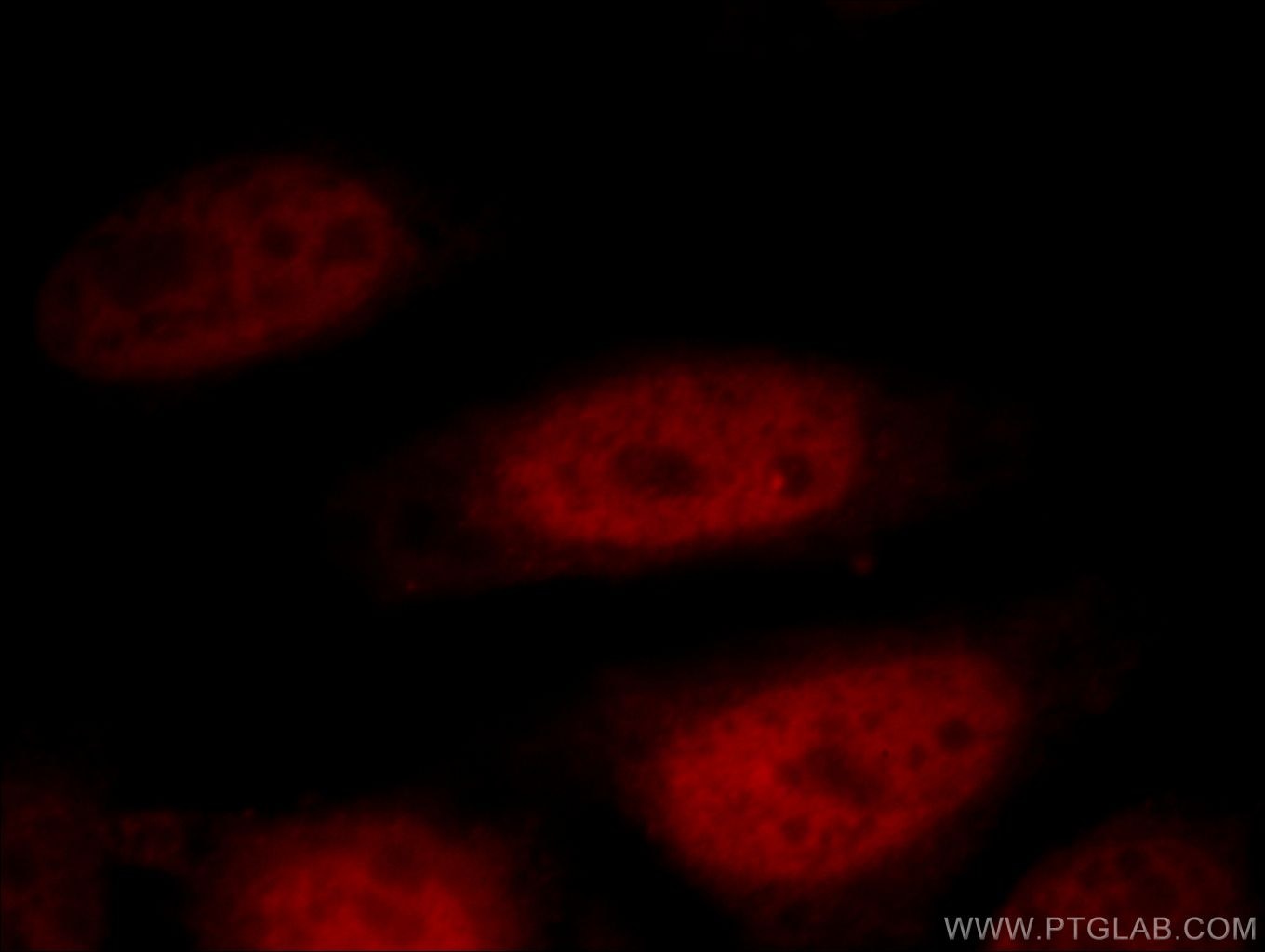
Informations sur le produit
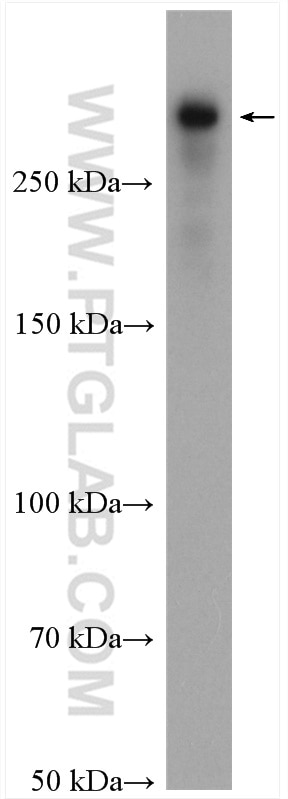
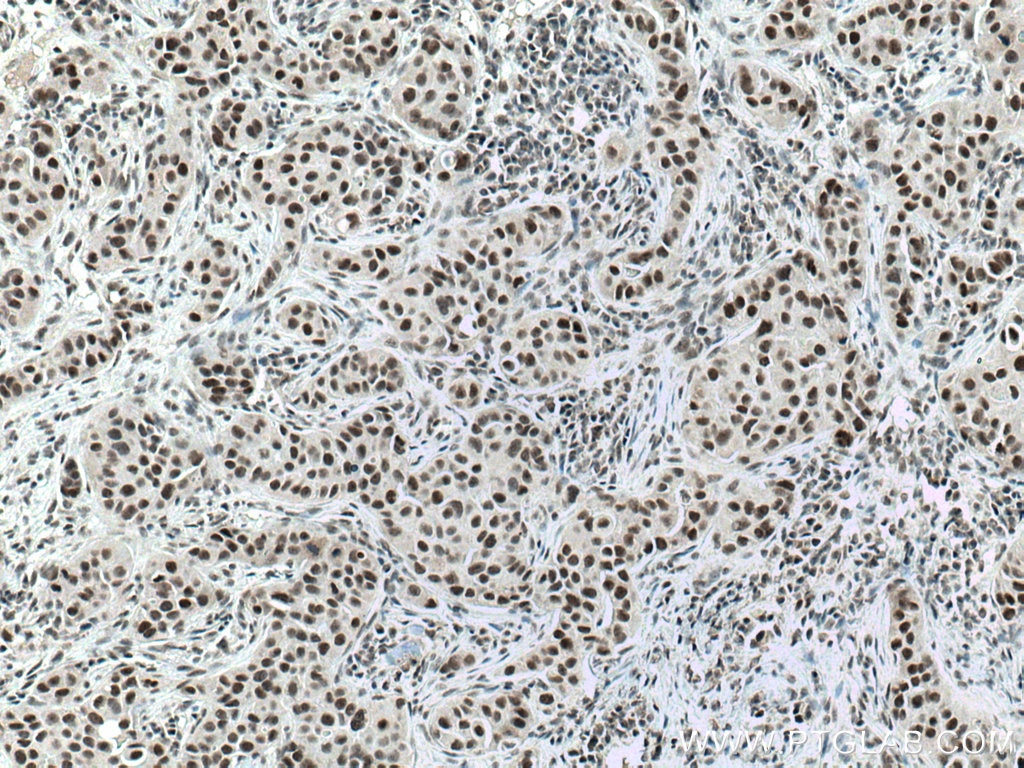
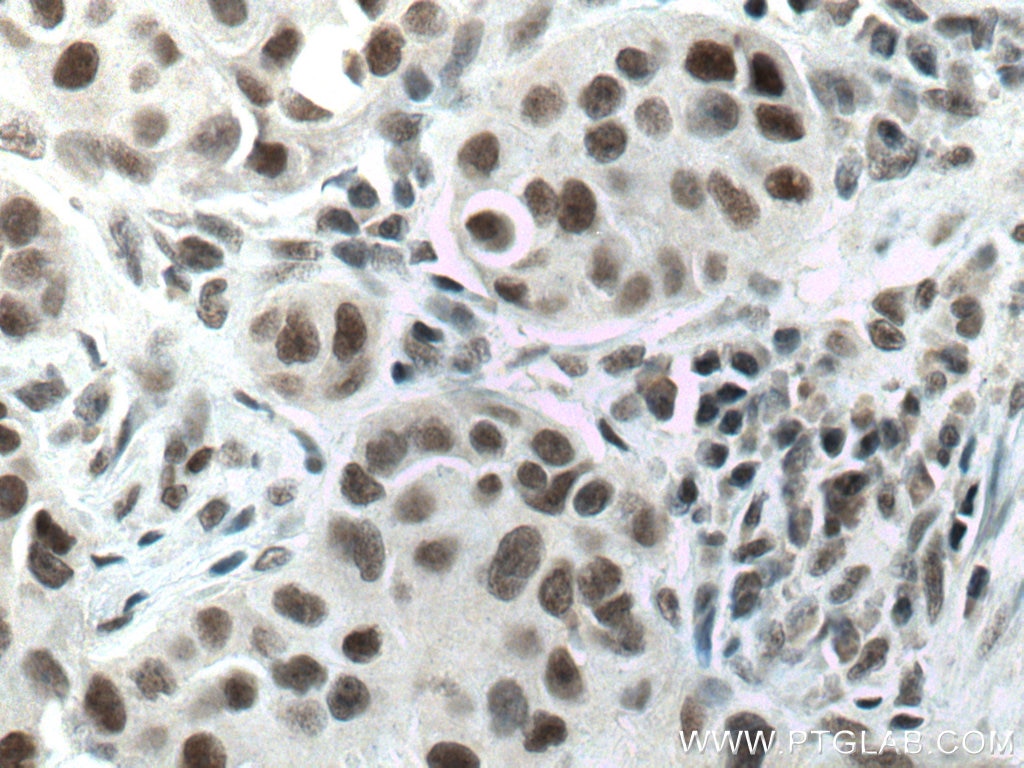
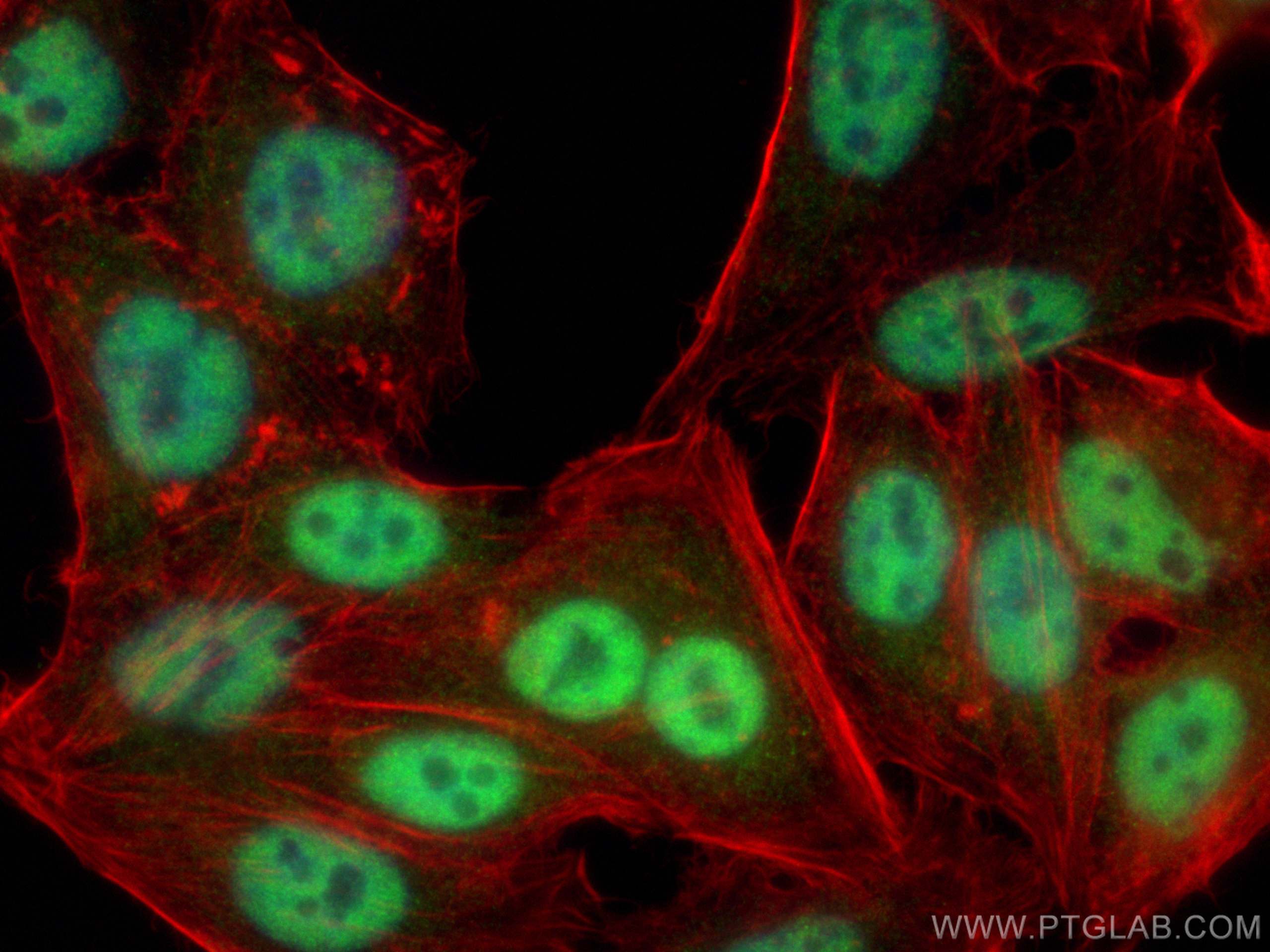
10183-1-PBS cible DIDO1 dans les applications de WB, IHC, IF/ICC, Indirect ELISA et montre une réactivité avec des échantillons Humain, rat, souris
| Réactivité | Humain, rat, souris |
| Hôte / Isotype | Lapin / IgG |
| Clonalité | Polyclonal |
| Type | Anticorps |
| Immunogène | DIDO1 Protéine recombinante Ag0237 |
| Nom complet | death inducer-obliterator 1 |
| Masse moléculaire calculée | 244 kDa |
| Poids moléculaire observé | 300-350 kDa |
| Numéro d’acquisition GenBank | BC000770 |
| Symbole du gène | DIDO1 |
| Identification du gène (NCBI) | 11083 |
| Conjugaison | Non conjugué |
| Forme | Liquide |
| Méthode de purification | Purification par affinité contre l'antigène |
| Tampon de stockage | PBS only |
| Conditions de stockage | Store at -80°C. 20ul contiennent 0,1% de BSA. |
Informations générales
DIDO1, also termed DATF-1, C20orf158, DATF1, KIAA0333 and DIO-1, is a putative transcription factor, weakly pro-apoptotic when overexpressed. It is a tumor suppressor. In mice, DIDO1 is upregulated by apoptotic signals and encodes a cytoplasmic protein that translocates to the nucleus upon apoptotic signal activation. When overexpressed, the mouse protein induced apoptosis in cell lines growing in vitro. The human DIDO1 is similar to the mouse gene and therefore is thought to be involved in apoptosis. DIDO1 has multiple isoforms with molecular weights of 243 kd, 129 kd, 59 kd, and 61 kd. DIDO1 undergoes various modifications, including phosphorylation and ubiquitination, resulting in a mainstream molecular weight of 300 kd.


