- Phare
- Validé par KD/KO
Anticorps Recombinant de lapin anti-ECM1
ECM1 Recombinant Antibody for WB, FC (Intra), ELISA
Hôte / Isotype
Lapin / IgG
Réactivité testée
Humain
Applications
WB, FC (Intra), ELISA
Conjugaison
Non conjugué
CloneNo.
230321F12
N° de cat : 83067-6-RR
Synonymes
Galerie de données de validation
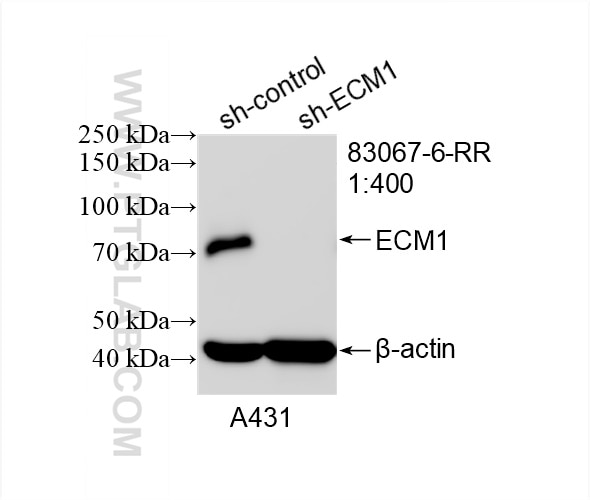
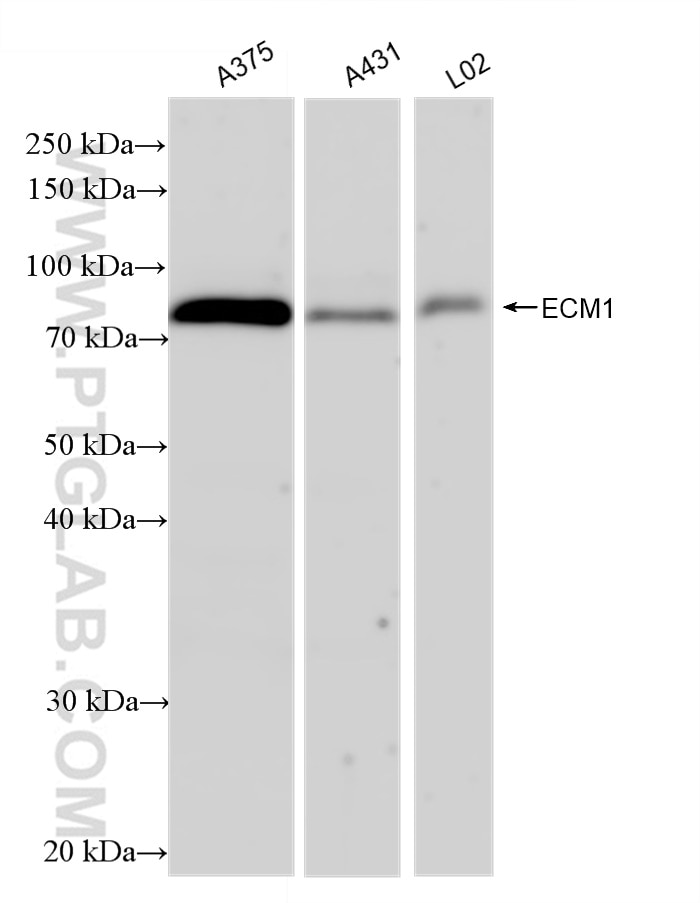
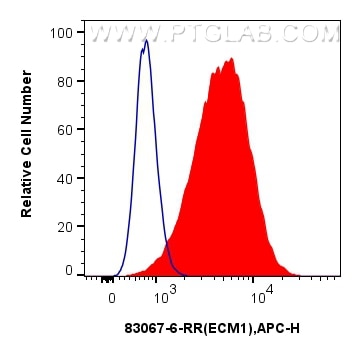
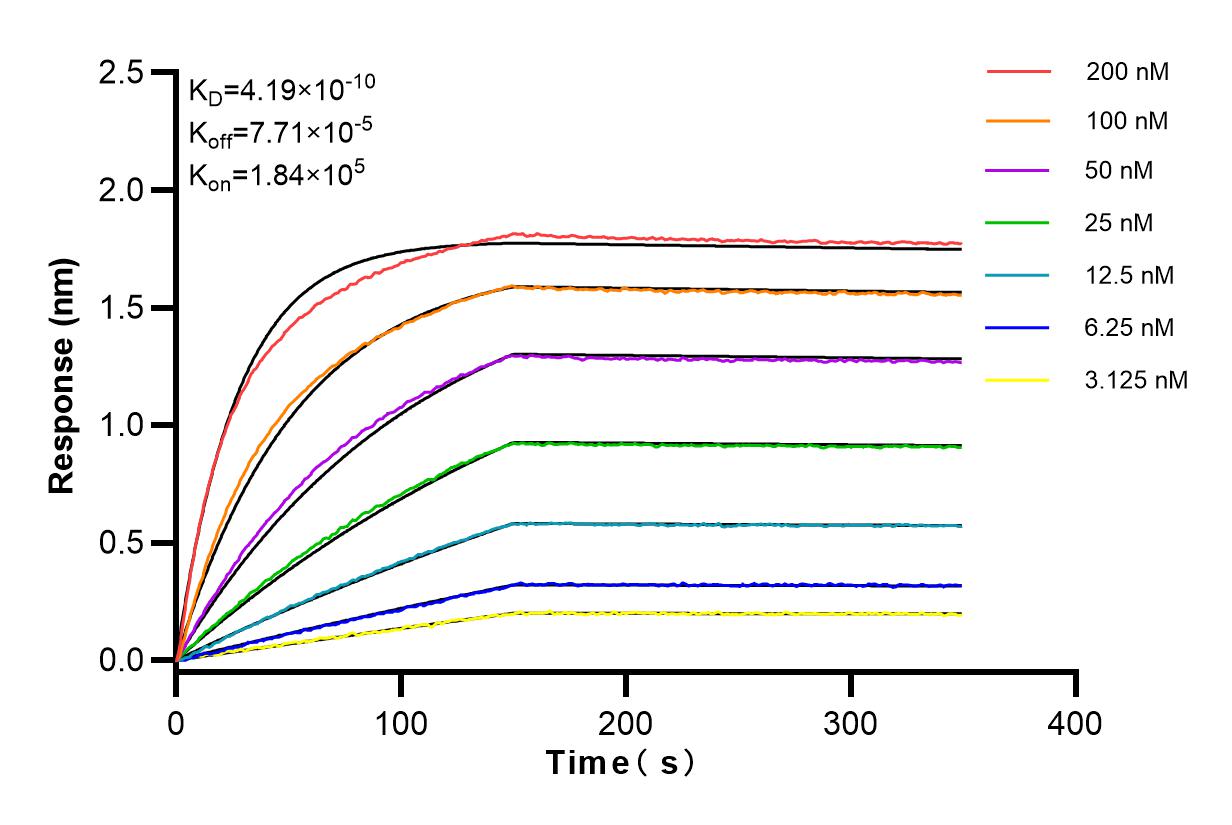
Applications testées
| Résultats positifs en WB | cellules A375, cellules A431, cellules L02 |
| Résultats positifs en FC (Intra) | cellules A375, |
Dilution recommandée
| Application | Dilution |
|---|---|
| Western Blot (WB) | WB : 1:5000-1:50000 |
| Flow Cytometry (FC) (INTRA) | FC (INTRA) : 0.25 ug per 10^6 cells in a 100 µl suspension |
| It is recommended that this reagent should be titrated in each testing system to obtain optimal results. | |
| Sample-dependent, check data in validation data gallery | |
Informations sur le produit
83067-6-RR cible ECM1 dans les applications de WB, FC (Intra), ELISA et montre une réactivité avec des échantillons Humain
| Réactivité | Humain |
| Hôte / Isotype | Lapin / IgG |
| Clonalité | Recombinant |
| Type | Anticorps |
| Immunogène | ECM1 Protéine recombinante Eg0533 |
| Nom complet | extracellular matrix protein 1 |
| Masse moléculaire calculée | 540 aa, 61 kDa |
| Poids moléculaire observé | 60-80 kDa |
| Numéro d’acquisition GenBank | BC023505 |
| Symbole du gène | ECM1 |
| Identification du gène (NCBI) | 1893 |
| Conjugaison | Non conjugué |
| Forme | Liquide |
| Méthode de purification | Purification par protéine A |
| Tampon de stockage | PBS with 0.02% sodium azide and 50% glycerol |
| Conditions de stockage | Stocker à -20°C. Stable pendant un an après l'expédition. L'aliquotage n'est pas nécessaire pour le stockage à -20oC Les 20ul contiennent 0,1% de BSA. |
Informations générales
ECM1 (extracellular matrix protein 1), also known as URBWD. It is located in secreted, extracellular space, and extracellular matrix, which is mainly expressed in esophagus and gall bladder. The gene encodes a soluble protein that is involved in endochondral bone formation, angiogenesis, and tumor biology. It also interacts with a variety of extracellular and structural proteins, contributing to the maintenance of skin integrity and homeostasis. Mutations in this gene are associated with lipoid proteinosis disorder (also known as hyalinosis cutis et mucosae or Urbach-Wiethe disease) that is characterized by generalized thickening of skin, mucosae and certain viscera. The calculated molecular weight of ECM1 is 60 kDa, and this antibody can recognize the 63 kDa isoform of target, moreover, this protein may have glycosylation modification.
Protocole
| Product Specific Protocols | |
|---|---|
| WB protocol for ECM1 antibody 83067-6-RR | Download protocol |
| Standard Protocols | |
|---|---|
| Click here to view our Standard Protocols |


