Anticorps Monoclonal anti-EGFR
EGFR Monoclonal Antibody for WB, IF/ICC, FC, ELISA, Blocking
Hôte / Isotype
Mouse / IgG1
Réactivité testée
Humain
Applications
WB, IF/ICC, FC, ELISA, Blocking
Conjugaison
Non conjugué
CloneNo.
2C8C12
N° de cat : 68643-1-Ig
Synonymes
Galerie de données de validation
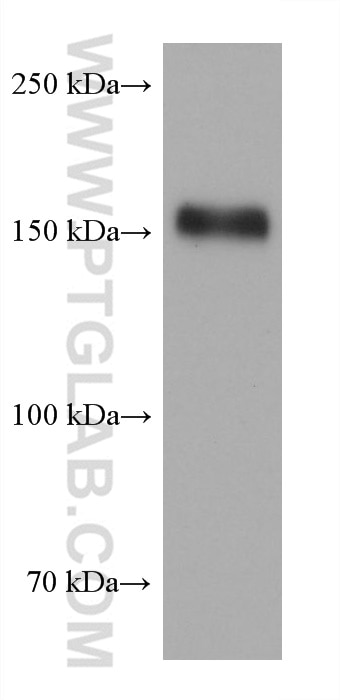
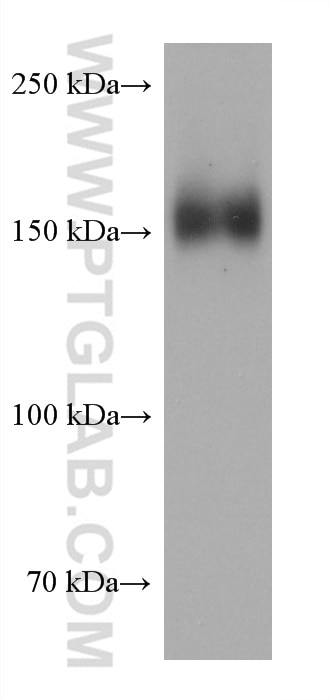
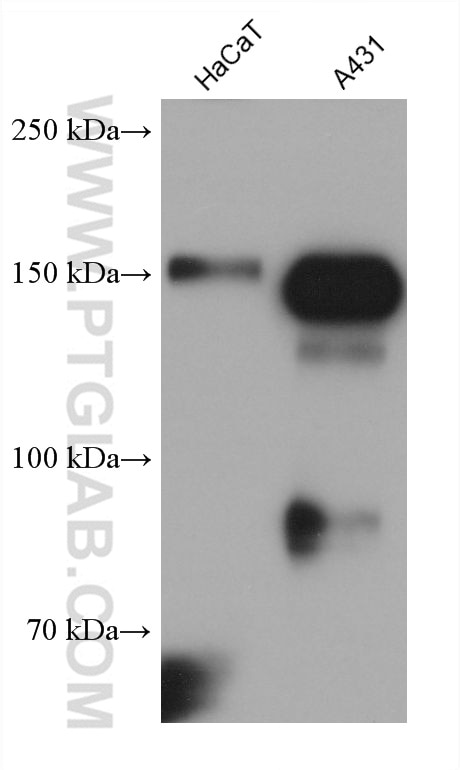
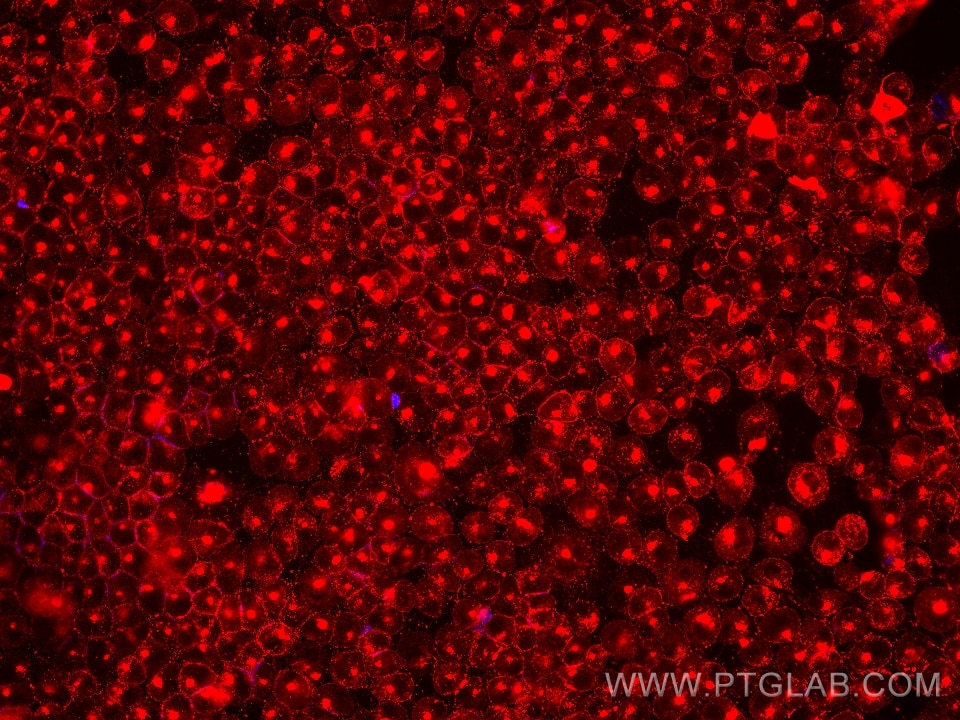
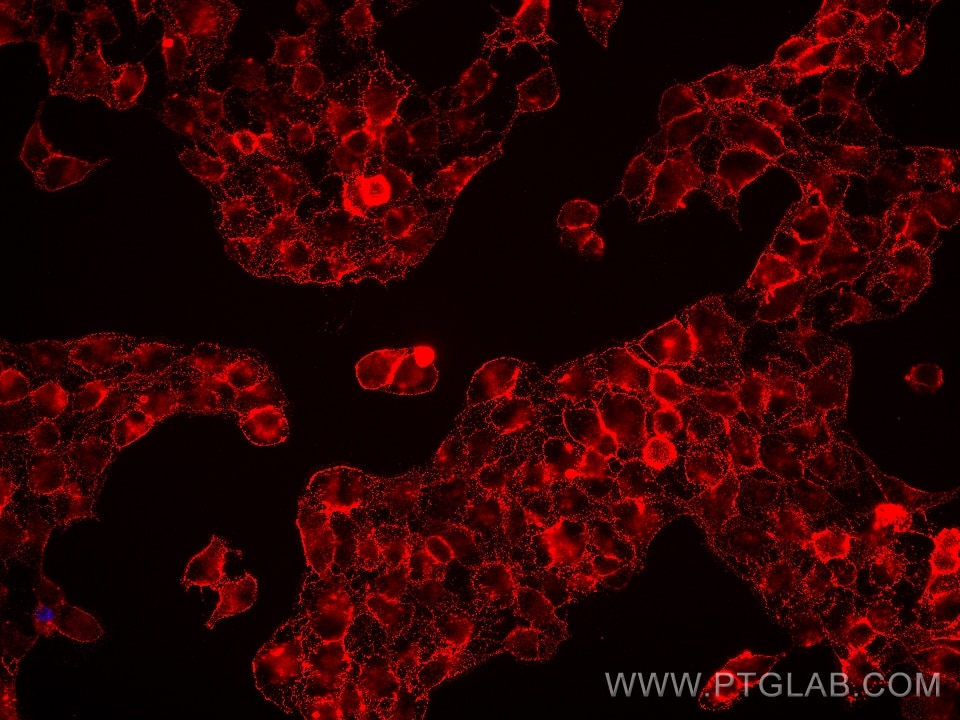
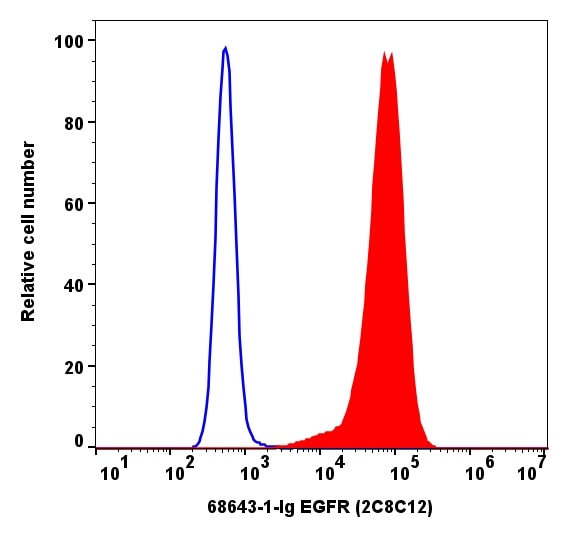
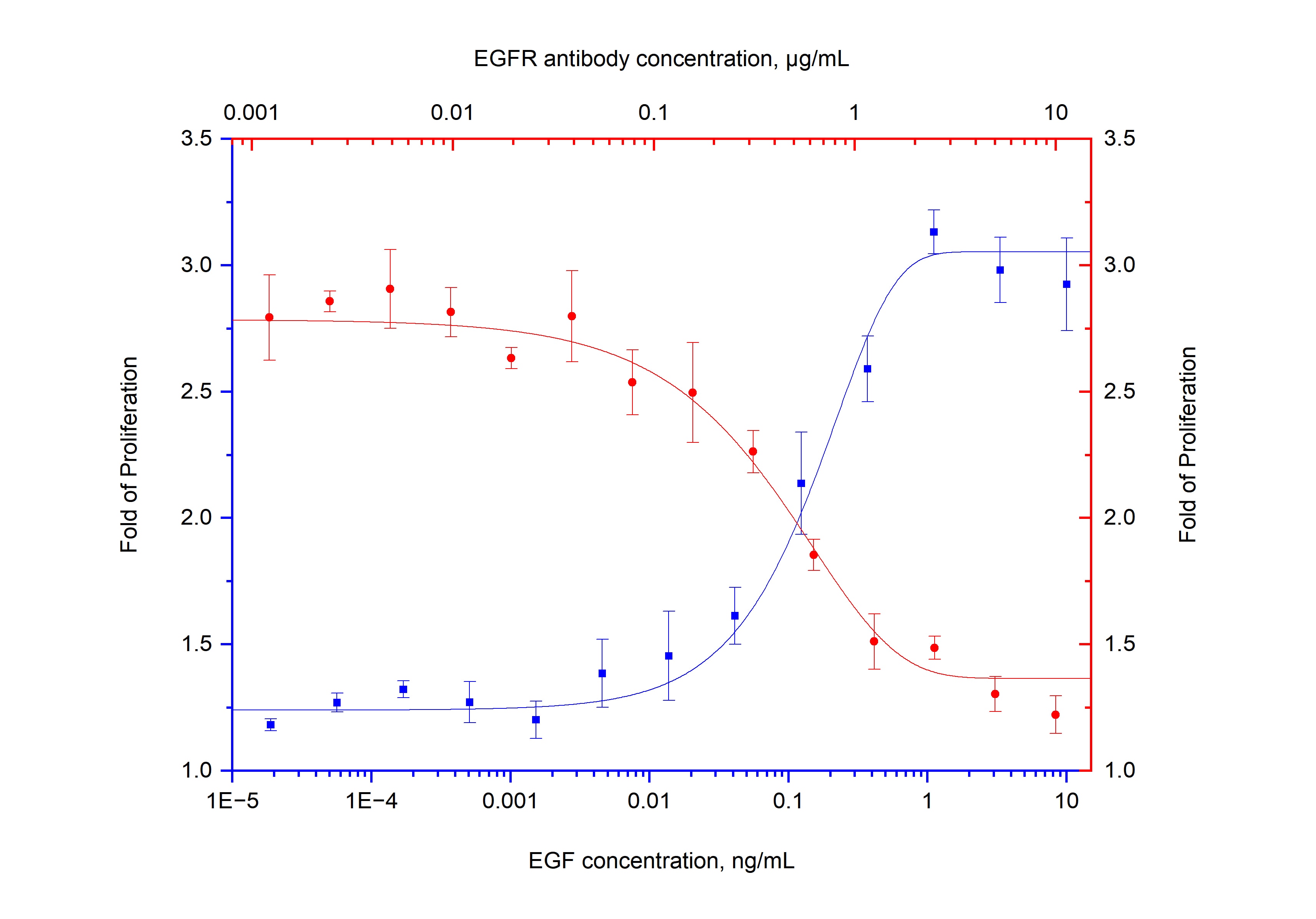
Applications testées
| Résultats positifs en WB | SCaBER cells, cellules A431, cellules HaCaT, cellules MDA-MB-468 |
| Résultats positifs en IF/ICC | cellules HaCaT, cellules A431 |
| Résultats positifs en cytométrie | cellules A431, |
| Résultats positifs en Blocking | cellules HeLa, |
Dilution recommandée
| Application | Dilution |
|---|---|
| Western Blot (WB) | WB : 1:5000-1:50000 |
| Immunofluorescence (IF)/ICC | IF/ICC : 1:500-1:2000 |
| Flow Cytometry (FC) | FC : 0.20 ug per 10^6 cells in a 100 µl suspension |
| BLOCKING | BLOCKING : 1:10-1:100 |
| It is recommended that this reagent should be titrated in each testing system to obtain optimal results. | |
| Sample-dependent, check data in validation data gallery | |
Informations sur le produit
68643-1-Ig cible EGFR dans les applications de WB, IF/ICC, FC, ELISA, Blocking et montre une réactivité avec des échantillons Humain
| Réactivité | Humain |
| Hôte / Isotype | Mouse / IgG1 |
| Clonalité | Monoclonal |
| Type | Anticorps |
| Immunogène | EGFR Protéine recombinante Ag24947 |
| Nom complet | epidermal growth factor receptor (erythroblastic leukemia viral (v-erb-b) oncogene homolog, avian) |
| Masse moléculaire calculée | 134kd |
| Poids moléculaire observé | 160 kDa |
| Numéro d’acquisition GenBank | NM_005228.5 |
| Symbole du gène | EGFR |
| Identification du gène (NCBI) | 1956 |
| Conjugaison | Non conjugué |
| Forme | Liquide |
| Méthode de purification | Purification par protéine G |
| Tampon de stockage | PBS with 0.02% sodium azide and 50% glycerol |
| Conditions de stockage | Stocker à -20°C. Stable pendant un an après l'expédition. L'aliquotage n'est pas nécessaire pour le stockage à -20oC Les 20ul contiennent 0,1% de BSA. |
Informations générales
EGFR, also named ERBB1, is a cell-surface receptor for members of the epidermal growth factor family (EGF-family) of extracellular protein ligands. Binding of the protein to a ligand induces receptor dimerization and tyrosine autophosphorylation and leads to cell proliferation. The gene resides on chromosome 7p12, encoding a 170 kDa membrane-associated glycoprotein. Recent studies have shown EGFR plays a critical role in cancer development and progression, including cell proliferation, apoptosis, angiogenesis, and metastatic spread. Mutations in this gene are associated with lung cancer. When stained with live cells, EGFR can be transported into the cell interior, which is consistent with the literature report (PMID: 18084617).
Protocole
| Product Specific Protocols | |
|---|---|
| WB protocol for EGFR antibody 68643-1-Ig | Download protocol |
| IF protocol for EGFR antibody 68643-1-Ig | Download protocol |
| FC protocol for EGFR antibody 68643-1-Ig | Download protocol |
| Standard Protocols | |
|---|---|
| Click here to view our Standard Protocols |

