Anticorps Monoclonal anti-EIF6
EIF6 Monoclonal Antibody for WB, IF/ICC, Indirect ELISA
Hôte / Isotype
Mouse / IgG2a
Réactivité testée
Humain, rat, souris
Applications
WB, IF/ICC, Indirect ELISA
Conjugaison
Non conjugué
CloneNo.
1F2A8
N° de cat : 68765-3-PBS
Synonymes
Galerie de données de validation
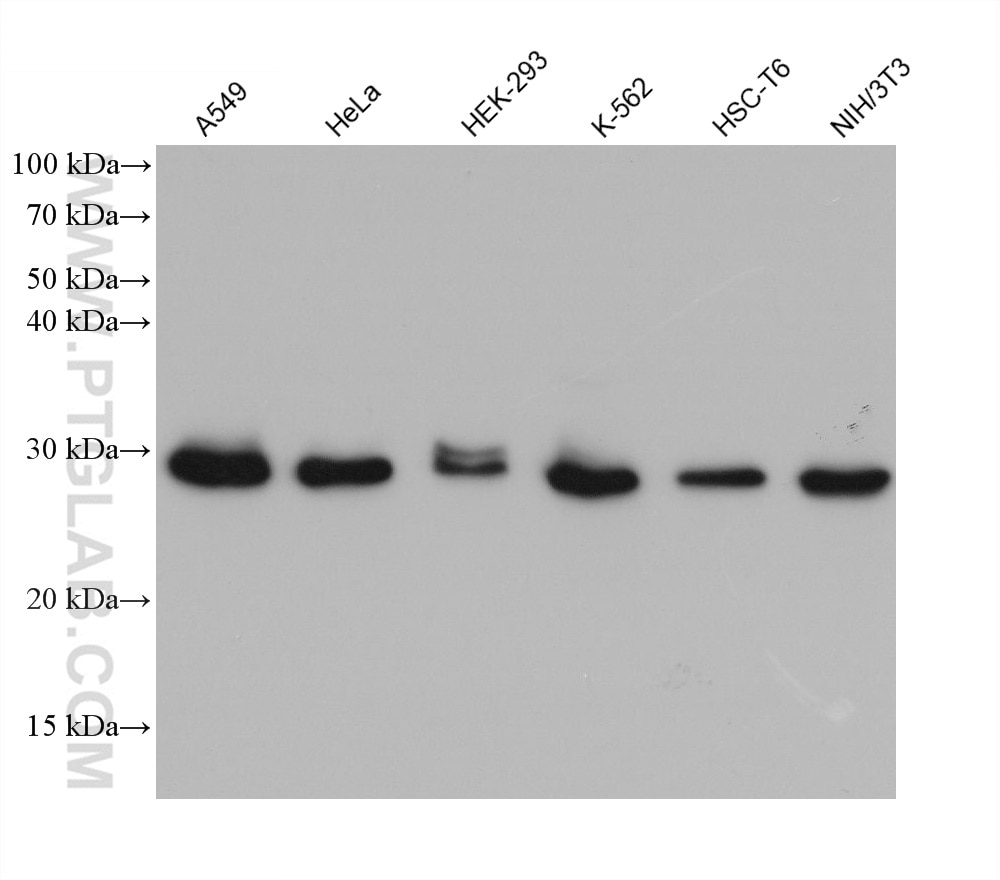
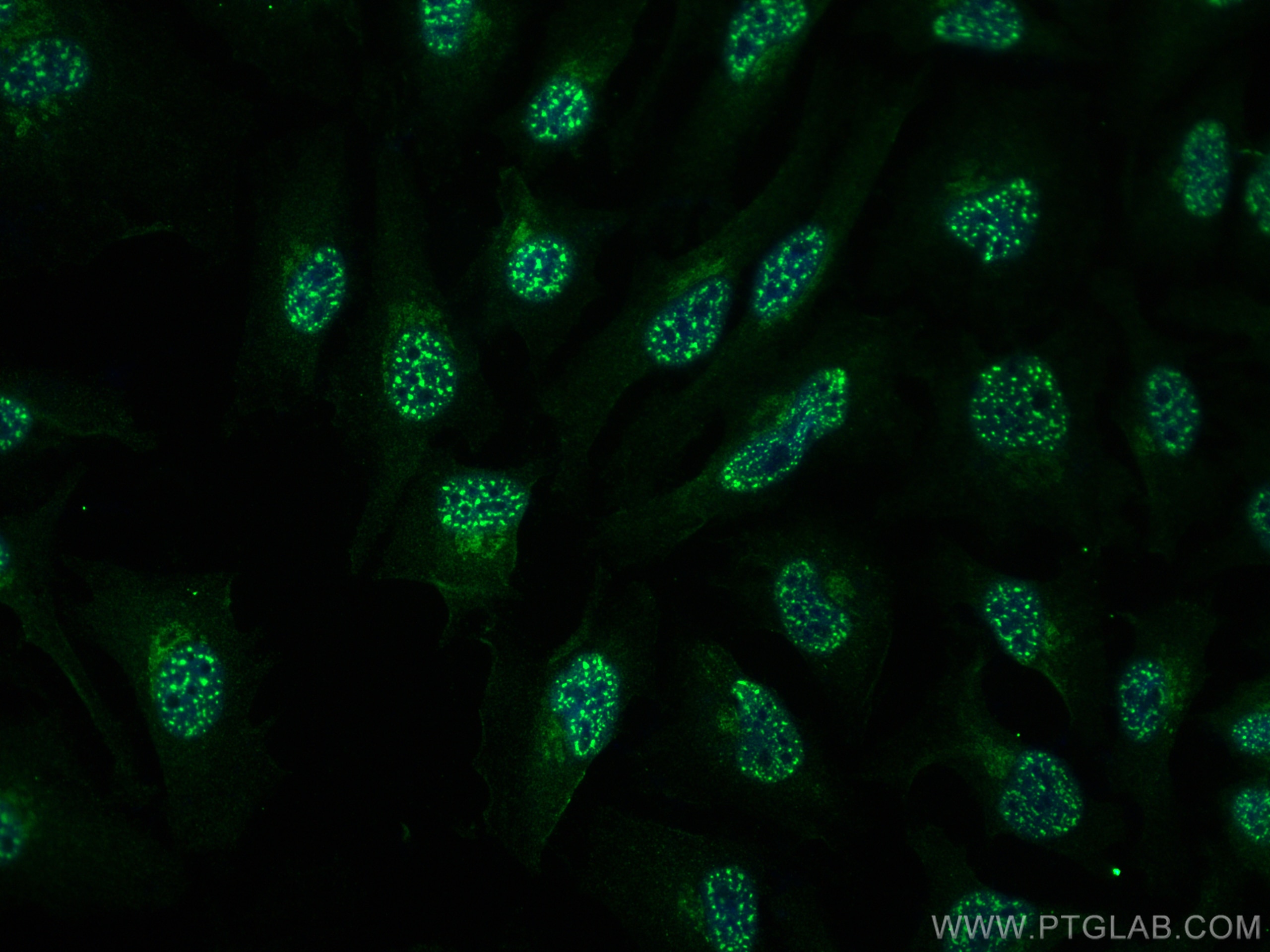
Informations sur le produit
68765-3-PBS cible EIF6 dans les applications de WB, IF/ICC, Indirect ELISA et montre une réactivité avec des échantillons Humain, rat, souris
| Réactivité | Humain, rat, souris |
| Hôte / Isotype | Mouse / IgG2a |
| Clonalité | Monoclonal |
| Type | Anticorps |
| Immunogène | EIF6 Protéine recombinante Ag30249 |
| Nom complet | eukaryotic translation initiation factor 6 |
| Masse moléculaire calculée | 27 kDa |
| Poids moléculaire observé | 27 kDa |
| Numéro d’acquisition GenBank | BC001119 |
| Symbole du gène | EIF6 |
| Identification du gène (NCBI) | 3692 |
| Conjugaison | Non conjugué |
| Forme | Liquide |
| Méthode de purification | Purification par protéine A |
| Tampon de stockage | PBS only |
| Conditions de stockage | Store at -80°C. 20ul contiennent 0,1% de BSA. |
Informations générales
p27(BBP/eIF6) is an evolutionarily conserved protein that was originally identified as p27(BBP), it functions as an interactor of the cytoplasmic domain of integrin 4 and as the putative translation initiation factor eIF6. p27BBP is found in two pools: one nuclear pool enriched in the perinucleolar region, and one cytoplasmic pool. p27BBP binds to the fibronectin type III domains of integrin 4 subunit (ITGB4), an important functional component of hemidesmosomes, and help link ITGB4 to the intermediate filament cytoskeleton. In vitro and in vivo studies demonstrated that p27BBP is essential for cell viability and has a primary function in the biogenesis of the 60S ribosomal subunit. p27BBP protein is increased in rapidly cycling cells and decreased in villous cells committed to apoptotic cell death. In dysplastic colorectal adenomas and carcinomas, p27BBP displayed a large increase of its nucleolar component and was associated with the nuclear matrix. In particular, p27BBP increased progressively from adenomas to carcinomas and was related to the tumor stage.


