Anticorps Recombinant de lapin anti-EOMES/TBR2
EOMES/TBR2 Recombinant Antibody for WB, IHC, IF/ICC, Indirect ELISA
Hôte / Isotype
Lapin / IgG
Réactivité testée
Humain, souris
Applications
WB, IHC, IF/ICC, Indirect ELISA
Conjugaison
Non conjugué
CloneNo.
241036D9
N° de cat : 83945-5-PBS
Synonymes
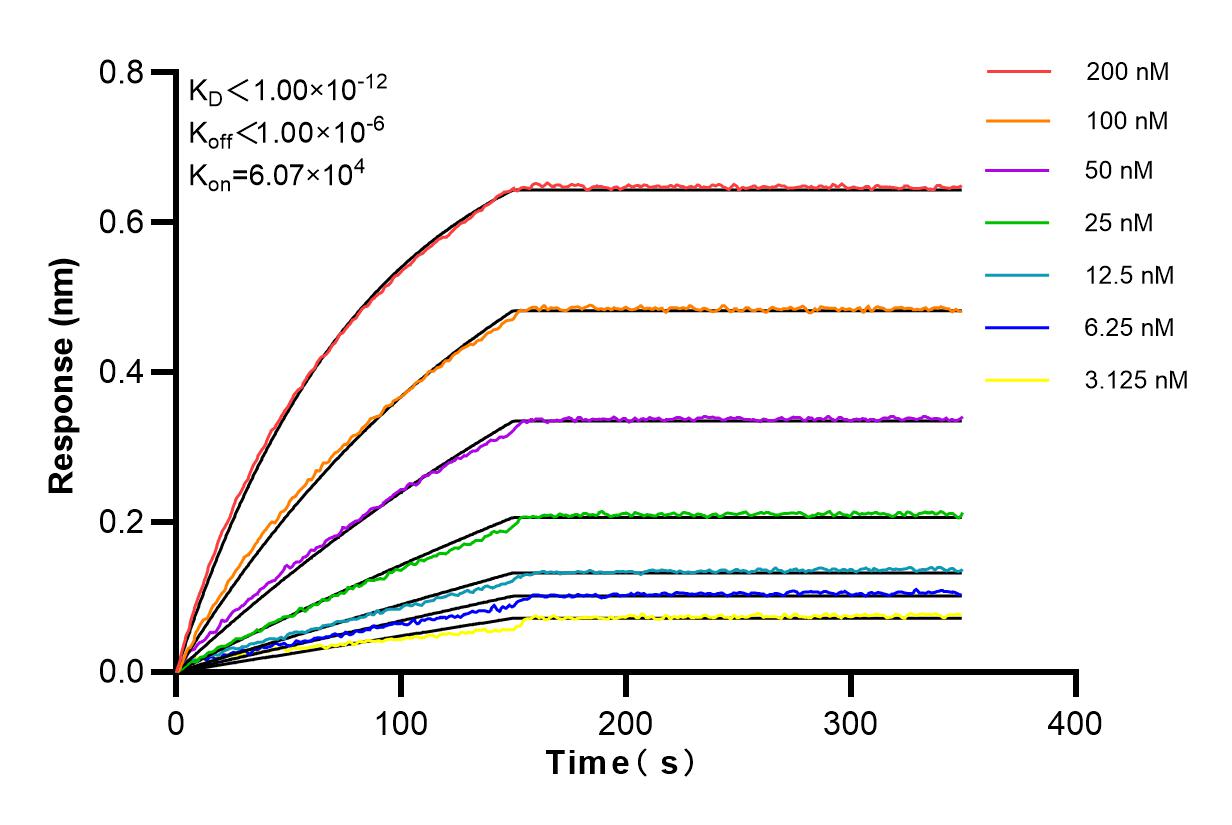
Galerie de données de validation
Informations sur le produit
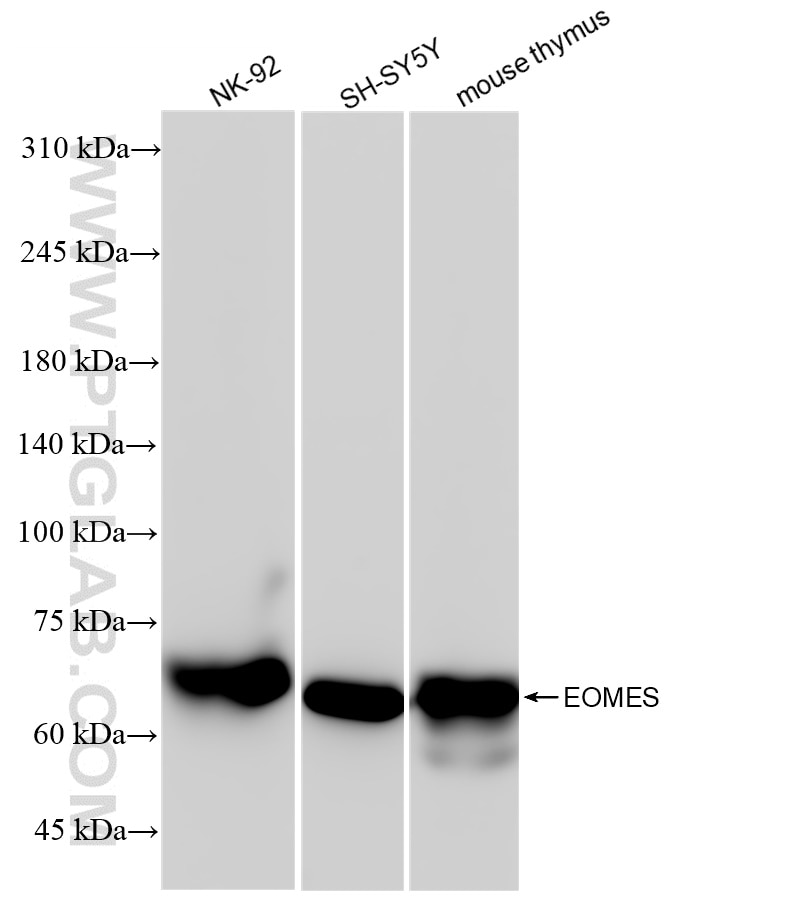
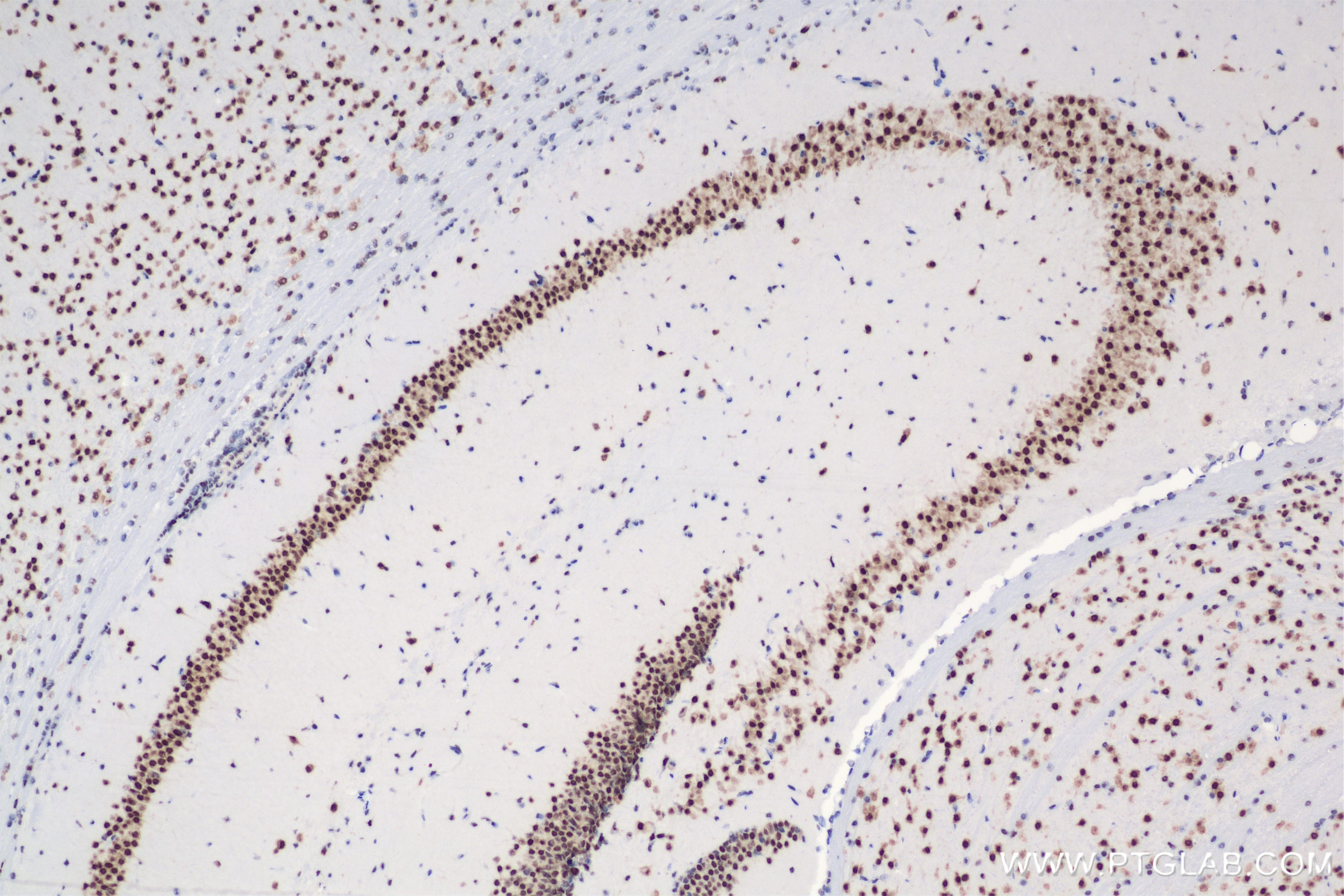
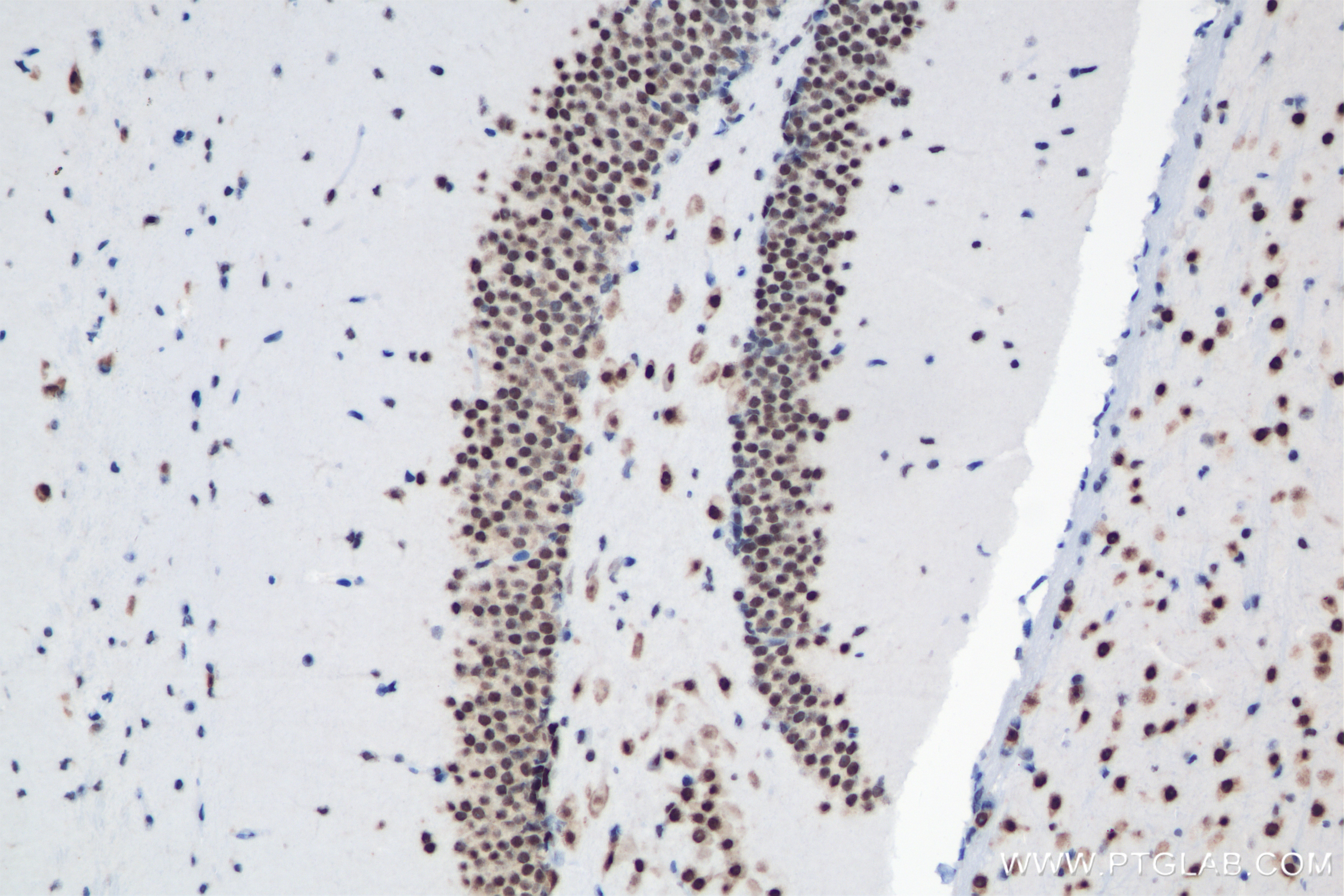
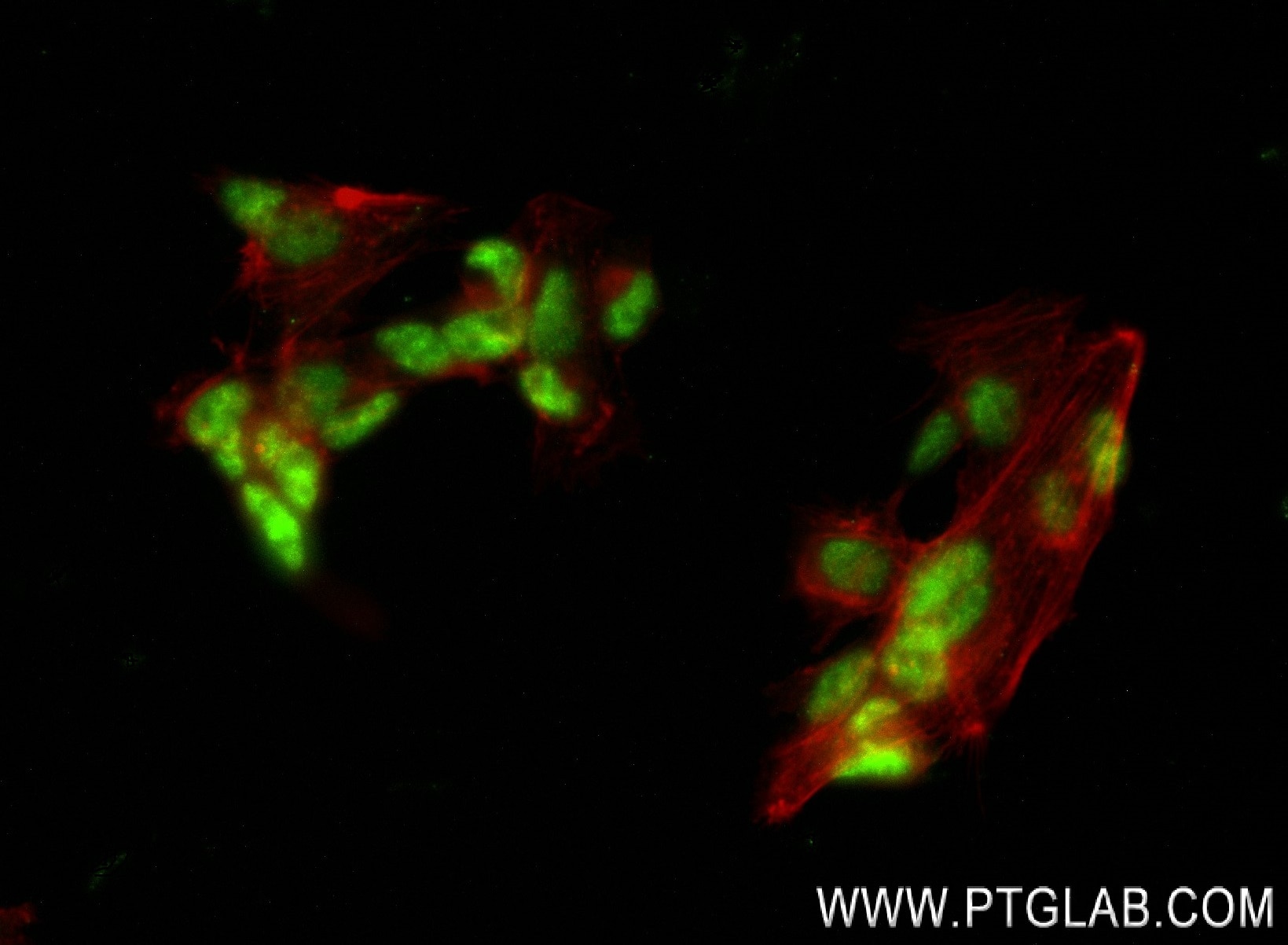
83945-5-PBS cible EOMES/TBR2 dans les applications de WB, IHC, IF/ICC, Indirect ELISA et montre une réactivité avec des échantillons Humain, souris
| Réactivité | Humain, souris |
| Hôte / Isotype | Lapin / IgG |
| Clonalité | Recombinant |
| Type | Anticorps |
| Immunogène | EOMES/TBR2 Protéine recombinante Ag27634 |
| Nom complet | eomesodermin homolog (Xenopus laevis) |
| Masse moléculaire calculée | 73 aa |
| Poids moléculaire observé | 67 kDa |
| Numéro d’acquisition GenBank | NM_001278182 |
| Symbole du gène | EOMES |
| Identification du gène (NCBI) | 8320 |
| Conjugaison | Non conjugué |
| Forme | Liquide |
| Méthode de purification | Protein A purfication |
| Tampon de stockage | PBS only |
| Conditions de stockage | Store at -80°C. 20ul contiennent 0,1% de BSA. |
Informations générales
EOMES/TRB2 (also named Eomesodermin/Tbr2) encode T-box transcription factor expressed highly in the intermediate progenitor stage of the developing neuron. During migration of the neurons, radial glia divide and migrate towards the surface of the cerebral cortex, there are three stages of cellular development: radial glia, intermediate progenitors, and postmitotic projection neurons. Radial glia express Pax6, while intermediate progenitor cells express Eomesodermin/Tbr2, and postmitotic projection neurons express Tbr1 (PMID:15634788; PMID:16320258). This process also called neurogenesis, and demonstrated that Eomesodermin/Tbr2 has been implicated in neurodevelopment. According to the mouse model, several articles showed that EOMES/TRB2 KO mice having proliferating cells decreased and having smaller upper cortical layers and a smaller sub ventricular zone in the brain (PMID:18940588). What's more, Eomesodermin/Tbr2 has also been found participating in immune response (PMID:20713880).


