Anticorps Recombinant de lapin anti-EXOSC6
EXOSC6 Recombinant Antibody for IF/ICC, Cytometric bead array, Indirect ELISA
Hôte / Isotype
Lapin / IgG
Réactivité testée
Humain
Applications
IF/ICC, Cytometric bead array, Indirect ELISA
Conjugaison
Non conjugué
CloneNo.
241535G9
N° de cat : 84346-2-PBS
Synonymes
Galerie de données de validation
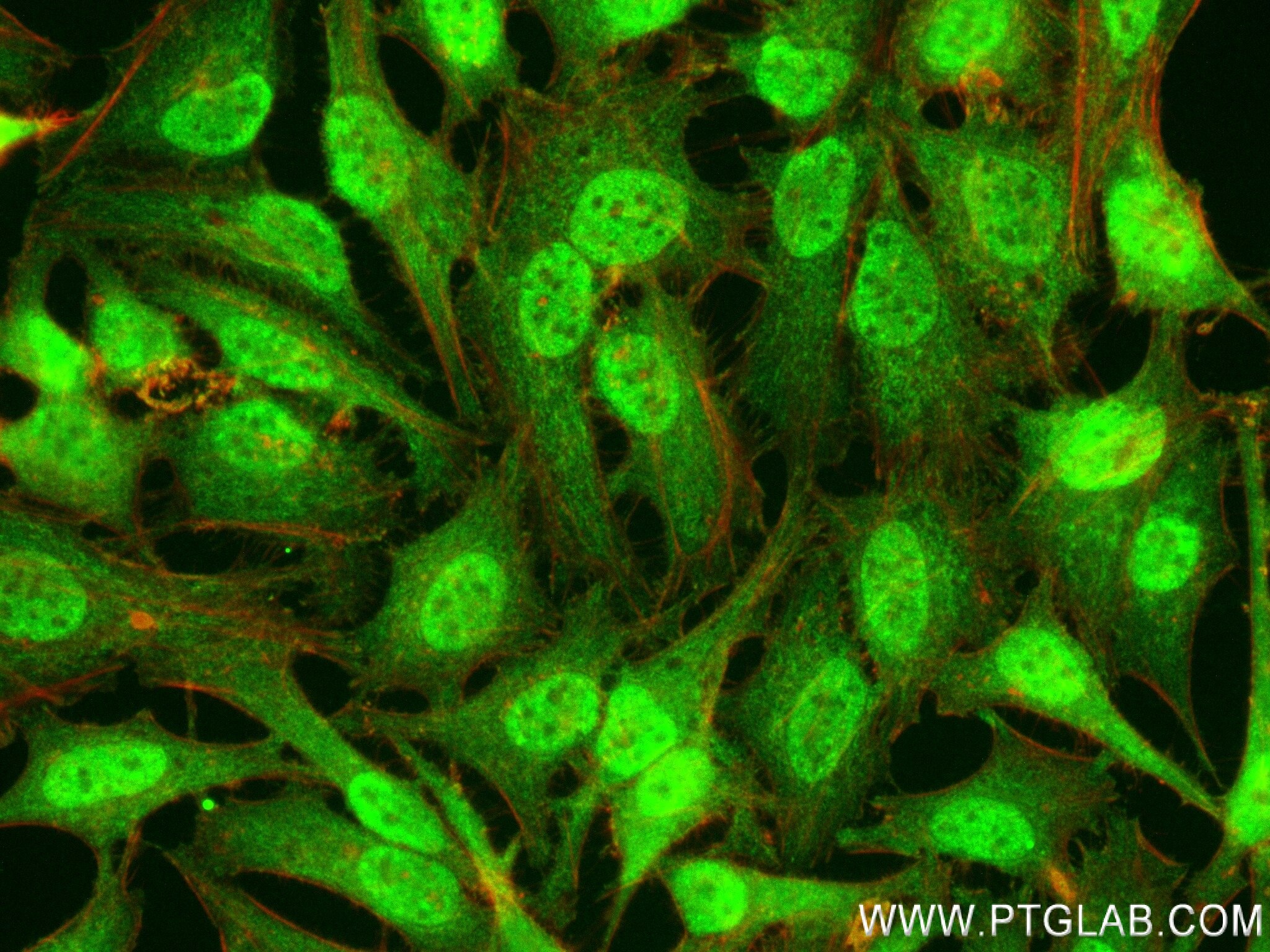
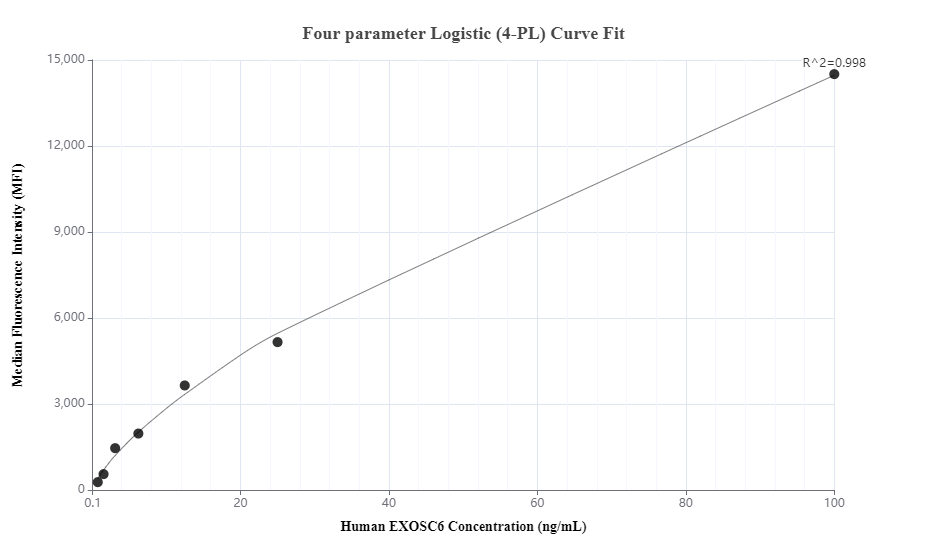
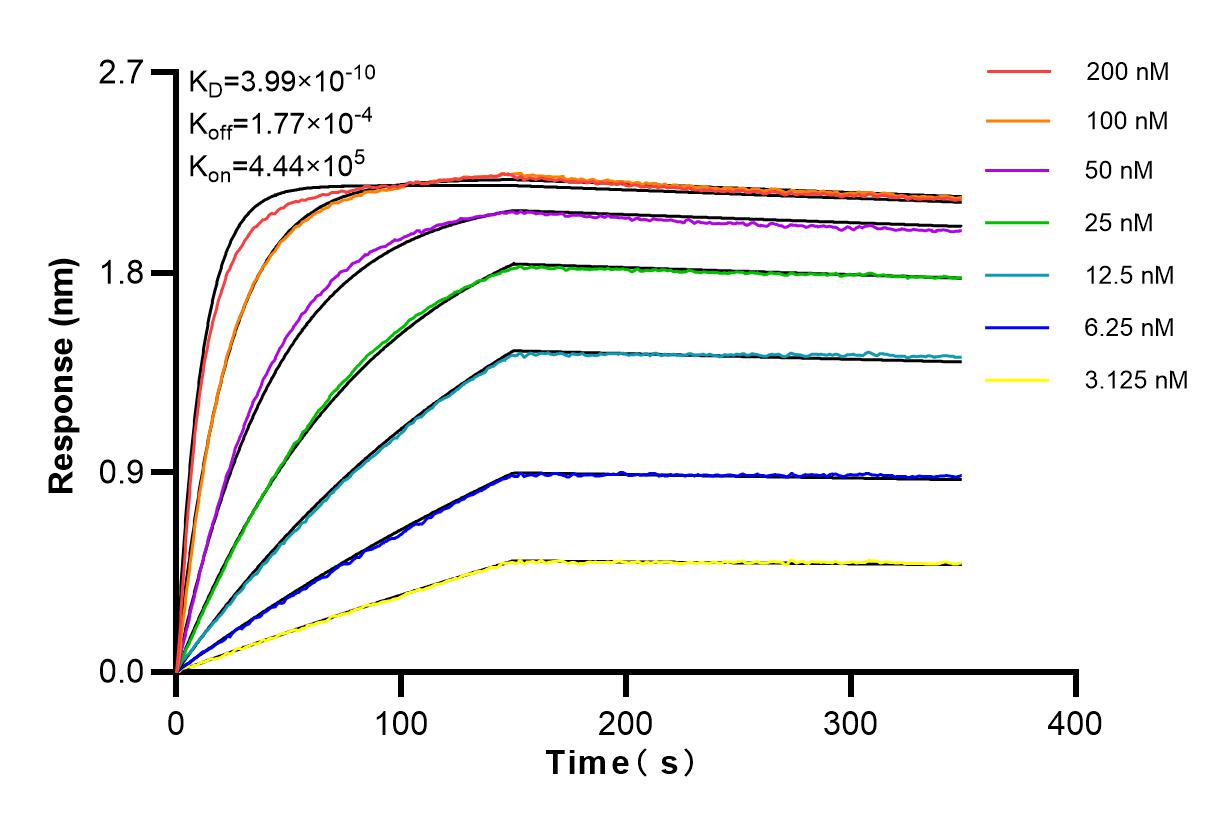
Informations sur le produit
84346-2-PBS cible EXOSC6 dans les applications de IF/ICC, Cytometric bead array, Indirect ELISA et montre une réactivité avec des échantillons Humain
| Réactivité | Humain |
| Hôte / Isotype | Lapin / IgG |
| Clonalité | Recombinant |
| Type | Anticorps |
| Immunogène | EXOSC6 Protéine recombinante Ag33513 |
| Nom complet | exosome component 6 |
| Masse moléculaire calculée | 28kd |
| Poids moléculaire observé | 28-32 kDa |
| Numéro d’acquisition GenBank | NM_058219 |
| Symbole du gène | EXOSC6 |
| Identification du gène (NCBI) | 118460 |
| Conjugaison | Non conjugué |
| Forme | Liquide |
| Méthode de purification | Purification par protéine A |
| Tampon de stockage | PBS only |
| Conditions de stockage | Store at -80°C. 20ul contiennent 0,1% de BSA. |
Informations générales
EXOSC6 (exosome component 6), also known as p11 or MTR3. The calculated molecular weight of EXOSC6 is 28 kDa. And it has low tissue specificity. The gene product constitutes one of the subunits of the multisubunit particle called exosome, which mediates mRNA degradation. It is also a component of the RNA exosome complex (PMID: 29906447). The composition of human exosome is similar to its yeast counterpart. EXOSC6 is homologous to the yeast Mtr3 protein. Its exact function is not known, however, it has been shown using a cell-free RNA decay system that the exosome is required for rapid degradation of unstable mRNAs containing AU-rich elements (AREs), but not for poly(A) shortening. The exosome does not recognize ARE-containing mRNAs on its own, but requires ARE-binding proteins that could interact with the exosome and recruit it to unstable mRNAs, thereby promoting their rapid degradation.


