Anticorps Polyclonal de lapin anti-EXTL3
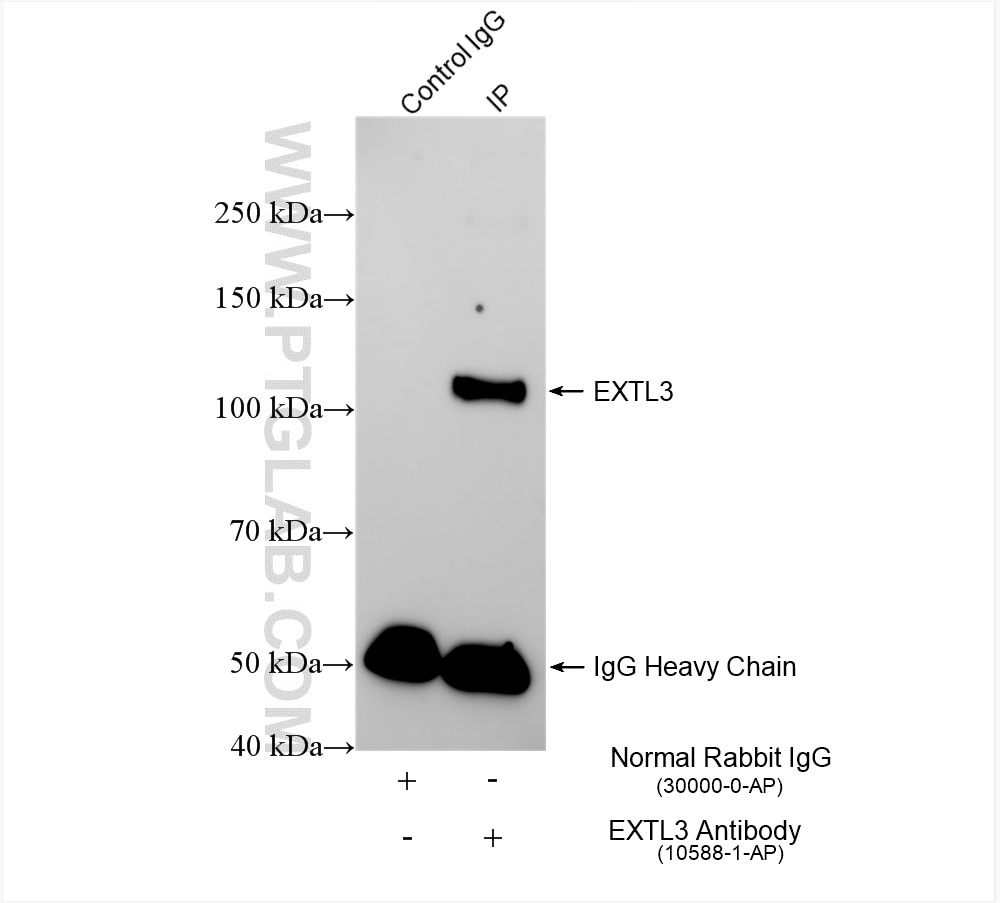
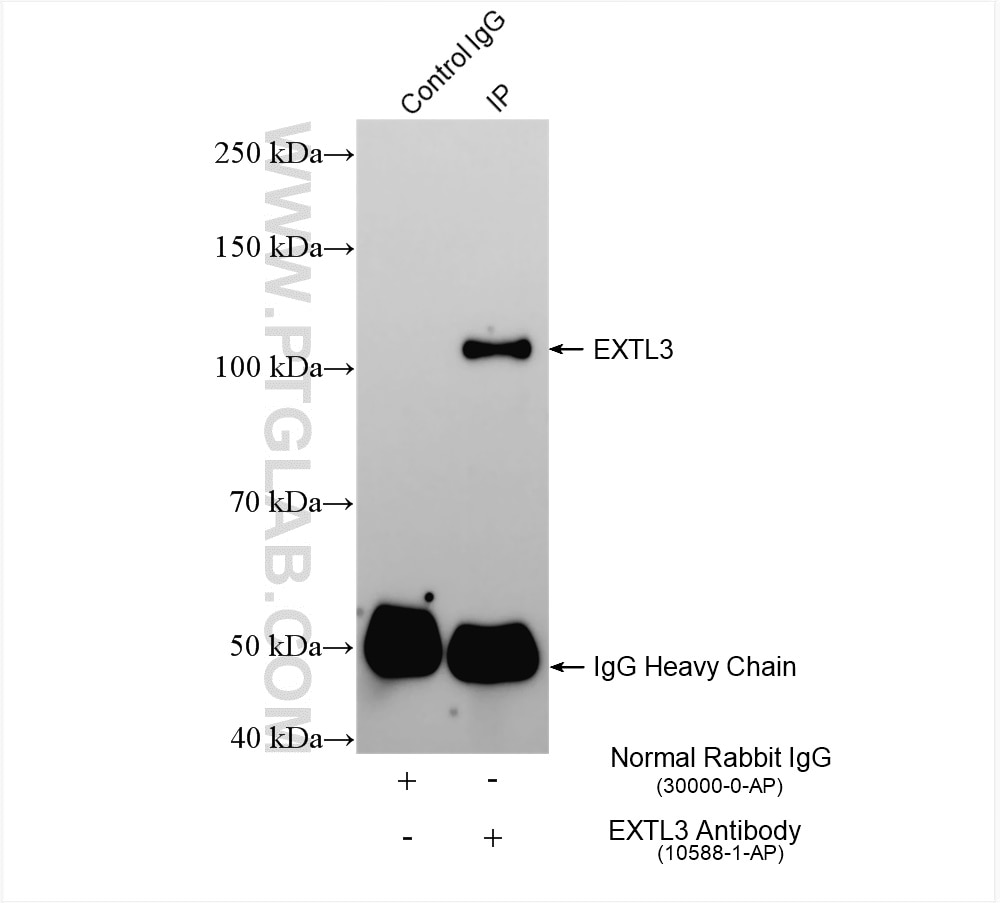
EXTL3 Polyclonal Antibody for IP, ELISA
Hôte / Isotype
Lapin / IgG
Réactivité testée
Humain, souris
Applications
IP, ELISA
Conjugaison
Non conjugué
N° de cat : 10588-1-PBS
Synonymes
Galerie de données de validation
Informations sur le produit
10588-1-PBS cible EXTL3 dans les applications de IP, ELISA et montre une réactivité avec des échantillons Humain, souris
| Réactivité | Humain, souris |
| Hôte / Isotype | Lapin / IgG |
| Clonalité | Polyclonal |
| Type | Anticorps |
| Immunogène | EXTL3 Protéine recombinante Ag0936 |
| Nom complet | exostoses (multiple)-like 3 |
| Masse moléculaire calculée | 105 kDa |
| Poids moléculaire observé | 105 kDa |
| Numéro d’acquisition GenBank | BC006363 |
| Symbole du gène | EXTL3 |
| Identification du gène (NCBI) | 2137 |
| Conjugaison | Non conjugué |
| Forme | Liquide |
| Méthode de purification | Purification par affinité contre l'antigène |
| Tampon de stockage | PBS only |
| Conditions de stockage | Store at -80°C. 20ul contiennent 0,1% de BSA. |
Informations générales
Exostosin like glycosyltransferase 3 (EXTL3), also known as RPR, is located at chromosome 8p21.1 and composed of 919 amino acids, making it the longest member of the EXT family (PMID: 35676258). EXTL3 encodes the glycosyltransferases responsible for the biosynthesis of the backbone structure of heparan sulfate (HS) (PMID: 24128412). EXTL3 has been identified as a receptor molecule for regenerating islet-derived (REG) protein ligands, which have been shown to stimulate islet β-cell growth. Mutations in EXTL3 could lead to skeletal dysplasia, developmental delay, and severe immune deficiency (PMID: 28148688). The predicted molecular weight is 105 kDa, but we detected the band at 65 kDa perhaps due to alternative splicing (PMID: 14618397).


