- Phare
- Validé par KD/KO
Anticorps Polyclonal de lapin anti-EphA4
EphA4 Polyclonal Antibody for WB, IHC, IF/ICC, IP, Indirect ELISA
Hôte / Isotype
Lapin / IgG
Réactivité testée
Humain, rat, souris
Applications
WB, IHC, IF/ICC, IP, Indirect ELISA
Conjugaison
Non conjugué
N° de cat : 21875-1-PBS
Synonymes
Galerie de données de validation
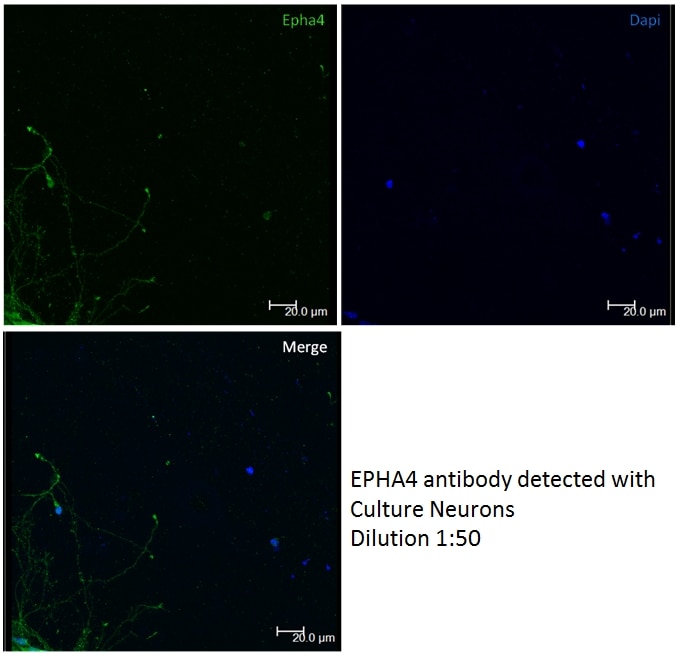
Informations sur le produit
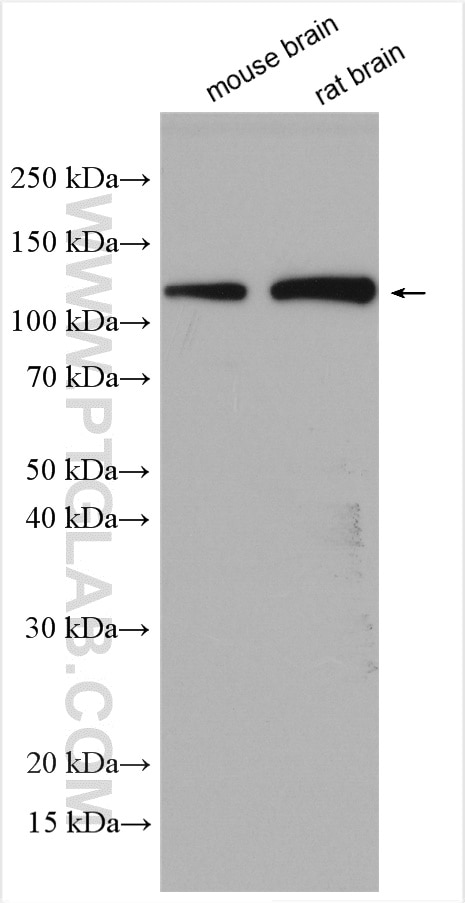
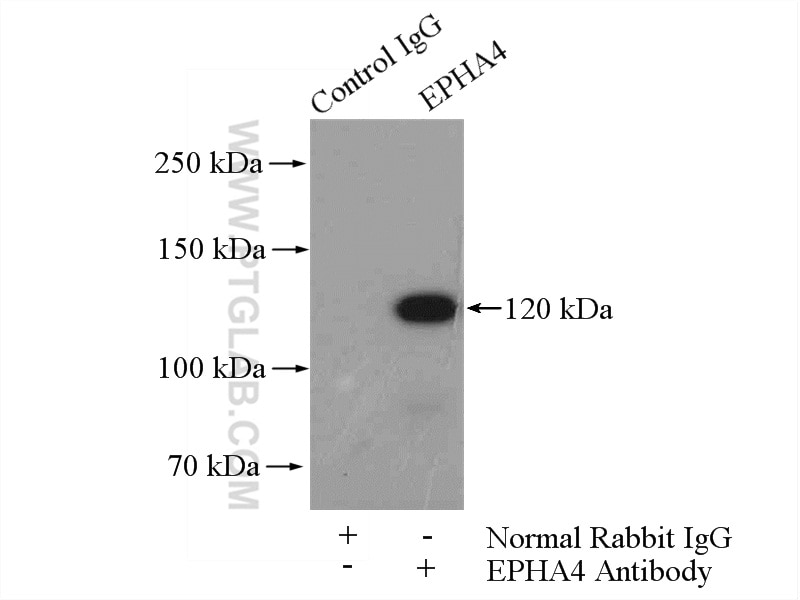
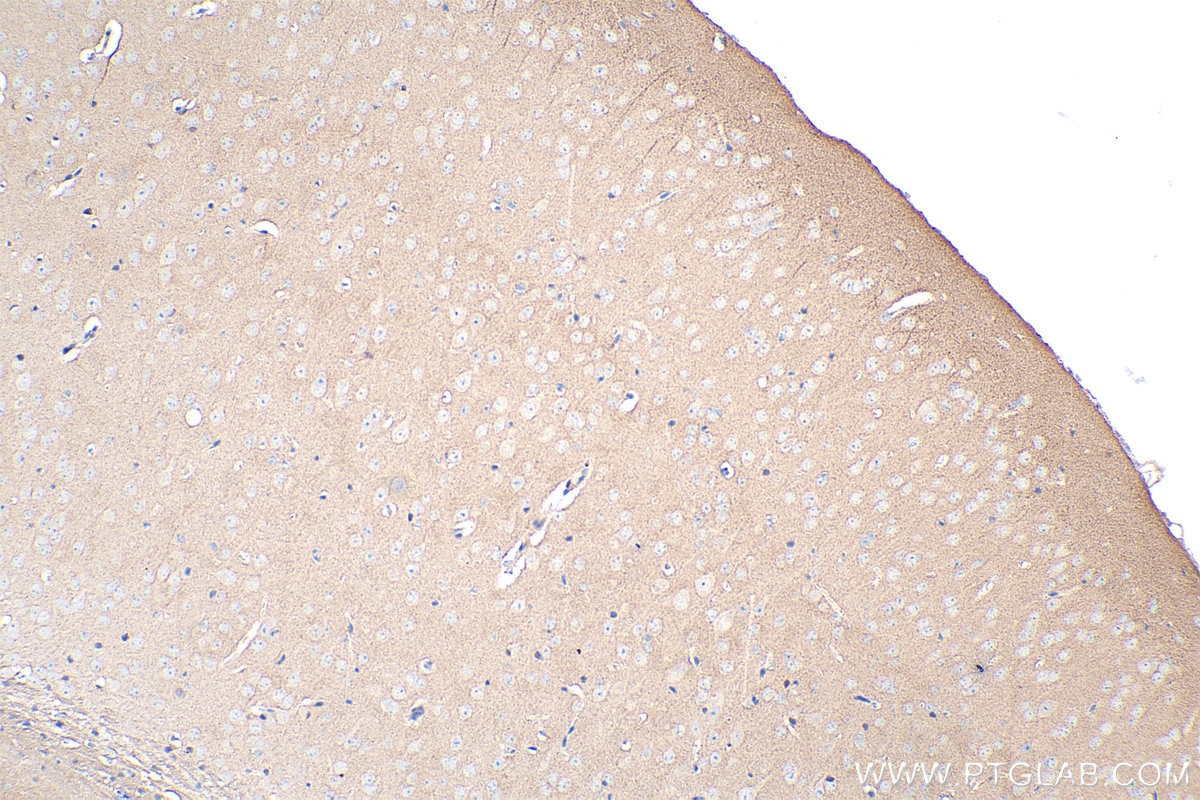
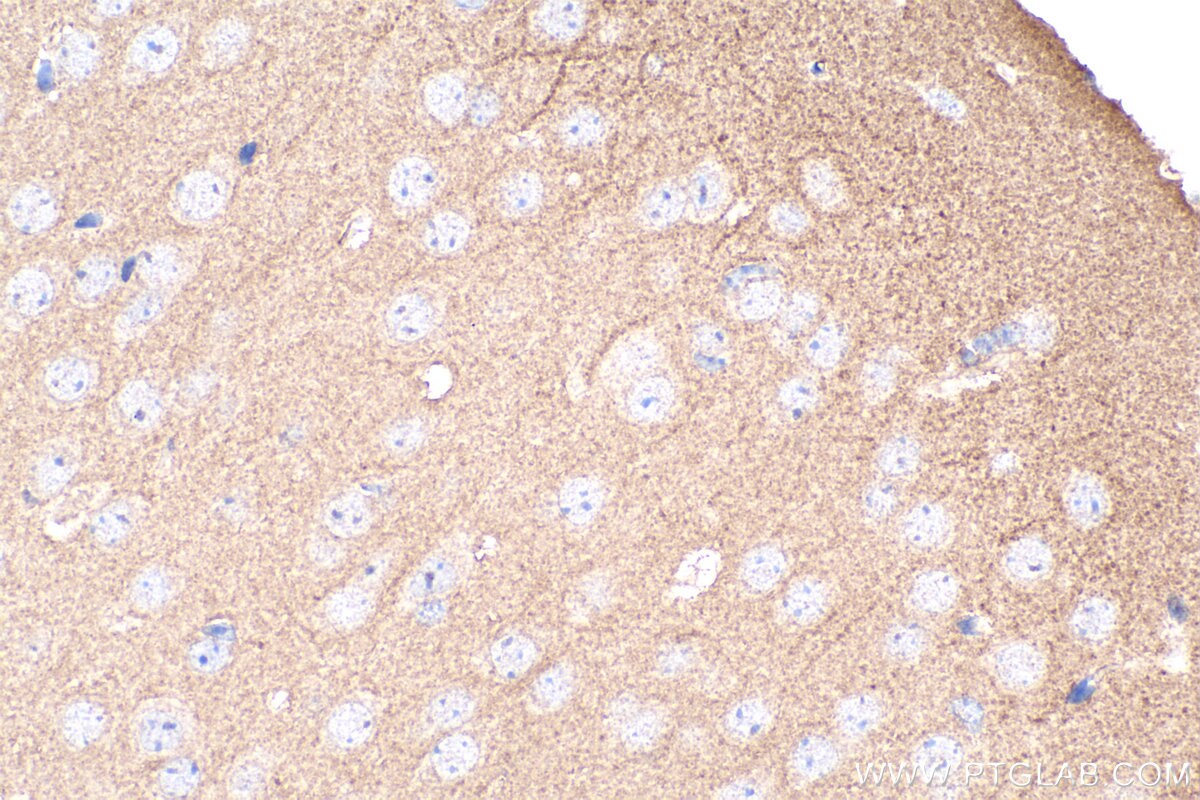
21875-1-PBS cible EphA4 dans les applications de WB, IHC, IF/ICC, IP, Indirect ELISA et montre une réactivité avec des échantillons Humain, rat, souris
| Réactivité | Humain, rat, souris |
| Hôte / Isotype | Lapin / IgG |
| Clonalité | Polyclonal |
| Type | Anticorps |
| Immunogène | EphA4 Protéine recombinante Ag16233 |
| Nom complet | EPH receptor A4 |
| Masse moléculaire calculée | 986 aa, 110 kDa |
| Poids moléculaire observé | 120 kDa |
| Numéro d’acquisition GenBank | BC026327 |
| Symbole du gène | EPHA4 |
| Identification du gène (NCBI) | 2043 |
| Conjugaison | Non conjugué |
| Forme | Liquide |
| Méthode de purification | Purification par affinité contre l'antigène |
| Tampon de stockage | PBS only |
| Conditions de stockage | Store at -80°C. 20ul contiennent 0,1% de BSA. |
Informations générales
EphA4 is a member of the Eph receptor tyrosine kinase family and has important functions in the developing and adult nervous system (PMID: 14697664). The Eph receptors comprise a large family of closely related transmembrane tyrosine kinases that actively signal when bound to their ephrin ligands. The Eph receptors are characterized by an extracellular region with a unique cysteine-rich motif extending over its amino-terminal half, followed by two fibronectin type III motifs (PMID: 9530499). They are divided into two sub-groups (EphA and EphB) based on the similarity of their extracellular domain sequences and their affinities for binding ephrin-A and ephrin-B ligands (PMID: 11114742). EphA4 is involved in commissure formation within the forebrain, axonal guidance in the corticospinal tract, regulation of the central pattern generator that provides normal locomotor function and axonal regeneration following spinal cord injury (PMID: 30061574). EphA4 has been implicated as a disease modifier of amyotrophic lateral sclerosis (ALS) (PMID: 22922411).


