- Phare
- Validé par KD/KO
Anticorps Polyclonal de lapin anti-FAT10
FAT10 Polyclonal Antibody for WB, IHC, Indirect ELISA
Hôte / Isotype
Lapin / IgG
Réactivité testée
Humain
Applications
WB, IHC, Indirect ELISA
Conjugaison
Non conjugué
N° de cat : 13003-2-PBS
Synonymes
Galerie de données de validation
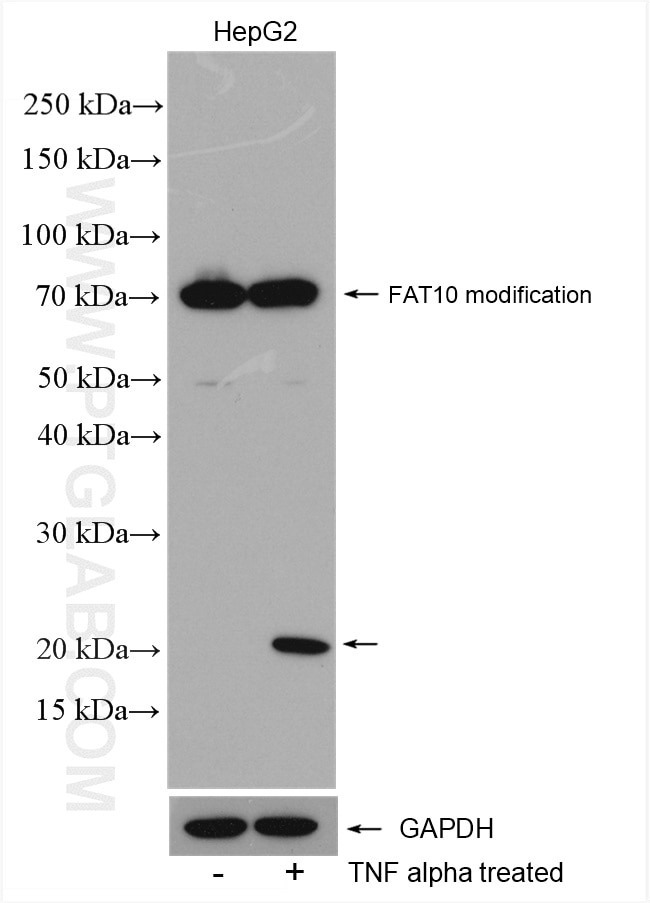
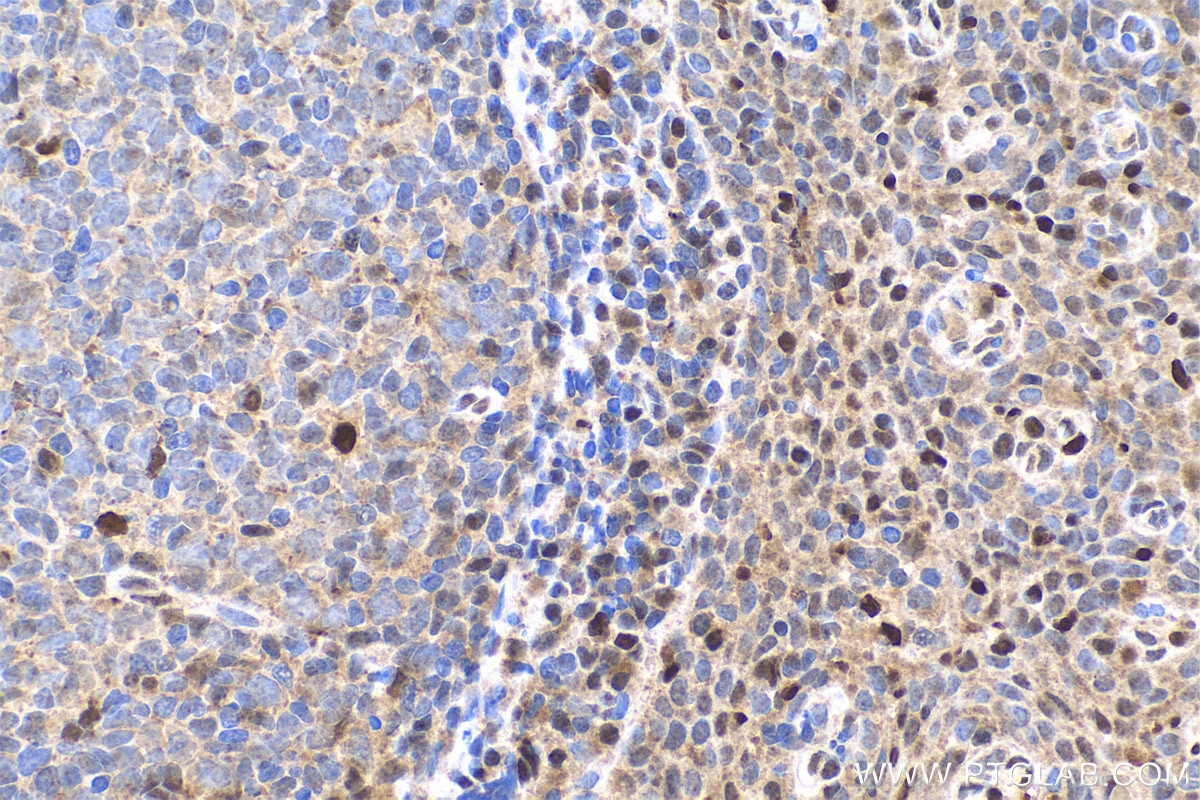
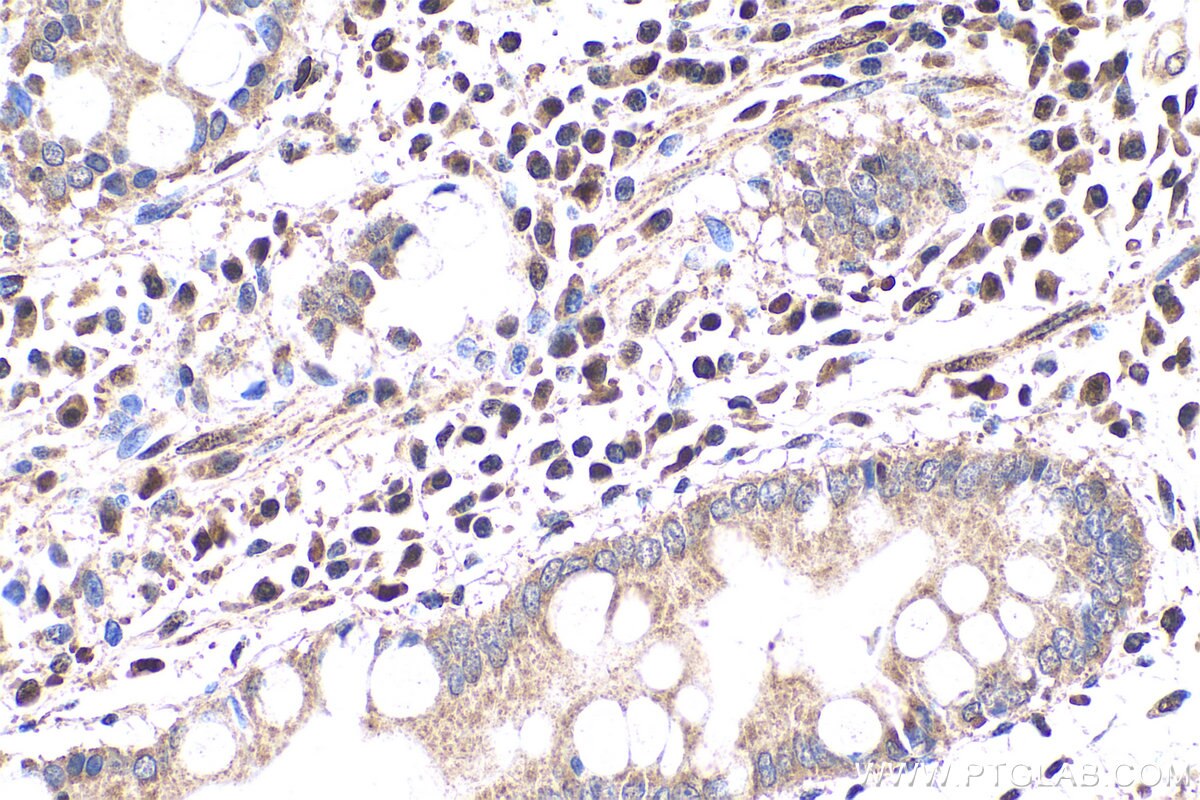
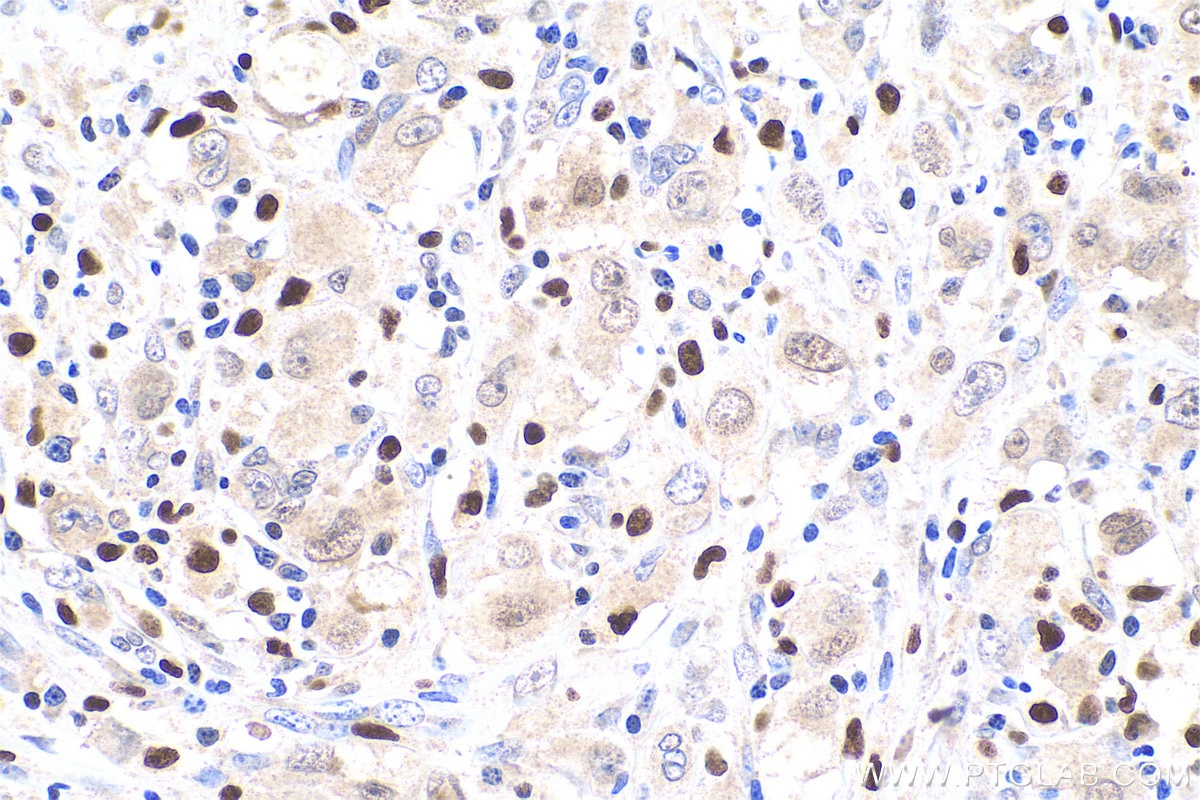
Informations sur le produit
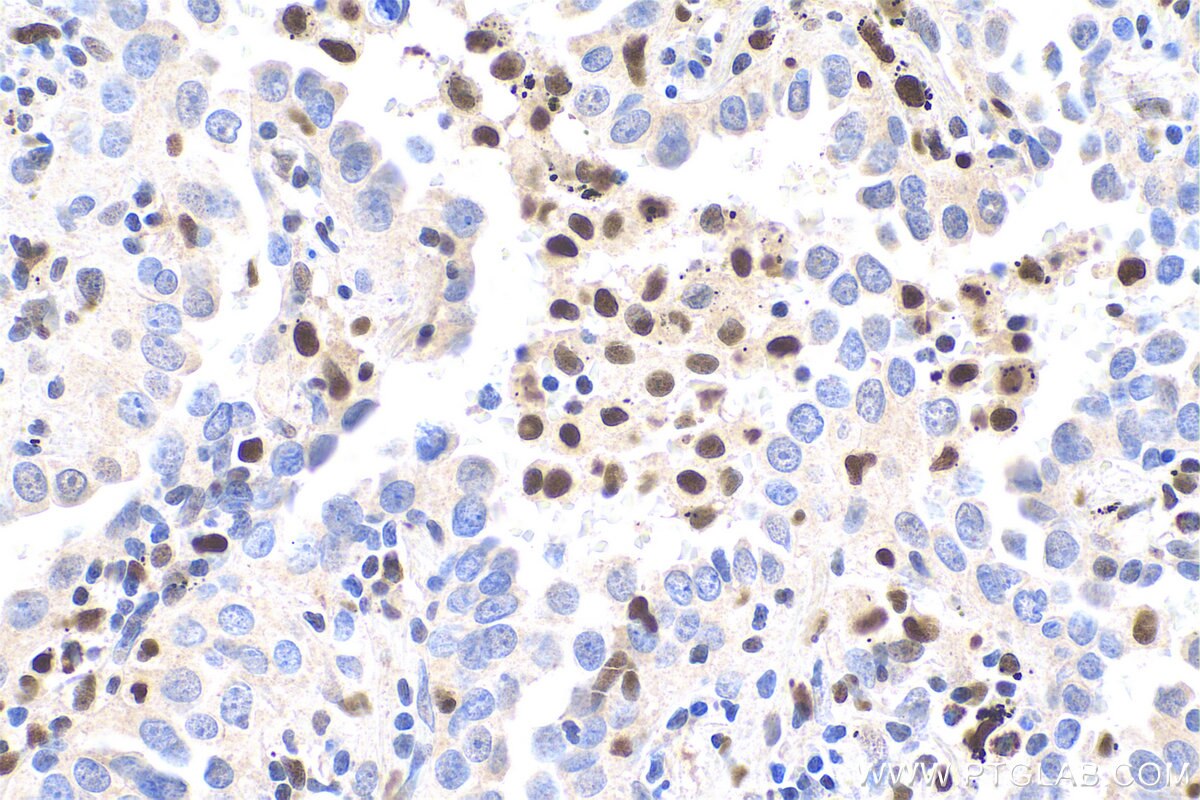
13003-2-PBS cible FAT10 dans les applications de WB, IHC, Indirect ELISA et montre une réactivité avec des échantillons Humain
| Réactivité | Humain |
| Hôte / Isotype | Lapin / IgG |
| Clonalité | Polyclonal |
| Type | Anticorps |
| Immunogène | FAT10 Protéine recombinante Ag3680 |
| Nom complet | ubiquitin D |
| Masse moléculaire calculée | 165 aa, 18 kDa |
| Poids moléculaire observé | 20 kDa, 70kDa |
| Numéro d’acquisition GenBank | BC012472 |
| Symbole du gène | FAT10 |
| Identification du gène (NCBI) | 10537 |
| Conjugaison | Non conjugué |
| Forme | Liquide |
| Méthode de purification | Purification par affinité contre l'antigène |
| Tampon de stockage | PBS only |
| Conditions de stockage | Store at -80°C. 20ul contiennent 0,1% de BSA. |
Informations générales
FAT10, also named UBD, contains two ubiquitin-like domains. It is a ubiquitin-like protein modifier that can be covalently attached to the target protein and subsequently leads to their degradation by the 26S proteasome, in a NUB1L-dependent manner. FAT10 also has important roles in cell mitosis, chromosome instability, apoptosis, and immune response. FAT10 mediates apoptosis in a caspase-dependent manner, especially in the renal epithelium and tubular cells during renal diseases such as polycystic kidney disease and Human immunodeficiency virus (HIV)-associated nephropathy (HIVAN). It promotes the expression of the proteasome subunit beta type-9 (PSMB9/LMP2). FAT10 regulates TNF-alpha-induced and LPS-mediated activation of the central mediator of innate immunity NF-kappa-B by promoting TNF-alpha-mediated proteasomal degradation of ubiquitinated-I-kappa-B-alpha. It may be involved in dendritic cell (DC) maturation, the process by which immature dendritic cells differentiate into fully competent antigen-presenting cells that initiate T-cell responses. FAT10 may be a marker for precancerous lesions and may promote cancer progression. This antibody is a rabbit polyclonal antibody raised against full-length FAT10 of human origin.


