Anticorps Polyclonal de lapin anti-FBXO21
FBXO21 Polyclonal Antibody for IF/ICC, IP, Indirect ELISA
Hôte / Isotype
Lapin / IgG
Réactivité testée
Humain, rat
Applications
IF/ICC, IP, Indirect ELISA
Conjugaison
Non conjugué
N° de cat : 17648-1-PBS
Synonymes
Galerie de données de validation
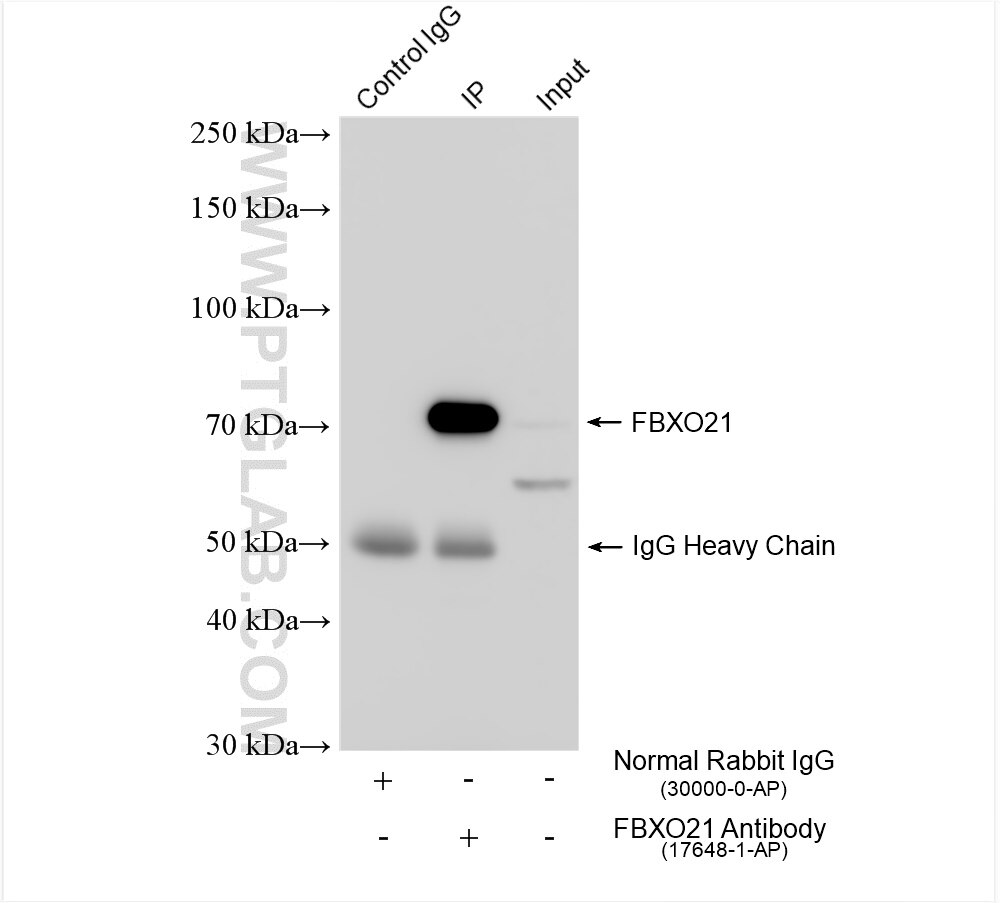
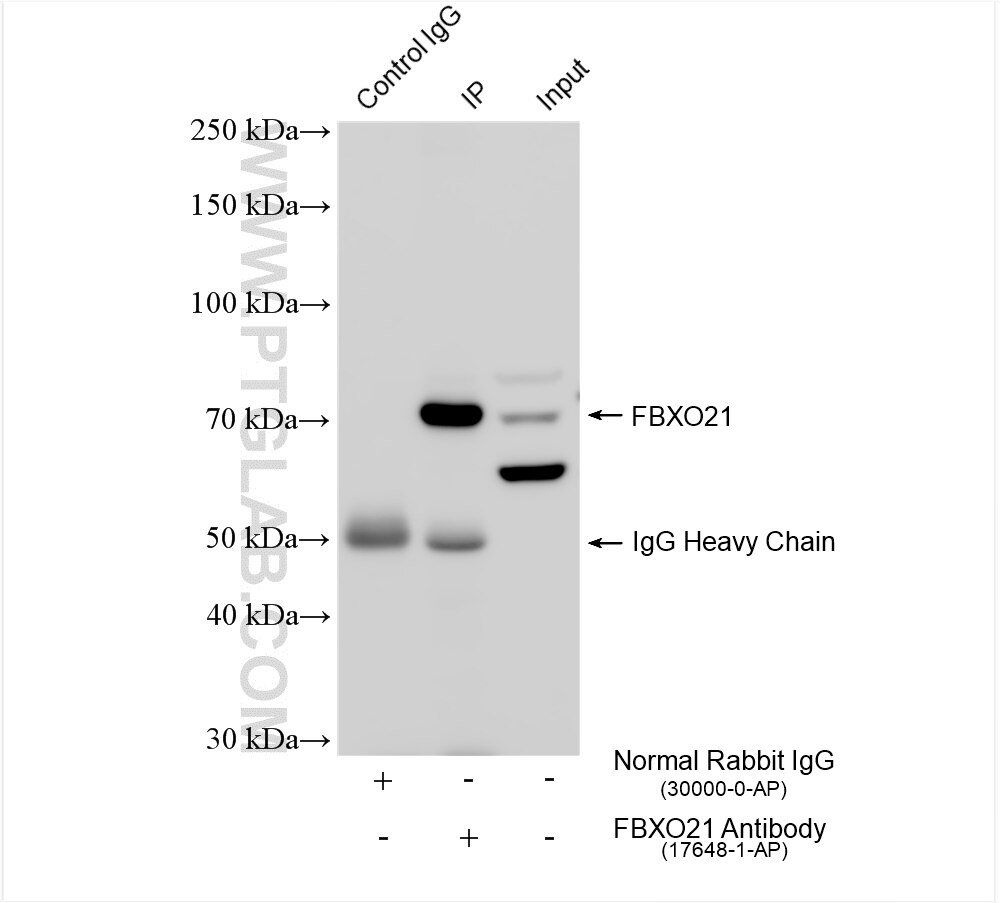
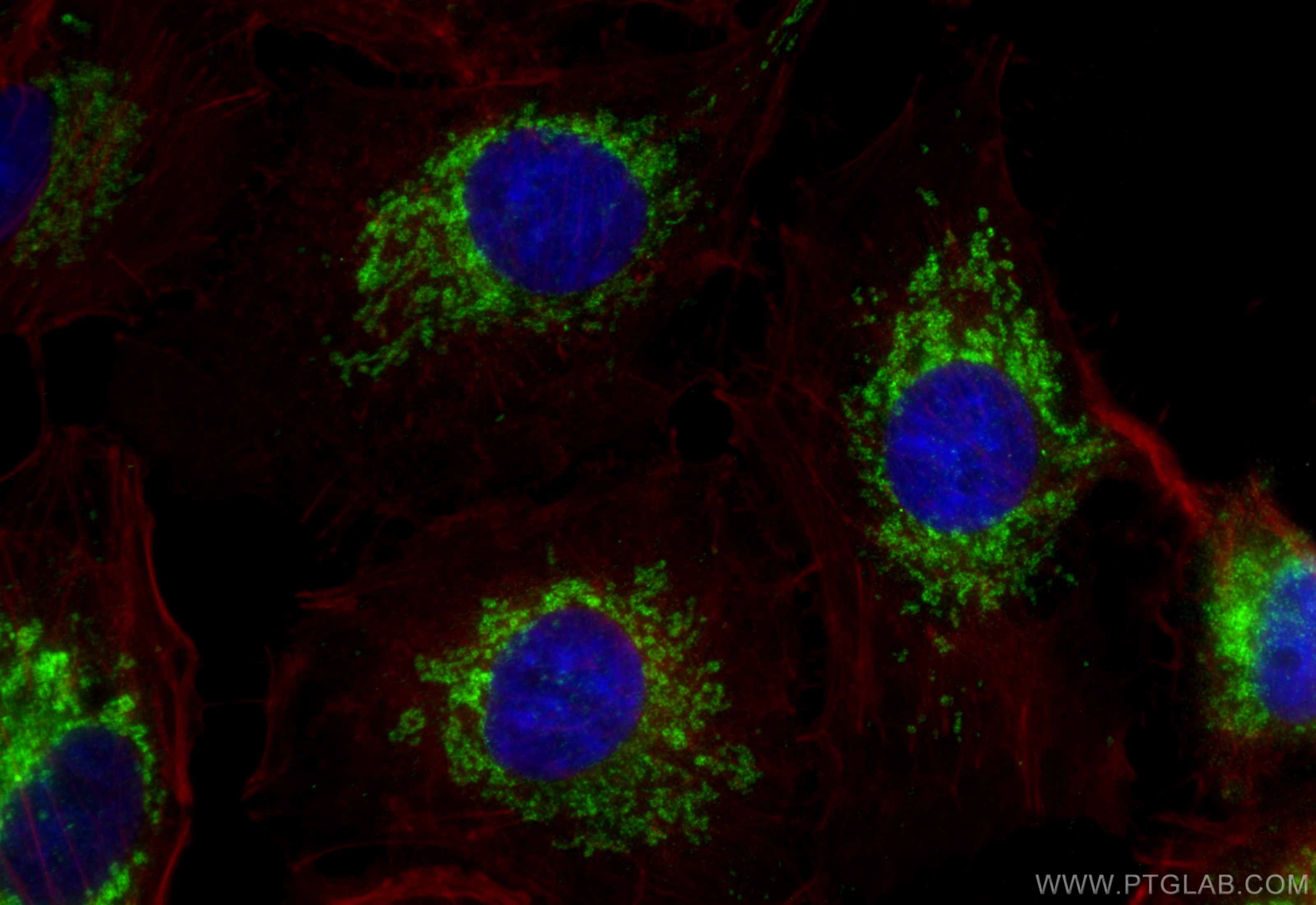
Informations sur le produit
17648-1-PBS cible FBXO21 dans les applications de IF/ICC, IP, Indirect ELISA et montre une réactivité avec des échantillons Humain, rat
| Réactivité | Humain, rat |
| Hôte / Isotype | Lapin / IgG |
| Clonalité | Polyclonal |
| Type | Anticorps |
| Immunogène | FBXO21 Protéine recombinante Ag11882 |
| Nom complet | F-box protein 21 |
| Masse moléculaire calculée | 537 aa, 63 kDa |
| Poids moléculaire observé | 75 kDa |
| Numéro d’acquisition GenBank | BC034045 |
| Symbole du gène | FBXO21 |
| Identification du gène (NCBI) | 23014 |
| Conjugaison | Non conjugué |
| Forme | Liquide |
| Méthode de purification | Purification par affinité contre l'antigène |
| Tampon de stockage | PBS only |
| Conditions de stockage | Store at -80°C. 20ul contiennent 0,1% de BSA. |
Informations générales
FBXO21 (F-box protein 21) is a member of the F-box protein family and serves as the substrate recognition component of the SCF (Skp1-Cullin-F-box) E3 ubiquitin ligase complex. In AML cells, FBXO21 can ubiquitinate p85α, a regulatory subunit of the PI3K pathway, leading to its degradation. This reduces PI3K signaling, promotes p85α dimerization, and activates ERK, thereby influencing cell proliferation and survival. Silencing FBXO21 in AML cells induces differentiation, inhibits tumor progression, and increases sensitivity to chemotherapeutic agents. FBXO21 can regulate immune responses by ubiquitinating and degrading proteins like ASK1 through pro-inflammatory cytokine pathways. It can also ubiquitinate p85α, affecting CXCL10 expression and modulating immune cell infiltration and anti-tumor activity. In renal cell carcinoma, overexpression of FBXO21 significantly suppresses ccRCC cell proliferation and metastasis both in vitro and in vivo. It may be related to the stromal score and the infiltration levels of immune cells associated with prognosis. Additionally, FBXO21 overexpression increases the expression of key molecules in the CREB pathway.


