- Phare
- Validé par KD/KO
Anticorps Polyclonal de lapin anti-FGFR4
FGFR4 Polyclonal Antibody for WB, IHC, IF/ICC, Indirect ELISA
Hôte / Isotype
Lapin / IgG
Réactivité testée
Humain
Applications
WB, IHC, IF/ICC, Indirect ELISA
Conjugaison
Non conjugué
N° de cat : 11098-1-PBS
Synonymes
Galerie de données de validation
Informations sur le produit
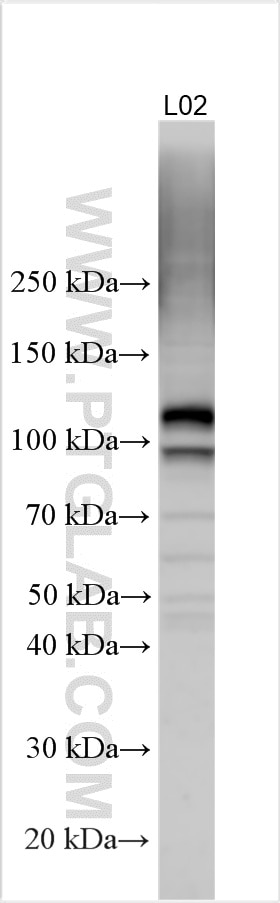
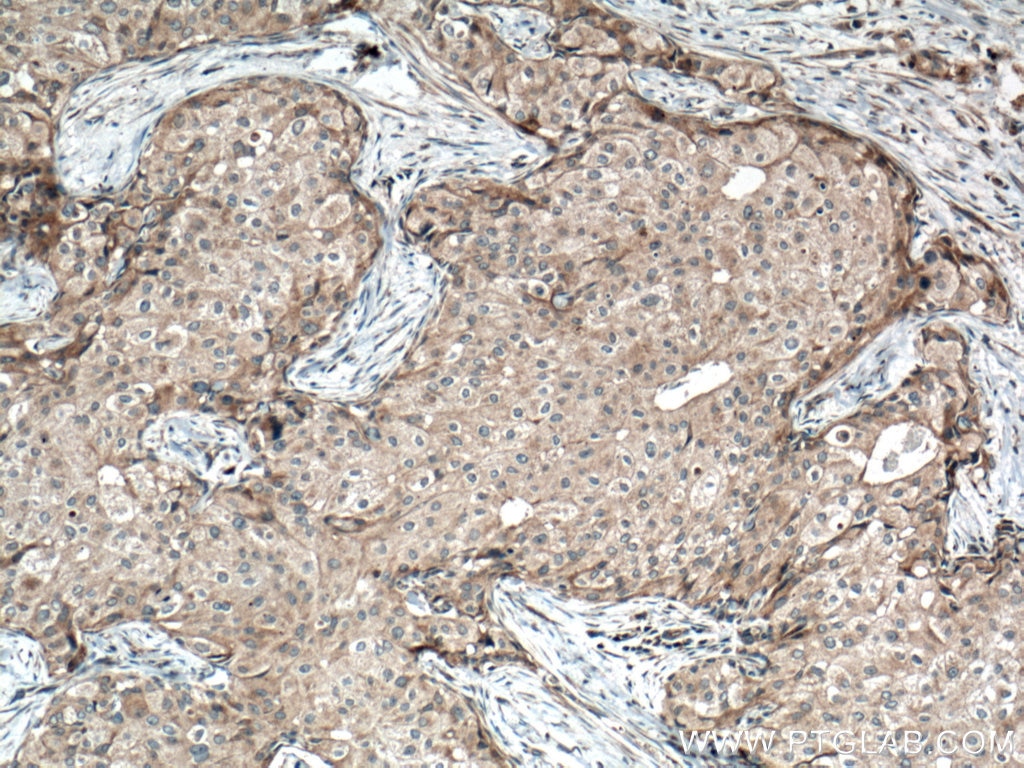
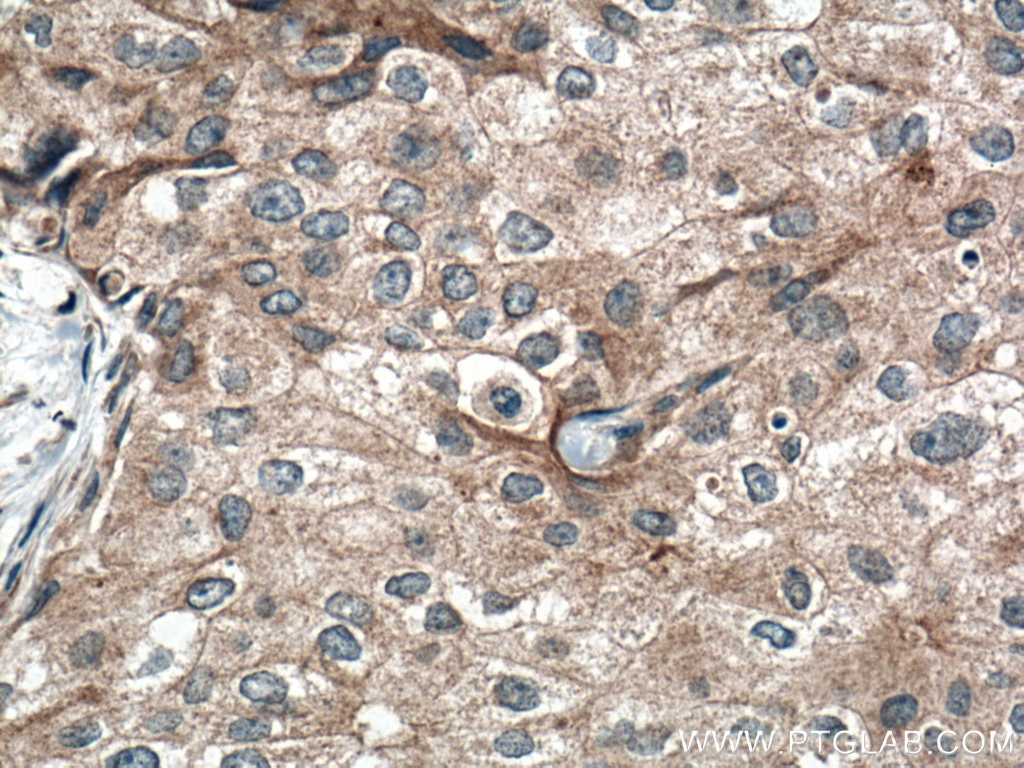
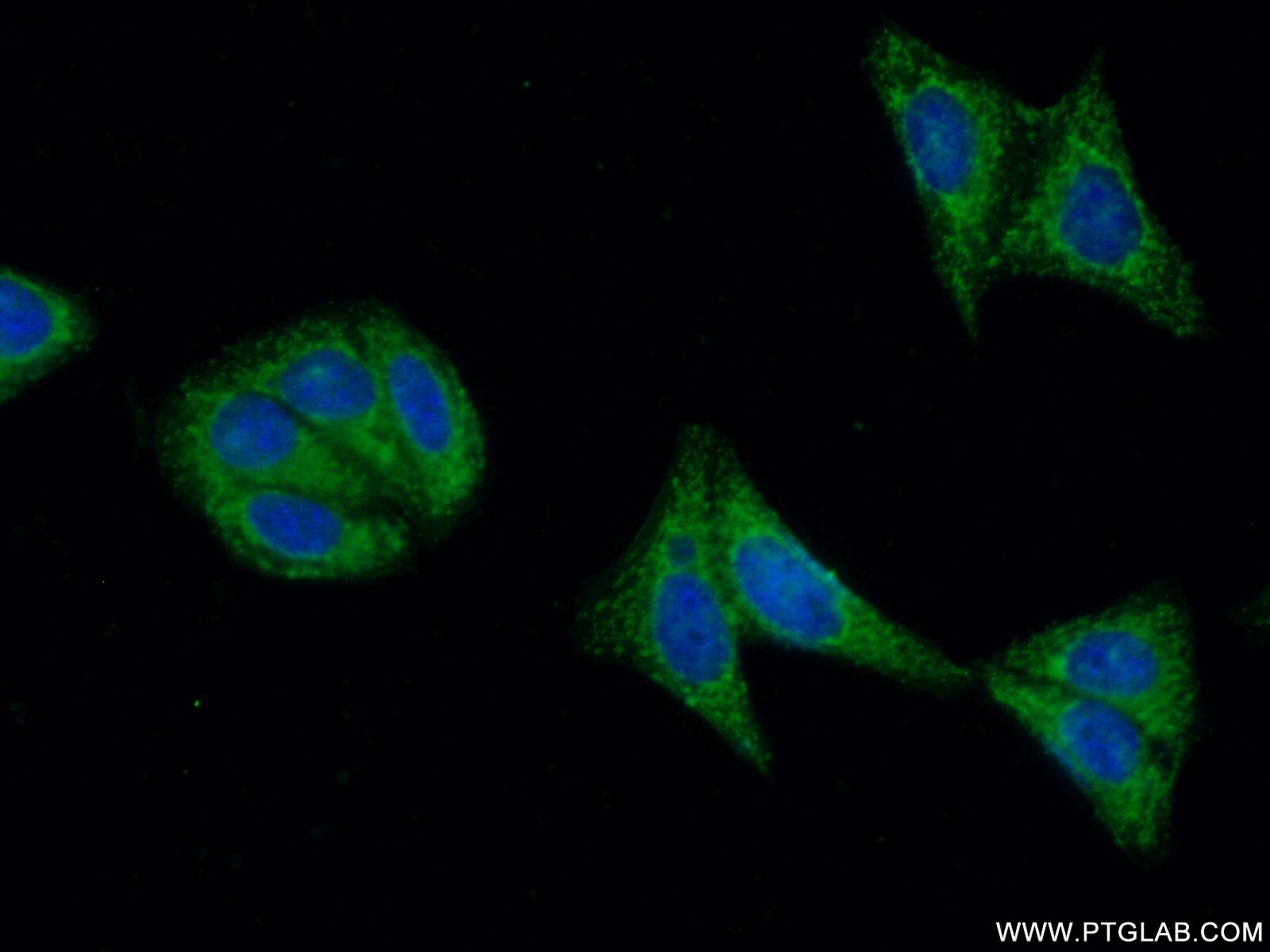
11098-1-PBS cible FGFR4 dans les applications de WB, IHC, IF/ICC, Indirect ELISA et montre une réactivité avec des échantillons Humain
| Réactivité | Humain |
| Hôte / Isotype | Lapin / IgG |
| Clonalité | Polyclonal |
| Type | Anticorps |
| Immunogène | FGFR4 Protéine recombinante Ag1573 |
| Nom complet | fibroblast growth factor receptor 4 |
| Masse moléculaire calculée | 88 kDa |
| Poids moléculaire observé | 95, 100-110 kDa |
| Numéro d’acquisition GenBank | BC011847 |
| Symbole du gène | FGFR4 |
| Identification du gène (NCBI) | 2264 |
| Conjugaison | Non conjugué |
| Forme | Liquide |
| Méthode de purification | Purification par affinité contre l'antigène |
| Tampon de stockage | PBS only |
| Conditions de stockage | Store at -80°C. 20ul contiennent 0,1% de BSA. |
Informations générales
Fibroblast growth factor receptor 4 (FGFR4) is a member of a highly conserved tyrosine kinase family, along with FGFR1-3. This family consists of an intracellular tyrosine kinase domain, a single transmembrane domain, and extracellular ligand-binding domains (PMID: 32492514). FGFR4 is the predominant FGFR isoform present in human hepatocytes. FGFR4 has been proposed to play a role in the observed induction of hepatocyte proliferation and carcinogenesis by FGF19; however, contradicting evidence proposing a protective role for FGFR4 in suppressing hepatoma progression has also been proposed(PMID: 20018895). While the role of FGFR4 in cancer remains to be fully elucidated, several findings suggest that this receptor may be an important player in Hepatocellular carcinoma (HCC) development and/or progression(PMID: 10336501).


