Anticorps Polyclonal de lapin anti-GFM1
GFM1 Polyclonal Antibody for WB, IHC, IF/ICC, IP, Indirect ELISA
Hôte / Isotype
Lapin / IgG
Réactivité testée
Humain, rat, souris
Applications
WB, IHC, IF/ICC, IP, Indirect ELISA
Conjugaison
Non conjugué
N° de cat : 14274-1-PBS
Synonymes
Galerie de données de validation
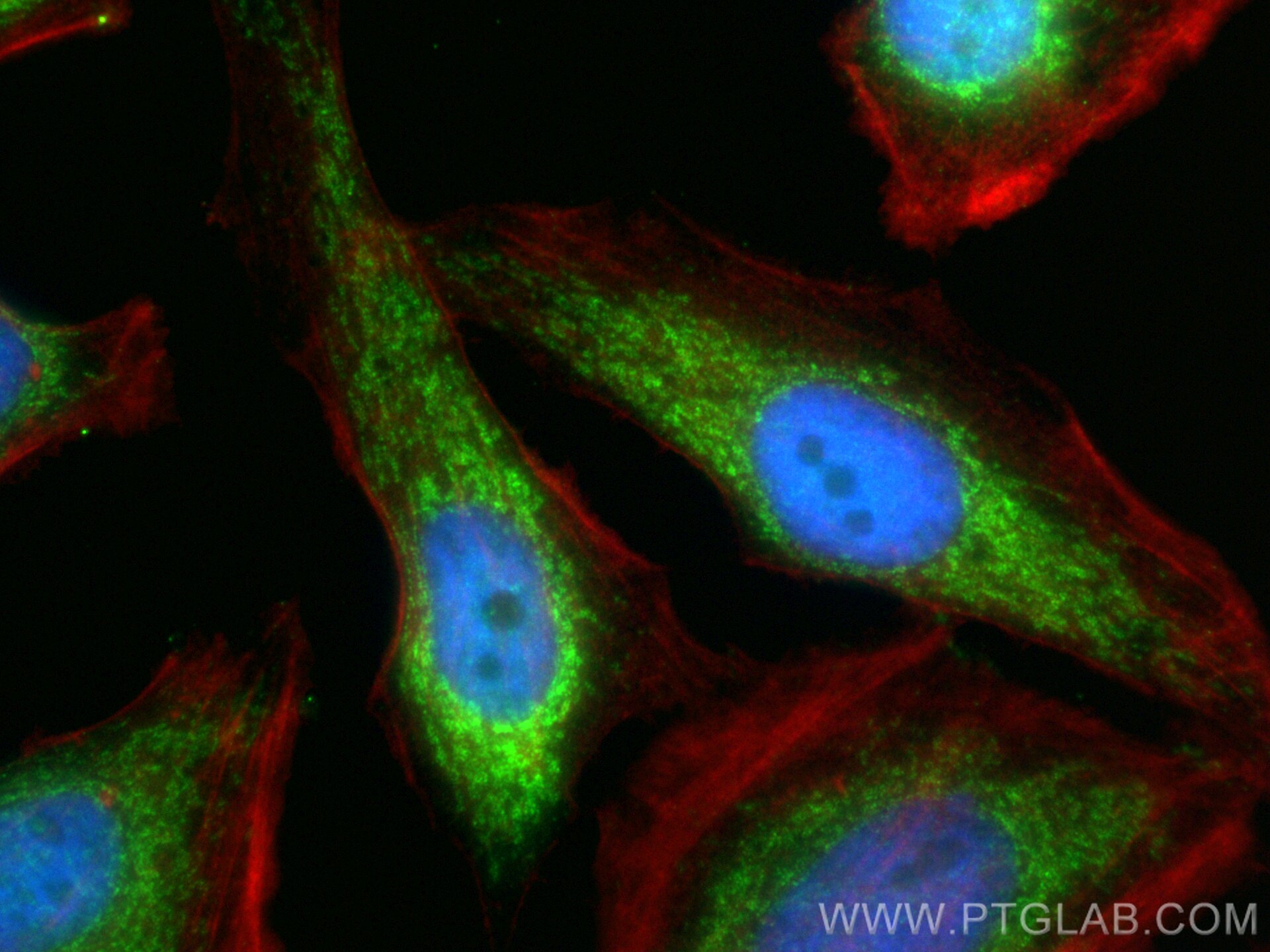
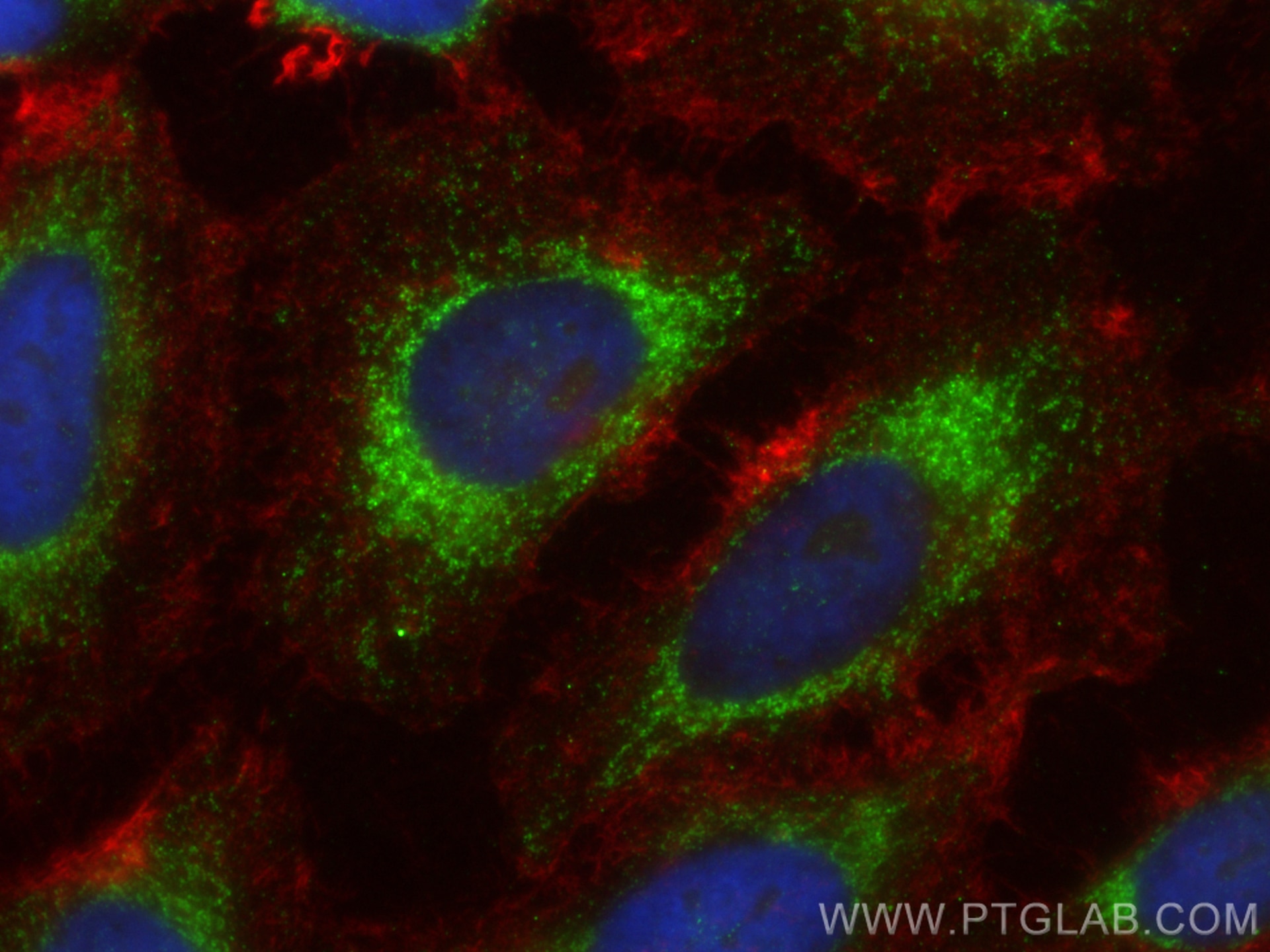
Informations sur le produit
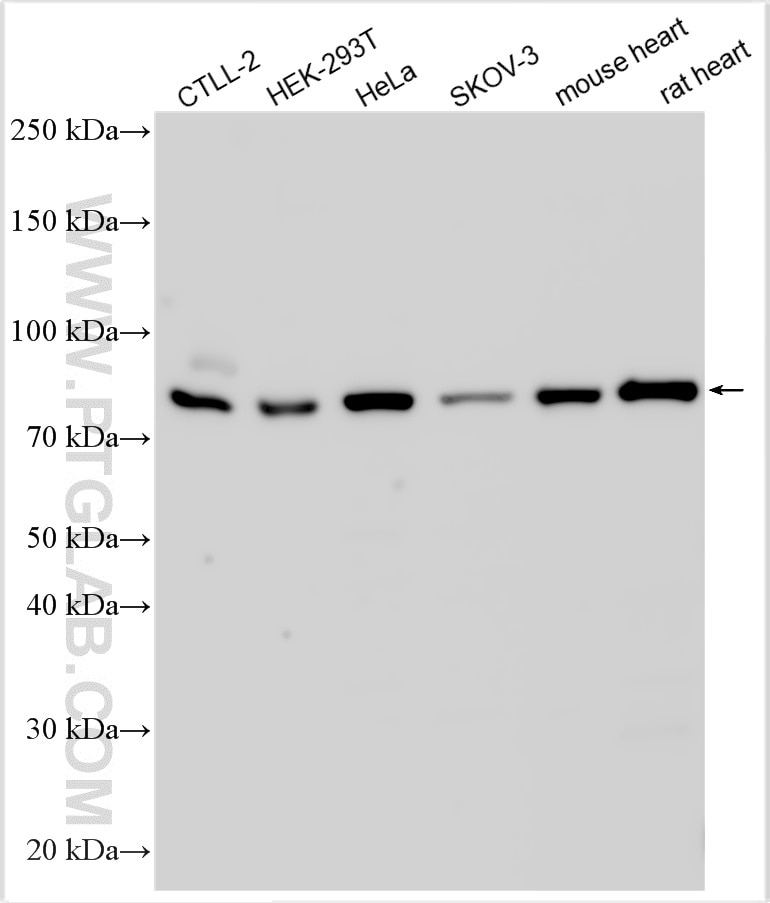
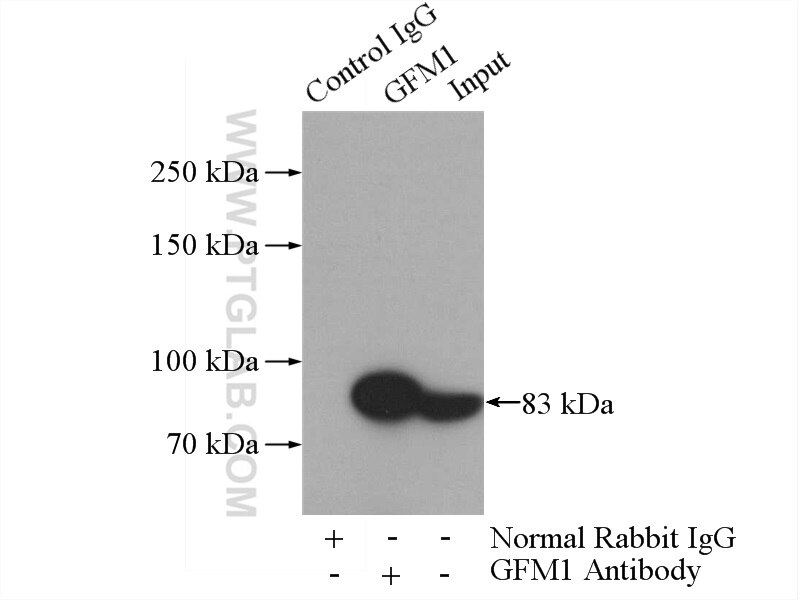
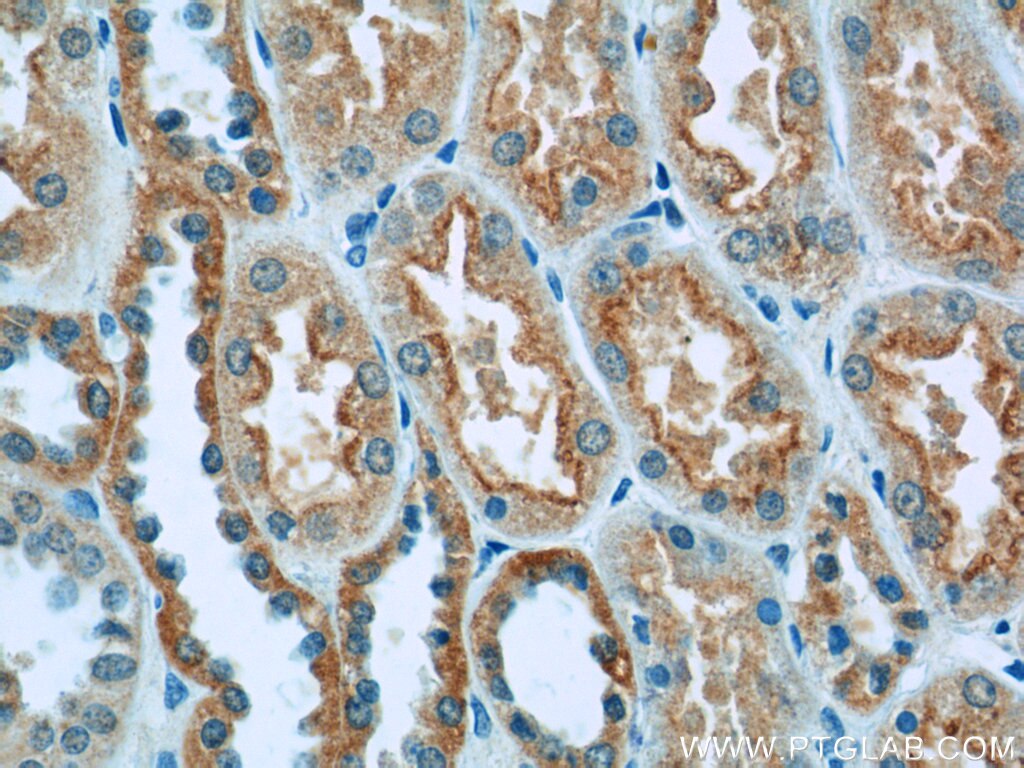
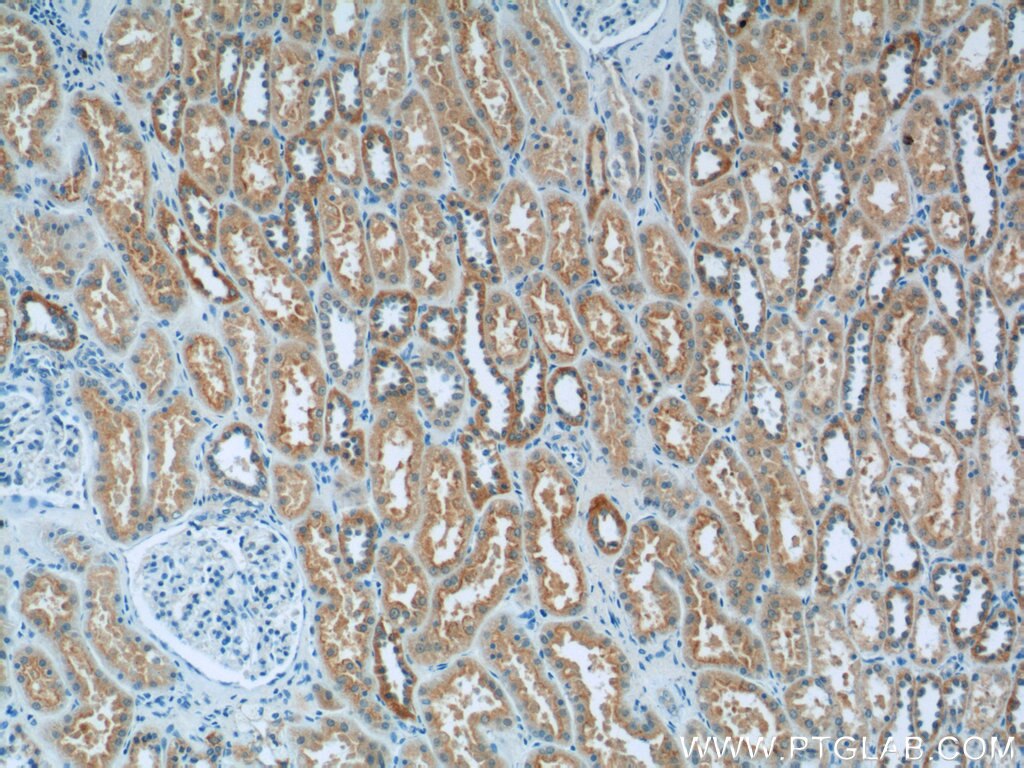
14274-1-PBS cible GFM1 dans les applications de WB, IHC, IF/ICC, IP, Indirect ELISA et montre une réactivité avec des échantillons Humain, rat, souris
| Réactivité | Humain, rat, souris |
| Hôte / Isotype | Lapin / IgG |
| Clonalité | Polyclonal |
| Type | Anticorps |
| Immunogène | GFM1 Protéine recombinante Ag5616 |
| Nom complet | G elongation factor, mitochondrial 1 |
| Masse moléculaire calculée | 86 kDa |
| Poids moléculaire observé | 85 kDa |
| Numéro d’acquisition GenBank | BC049210 |
| Symbole du gène | GFM1 |
| Identification du gène (NCBI) | 85476 |
| Conjugaison | Non conjugué |
| Forme | Liquide |
| Méthode de purification | Purification par affinité contre l'antigène |
| Tampon de stockage | PBS only |
| Conditions de stockage | Store at -80°C. 20ul contiennent 0,1% de BSA. |
Informations générales
Different factors catalyze the three stages of protein translation: initiation, elongation, and termination. There are two translational systems in eukaryotes, one in the cytoplasm and the other in the mitochondria. In mitochondria, the elongation phase requires three elongation factors (EF): Tu (TUFM), Ts (TSFM), and G (GFM1)[PMID:19716793]. GFM1 catalyzes translocation during peptide elongation and mediates ribosomal disassembly during ribosome recycling in concert with the ribosomal recycling factor (RRF). [PMID:16487710]


