Anticorps Monoclonal anti-HMGB1
HMGB1 Monoclonal Antibody for WB, Indirect ELISA
Hôte / Isotype
Mouse / IgG1
Réactivité testée
Humain, souris
Applications
WB, Indirect ELISA
Conjugaison
Non conjugué
CloneNo.
1D12A6
N° de cat : 66525-1-PBS
Synonymes
Galerie de données de validation
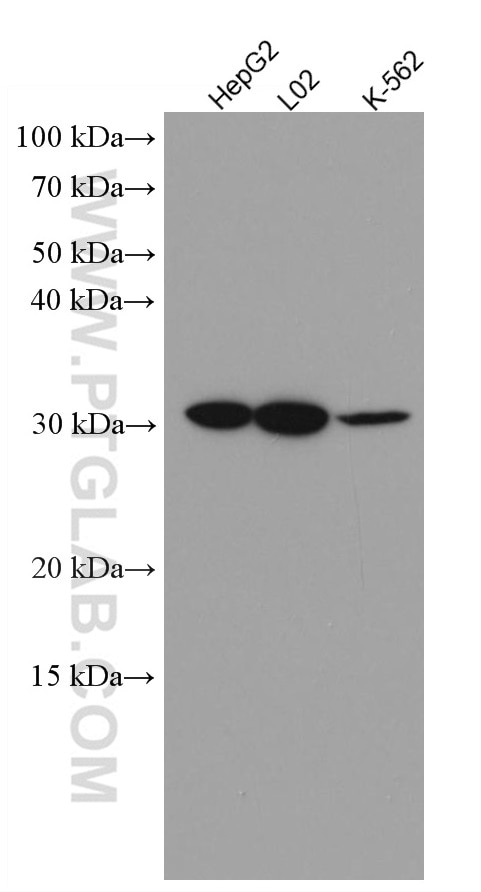
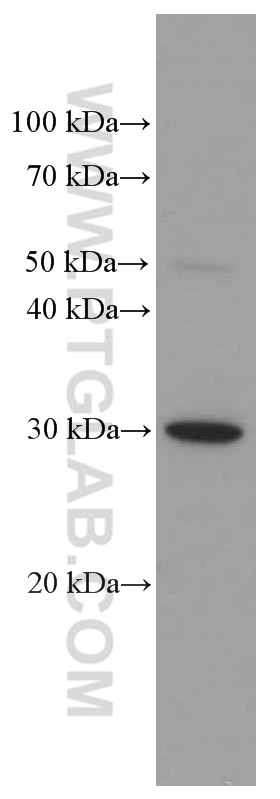
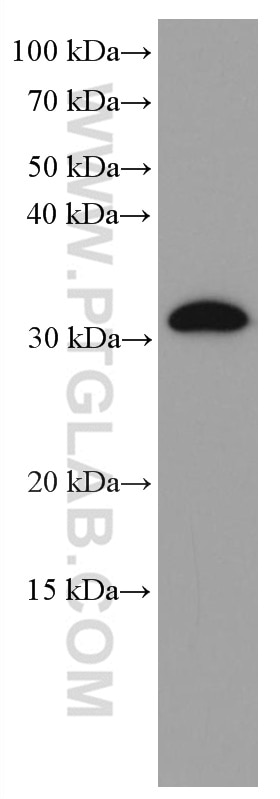
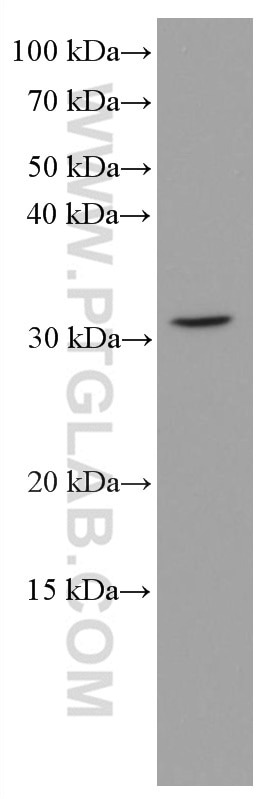
Informations sur le produit
66525-1-PBS cible HMGB1 dans les applications de WB, Indirect ELISA et montre une réactivité avec des échantillons Humain, souris
| Réactivité | Humain, souris |
| Hôte / Isotype | Mouse / IgG1 |
| Clonalité | Monoclonal |
| Type | Anticorps |
| Immunogène | HMGB1 Protéine recombinante Ag1264 |
| Nom complet | high-mobility group box 1 |
| Masse moléculaire calculée | 25 kDa |
| Poids moléculaire observé | 30 kDa |
| Numéro d’acquisition GenBank | BC003378 |
| Symbole du gène | HMGB1 |
| Identification du gène (NCBI) | 3146 |
| Conjugaison | Non conjugué |
| Forme | Liquide |
| Méthode de purification | Purification par protéine G |
| Tampon de stockage | PBS only |
| Conditions de stockage | Store at -80°C. 20ul contiennent 0,1% de BSA. |
Informations générales
The HMG (high mobility group) proteins are nonhistone chromosomal proteins that is present in almost all eukaryotic cells, and it functions to stabilize NUCLEOSOME formation and acts as a transcription-factor-like protein that regulates the expression of several genes[PMID: 18160415]. Once injury, infection or other inflammatory stimuli, activated macrophages, mature dendritic cells and natural killer cells can secret HMGB1, which act as a crucial cytokine[PMID: 20163887]. HMGB1 also involved in V(D)J recombination by acting as a cofactor of the RAG complex, stimulating cleavage and RAG protein binding at the 23 bp spacer of conserved recombination signal sequences (RSS)[PMID: 19360789 ]. Act as a Heparin-binding protein that has a role in the extension of neurite-type cytoplasmic processes in developing cells. HMGB1 (high mobility group box 1) modulates gene expression in the nucleus, but certain immune cells secrete HMGB1 as an extracellular Alarmin to signal tissue damage.The nuclear HMGB1 relocalizes to the extracellular milieu in senescent human and mouse cells in culture and in vivo, which stimulated cytokine secretion through TLR-4 signaling (23649808).This antibody is raised against full length HMGB1 of human origin. The monomeric HMGB1 is 29 kDa and dimer is 58 kDa.


