Anticorps Monoclonal anti-HMMR
HMMR Monoclonal Antibody for WB, IF/ICC, Indirect ELISA
Hôte / Isotype
Mouse / IgG1
Réactivité testée
Humain
Applications
WB, IF/ICC, Indirect ELISA
Conjugaison
Non conjugué
CloneNo.
1C6B5
N° de cat : 68718-1-PBS
Synonymes
Galerie de données de validation
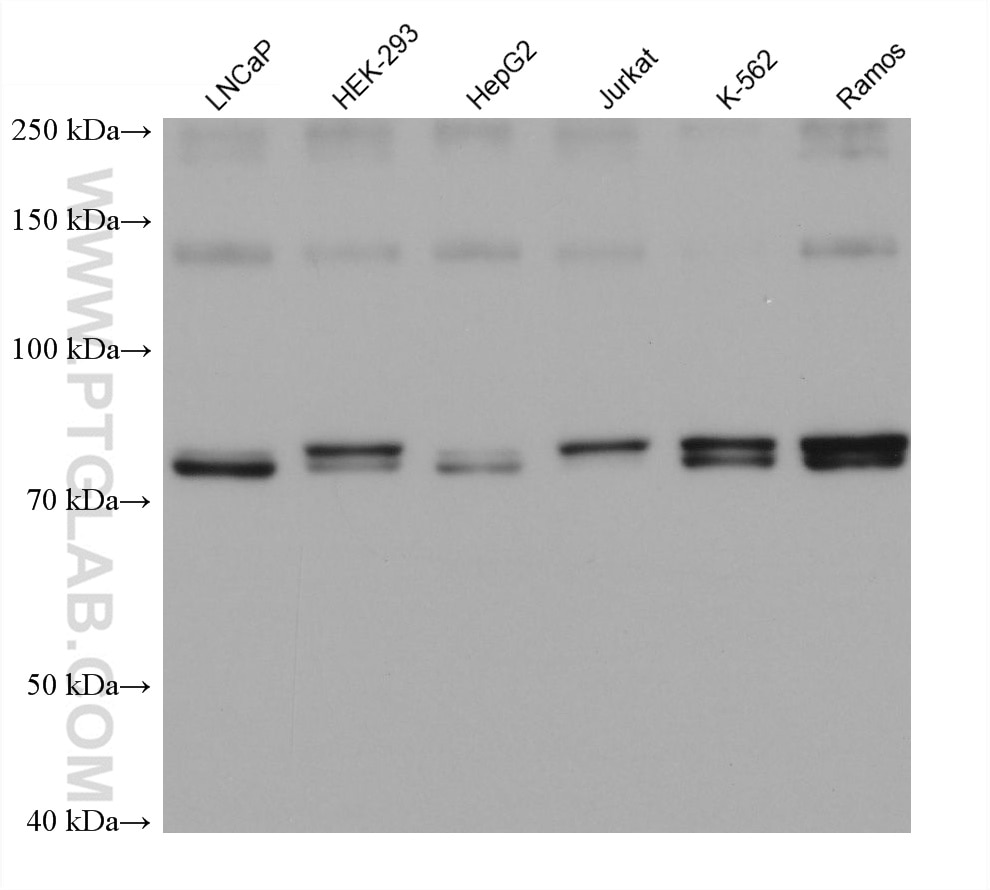
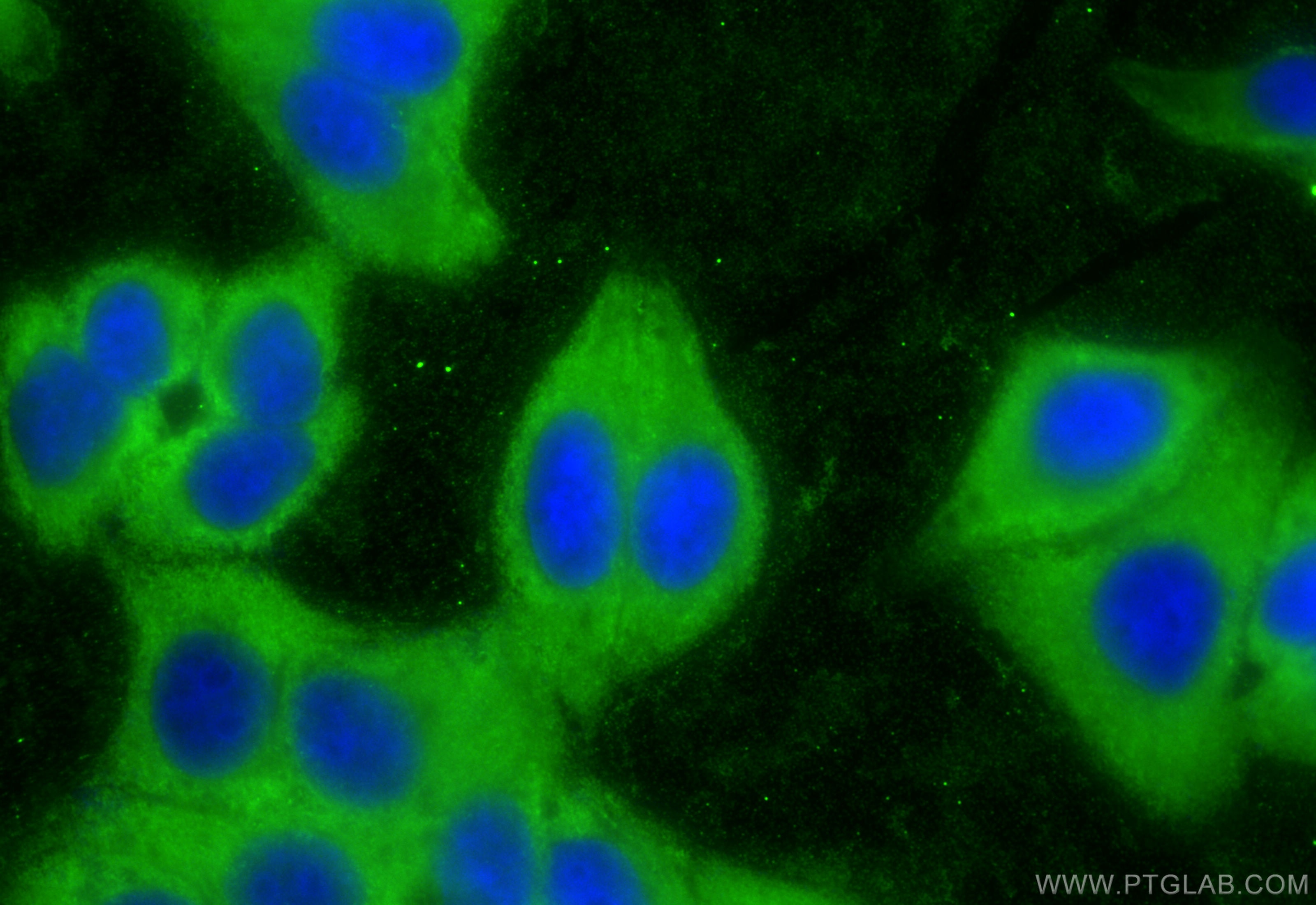
Informations sur le produit
68718-1-PBS cible HMMR dans les applications de WB, IF/ICC, Indirect ELISA et montre une réactivité avec des échantillons Humain
| Réactivité | Humain |
| Hôte / Isotype | Mouse / IgG1 |
| Clonalité | Monoclonal |
| Type | Anticorps |
| Immunogène | HMMR Protéine recombinante Ag33723 |
| Nom complet | hyaluronan-mediated motility receptor (RHAMM) |
| Masse moléculaire calculée | 84 kDa |
| Poids moléculaire observé | 84 kDa |
| Numéro d’acquisition GenBank | NM_012484 |
| Symbole du gène | HMMR |
| Identification du gène (NCBI) | 3161 |
| Conjugaison | Non conjugué |
| Forme | Liquide |
| Méthode de purification | Purification par protéine G |
| Tampon de stockage | PBS only |
| Conditions de stockage | Store at -80°C. 20ul contiennent 0,1% de BSA. |
Informations générales
Hyaluronan-mediated motility receptor (HMMR), also termed CD168, was first described by Turley in murine cells . It is reported that HMMR has an extensive coiled-coil structure (CC) that contains multiple sites for interactive partners. Initially, HMMR was considered a novel hyaluronan-mediated motility receptor and a microtubule-associated spindle assembly factor. Full-length human RHAMM is an 85 kDa coiled-coil protein that occurs both in intracellular and extracellular compartments. It has highly restricted and tightly regulated expression in most normal tissues, but is one of a number of oncogenic proteins that are exported to the cell surface in response to tissue stress by unconventional transport mechanisms. (PMID: 36750558, PMID: 30249497)


