Anticorps Polyclonal de lapin anti-HTRA1
HTRA1 Polyclonal Antibody for WB, IHC, IF/ICC, IP, Indirect ELISA
Hôte / Isotype
Lapin / IgG
Réactivité testée
Humain
Applications
WB, IHC, IF/ICC, IP, Indirect ELISA
Conjugaison
Non conjugué
N° de cat : 29618-1-PBS
Synonymes
Galerie de données de validation
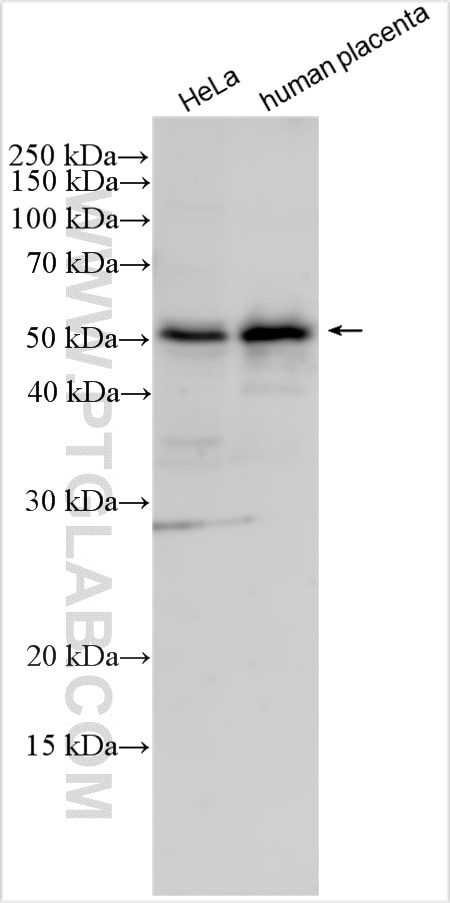
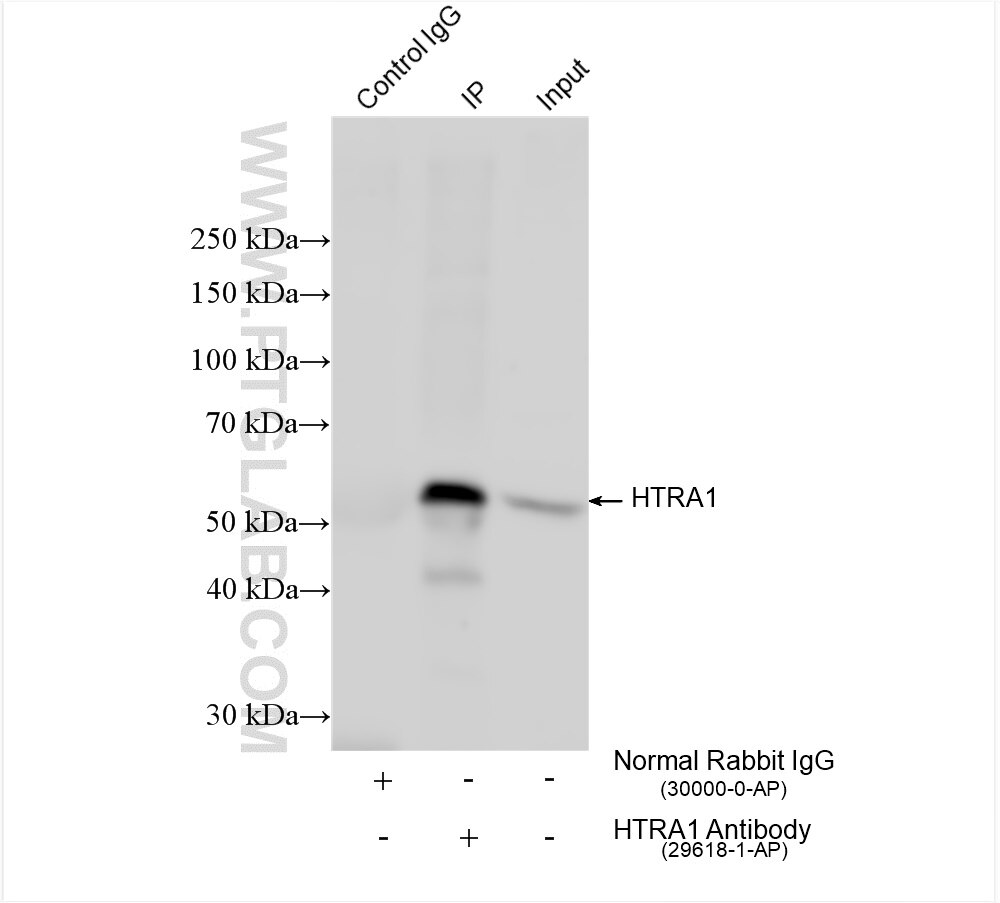
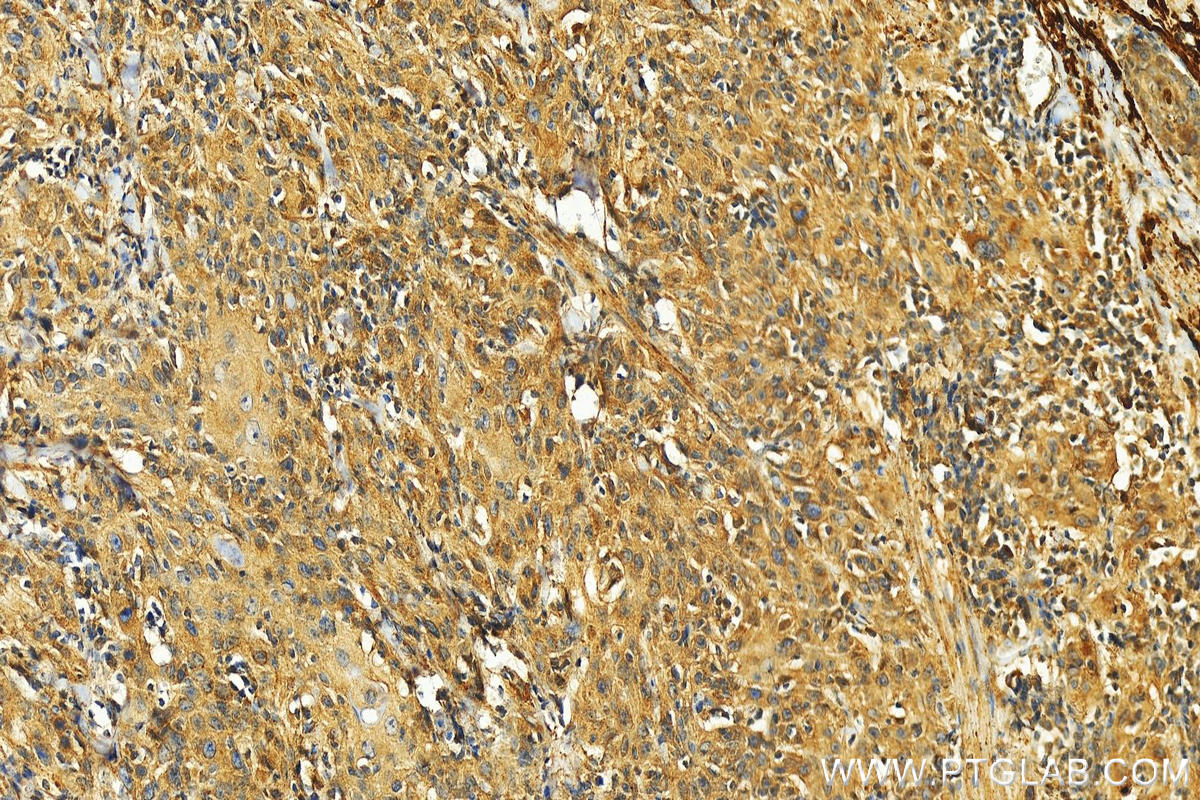
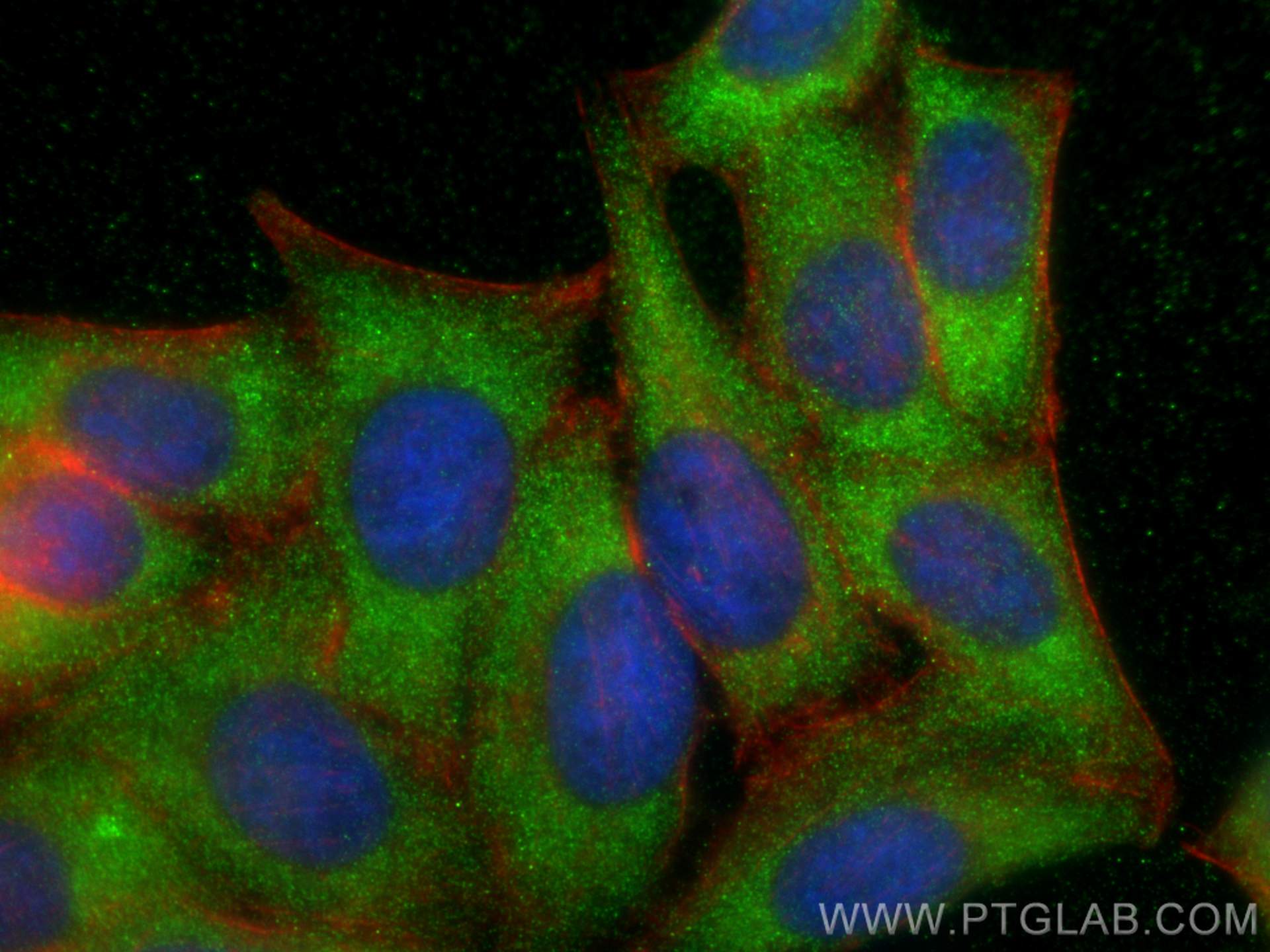
Informations sur le produit
29618-1-PBS cible HTRA1 dans les applications de WB, IHC, IF/ICC, IP, Indirect ELISA et montre une réactivité avec des échantillons Humain
| Réactivité | Humain |
| Hôte / Isotype | Lapin / IgG |
| Clonalité | Polyclonal |
| Type | Anticorps |
| Immunogène | HTRA1 Protéine recombinante Ag31194 |
| Nom complet | HtrA serine peptidase 1 |
| Masse moléculaire calculée | 51 kDa |
| Poids moléculaire observé | 51 kDa |
| Numéro d’acquisition GenBank | NM_002775 |
| Symbole du gène | HTRA1 |
| Identification du gène (NCBI) | 5654 |
| Conjugaison | Non conjugué |
| Forme | Liquide |
| Méthode de purification | Purification par affinité contre l'antigène |
| Tampon de stockage | PBS only |
| Conditions de stockage | Store at -80°C. 20ul contiennent 0,1% de BSA. |
Informations générales
HTRA1, also named as HTRA, PRSS11 and L56, belongs to the peptidase S1B family. It is a protease that regulates the availability of nsulin-like growth factors (IGFs) by cleaving IGF-binding proteins. HTRA1 represses signaling by TGF-beta family members. Variations in the promoter region of HTRA1 are the cause of susceptibility to age-related macular degeneration type 7 (ARMD7). Defects in HTRA1 are the cause of cerebral autosomal recessive arteriopathy with subcortical infarcts and leukoencephalopathy (CARASIL). The 51 kDa HTRA1 was found at varying levels in the majority samples tested, whereas the 42 kDa form of HTRA1 was identified in degenerated intervertebral disc protein samples(PMID:22556410). The short truncated monomer 37 kDa and dimer 74 kDa are proved (PMID:25329061). The antibody is specific to HTRA1.


