Anticorps Polyclonal de lapin anti-HYAL1
HYAL1 Polyclonal Antibody for WB, IHC, Indirect ELISA
Hôte / Isotype
Lapin / IgG
Réactivité testée
Humain, souris
Applications
WB, IHC, Indirect ELISA
Conjugaison
Non conjugué
N° de cat : 25179-1-PBS
Synonymes
Galerie de données de validation
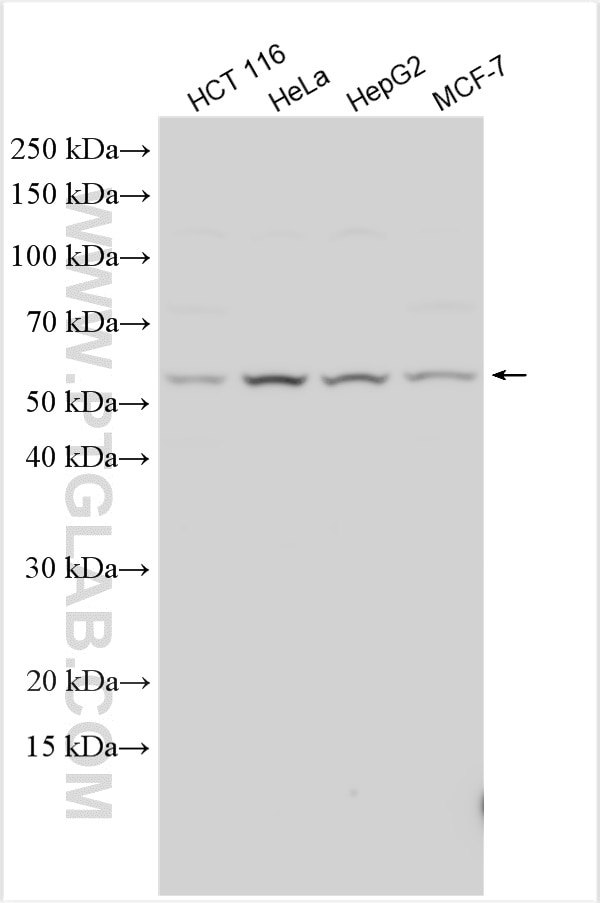
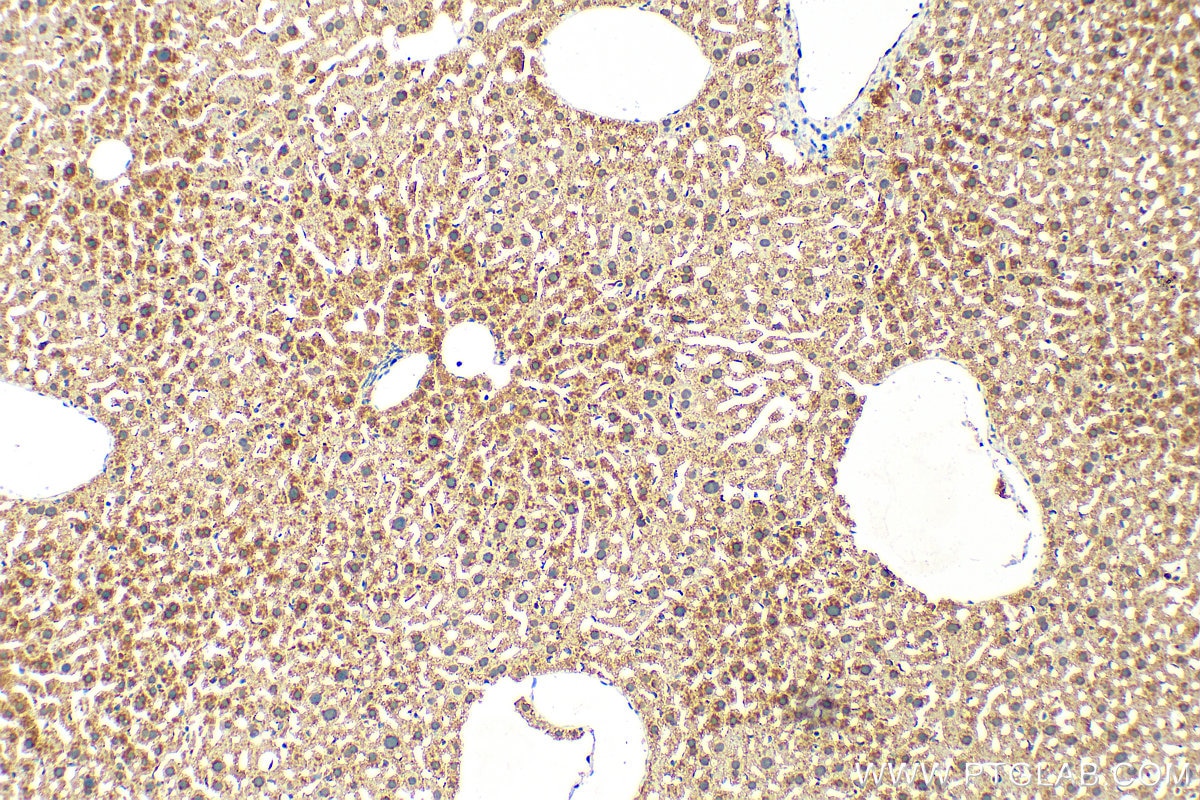
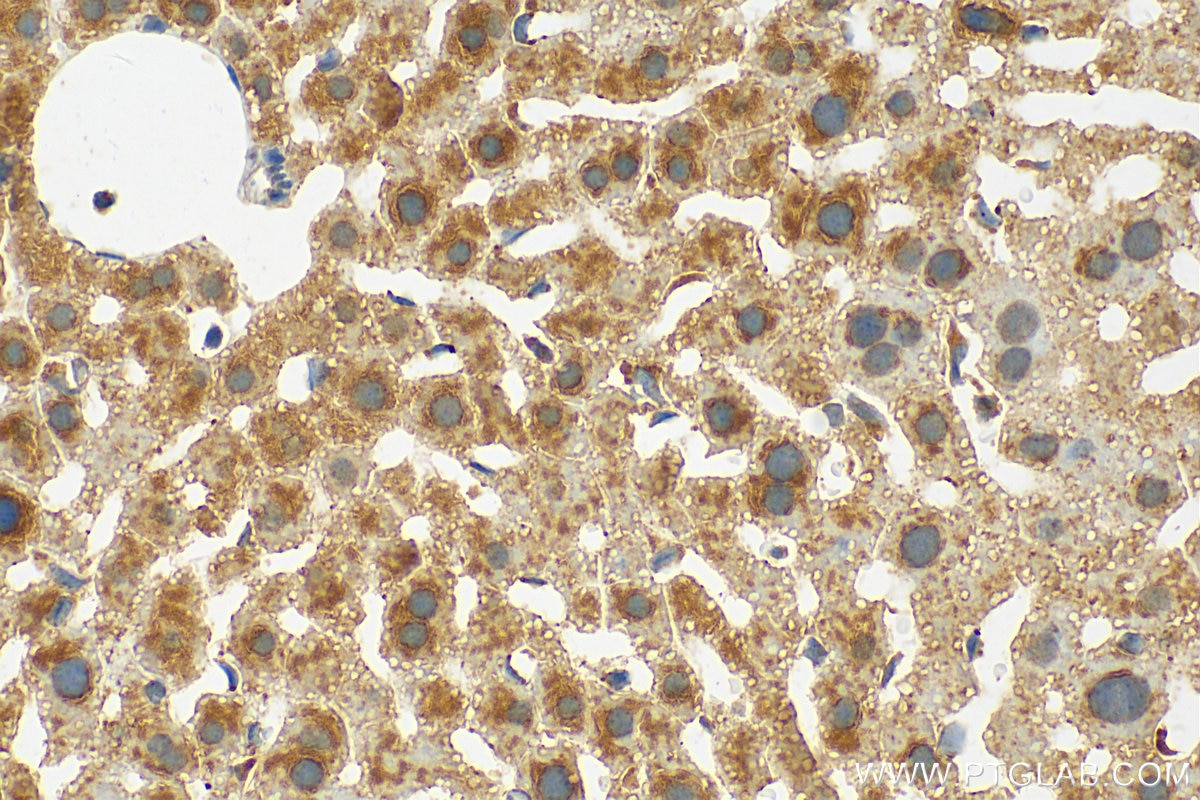
Informations sur le produit
25179-1-PBS cible HYAL1 dans les applications de WB, IHC, Indirect ELISA et montre une réactivité avec des échantillons Humain, souris
| Réactivité | Humain, souris |
| Hôte / Isotype | Lapin / IgG |
| Clonalité | Polyclonal |
| Type | Anticorps |
| Immunogène | HYAL1 Protéine recombinante Ag17943 |
| Nom complet | hyaluronoglucosaminidase 1 |
| Masse moléculaire calculée | 435 aa, 48 kDa |
| Poids moléculaire observé | 60 kDa |
| Numéro d’acquisition GenBank | BC035695 |
| Symbole du gène | HYAL1 |
| Identification du gène (NCBI) | 3373 |
| Conjugaison | Non conjugué |
| Forme | Liquide |
| Méthode de purification | Purification par affinité contre l'antigène |
| Tampon de stockage | PBS only |
| Conditions de stockage | Store at -80°C. 20ul contiennent 0,1% de BSA. |
Informations générales
Hyaluronic acid (HA) is a glycosaminoglycan that is believed to have numerous important biologic functions, including modulation of cell proliferation, migration, and differentiation, as well as the regulation of extracellular water and protein homeostasis. It is also an integral structural component of cartilage and other tissues and acts as a lubricant in joints. Hyaluronidases are a family of enzymes that catalyse the degradation of HA. In humans, there are five functional hyaluronidases: HYAL1, HYAL2, HYAL3, HYAL4 and HYAL5 (also known as SPAM1 or PH-20); plus a pseudogene, HYAL6 (also known as HYALP1). HYAL-1 is present in many tissues and is predominantly found in the plasma and urine (PMID: 16600643). In addition to its function in normal cellular hyaluronan turnover, human HYAL-1 is implicated in cancer proliferation, angiogenesis, and inflammatory diseases (PMID: 17503783).


