Anticorps Recombinant de lapin anti-LAMR1/RPSA
LAMR1/RPSA Recombinant Antibody for WB, IF/ICC, FC (Intra), ELISA
Hôte / Isotype
Lapin / IgG
Réactivité testée
Humain, souris
Applications
WB, IF/ICC, FC (Intra), ELISA
Conjugaison
Non conjugué
CloneNo.
240461G11
N° de cat : 83495-7-PBS
Synonymes
Galerie de données de validation
Informations sur le produit
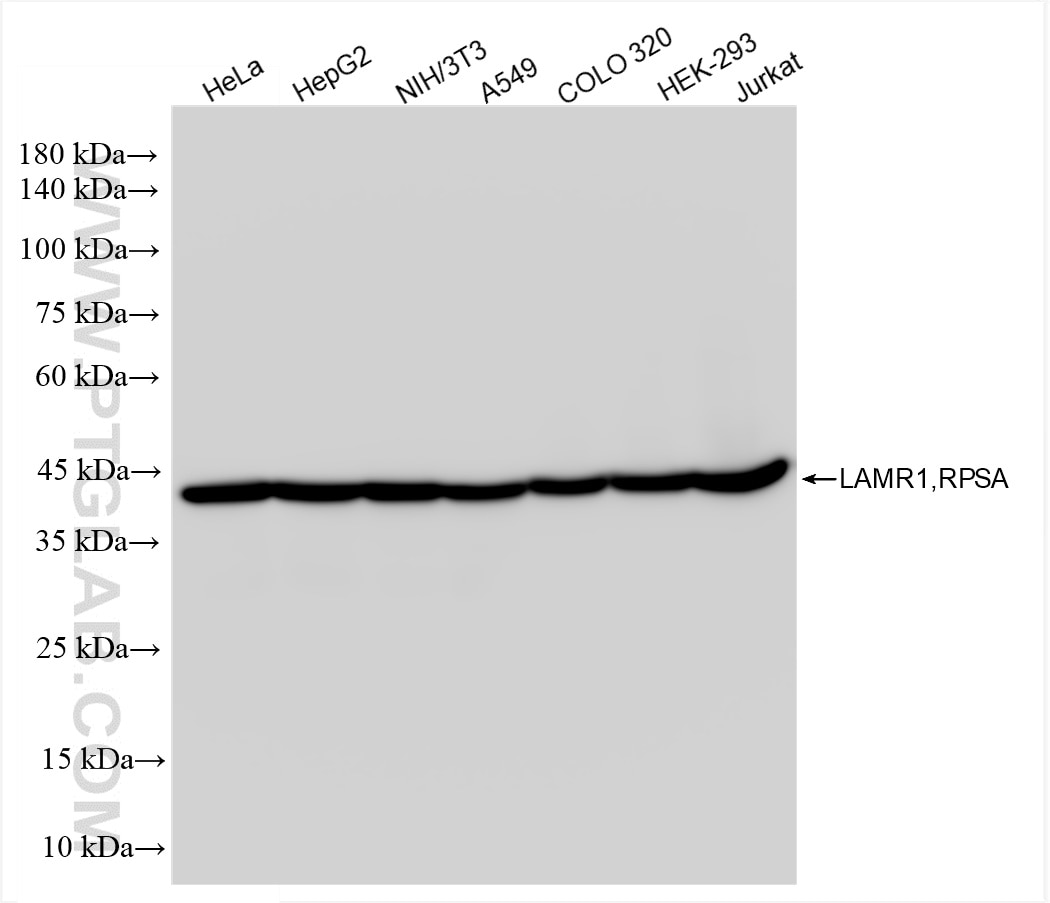
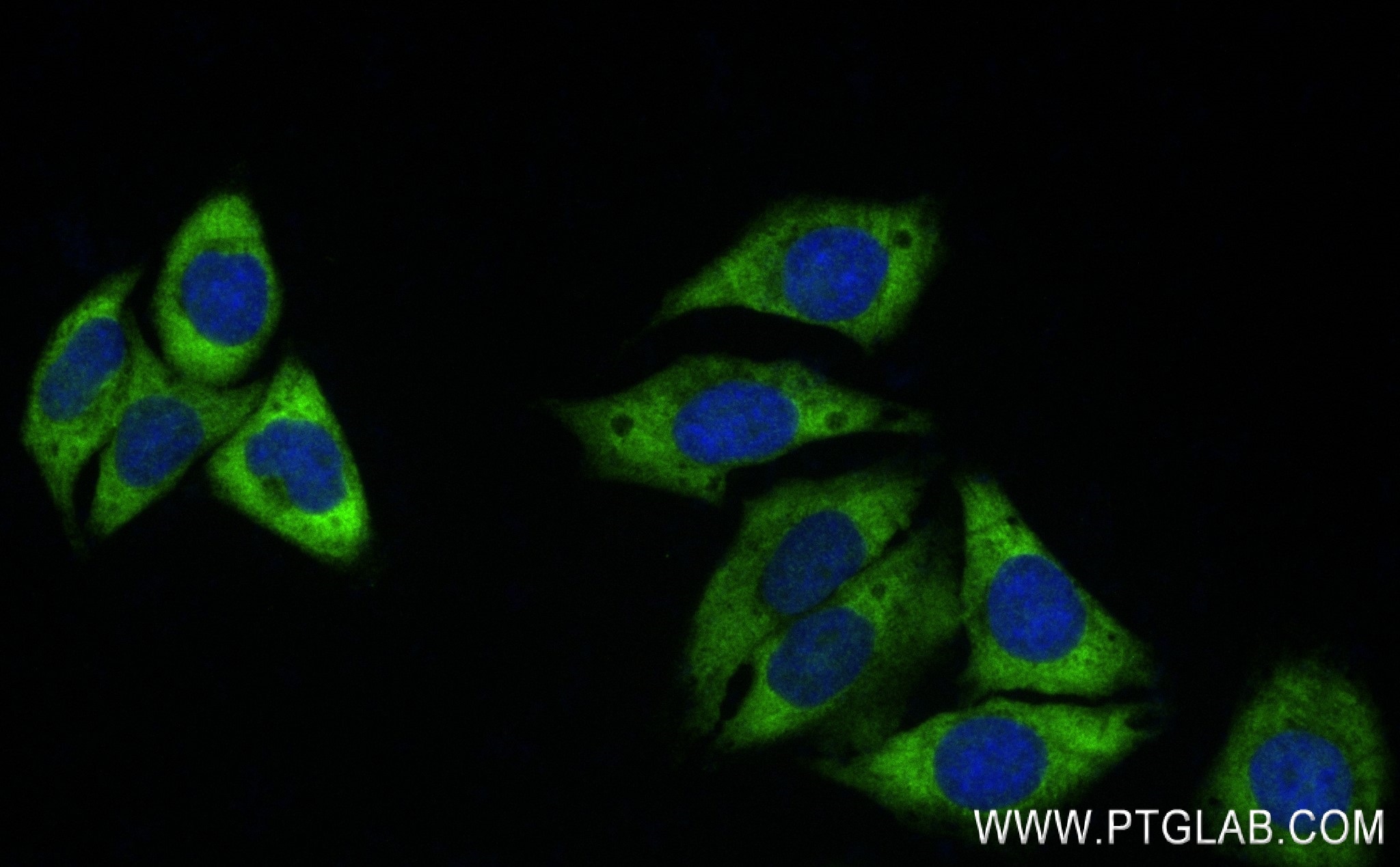
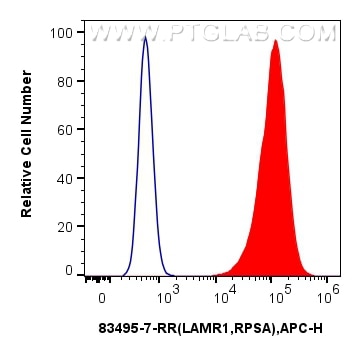
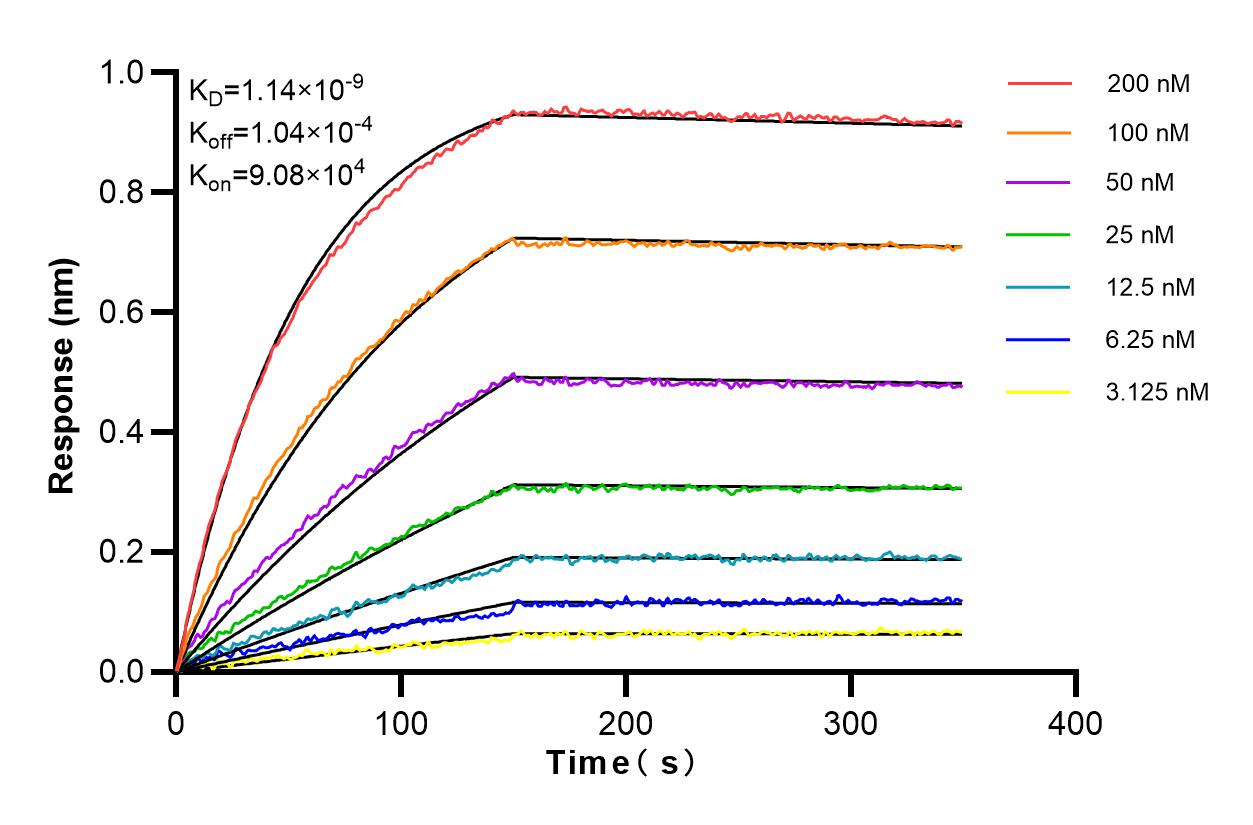
83495-7-PBS cible LAMR1/RPSA dans les applications de WB, IF/ICC, FC (Intra), ELISA et montre une réactivité avec des échantillons Humain, souris
| Réactivité | Humain, souris |
| Hôte / Isotype | Lapin / IgG |
| Clonalité | Recombinant |
| Type | Anticorps |
| Immunogène | LAMR1/RPSA Protéine recombinante Ag6033 |
| Nom complet | ribosomal protein SA |
| Masse moléculaire calculée | 33 kDa |
| Poids moléculaire observé | 40 kDa |
| Numéro d’acquisition GenBank | BC050688 |
| Symbole du gène | RPSA |
| Identification du gène (NCBI) | 3921 |
| Conjugaison | Non conjugué |
| Forme | Liquide |
| Méthode de purification | Protein A purfication |
| Tampon de stockage | PBS only |
| Conditions de stockage | Store at -80°C. 20ul contiennent 0,1% de BSA. |
Informations générales
The ribosomal protein SA (RPSA), previously named 67 kD laminin receptor(67LR), 37 kD laminin receptor precursor (37LRP) and p40 ribosome-associated protein, is a multifunctional protein, that plays a role in a number of pathological processes, such as cancer and prion diseases. It is overexpressed in various cancer cell lines, and the the level of the laminin receptor transcript is higher in colon carcinoma tissue and lung cancer cell line than their normal counterparts. This antibody is a rabbit polyclonal antibody raised against full length RPSA of human origin. This antibody is specific to RPSA (LAMR1).67LR derives from homo- or hetero- dimerization of a 37 kDa cytosolic precursor (37LRP)], most probably by fatty acid acylation. 37LRP is mostly found in the cytosol and nucleus [10] where it is involved in translational processes and maintenance of nuclear structures, respectively. 67LR is localized at the cell surface and it not only serves as a receptor for LM but also acts as a receptor for elastin, carbohydrates and the cellular prion protein.


