- Phare
- Validé par KD/KO
Anticorps Polyclonal de lapin anti-MGAT3
MGAT3 Polyclonal Antibody for WB, IHC, Indirect ELISA
Hôte / Isotype
Lapin / IgG
Réactivité testée
Humain, rat, souris
Applications
WB, IHC, Indirect ELISA
Conjugaison
Non conjugué
N° de cat : 17869-1-PBS
Synonymes
Galerie de données de validation
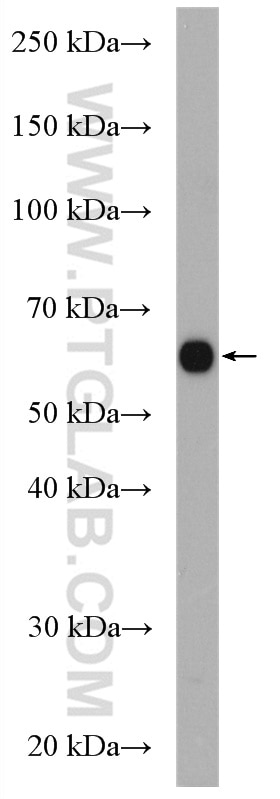
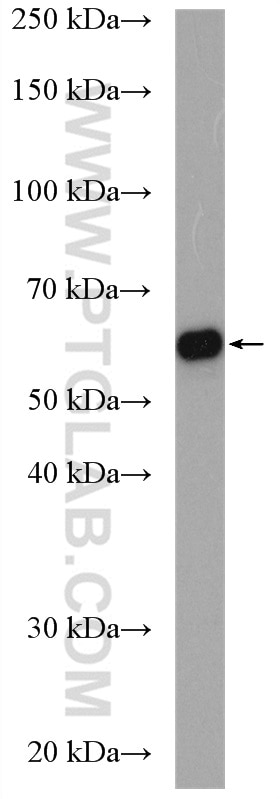
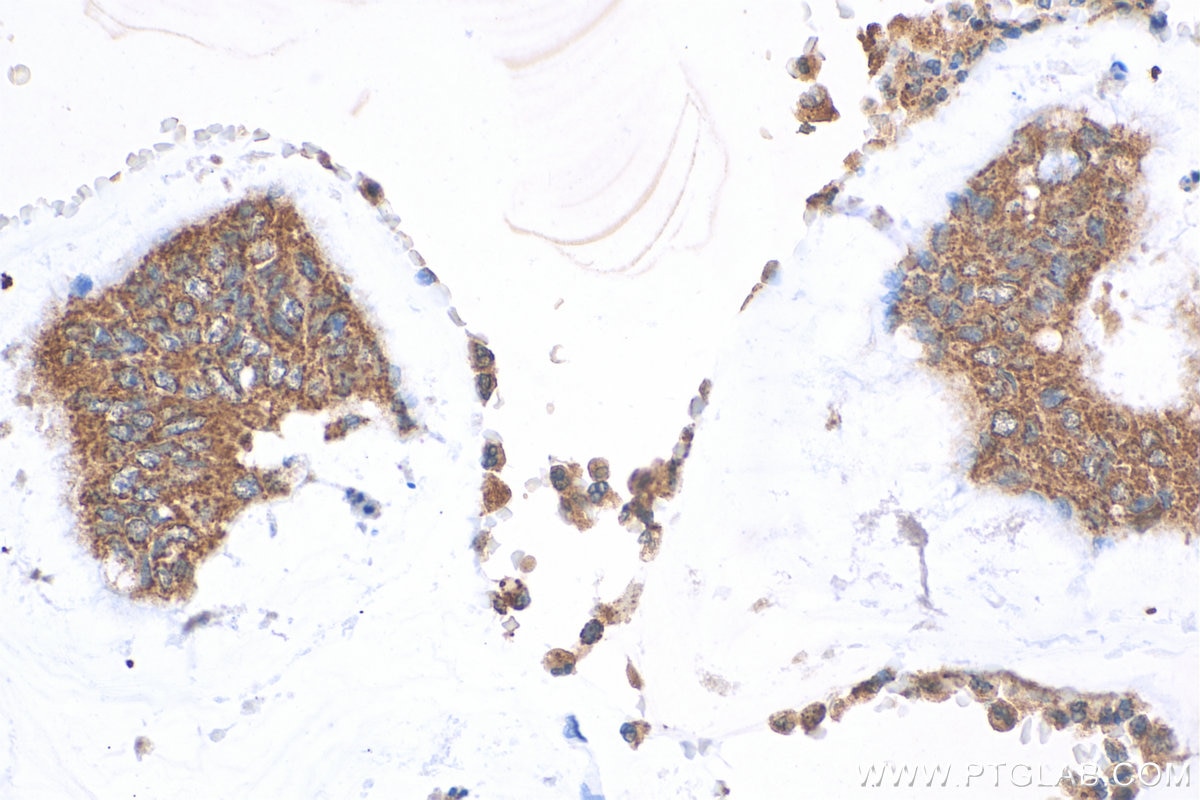
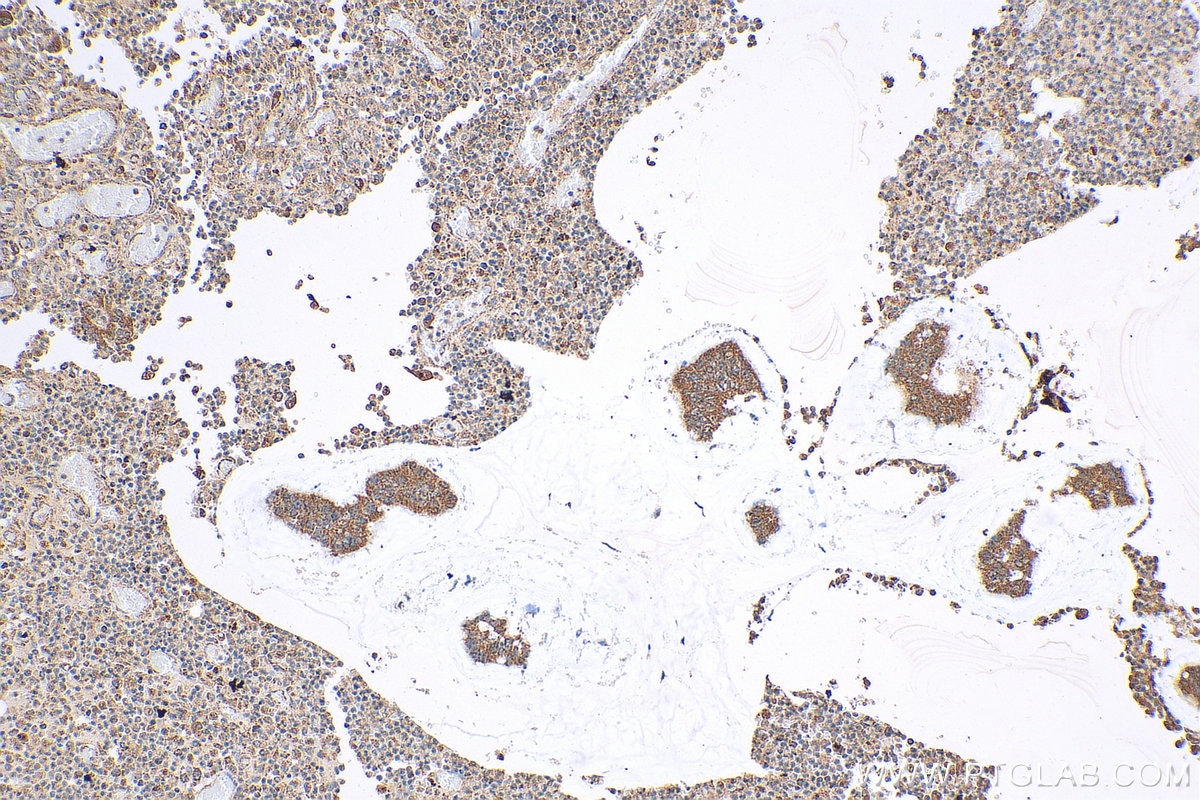
Informations sur le produit
17869-1-PBS cible MGAT3 dans les applications de WB, IHC, Indirect ELISA et montre une réactivité avec des échantillons Humain, rat, souris
| Réactivité | Humain, rat, souris |
| Hôte / Isotype | Lapin / IgG |
| Clonalité | Polyclonal |
| Type | Anticorps |
| Immunogène | MGAT3 Protéine recombinante Ag12352 |
| Nom complet | mannosyl (beta-1,4-)-glycoprotein beta-1,4-N-acetylglucosaminyltransferase |
| Masse moléculaire calculée | 533 aa, 61 kDa |
| Poids moléculaire observé | 61 kDa |
| Numéro d’acquisition GenBank | BC075026 |
| Symbole du gène | MGAT3 |
| Identification du gène (NCBI) | 4248 |
| Conjugaison | Non conjugué |
| Forme | Liquide |
| Méthode de purification | Purification par affinité contre l'antigène |
| Tampon de stockage | PBS only |
| Conditions de stockage | Store at -80°C. 20ul contiennent 0,1% de BSA. |
Informations générales
In the small intestine, ~75% of triacylglycerol (TG) synthesis occurs via the monoacylglycerol acyltransferase (MGAT) pathway.Three MGAT isoforms (MGAT1, MGAT2 and MGAT3) have been identifed based on their extensive homology to DGAT2. MGAT1 is primarily expressed in the adipose tissue, stomach and kidney but not in the small intestine. MGAT2 and MGAT3 are most highly expressed in the small intestine, suggesting that these two MGAT forms are responsible for the resynthesis of dietary TG that is packaged into chylomicrons.


