Anticorps Polyclonal de lapin anti-MIOS
MIOS Polyclonal Antibody for WB, IHC, IP, ELISA
Hôte / Isotype
Lapin / IgG
Réactivité testée
Humain, rat, souris et plus (1)
Applications
WB, IHC, IP, ELISA
Conjugaison
Non conjugué
N° de cat : 20826-1-AP
Synonymes
Galerie de données de validation
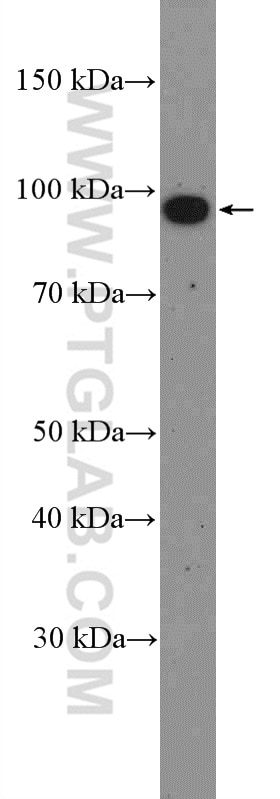
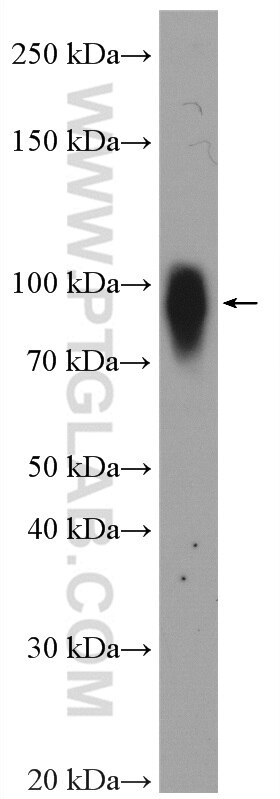
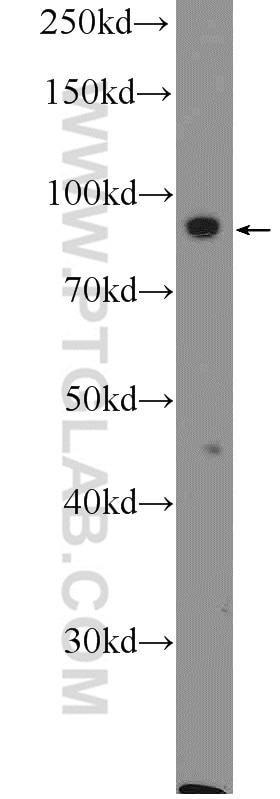
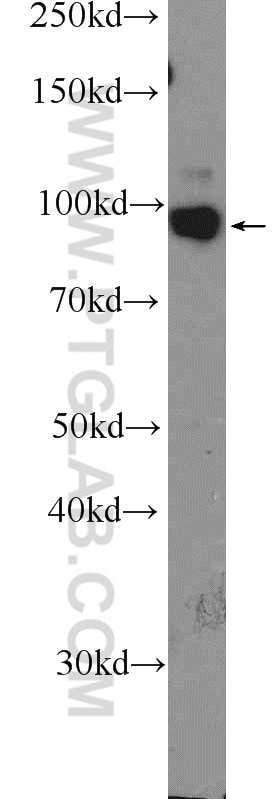
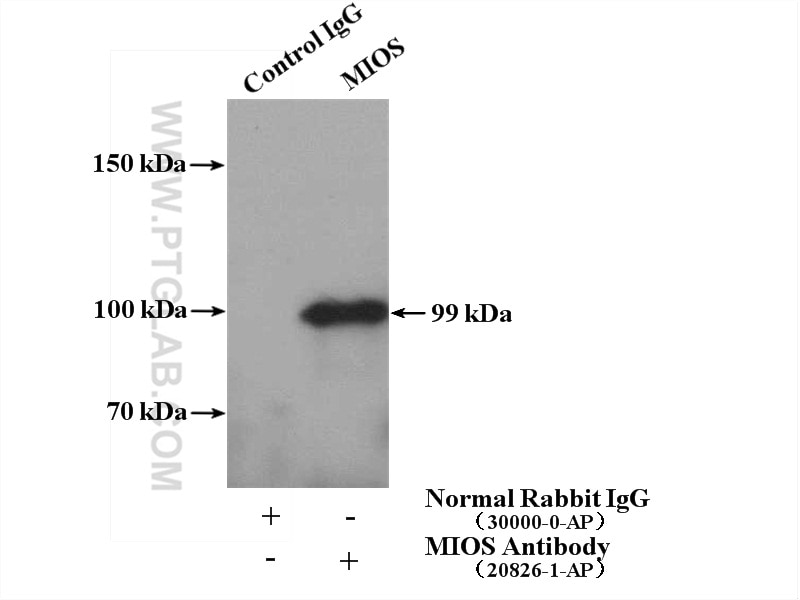


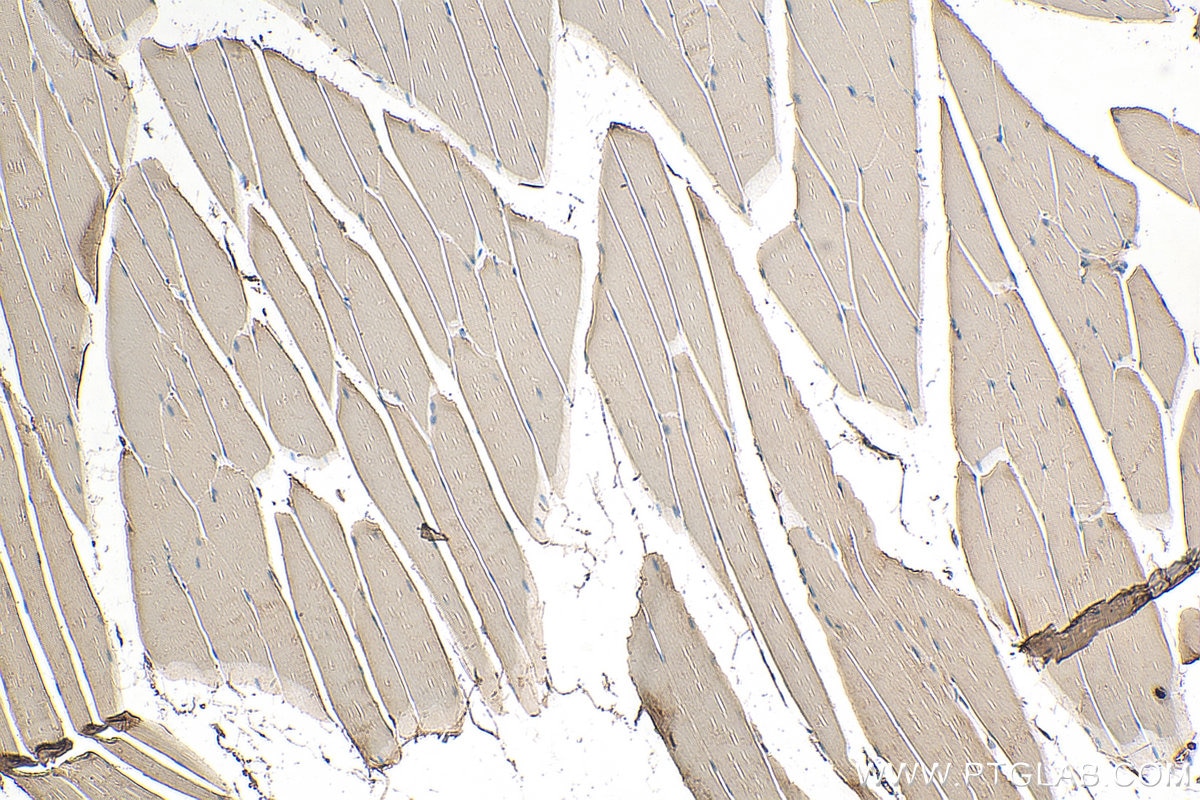
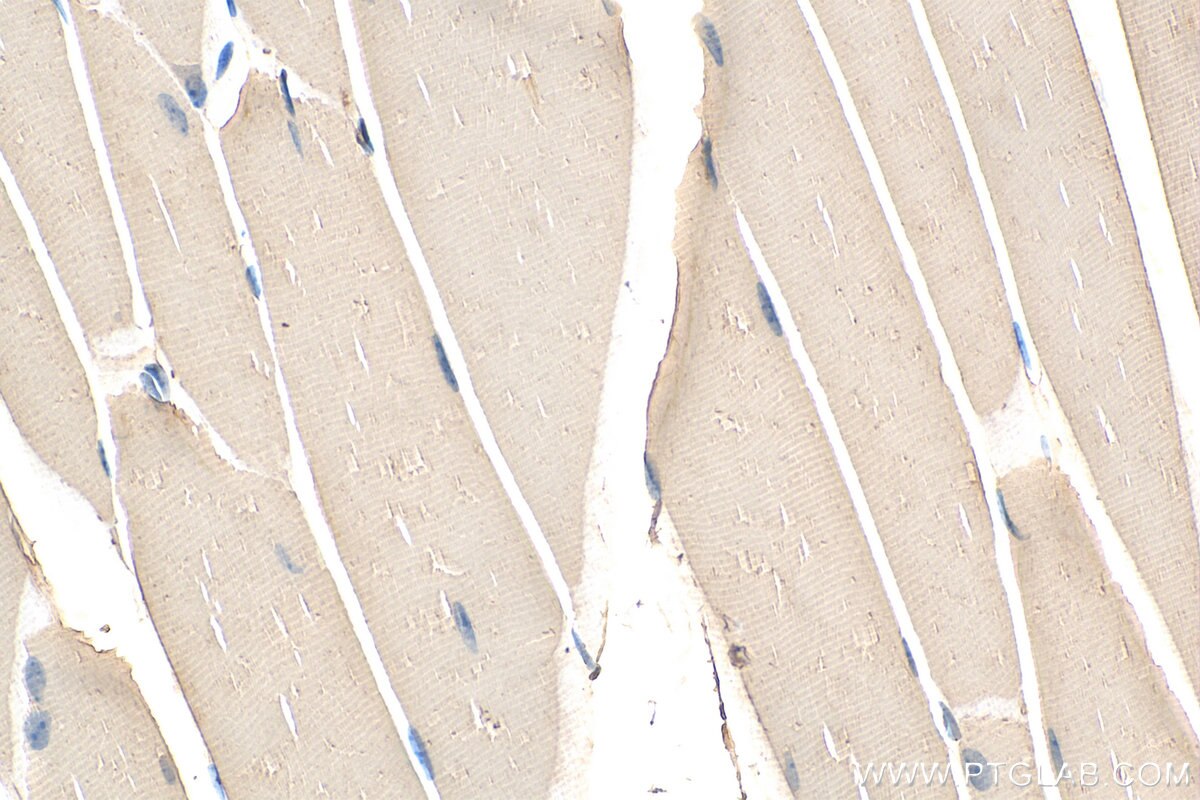
Applications testées
| Résultats positifs en WB | cellules K-562, cellules HeLa, cellules PC-3, tissu hépatique de rat |
| Résultats positifs en IP | cellules HeLa |
| Résultats positifs en IHC | tissu de muscle squelettique de souris, il est suggéré de démasquer l'antigène avec un tampon de TE buffer pH 9.0; (*) À défaut, 'le démasquage de l'antigène peut être 'effectué avec un tampon citrate pH 6,0. |
Dilution recommandée
| Application | Dilution |
|---|---|
| Western Blot (WB) | WB : 1:500-1:1000 |
| Immunoprécipitation (IP) | IP : 0.5-4.0 ug for 1.0-3.0 mg of total protein lysate |
| Immunohistochimie (IHC) | IHC : 1:50-1:500 |
| It is recommended that this reagent should be titrated in each testing system to obtain optimal results. | |
| Sample-dependent, check data in validation data gallery | |
Applications publiées
| KD/KO | See 1 publications below |
| WB | See 3 publications below |
Informations sur le produit
20826-1-AP cible MIOS dans les applications de WB, IHC, IP, ELISA et montre une réactivité avec des échantillons Humain, rat, souris
| Réactivité | Humain, rat, souris |
| Réactivité citée | Humain, porc |
| Hôte / Isotype | Lapin / IgG |
| Clonalité | Polyclonal |
| Type | Anticorps |
| Immunogène | MIOS Protéine recombinante Ag14802 |
| Nom complet | missing oocyte, meiosis regulator, homolog (Drosophila) |
| Masse moléculaire calculée | 875 aa, 99 kDa |
| Poids moléculaire observé | 99 kDa |
| Numéro d’acquisition GenBank | BC005883 |
| Symbole du gène | MIOS |
| Identification du gène (NCBI) | 54468 |
| Conjugaison | Non conjugué |
| Forme | Liquide |
| Méthode de purification | Purification par affinité contre l'antigène |
| Tampon de stockage | PBS with 0.02% sodium azide and 50% glycerol |
| Conditions de stockage | Stocker à -20°C. Stable pendant un an après l'expédition. L'aliquotage n'est pas nécessaire pour le stockage à -20oC Les 20ul contiennent 0,1% de BSA. |
Informations générales
The mechanistic target of rapamycin complex 1 (mTORC1) controls growth by regulating anabolic and catabolic processes in response to environmental cues, including nutrients. Amino acids signal to mTORC1 through the Rag GTPases, which are regulated by several protein complexes, including GATOR1 and GATOR2. GATOR2, which has five components (WDR24, MIOS, WDR59, SEH1L, SEC13), is required for amino acids to activate mTORC1. PMID: 35831510
Protocole
| Product Specific Protocols | |
|---|---|
| WB protocol for MIOS antibody 20826-1-AP | Download protocol |
| IHC protocol for MIOS antibody 20826-1-AP | Download protocol |
| IP protocol for MIOS antibody 20826-1-AP | Download protocol |
| Standard Protocols | |
|---|---|
| Click here to view our Standard Protocols |
Publications
| Species | Application | Title |
|---|---|---|
Am J Physiol Endocrinol Metab Intermittent bolus feeding does not enhance protein synthesis, myonuclear accretion, or lean growth more than continuous feeding in a premature piglet model. | ||
JCI Insight GATOR2-dependent mTORC1 activity is a therapeutic vulnerability in FOXO1 fusion positive rhabdomyosarcoma
| ||
Nat Commun Increased translation driven by non-canonical EZH2 creates a synthetic vulnerability in enzalutamide-resistant prostate cancer |

