- Phare
- Validé par KD/KO
Anticorps Polyclonal de lapin anti-MN1
MN1 Polyclonal Antibody for WB, IHC, Indirect ELISA
Hôte / Isotype
Lapin / IgG
Réactivité testée
Humain
Applications
WB, IHC, Indirect ELISA
Conjugaison
Non conjugué
N° de cat : 24697-1-PBS
Synonymes
Galerie de données de validation
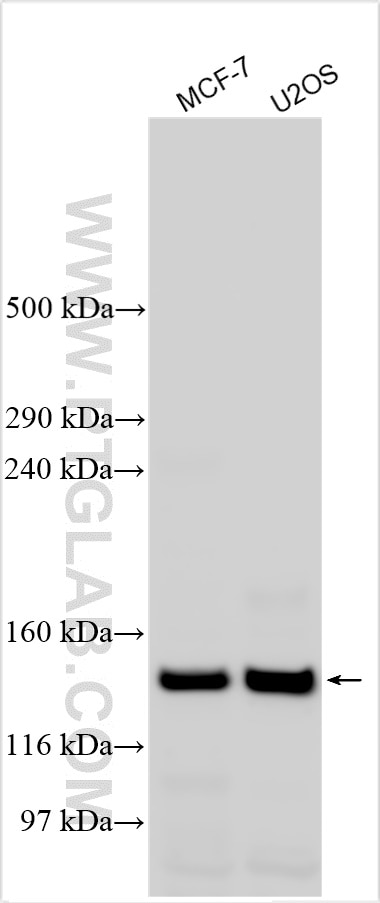
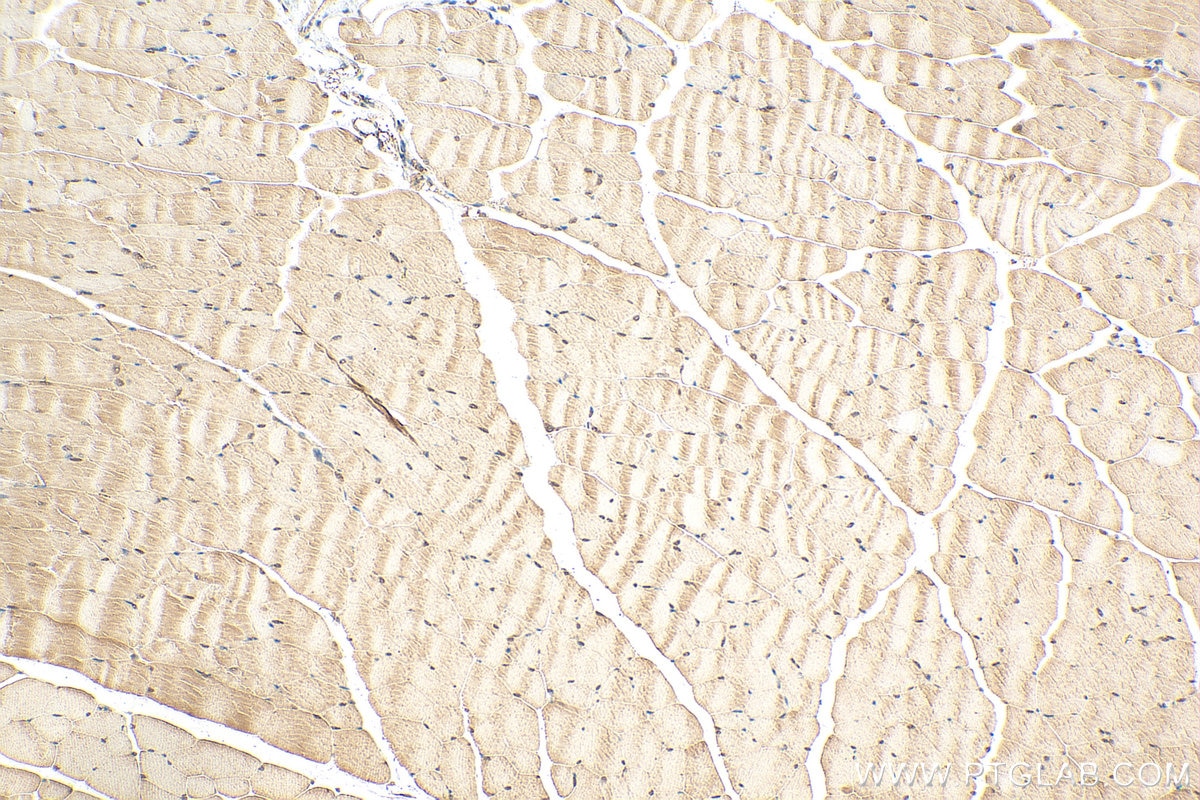

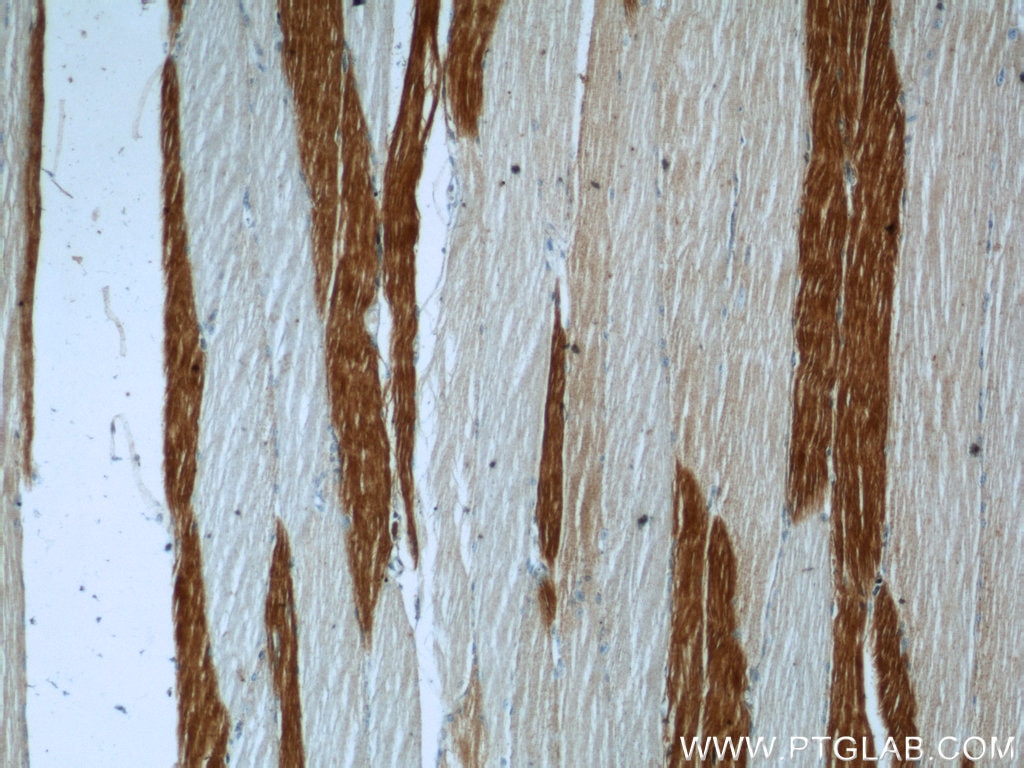
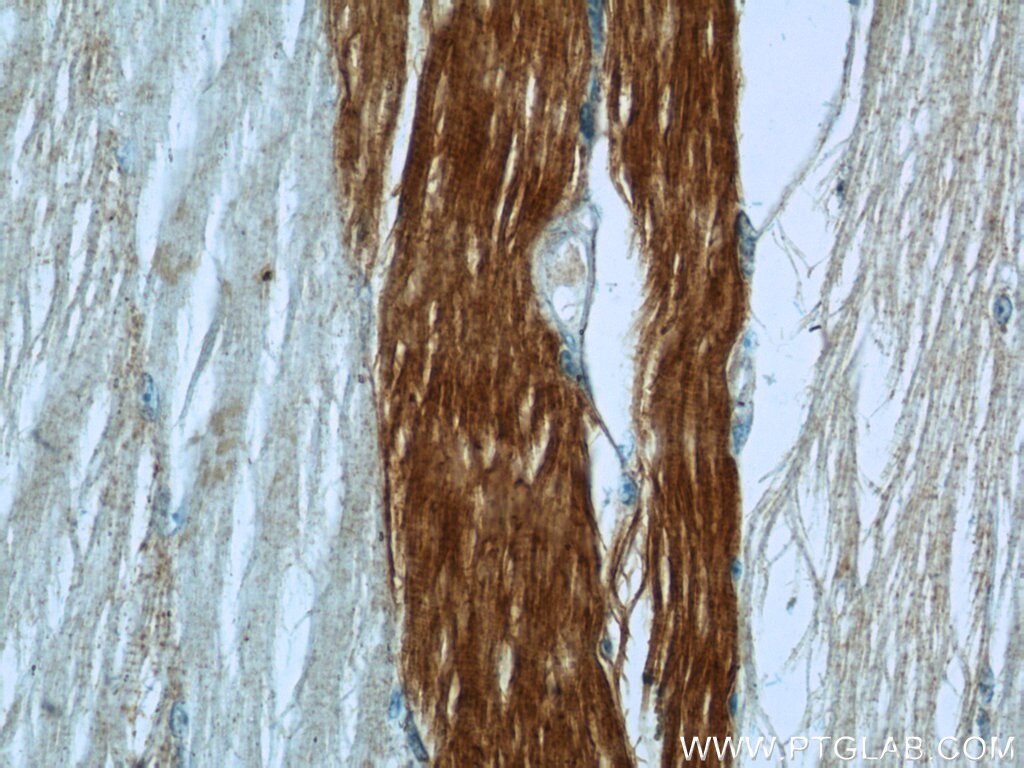
Informations sur le produit
24697-1-PBS cible MN1 dans les applications de WB, IHC, Indirect ELISA et montre une réactivité avec des échantillons Humain
| Réactivité | Humain |
| Hôte / Isotype | Lapin / IgG |
| Clonalité | Polyclonal |
| Type | Anticorps |
| Immunogène | MN1 Protéine recombinante Ag20344 |
| Nom complet | meningioma (disrupted in balanced translocation) 1 |
| Masse moléculaire calculée | 1320 aa, 136 kDa |
| Poids moléculaire observé | 136 kDa |
| Numéro d’acquisition GenBank | BC156879 |
| Symbole du gène | MN1 |
| Identification du gène (NCBI) | 4330 |
| Conjugaison | Non conjugué |
| Forme | Liquide |
| Méthode de purification | Purification par affinité contre l'antigène |
| Tampon de stockage | PBS only |
| Conditions de stockage | Store at -80°C. 20ul contiennent 0,1% de BSA. |
Informations générales
MN1 (Transcriptional activator MN1), which is mainly located in nucleus. Highest expression is observed in fetal brain and skeletal muscle, and adult skeletal muscle. MN1 protein can interact with Brg1/Brm related factor (BAF) complex containing Smarca4/Brg1 and stabilize it on chromatin, thus maintaining the expression of hematopoietic progenitor cell-like genes. Under normal physiological conditions, MN1 protein is mainly expressed in granulocyte monocyte progenitor cells (GMP) in hematopoietic system, which plays an important role in the development and function of hematopoietic cells, and it is involved in regulating cell proliferation, differentiation, apoptosis and embryonic development. MN1 protein is related to many diseases, especially in leukemia (PMID: 23049943). MN1 gene rearrangements such as t(12; 22)(p13; Q11) can produce MN1-TEL fusion protein, which combines the transcriptional activation domain of MN1 and the DNA binding domain of TEL(ETV6), and can stably occupy the TEL recognition sequence, hindering the combination of normal transcription regulatory factors, thus leading to leukemia. Overexpression of MN1 gene has also been proved to be one of the signs of poor prognosis in patients with acute myeloid leukemia (AML), and its expression level is high in AML patients with normal karyotype. The molecular weight of MN1 is 136 kDa.


