Anticorps Polyclonal de lapin anti-NR5A1
NR5A1 Polyclonal Antibody for WB, IHC, FC (Intra), IP, Indirect ELISA
Hôte / Isotype
Lapin / IgG
Réactivité testée
Humain, rat, souris
Applications
WB, IHC, FC (Intra), IP, Indirect ELISA
Conjugaison
Non conjugué
N° de cat : 18658-1-PBS
Synonymes
Galerie de données de validation
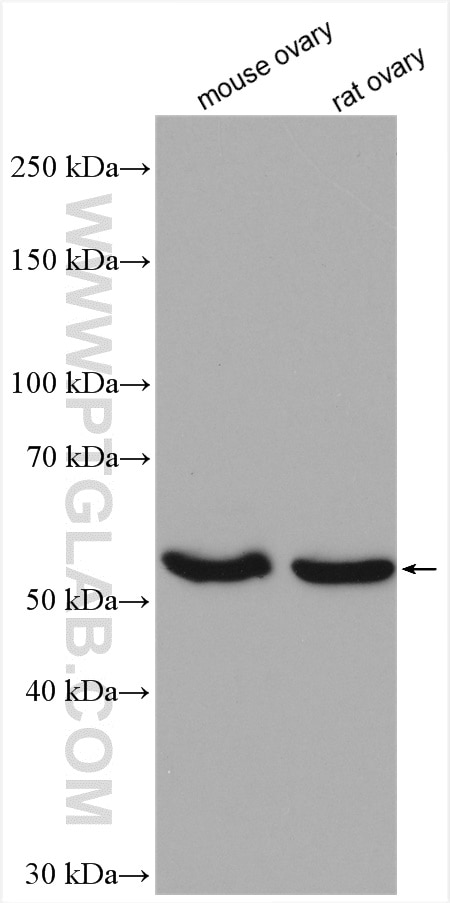
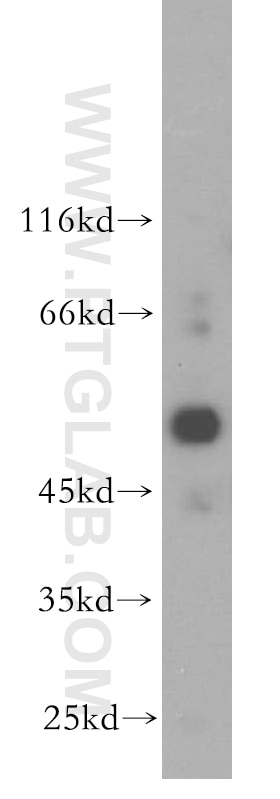
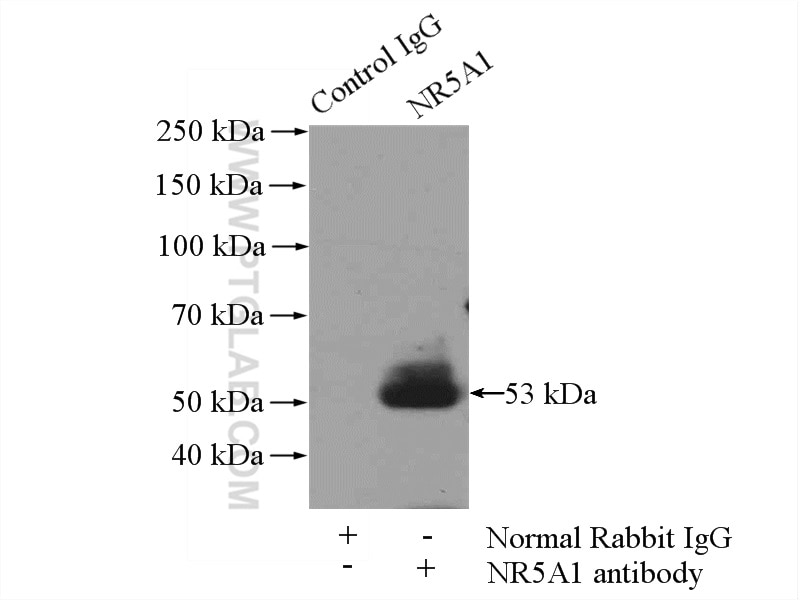
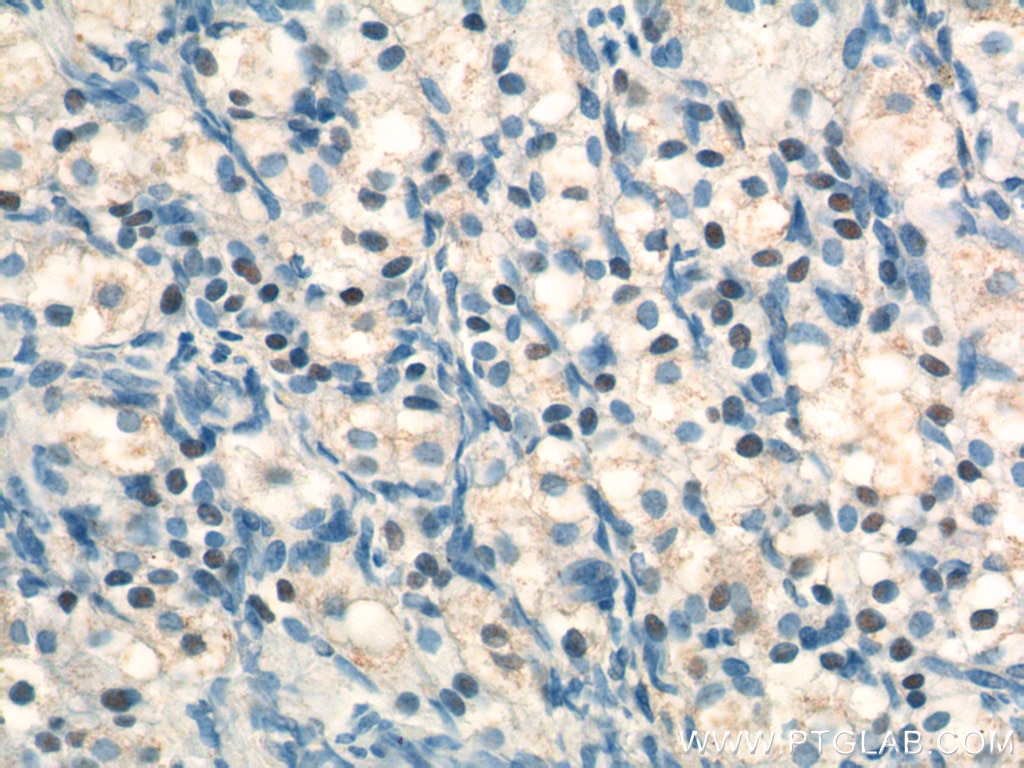
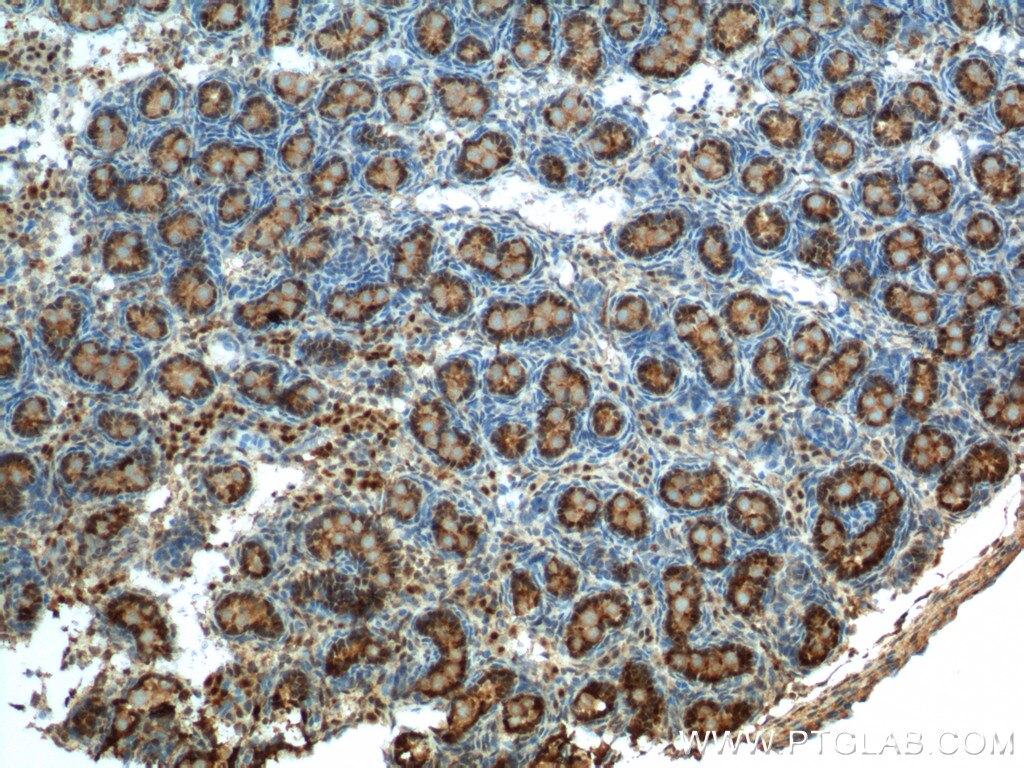
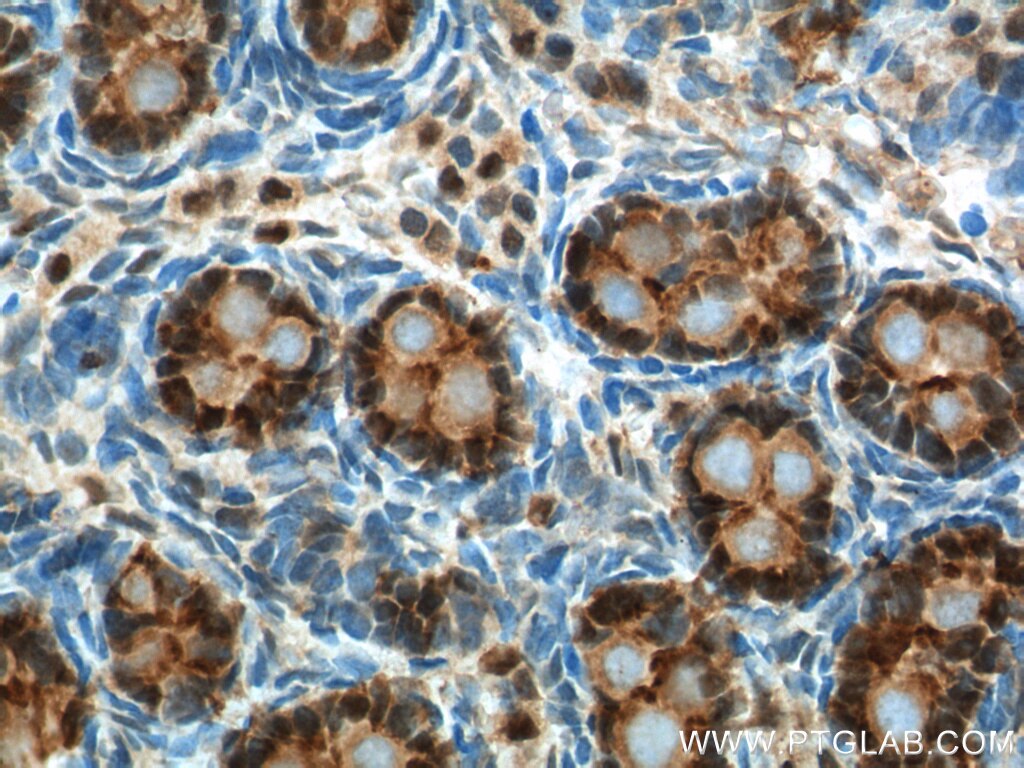
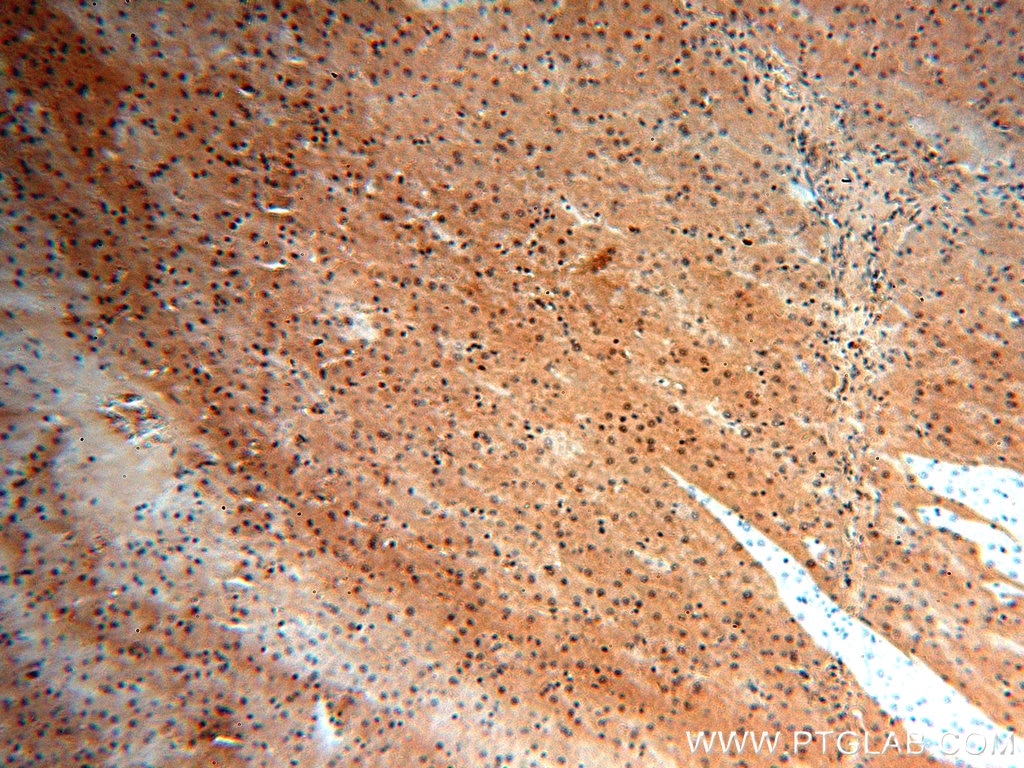
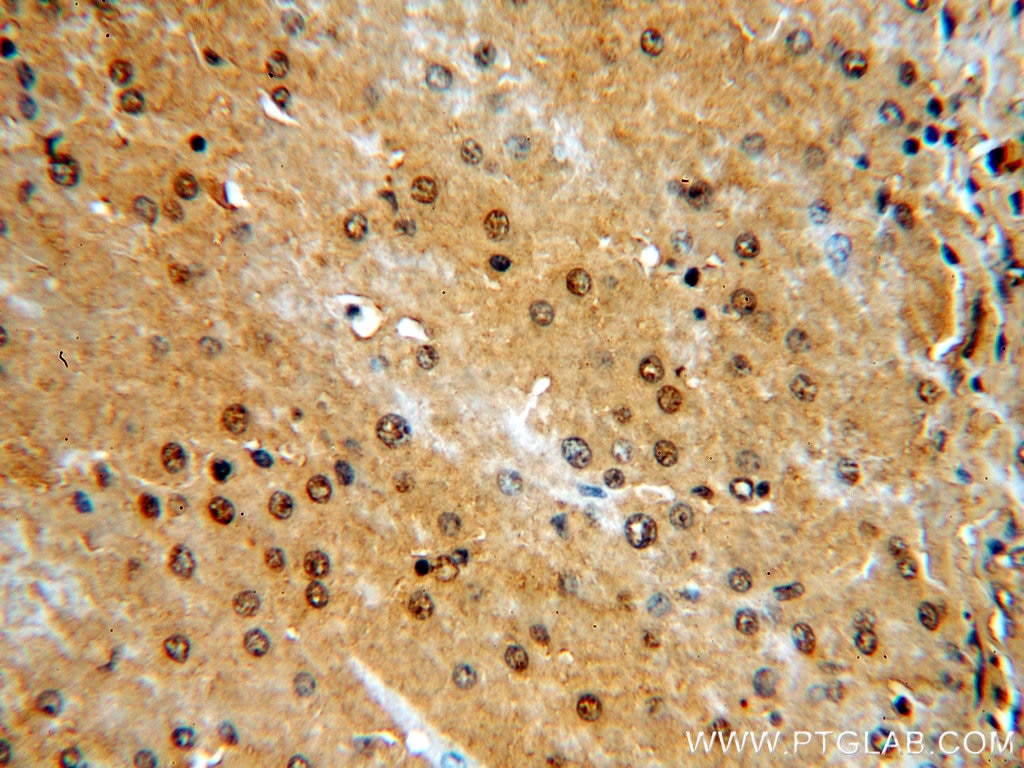
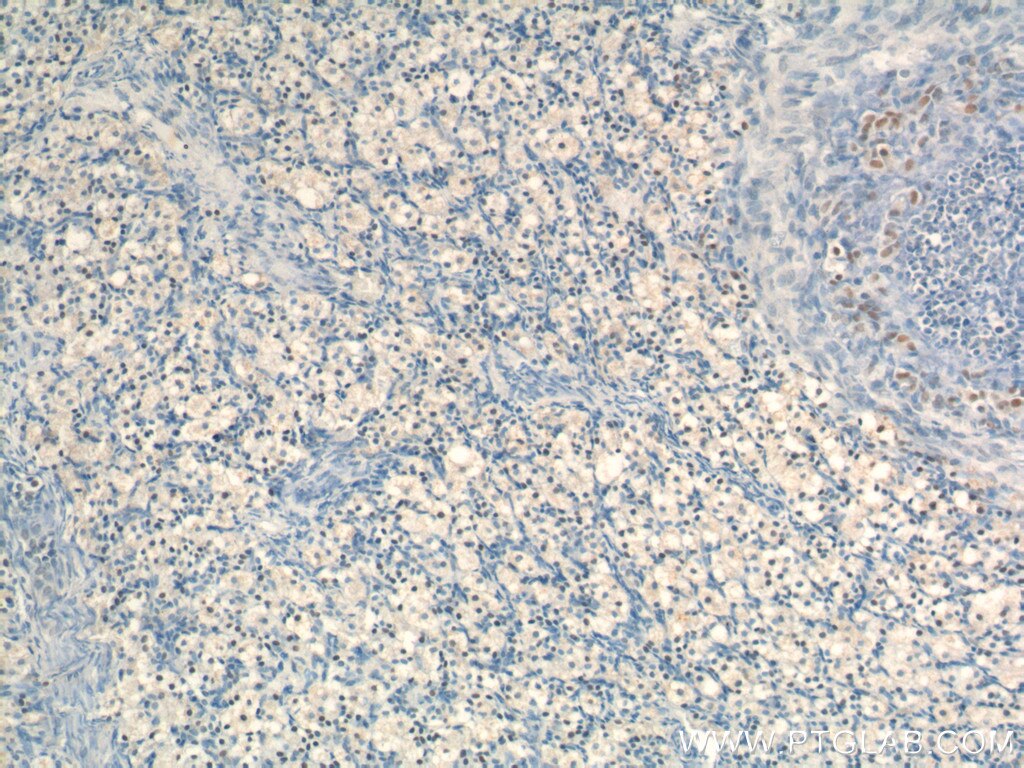
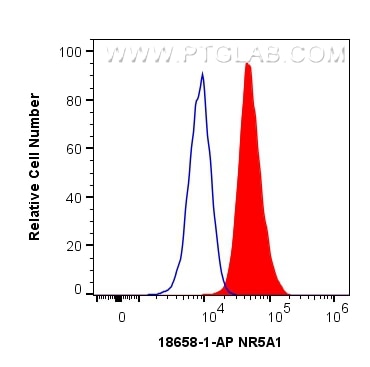
Informations sur le produit
18658-1-PBS cible NR5A1 dans les applications de WB, IHC, FC (Intra), IP, Indirect ELISA et montre une réactivité avec des échantillons Humain, rat, souris
| Réactivité | Humain, rat, souris |
| Hôte / Isotype | Lapin / IgG |
| Clonalité | Polyclonal |
| Type | Anticorps |
| Immunogène | NR5A1 Protéine recombinante Ag13252 |
| Nom complet | nuclear receptor subfamily 5, group A, member 1 |
| Masse moléculaire calculée | 52 kDa |
| Poids moléculaire observé | 52 kDa |
| Numéro d’acquisition GenBank | BC032501 |
| Symbole du gène | NR5A1 |
| Identification du gène (NCBI) | 2516 |
| Conjugaison | Non conjugué |
| Forme | Liquide |
| Méthode de purification | Purification par affinité contre l'antigène |
| Tampon de stockage | PBS only |
| Conditions de stockage | Store at -80°C. 20ul contiennent 0,1% de BSA. |
Informations générales
Steroidogenic factor-1 (SF-1,STF-1), also known as NR5A1, regulates multiple genes involved in the adrenal and gonadal development and in the biosynthesis of a variety of hormones, including adrenal and gonadal steroids, anti-Mullerian hormone (AMH), and gonadotropins. SF-1 belongs to the fushi tarazu factor-1 (FTZ-F1) subfamily of orphan nuclear receptors. Initially identified as a tissue-specific transcriptional regulator of cytochrome P450 steroid hydroxylases, research studies of both global and tissue-specific knockout mice have demonstrated that SF-1 is required for the development of adrenal glands, gonads, ventromedial hypothalamus, and for the proper functioning of pituitary gonadotropes. Indeed, humans with mutations that render SF-1 transcriptionally inactive can present with testicular failure, ovarian failure, and adrenal insufficiency. Furthermore, dysregulation of SF-1 has been linked to diseases such as endometriosis and adrenocortical carcinoma.Like other nuclear hormone receptors, SF-1 has a modular domain structure composed of an N-terminal zinc finger DNA-binding domain, a ligand-binding domain, a C-terminal AF-2 activation domain, and a hinge region with AF-1-like activation activity. SF-1 also contains a fushi tarazu factor 1 box, which functions as an accessory DNA binding domain. SF-1 is primarily phosphorylated at Ser203, which is thought to enhance its transcriptional activity by promoting complex formation with transcriptional cofactors. In addition to phosphorylation at Ser203, SF-1 is subject to SUMO conjugation and acetylation at ε-amino groups of target lysine residues. Whereas SUMOylation represses SF-1 function, acetylation enhances its transcriptional activity.In the adult ovary, SF-1 localizes to theca/interstitial cells.


