Anticorps Recombinant de lapin anti-NOV/CCN3
NOV/CCN3 Recombinant Antibody for WB, Cytometric bead array, Indirect ELISA
Hôte / Isotype
Lapin / IgG
Réactivité testée
Humain, rat, souris
Applications
WB, Cytometric bead array, Indirect ELISA
Conjugaison
Non conjugué
CloneNo.
250054B2
N° de cat : 85731-1-PBS
Synonymes
Galerie de données de validation
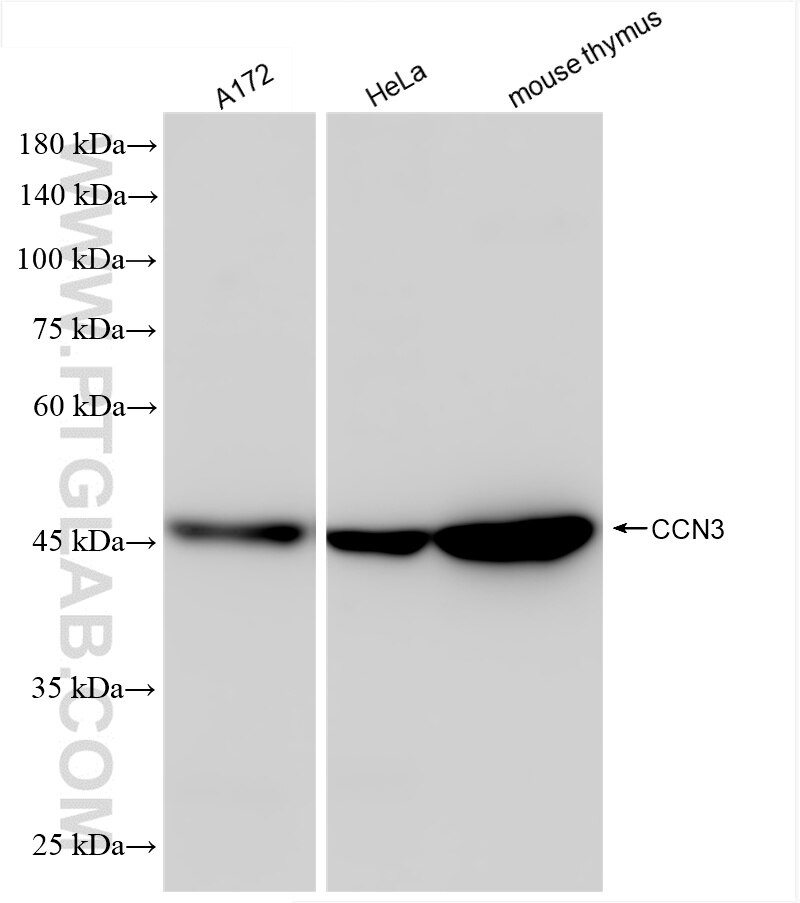
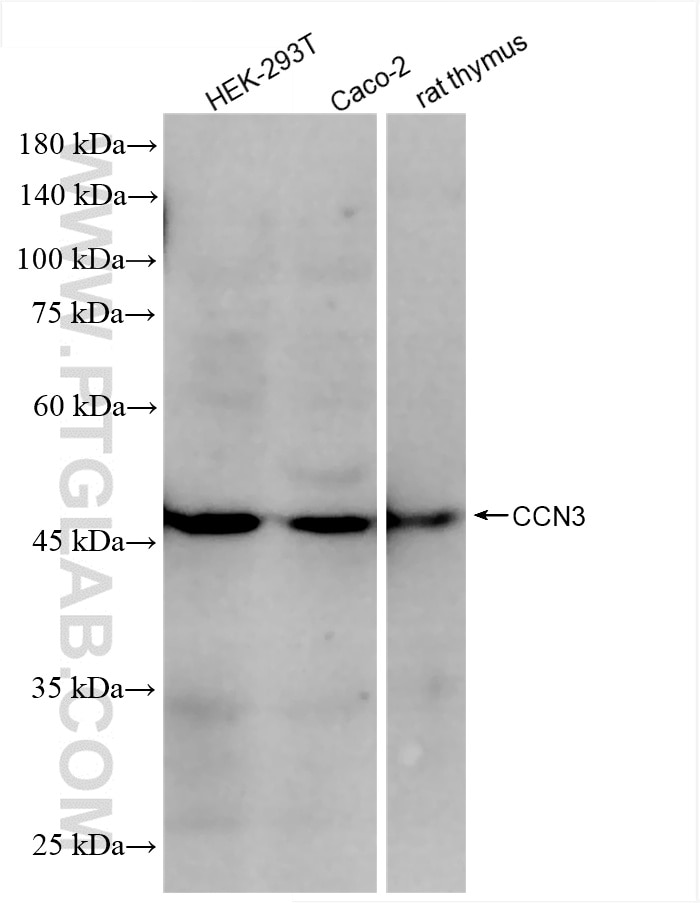
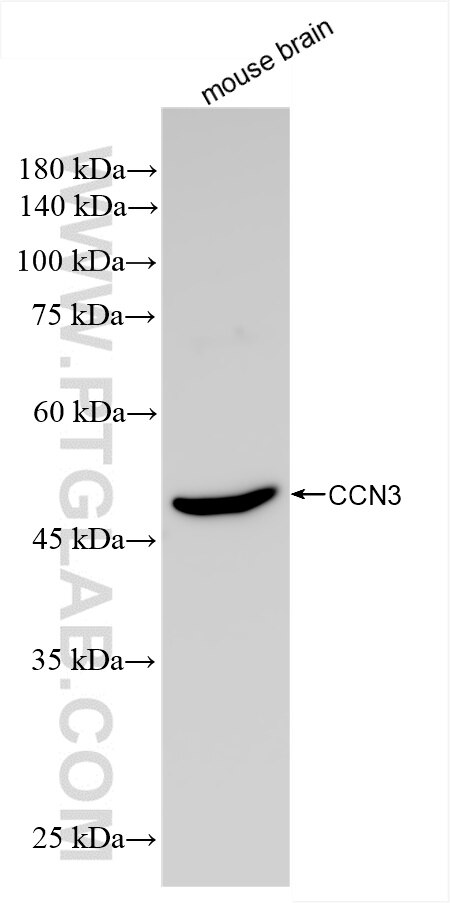
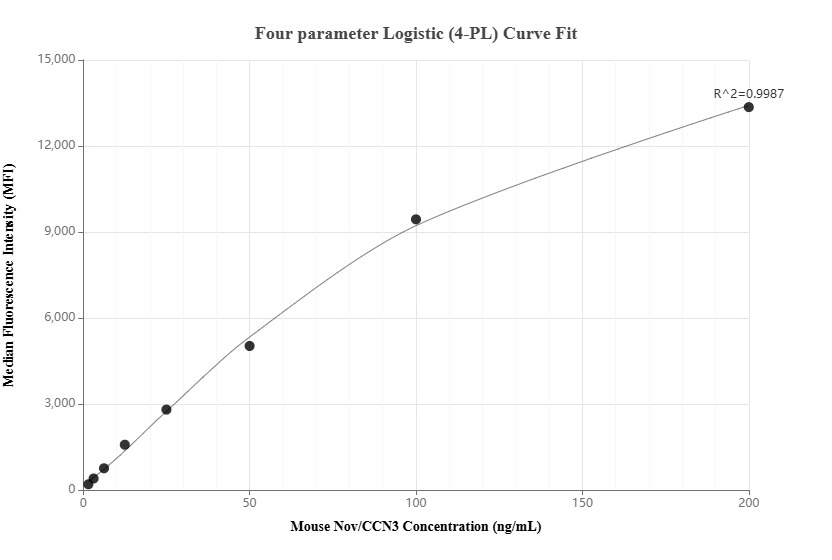
Informations sur le produit
85731-1-PBS cible NOV/CCN3 dans les applications de WB, Cytometric bead array, Indirect ELISA et montre une réactivité avec des échantillons Humain, rat, souris
| Réactivité | Humain, rat, souris |
| Hôte / Isotype | Lapin / IgG |
| Clonalité | Recombinant |
| Type | Anticorps |
| Immunogène | NOV/CCN3 Protéine recombinante Eg2856 |
| Nom complet | nephroblastoma overexpressed gene |
| Masse moléculaire calculée | 39 kDa |
| Poids moléculaire observé | 46 kDa |
| Numéro d’acquisition GenBank | NM_010930.4 |
| Symbole du gène | Nov |
| Identification du gène (NCBI) | 18133 |
| Conjugaison | Non conjugué |
| Forme | Liquide |
| Méthode de purification | Purification par protéine A |
| Tampon de stockage | PBS only |
| Conditions de stockage | Store at -80°C. 20ul contiennent 0,1% de BSA. |
Informations générales
CCN family member 3 (CCN3), also known as Nephroblastoma overexpressed (NOV) protein, is a member of the CCN protein family (PMID: 1309586). CCN3 is predominantly expressed in the cytoplasm, nucleus, and extracellular space. As a subset of extracellular matrix proteins, it can directly bind to the integrin receptor family on the cell surface and participate in signal transduction between the cell surface and the extracellular matrix structure (PMID: 37378812). CCN3 exhibits anti-proliferative activity in normal cells and most tumor cells (PMID: 17340618). CCN3 co-localizes with connexin 43 (C×43) in the plasma membrane, and these two proteins physically interact to inhibit cell growth (PMID: 15213231). CCN3 can induce myofibroblast differentiation through the Notch pathway (PMID: 12050162). CCN can promote adhesion of endothelial cells, vascular smooth muscle cells, and fibroblasts through heparan sulfate proteoglycans (HSPG) (PMID: 30158025).


