Anticorps Polyclonal de lapin anti-PCDHGC5
PCDHGC5 Polyclonal Antibody for IHC, Indirect ELISA
Hôte / Isotype
Lapin / IgG
Réactivité testée
Humain
Applications
IHC, Indirect ELISA
Conjugaison
Non conjugué
N° de cat : 23848-1-PBS
Synonymes
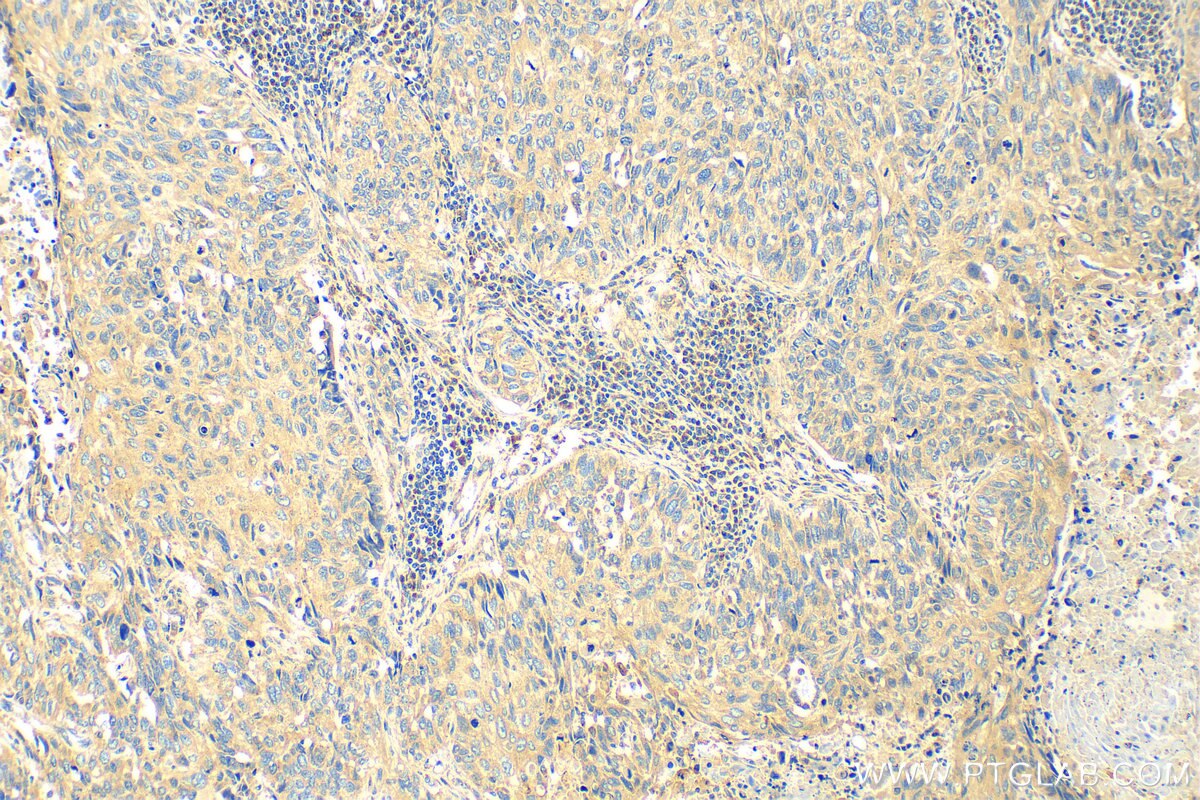
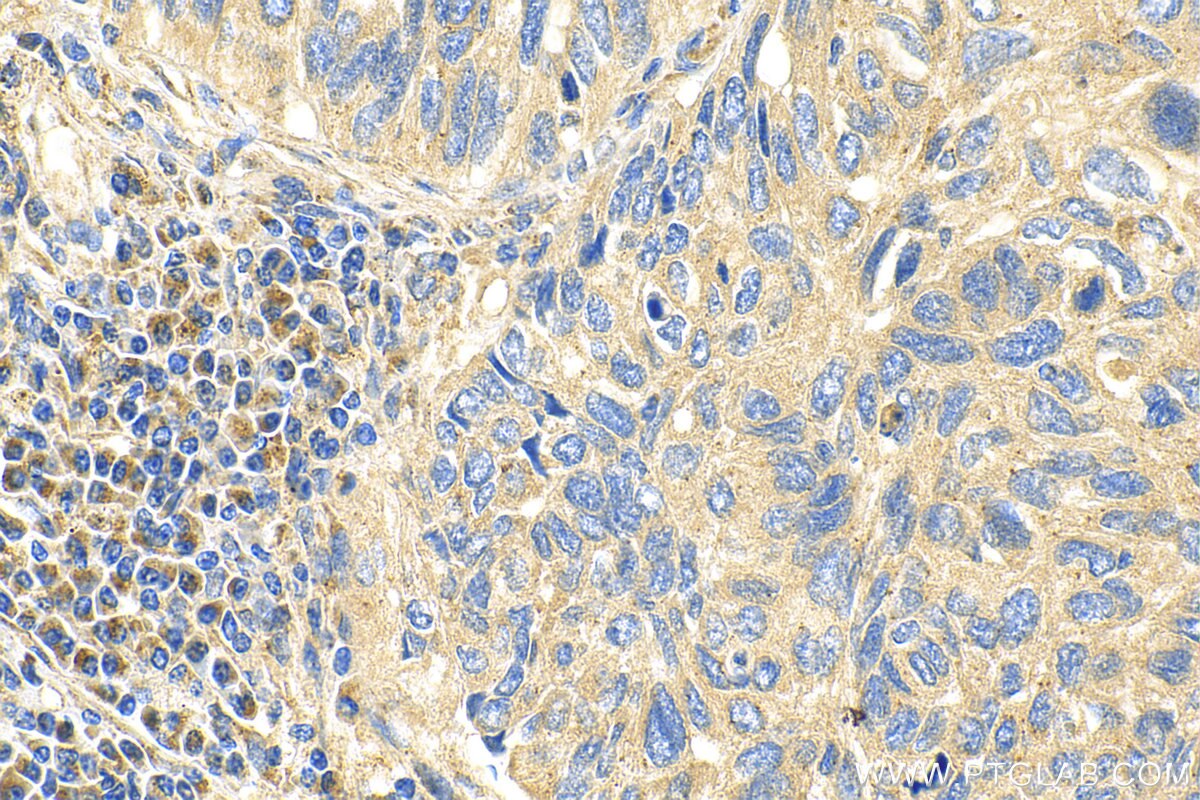
Galerie de données de validation
Informations sur le produit
23848-1-PBS cible PCDHGC5 dans les applications de IHC, Indirect ELISA et montre une réactivité avec des échantillons Humain
| Réactivité | Humain |
| Hôte / Isotype | Lapin / IgG |
| Clonalité | Polyclonal |
| Type | Anticorps |
| Immunogène | PCDHGC5 Protéine recombinante Ag20867 |
| Nom complet | protocadherin gamma subfamily C, 5 |
| Masse moléculaire calculée | 581aa,65 kDa; 944aa,102 kDa |
| Numéro d’acquisition GenBank | BC112081 |
| Symbole du gène | PCDHGC5 |
| Identification du gène (NCBI) | 56097 |
| Conjugaison | Non conjugué |
| Forme | Liquide |
| Méthode de purification | Purifié par affinité contre l'antigène |
| Tampon de stockage | PBS only |
| Conditions de stockage | Store at -80°C. 20ul contiennent 0,1% de BSA. |
Informations générales
Protocadherins, which constitute the largest subgroup within the cadherin superfamily, are predominantly expressed in the nervous system and are probably involved in the regulation of neuronal recognition and connectivity (PMID: 17936607; 12231349; 17133224). The protocadherin subfamily can be further subdivided into three groups: the clustered protocadherins, comprising α-, β- and γ-protocadherins; δ-protocadherins; and others, many of which are solitary (PMID: 17133224). Disruption of the γ-protocadherins locus causes neonatal lethality, and Pcdhgc3, Pcdhgc4, and Pcdhgc5 are essential for the observed lethality.


