Anticorps Monoclonal anti-PD-ECGF
PD-ECGF Monoclonal Antibody for Cytometric bead array, Indirect ELISA
Hôte / Isotype
Mouse / IgG2a
Réactivité testée
Humain
Applications
Cytometric bead array, Indirect ELISA
Conjugaison
Non conjugué
CloneNo.
1B3E7
N° de cat : 67104-2-PBS
Synonymes
Galerie de données de validation
Informations sur le produit
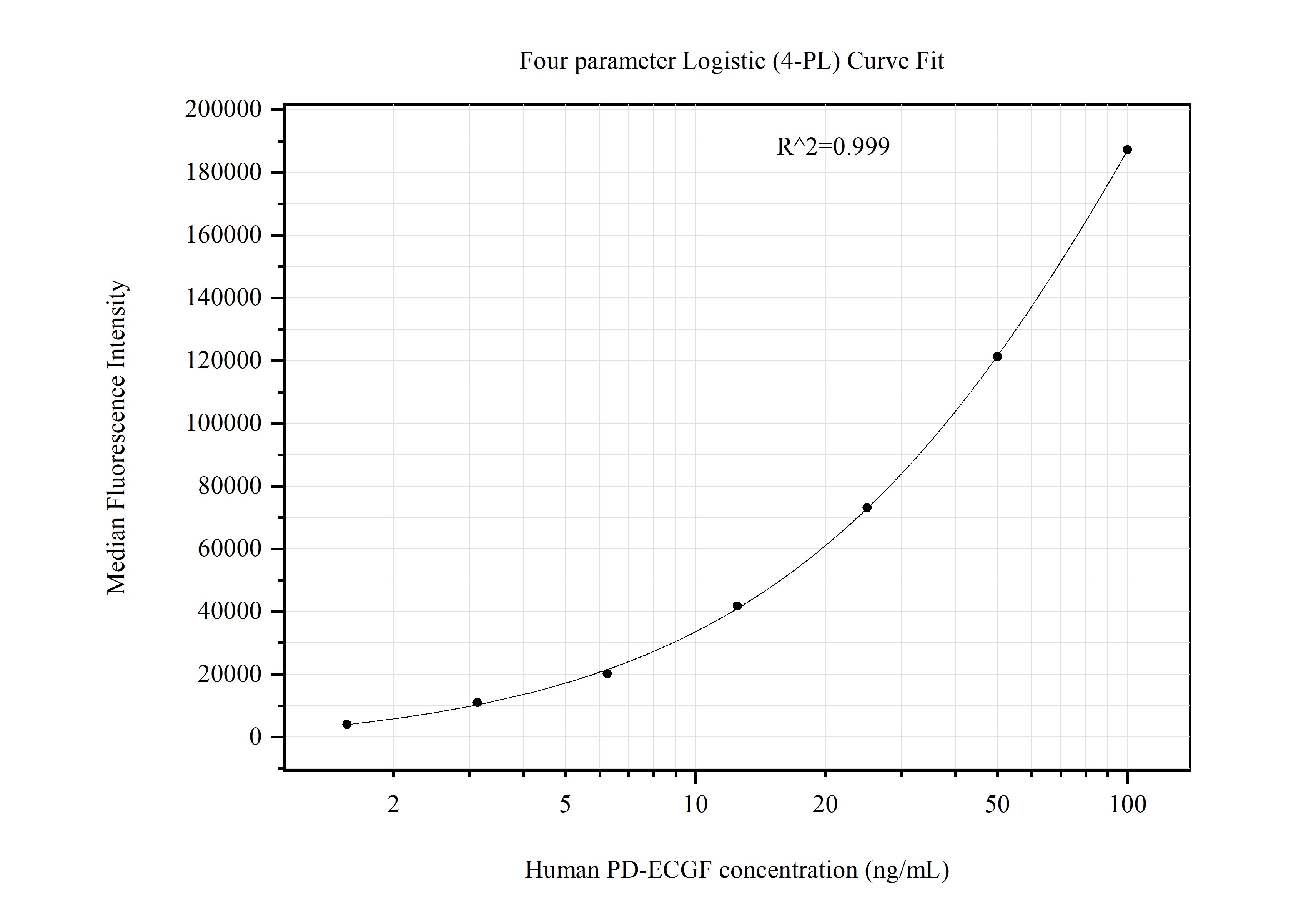
67104-2-PBS cible PD-ECGF dans les applications de Cytometric bead array, Indirect ELISA et montre une réactivité avec des échantillons Humain
| Réactivité | Humain |
| Hôte / Isotype | Mouse / IgG2a |
| Clonalité | Monoclonal |
| Type | Anticorps |
| Immunogène | PD-ECGF Protéine recombinante Ag28631 |
| Nom complet | thymidine phosphorylase |
| Masse moléculaire calculée | 482 aa, 50 kDa |
| Numéro d’acquisition GenBank | BC018160 |
| Symbole du gène | Thymidine phosphorylase |
| Identification du gène (NCBI) | 1890 |
| Conjugaison | Non conjugué |
| Forme | Liquide |
| Méthode de purification | Purification par protéine A |
| Tampon de stockage | PBS only |
| Conditions de stockage | Store at -80°C. 20ul contiennent 0,1% de BSA. |
Informations générales
Platelet derived endothelial cell growth factor (PD-ECGF), also known as thymidine phosphorylase (TP), induces migration and angiogenesis in endothelial and tumor cells, and was upregulated in various malignancies compared to that in normal tissues. Interestingly, PD-ECGF has dual effect on tumor development and chemotherapy. It could stimulate cancer cell migration and proliferation. On the other hand, some chemotherapeutic agents (5-fluorouracil, capecitabine, etc.] were converted to their active forms through TP enzymes.


