- Phare
- Validé par KD/KO
Anticorps Monoclonal anti-PHD2/EGLN1
PHD2/EGLN1 Monoclonal Antibody for WB, IHC, IF/ICC, Indirect ELISA
Hôte / Isotype
Mouse / IgG1
Réactivité testée
Humain, porc, rat, souris
Applications
WB, IHC, IF/ICC, Indirect ELISA
Conjugaison
Non conjugué
CloneNo.
1A2F1
N° de cat : 66589-1-PBS
Synonymes
Galerie de données de validation
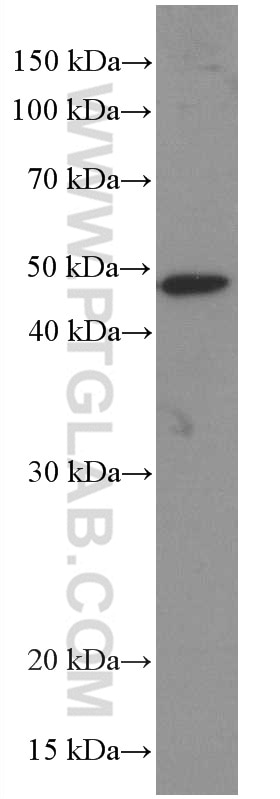
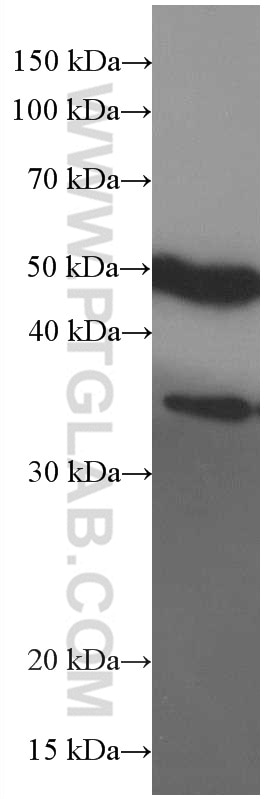
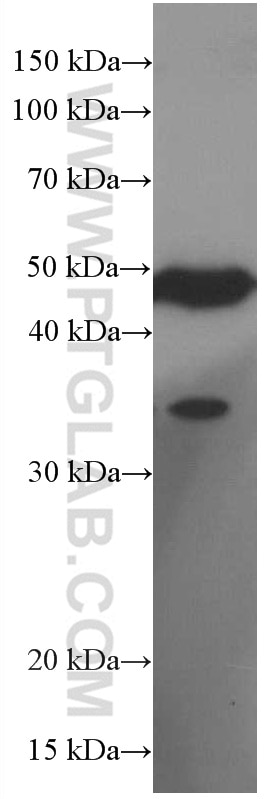
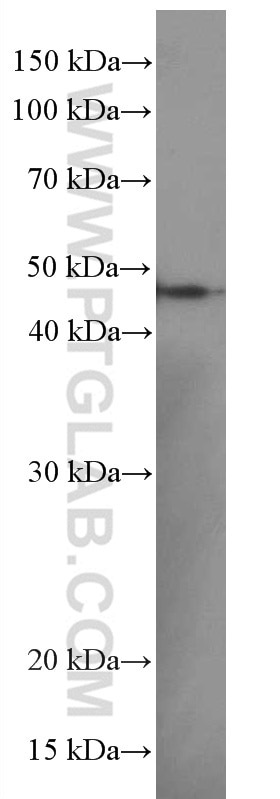
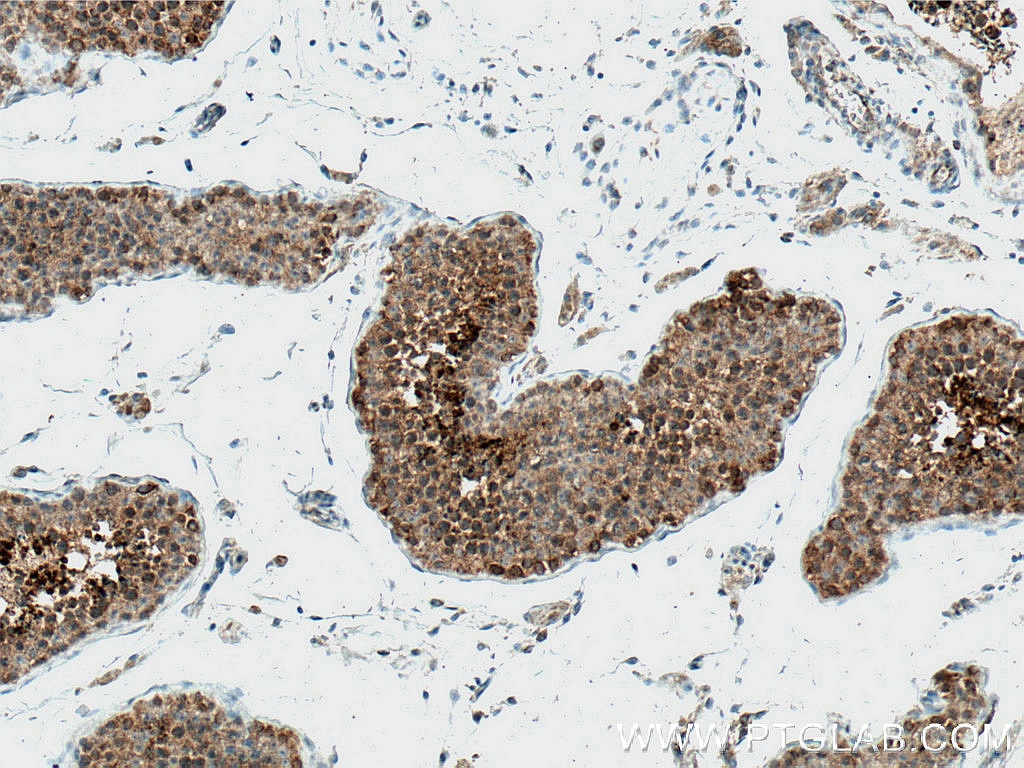
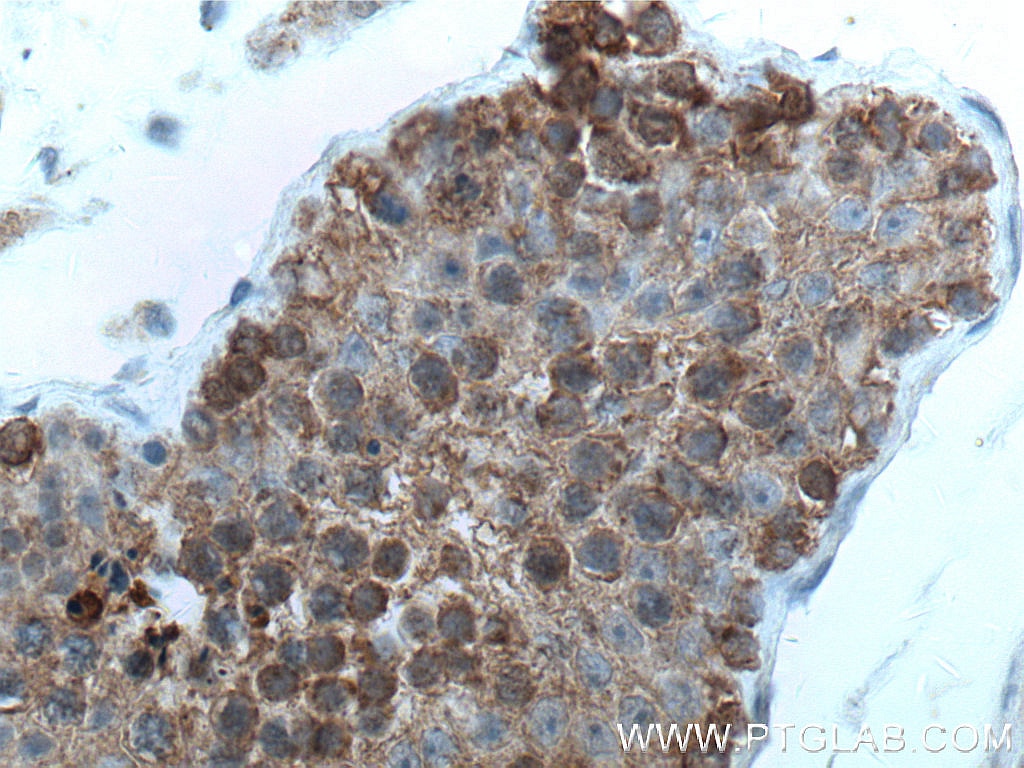
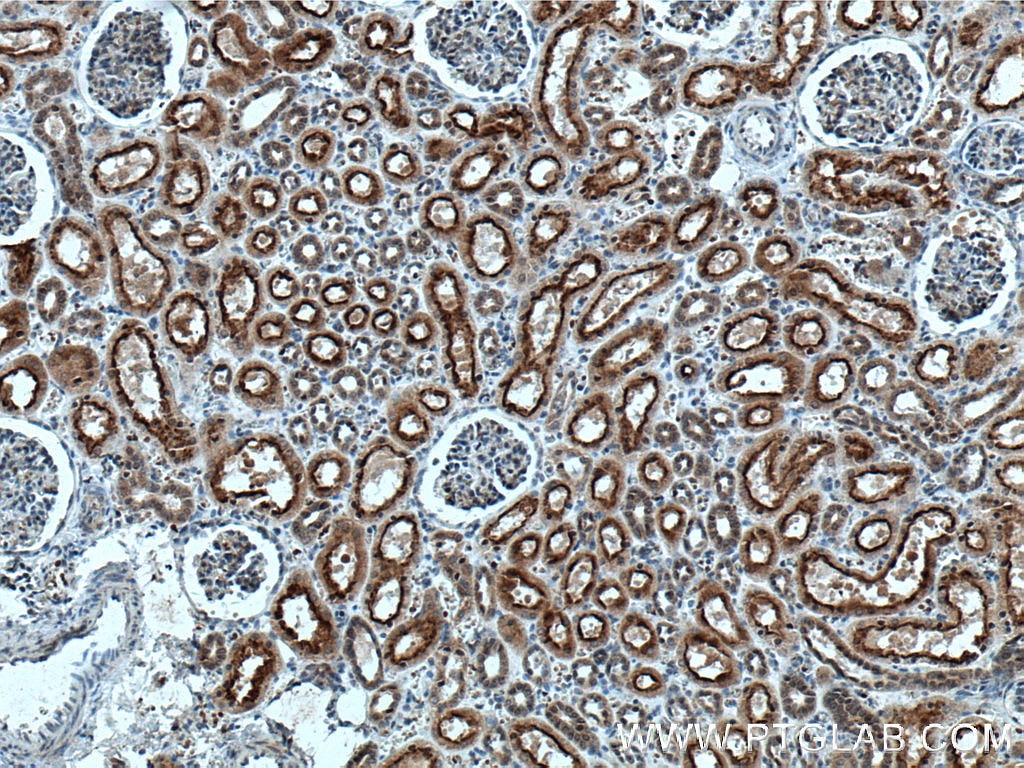
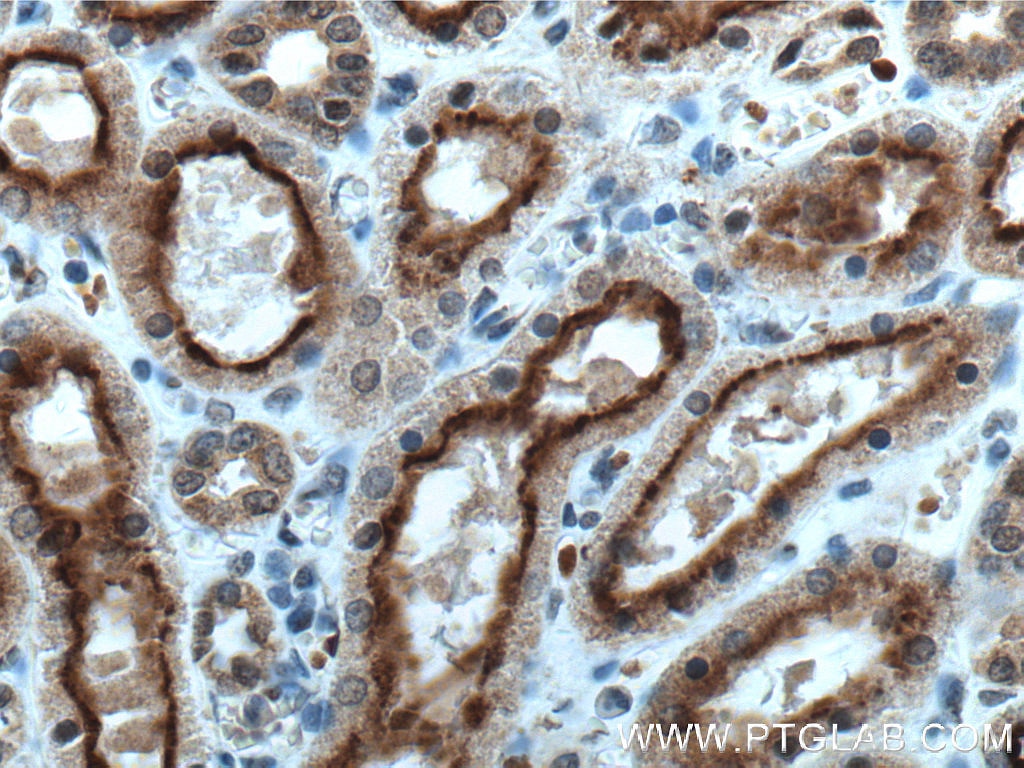
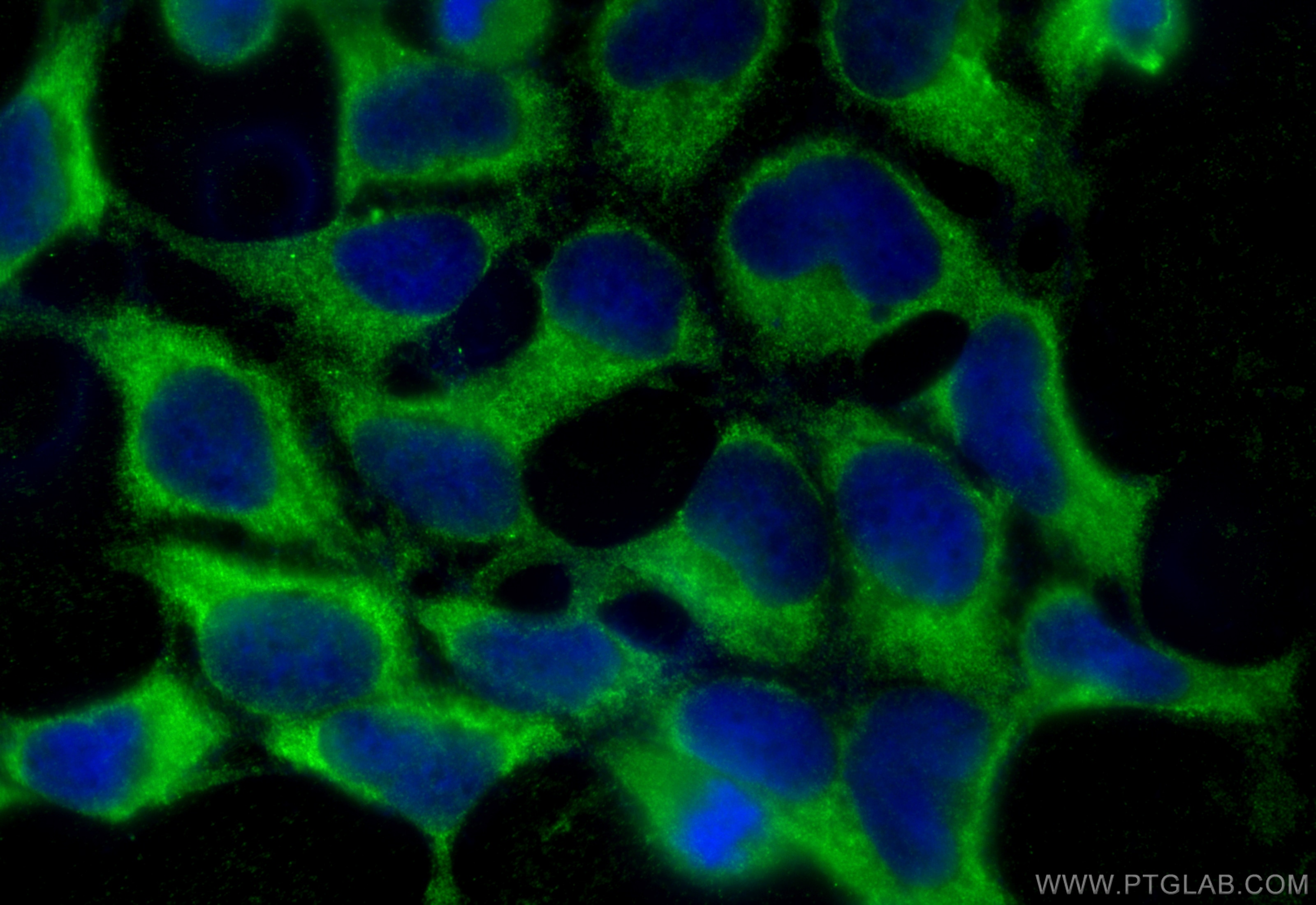
Informations sur le produit
66589-1-PBS cible PHD2/EGLN1 dans les applications de WB, IHC, IF/ICC, Indirect ELISA et montre une réactivité avec des échantillons Humain, porc, rat, souris
| Réactivité | Humain, porc, rat, souris |
| Hôte / Isotype | Mouse / IgG1 |
| Clonalité | Monoclonal |
| Type | Anticorps |
| Immunogène | Peptide |
| Nom complet | egl nine homolog 1 (C. elegans) |
| Masse moléculaire calculée | 46 kDa |
| Poids moléculaire observé | 46 kDa, 44 kDa, 36 kDa |
| Numéro d’acquisition GenBank | NM_022051 |
| Symbole du gène | PHD2/EGLN1 |
| Identification du gène (NCBI) | 54583 |
| Conjugaison | Non conjugué |
| Forme | Liquide |
| Méthode de purification | Purification par protéine G |
| Tampon de stockage | PBS only |
| Conditions de stockage | Store at -80°C. 20ul contiennent 0,1% de BSA. |
Informations générales
EGLN1, also named as PHD2, SM-20, HPH-2 and HIF-PH2, catalyzes the post-translational formation of 4-hydroxyproline in hypoxia-inducible factor (HIF) alpha proteins. It hydroxylates HIF-1 alpha at 'Pro-402' and 'Pro-564', and HIF-2 alpha. EGLN1 functions as a cellular oxygen sensor and, under normoxic conditions, targets HIF through the hydroxylation for proteasomal degradation via the von Hippel-Lindau ubiquitination complex. Defects in EGLN1 are the cause of erythrocytosis familial type 3 (ECYT3). EGLN1 has 3 isoforms with MW of 46 kDa, 44 kDa and 36 kDa produced by alternative splicing. It mainly localizes in cytoplasm and can shuttle between the nucleus and cytoplasm (PubMed:19631610). The antibody is specific to EGLN1.


