Anticorps Polyclonal de lapin anti-PIPPIN
PIPPIN Polyclonal Antibody for WB, IHC, Indirect ELISA
Hôte / Isotype
Lapin / IgG
Réactivité testée
Humain, souris
Applications
WB, IHC, Indirect ELISA
Conjugaison
Non conjugué
N° de cat : 25013-1-PBS
Synonymes
Galerie de données de validation
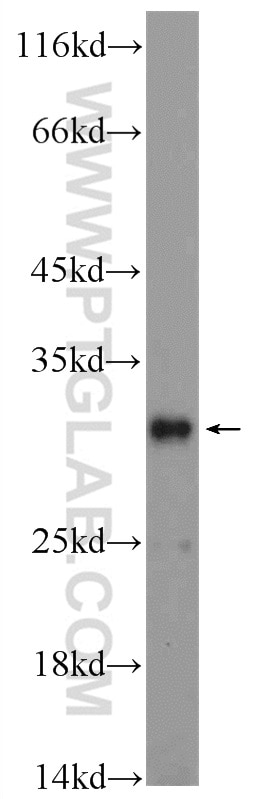
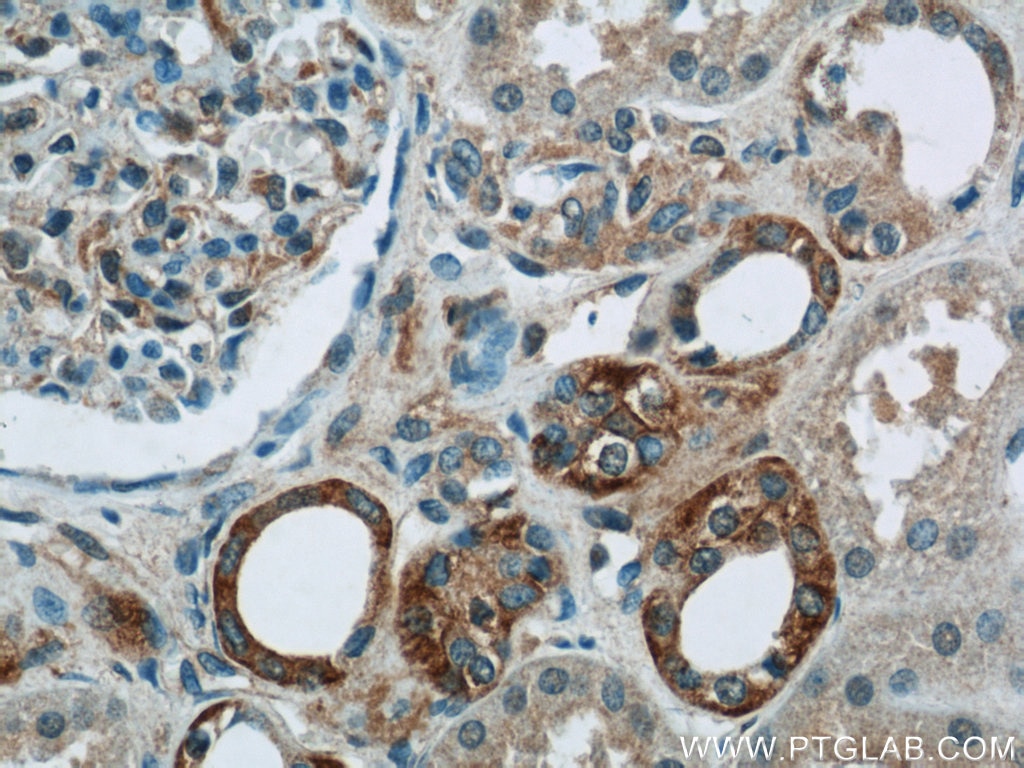
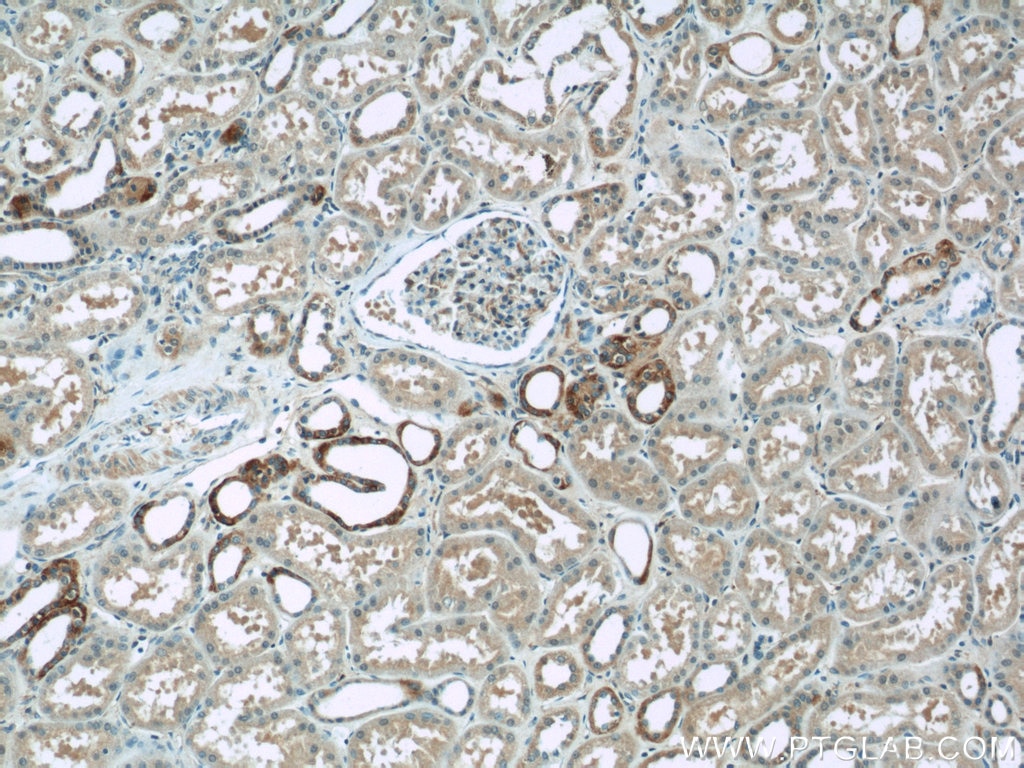
Informations sur le produit
25013-1-PBS cible PIPPIN dans les applications de WB, IHC, Indirect ELISA et montre une réactivité avec des échantillons Humain, souris
| Réactivité | Humain, souris |
| Hôte / Isotype | Lapin / IgG |
| Clonalité | Polyclonal |
| Type | Anticorps |
| Immunogène | PIPPIN Protéine recombinante Ag16216 |
| Nom complet | cold shock domain containing C2, RNA binding |
| Masse moléculaire calculée | 153 aa, 17 kDa |
| Poids moléculaire observé | 30 kDa |
| Numéro d’acquisition GenBank | BC067113 |
| Symbole du gène | CSDC2 |
| Identification du gène (NCBI) | 27254 |
| Conjugaison | Non conjugué |
| Forme | Liquide |
| Méthode de purification | Purification par affinité contre l'antigène |
| Tampon de stockage | PBS only |
| Conditions de stockage | Store at -80°C. 20ul contiennent 0,1% de BSA. |
Informations générales
PIPPIN, also known as CSDC2 (Cold shock domain-containing protein C2) is an RNA‐binding protein (RBP), highly enriched in the rat brain, specifically enriched in some pyramidal neurons of the cerebral cortex and in the Purkinje cells of the cerebellum (PMID: 10446180). PIPPIN has the potential to undergo different posttranslational modifications and might be a good candidate to regulate the synthesis of specific proteins in response to extracellular stimuli. Nuclear CSDC2 is connected to proliferation and cytoplasmic CSDC2 to terminal differentiation in the decidua and that CSDC2 could regulate differentiation during decidua development (PMID: 30078185, PMID: 17053029).


