Anticorps Recombinant de lapin anti-PKC Iota
PKC Iota Recombinant Antibody for WB, Sandwich ELISA, Indirect ELISA, Sample test
Hôte / Isotype
Lapin / IgG
Réactivité testée
Humain, rat, souris
Applications
WB, Sandwich ELISA, Indirect ELISA, Sample test
Conjugaison
Non conjugué
CloneNo.
243126A4
N° de cat : 85733-2-PBS
Synonymes
Galerie de données de validation
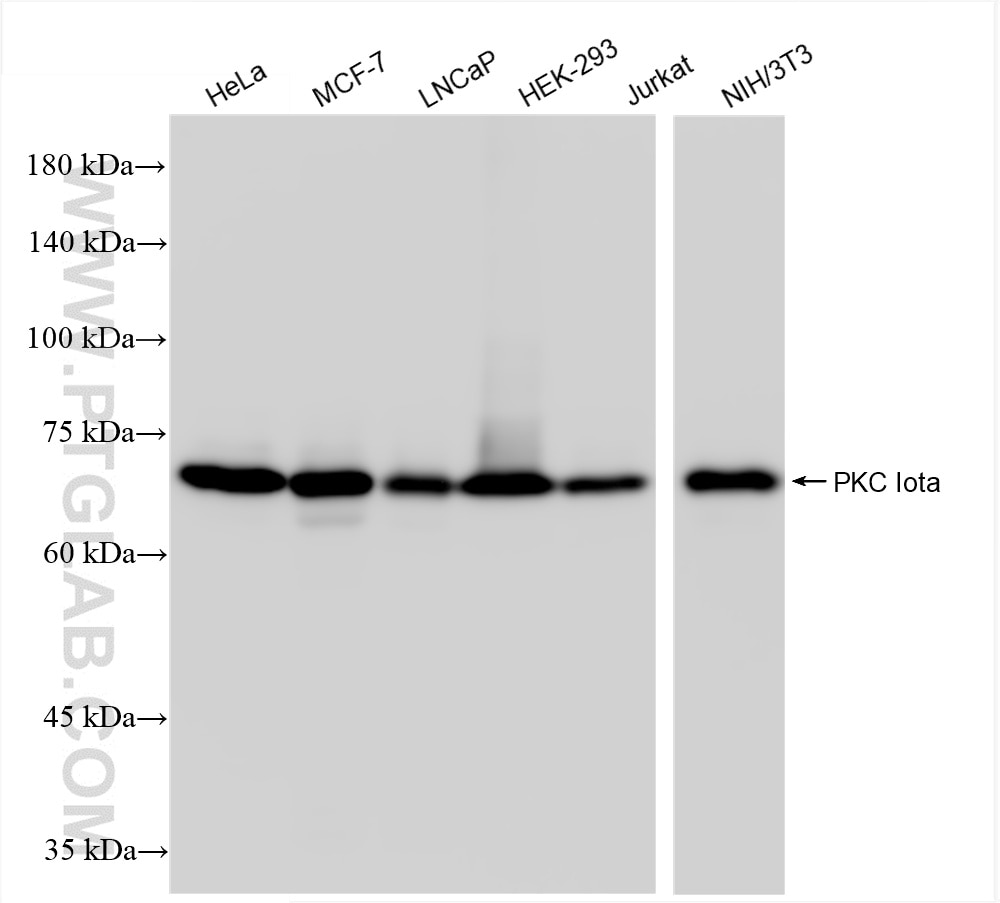
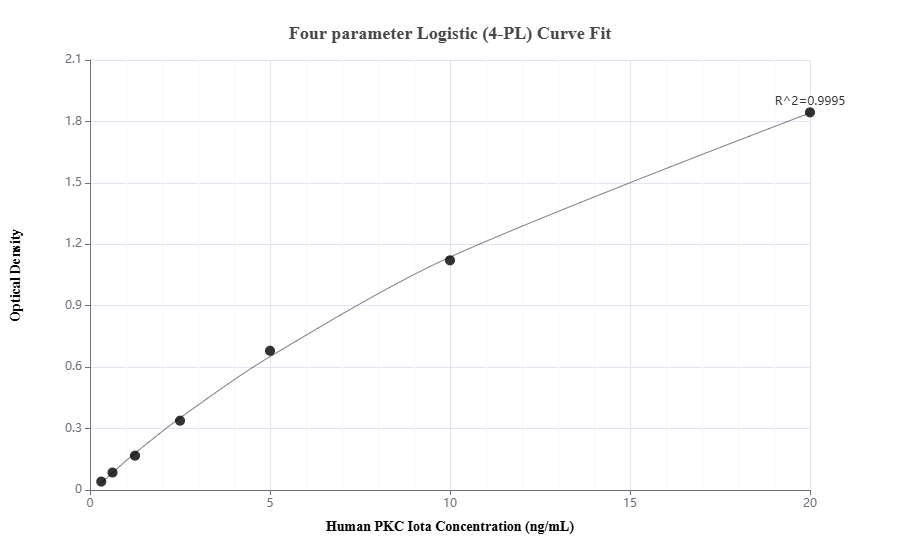
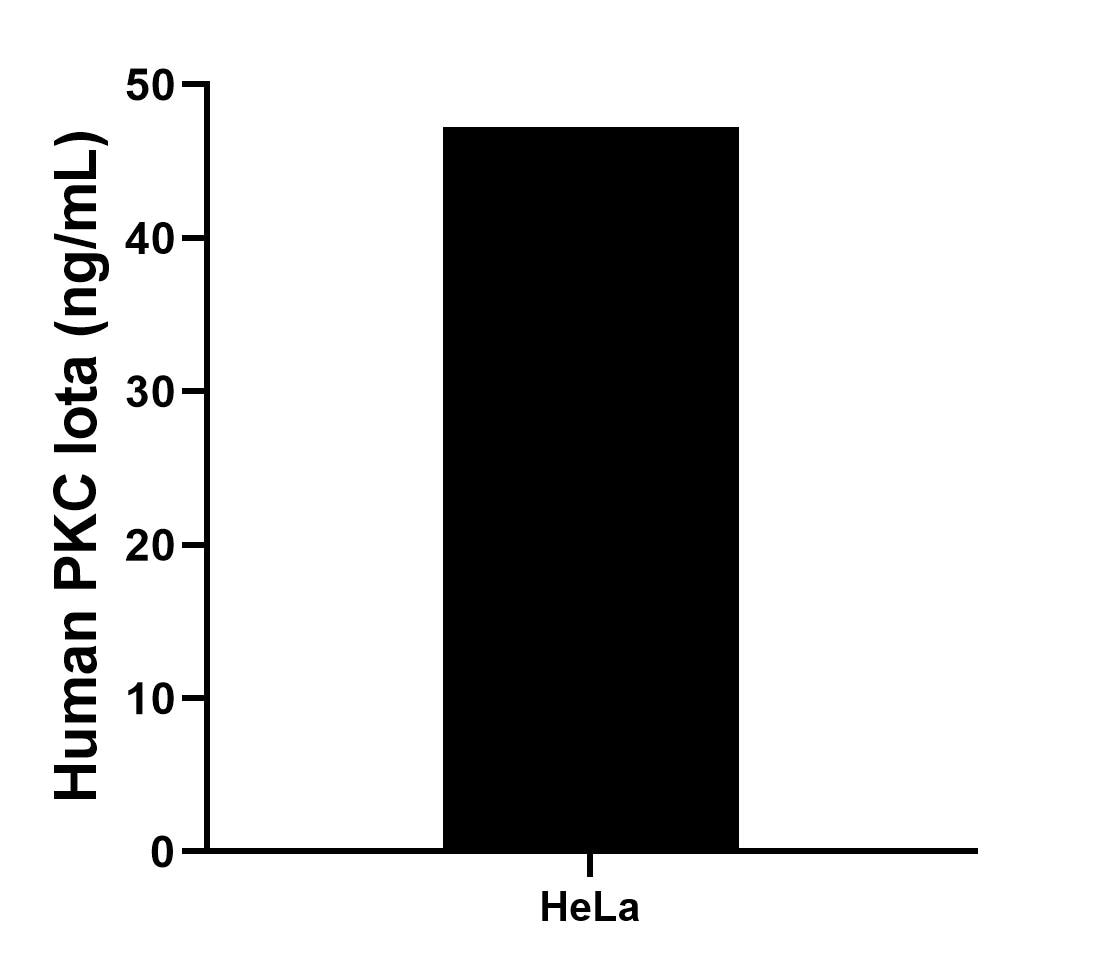
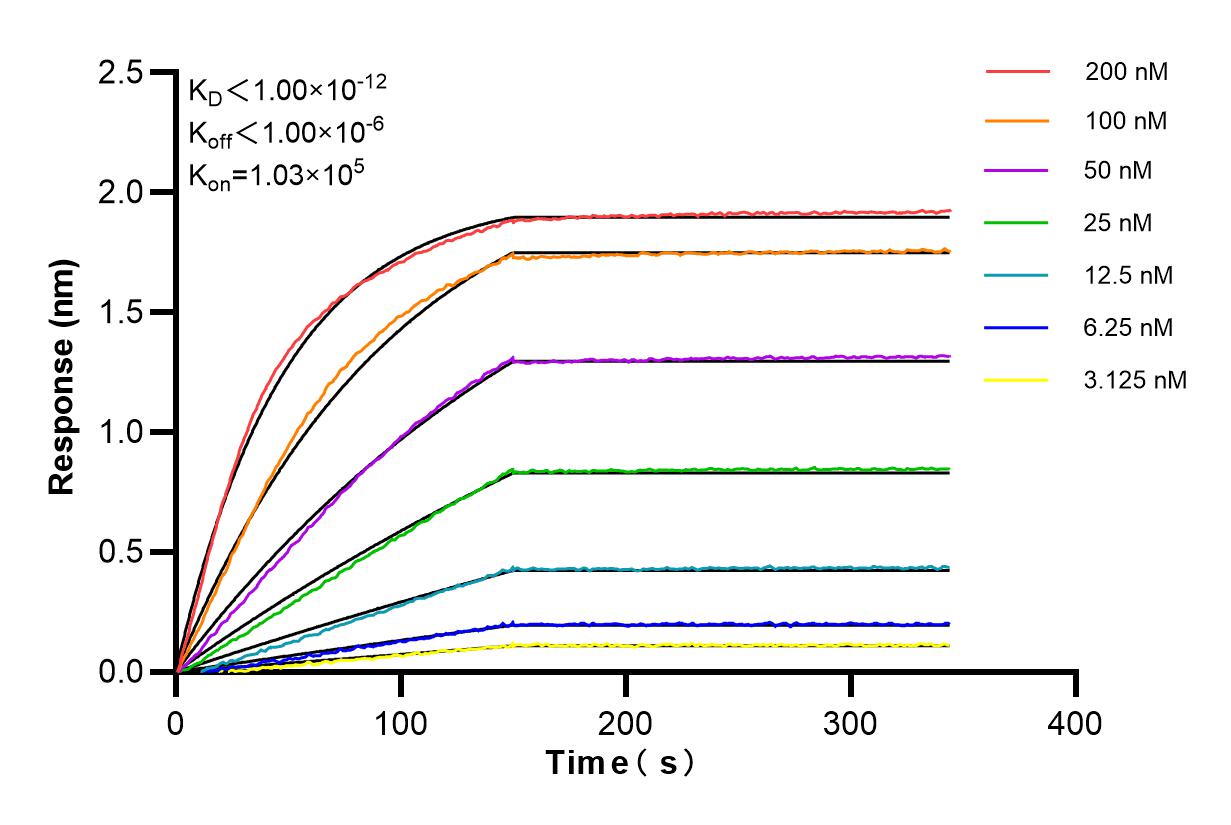
Informations sur le produit
85733-2-PBS cible PKC Iota dans les applications de WB, Sandwich ELISA, Indirect ELISA, Sample test et montre une réactivité avec des échantillons Humain, rat, souris
| Réactivité | Humain, rat, souris |
| Hôte / Isotype | Lapin / IgG |
| Clonalité | Recombinant |
| Type | Anticorps |
| Immunogène | PKC Iota Protéine recombinante Ag4990 |
| Nom complet | protein kinase C, iota |
| Masse moléculaire calculée | 68 kDa |
| Poids moléculaire observé | 67 kDa |
| Numéro d’acquisition GenBank | BC022016 |
| Symbole du gène | PKC Iota |
| Identification du gène (NCBI) | 5584 |
| Conjugaison | Non conjugué |
| Forme | Liquide |
| Méthode de purification | Purification par protéine A |
| Tampon de stockage | PBS only |
| Conditions de stockage | Store at -80°C. 20ul contiennent 0,1% de BSA. |
Informations générales
The atypical protein kinase C isoform PRKC iota (PRKCI) is a member of the protein kinase C (PKC) family of serine/threonine protein kinases. PKC family comprises at least eight members, which are differentially expressed and are involved in a wide variety of cellular processes. PRKC iota is calcium-independent and phospholipid-dependent. It is not activated by phorbolesters or diacylglycerol. This kinase can be recruited to vesicle tubular clusters (VTCs) by direct interaction with the small GTPase RAB2, where this kinase phosphorylates glyceraldehyde-3-phosphate dehydrogenase (GAPD/GAPDH) and plays a role in microtubule dynamics in the early secretory pathway. This kinase is found to be necessary for BCL-ABL-mediated resistance to drug-induced apoptosis and therefore protects leukemia cells against drug-induced apoptosis. PRKC iota plays a key role in cell proliferation, differentiation, and carcinogenesis, and it has been shown to be a human oncogene.


