- Phare
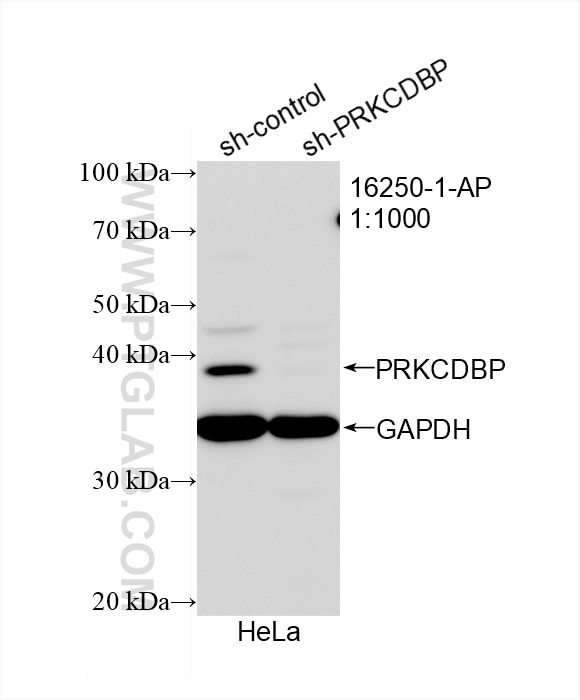
- Validé par KD/KO
Anticorps Polyclonal de lapin anti-PRKCDBP
PRKCDBP Polyclonal Antibody for WB, IHC, IF/ICC, IP, Indirect ELISA
Hôte / Isotype
Lapin / IgG
Réactivité testée
Humain, rat, souris
Applications
WB, IHC, IF/ICC, IP, Indirect ELISA
Conjugaison
Non conjugué
N° de cat : 16250-1-PBS
Synonymes
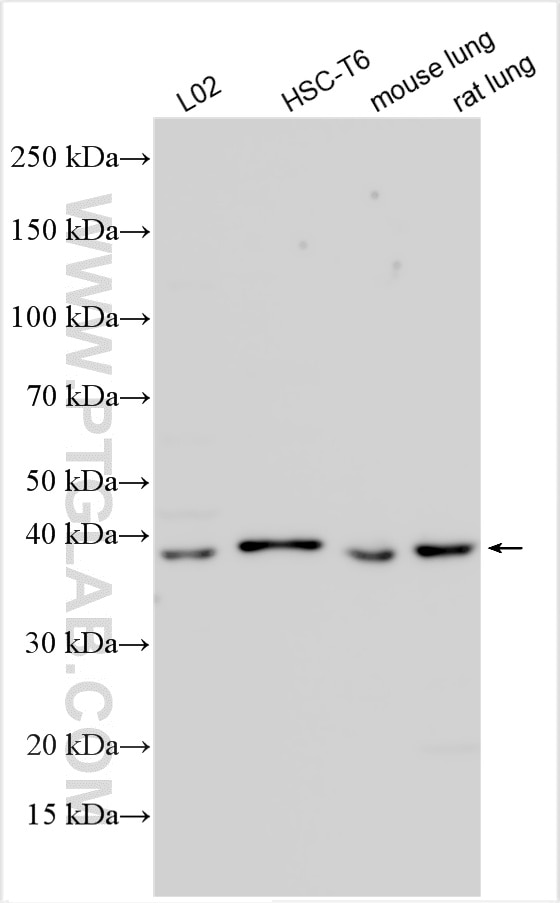
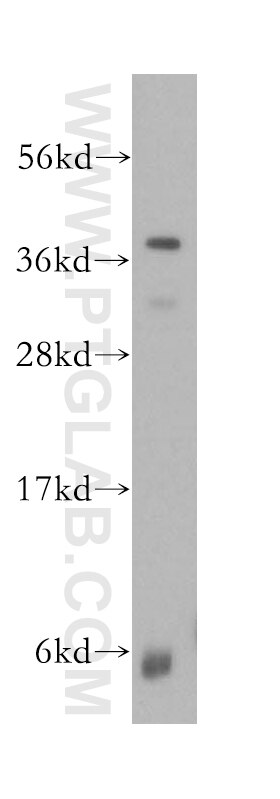
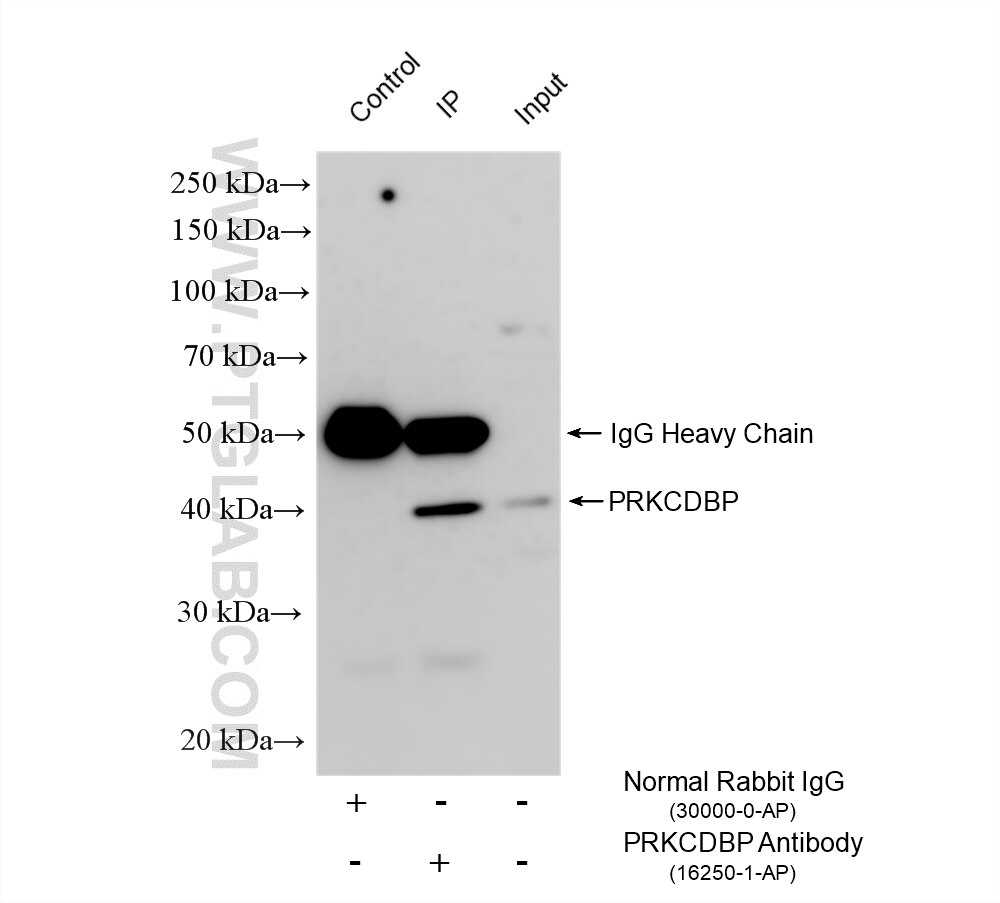
Galerie de données de validation
Informations sur le produit
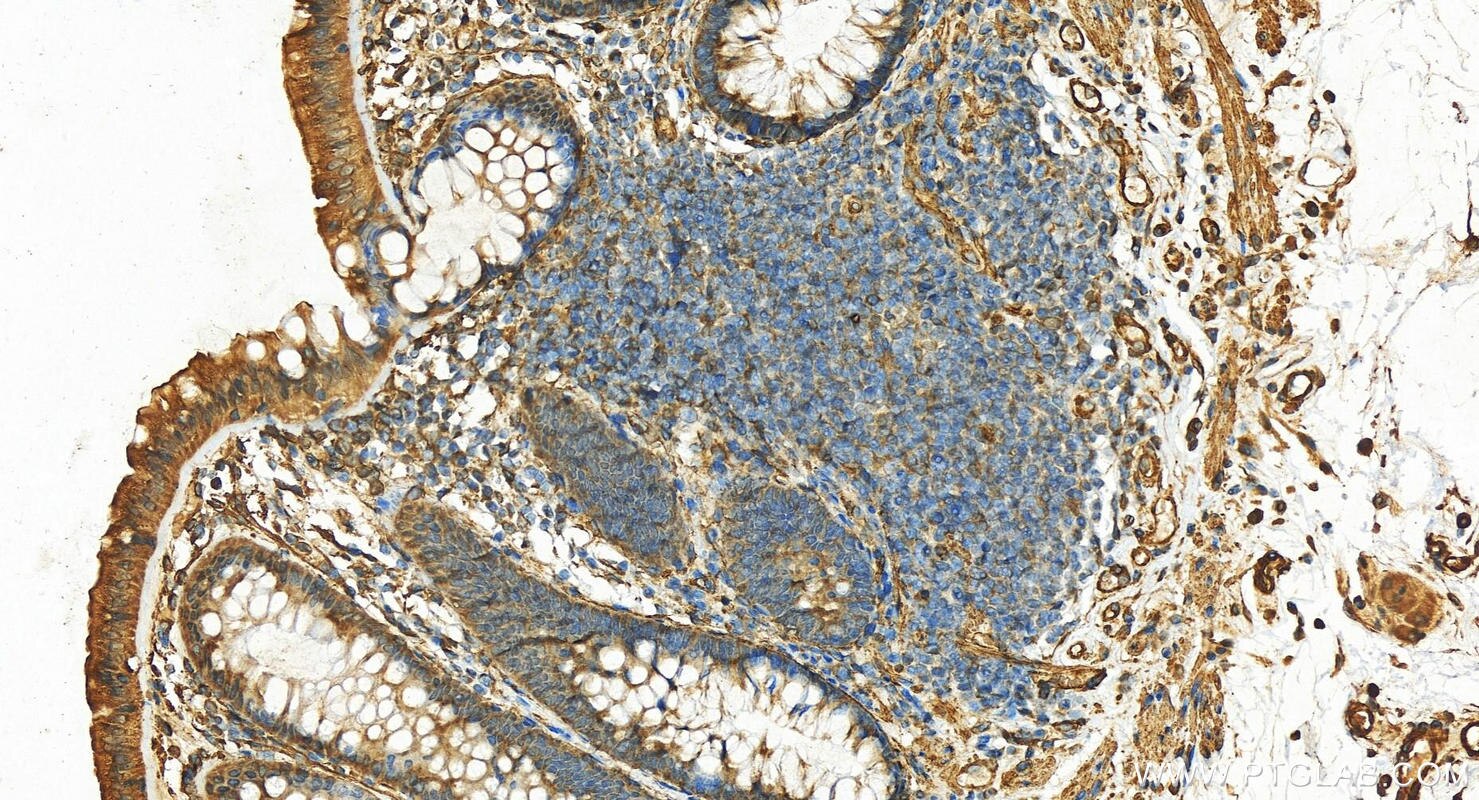
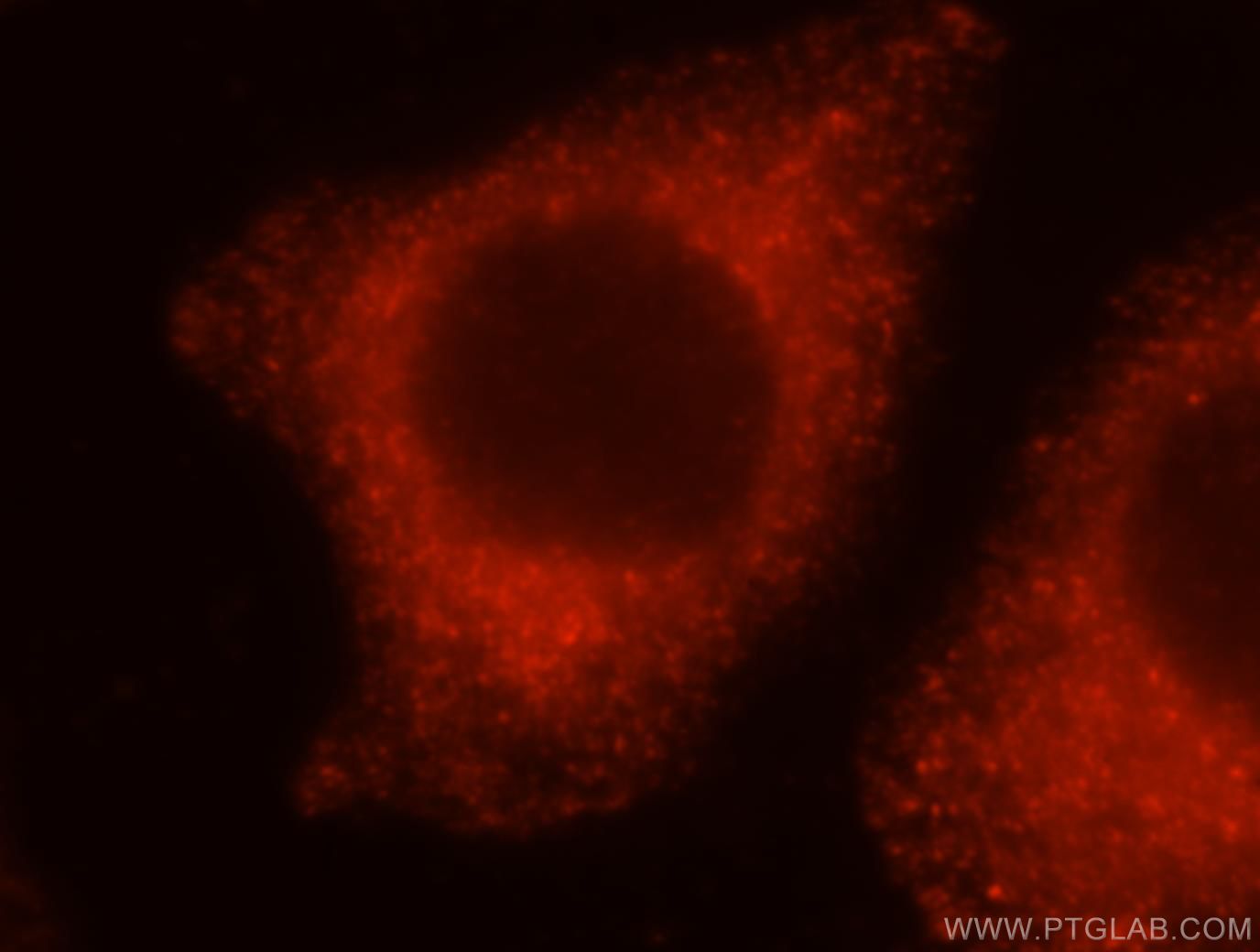
16250-1-PBS cible PRKCDBP dans les applications de WB, IHC, IF/ICC, IP, Indirect ELISA et montre une réactivité avec des échantillons Humain, rat, souris
| Réactivité | Humain, rat, souris |
| Hôte / Isotype | Lapin / IgG |
| Clonalité | Polyclonal |
| Type | Anticorps |
| Immunogène | PRKCDBP Protéine recombinante Ag9209 |
| Nom complet | protein kinase C, delta binding protein |
| Masse moléculaire calculée | 261 aa, 28 kDa |
| Poids moléculaire observé | 35-40 kDa |
| Numéro d’acquisition GenBank | BC011585 |
| Symbole du gène | PRKCDBP |
| Identification du gène (NCBI) | 112464 |
| Conjugaison | Non conjugué |
| Forme | Liquide |
| Méthode de purification | Purification par affinité contre l'antigène |
| Tampon de stockage | PBS only |
| Conditions de stockage | Store at -80°C. 20ul contiennent 0,1% de BSA. |
Informations générales
Protein kinase C delta-binding protein (PRKCDBP) is a putative tumor suppressor in which alteration has been observed in several human cancers. It is a BRCA1-interacting protein, and may also be involved in DNA damage response and participate in BRCA1-mediated tumor suppression pathways. PKCdelta binds to the C-terminal half of PRKCDBP through the regulatory domain and phosphorylates it in vitro. In COS1 cells, the phosphorylation of over-expressed PRKCDBP is stimulated by 12-O-tetradecanoylphorbol-13-acetate and further enhanced by the over-expression of PKCdelta


