Anticorps Polyclonal de lapin anti-PRKCQ-Specific
PRKCQ-Specific Polyclonal Antibody for WB, FC (Intra), IP, Indirect ELISA
Hôte / Isotype
Lapin / IgG
Réactivité testée
Humain
Applications
WB, FC (Intra), IP, Indirect ELISA
Conjugaison
Non conjugué
N° de cat : 19982-1-PBS
Synonymes
Galerie de données de validation
Informations sur le produit
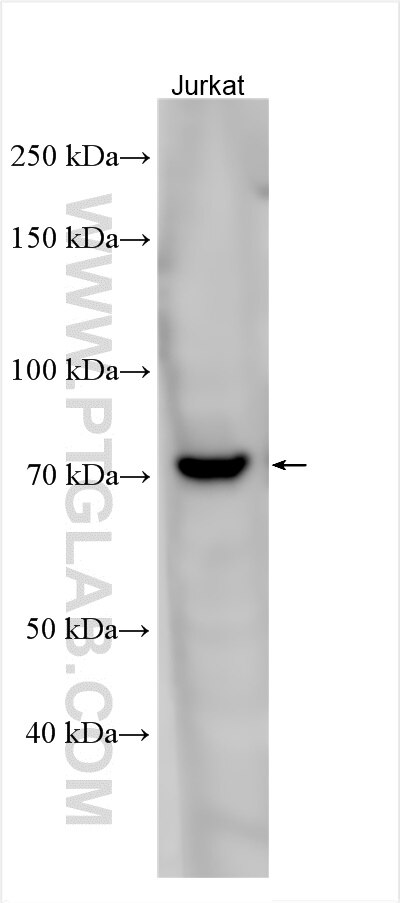
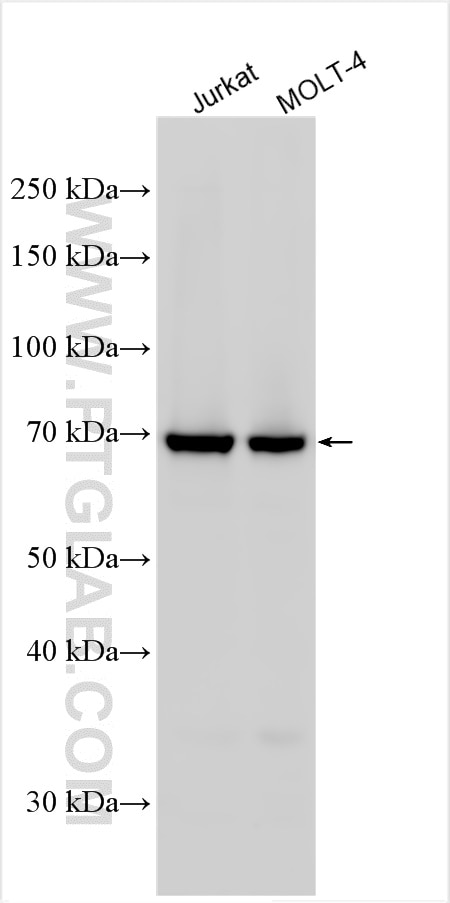
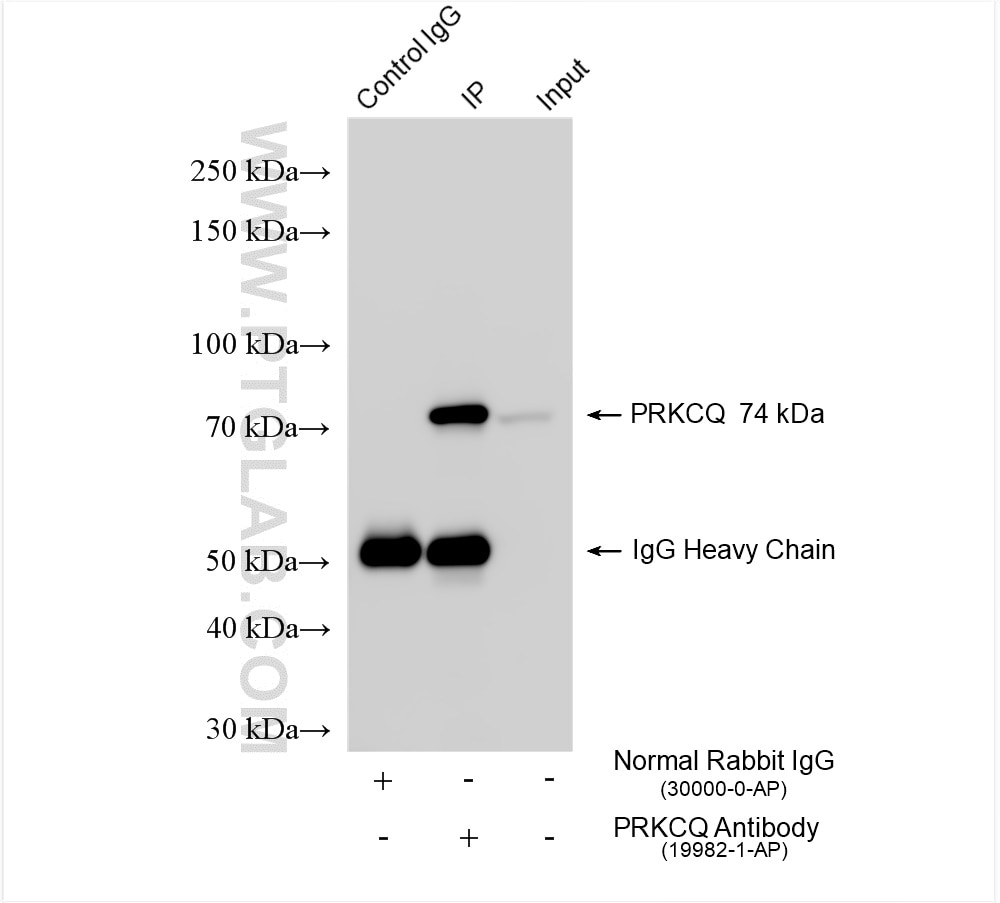
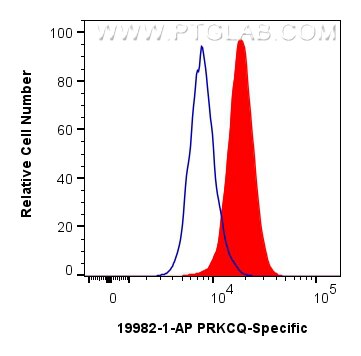
19982-1-PBS cible PRKCQ-Specific dans les applications de WB, FC (Intra), IP, Indirect ELISA et montre une réactivité avec des échantillons Humain
| Réactivité | Humain |
| Hôte / Isotype | Lapin / IgG |
| Clonalité | Polyclonal |
| Type | Anticorps |
| Immunogène | Peptide |
| Nom complet | protein kinase C, theta |
| Masse moléculaire calculée | 82 kDa |
| Poids moléculaire observé | 72-74 kDa |
| Numéro d’acquisition GenBank | NM_006257 |
| Symbole du gène | PRKCQ |
| Identification du gène (NCBI) | 5588 |
| Conjugaison | Non conjugué |
| Forme | Liquide |
| Méthode de purification | Purification par affinité contre l'antigène |
| Tampon de stockage | PBS only |
| Conditions de stockage | Store at -80°C. 20ul contiennent 0,1% de BSA. |
Informations générales
PRKCQ, also named as PRKCT and nPKC-theta, belongs to the protein kinase superfamily, AGC Ser/Thr protein kinase family and PKC subfamily. PRKCQ catalyzes the reaction: ATP + a protein = ADP + a phosphoprotein. PRKCQ is a calcium-independent, phospholipid-dependent, serine- and threonine-specific enzyme. It is essential for T-cell receptor (TCR)-mediated T-cell activation, but it is dispensable during TCR-dependent thymocyte development. PRKCQ links the TCR signaling complex to the activation of NF-kappa-B in mature T lymphocytes. It is required for interleukin-2 (IL2) production. PKC is activated by diacylglycerol which in turn phosphorylates a range of cellular proteins. PKC also serves as the receptor for phorbol esters, a class of tumor promoters. This antibody is specific to PRKCQ.


