Anticorps Recombinant de lapin anti-PROSC
PROSC Recombinant Antibody for WB, IHC, ELISA
Hôte / Isotype
Lapin / IgG
Réactivité testée
Humain, souris
Applications
WB, IHC, ELISA
Conjugaison
Non conjugué
CloneNo.
240998B6
N° de cat : 83831-5-PBS
Synonymes
Galerie de données de validation
Filter:
Informations sur le produit
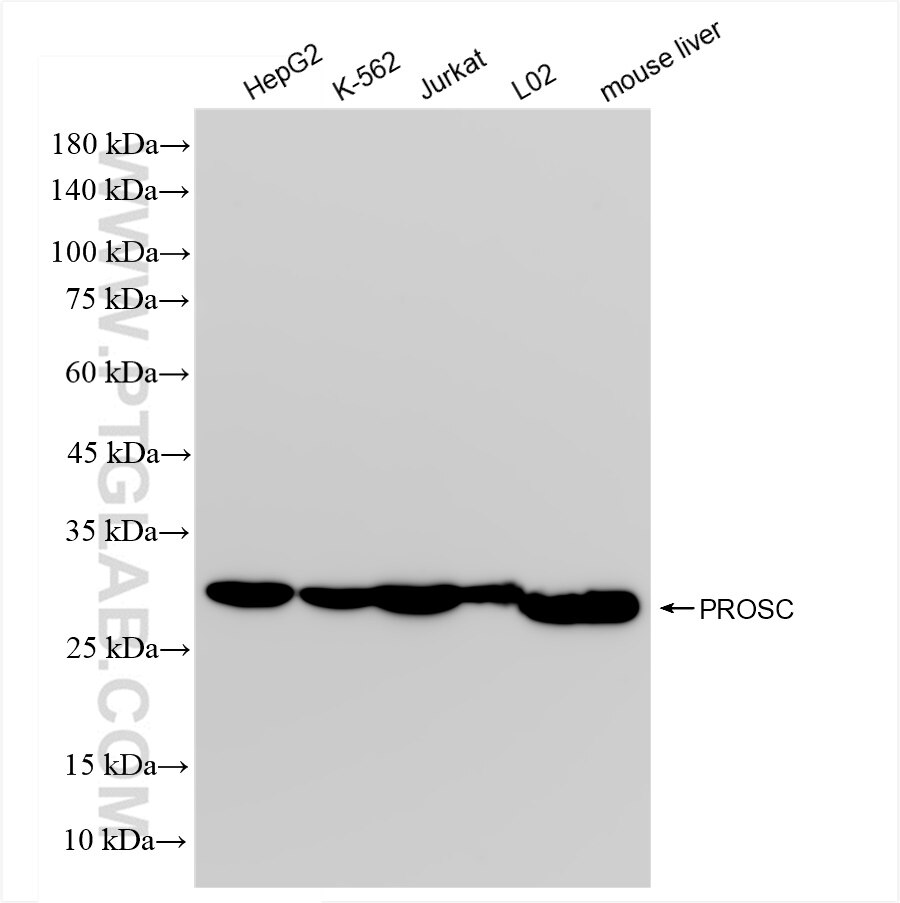
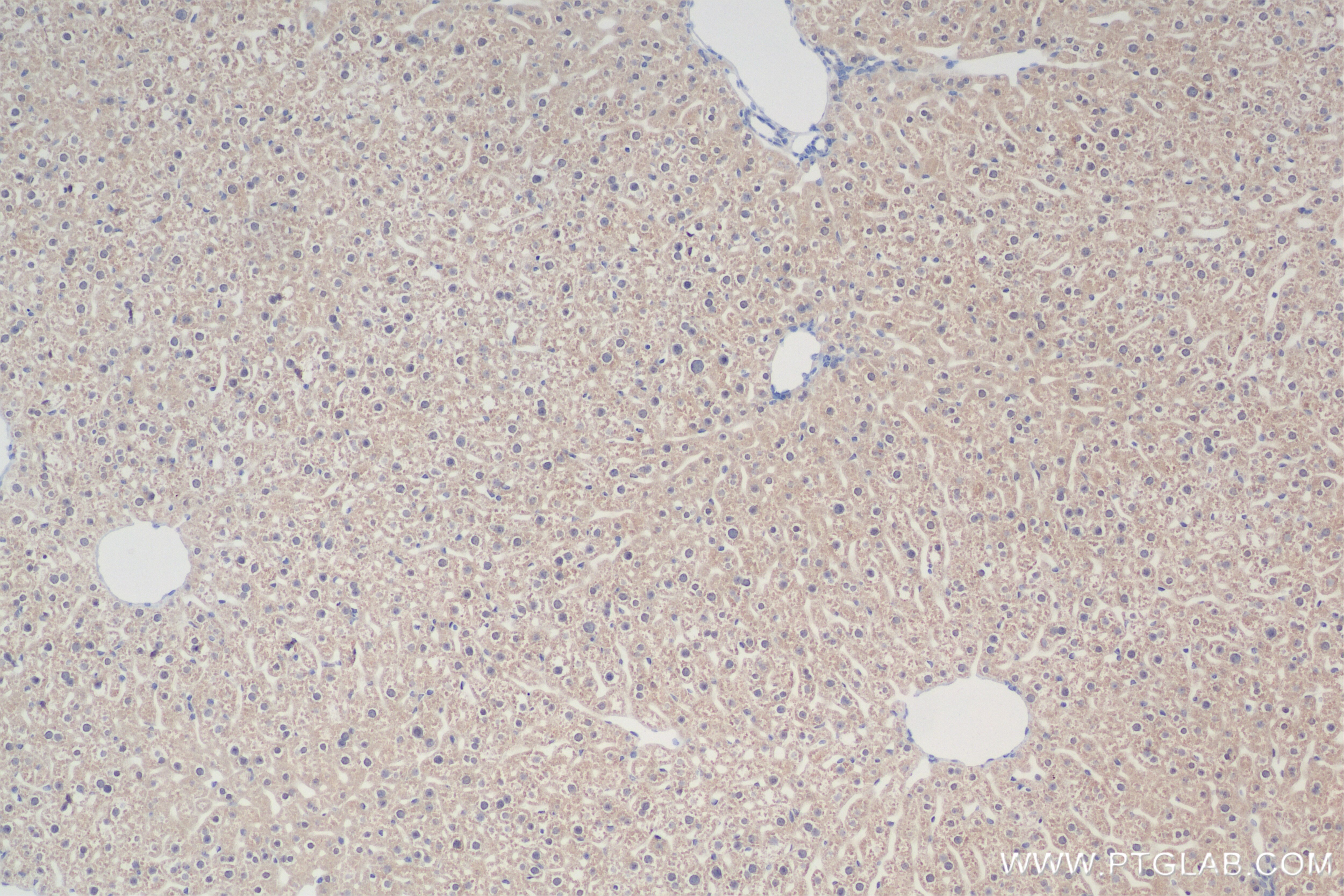
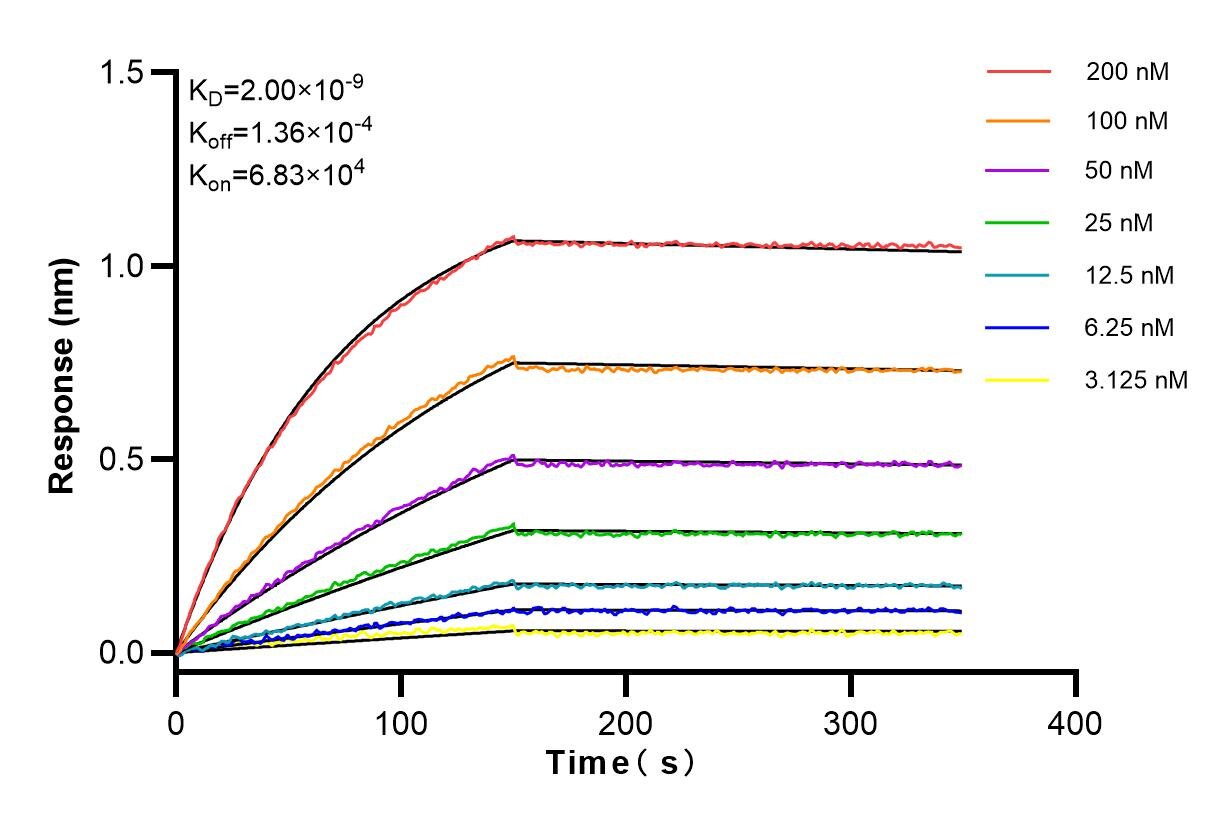
83831-5-PBS cible PROSC dans les applications de WB, IHC, ELISA et montre une réactivité avec des échantillons Humain, souris
| Réactivité | Humain, souris |
| Hôte / Isotype | Lapin / IgG |
| Clonalité | Recombinant |
| Type | Anticorps |
| Immunogène | PROSC Protéine recombinante Ag18369 |
| Nom complet | proline synthetase co-transcribed homolog (bacterial) |
| Masse moléculaire calculée | 275 aa, 30 kDa |
| Poids moléculaire observé | 30 kDa |
| Numéro d’acquisition GenBank | BC012334 |
| Symbole du gène | PROSC |
| Identification du gène (NCBI) | 11212 |
| Conjugaison | Non conjugué |
| Forme | Liquide |
| Méthode de purification | Protein A purfication |
| Tampon de stockage | PBS only |
| Conditions de stockage | Store at -80°C. 20ul contiennent 0,1% de BSA. |
Informations générales
Human Pyridoxal 5′-phosphate-binding protein (PLPBP; previously proline synthase cotranscribed homolog, PROSC) was first described in 1999 and was demonstrated to be ubiquitously expressed in many tissues. PROSC is ubiquitously expressed in human tissues and is highly conserved throughout evolution. PROSC deficiency could therefore markedly increase free cellular PLP levels (PMID: 31825581, 27912044).


