Anticorps Polyclonal de lapin anti-PTPRD
PTPRD Polyclonal Antibody for WB, IHC, ELISA
Hôte / Isotype
Lapin / IgG
Réactivité testée
Humain, rat, souris
Applications
WB, IHC, ELISA
Conjugaison
Non conjugué
N° de cat : 27941-1-AP
Synonymes
Galerie de données de validation
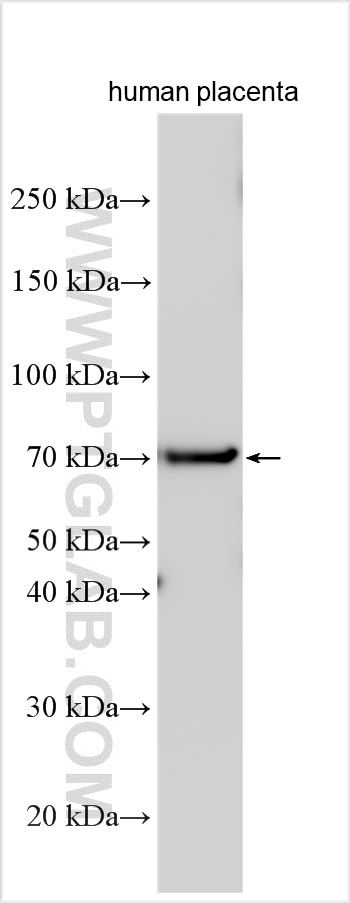
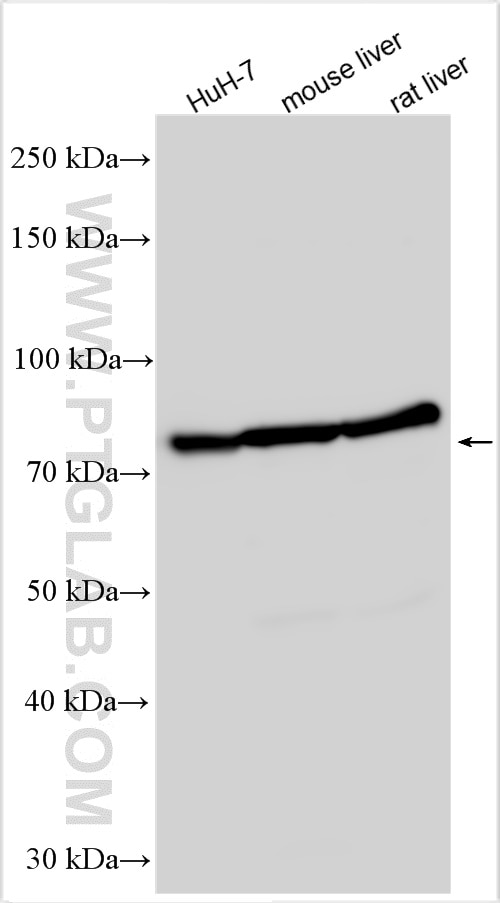
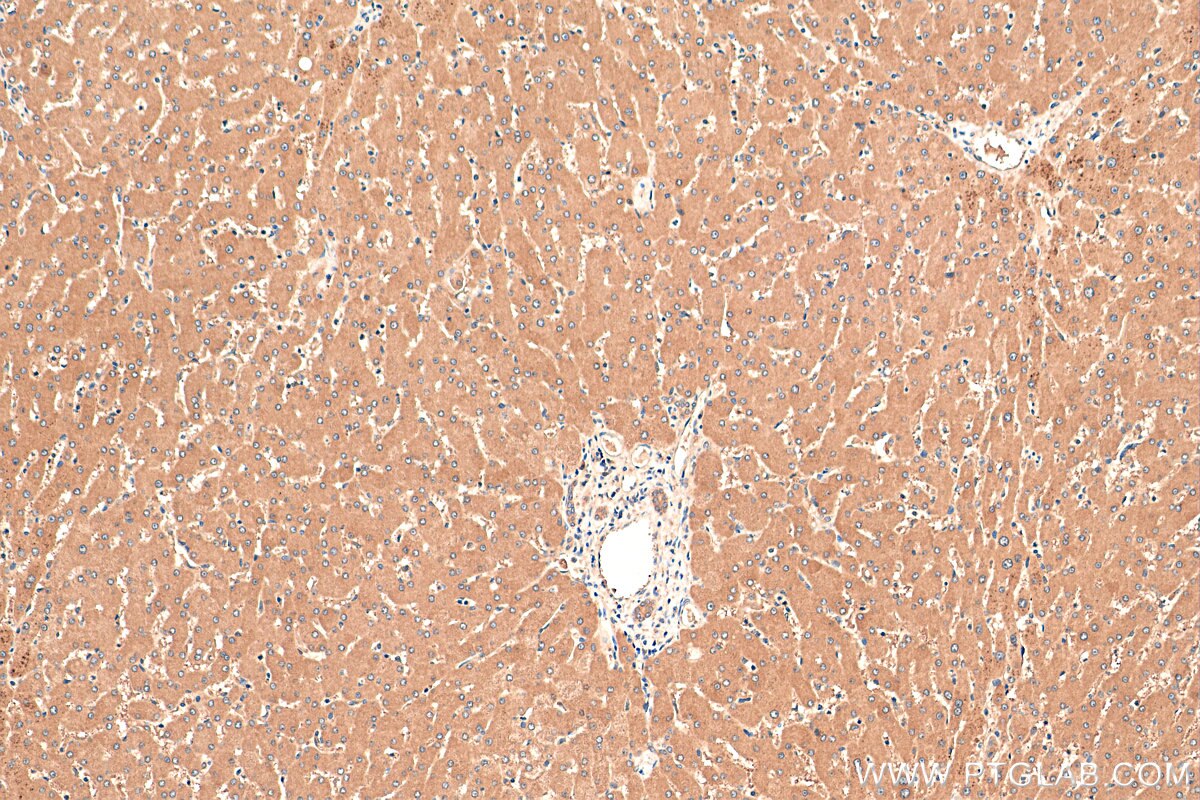
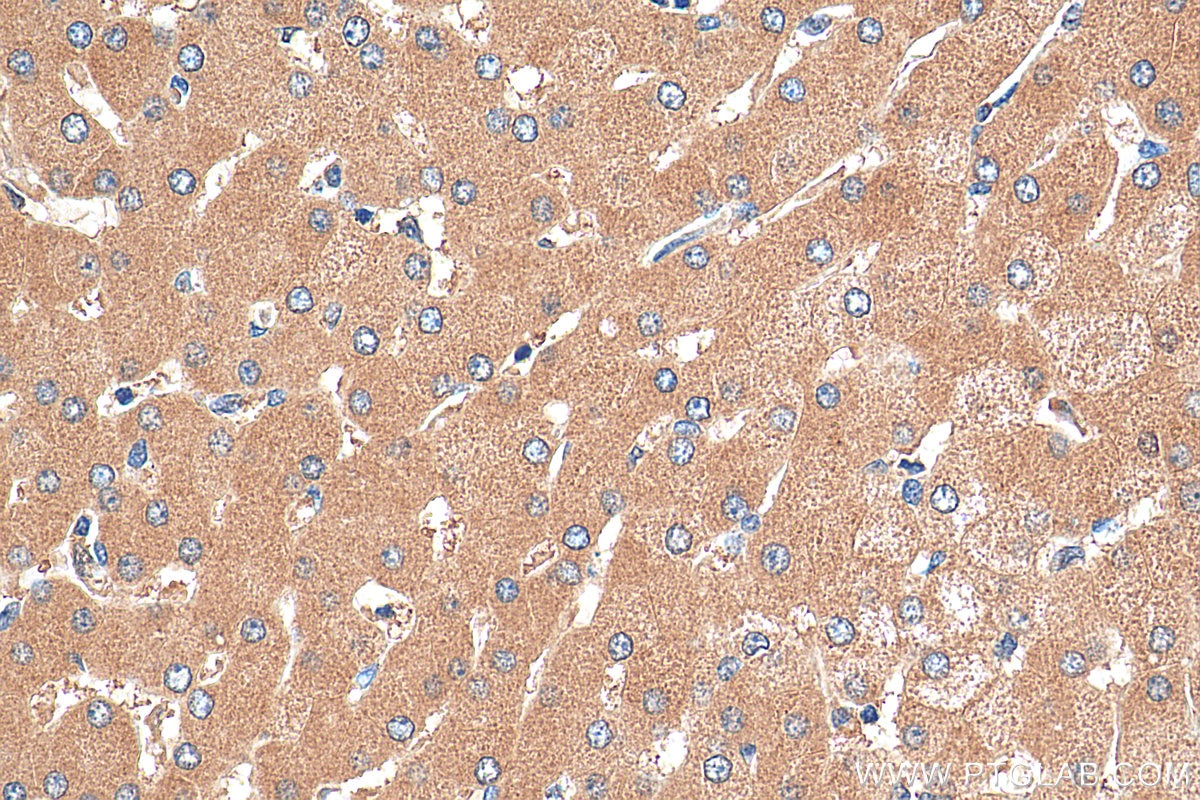
Applications testées
| Résultats positifs en WB | cellules HuH-7, tissu hépatique de rat, tissu hépatique de souris, tissu placentaire humain |
| Résultats positifs en IHC | tissu hépatique humain, il est suggéré de démasquer l'antigène avec un tampon de TE buffer pH 9.0; (*) À défaut, 'le démasquage de l'antigène peut être 'effectué avec un tampon citrate pH 6,0. |
Dilution recommandée
| Application | Dilution |
|---|---|
| Western Blot (WB) | WB : 1:1000-1:5000 |
| Immunohistochimie (IHC) | IHC : 1:50-1:500 |
| It is recommended that this reagent should be titrated in each testing system to obtain optimal results. | |
| Sample-dependent, check data in validation data gallery | |
Informations sur le produit
27941-1-AP cible PTPRD dans les applications de WB, IHC, ELISA et montre une réactivité avec des échantillons Humain, rat, souris
| Réactivité | Humain, rat, souris |
| Hôte / Isotype | Lapin / IgG |
| Clonalité | Polyclonal |
| Type | Anticorps |
| Immunogène | PTPRD Protéine recombinante Ag27689 |
| Nom complet | protein tyrosine phosphatase, receptor type, D |
| Masse moléculaire calculée | 1912 aa, 215 kDa |
| Poids moléculaire observé | 75 kDa, 175 kDa |
| Numéro d’acquisition GenBank | BC106714 |
| Symbole du gène | PTPRD |
| Identification du gène (NCBI) | 5789 |
| Conjugaison | Non conjugué |
| Forme | Liquide |
| Méthode de purification | Purification par affinité contre l'antigène |
| Tampon de stockage | PBS with 0.02% sodium azide and 50% glycerol |
| Conditions de stockage | Stocker à -20°C. Stable pendant un an après l'expédition. L'aliquotage n'est pas nécessaire pour le stockage à -20oC Les 20ul contiennent 0,1% de BSA. |
Informations générales
PTPRD is a receptor-type protein tyrosine phosphatase that plays significant roles in various biological processes, including cell adhesion, synaptic function, and signal transduction. PTPRD is highly expressed in the brain, followed by the kidney, ovary, placenta, and intestine. Within the brain, it is found in specific regions, suggesting a role in neurological functions. PTPRD has emerged as a potential therapeutic target for various brain phenotypes and disorders. Its genetic variations have been associated with nervous system phenotypes, and the discovery of the first small molecule inhibitor of PTPRD phosphatase has opened new avenues for therapeutic intervention in addiction and possibly other PTPRD-associated disorders. Additionally, PTPRD is considered a tumor-suppressor gene that is down-regulated in hepatocellular carcinoma, suggesting its role in cancer progression and potential as a therapeutic target. The protein can recognize 175 kDa full length and 75 kDa mature cleavage product (PMID: 19074898, PMID: 25113440).
Protocole
| Product Specific Protocols | |
|---|---|
| WB protocol for PTPRD antibody 27941-1-AP | Download protocol |
| IHC protocol for PTPRD antibody 27941-1-AP | Download protocol |
| Standard Protocols | |
|---|---|
| Click here to view our Standard Protocols |

