Anticorps Monoclonal anti-PTPRH
PTPRH Monoclonal Antibody for WB, IF/ICC, Indirect ELISA
Hôte / Isotype
Mouse / IgG1
Réactivité testée
Humain, porc
Applications
WB, IF/ICC, Indirect ELISA
Conjugaison
Non conjugué
CloneNo.
3C6E8
N° de cat : 68635-1-PBS
Synonymes
Galerie de données de validation
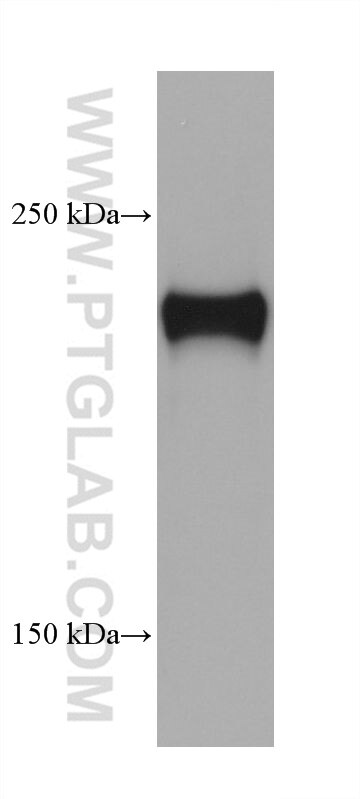
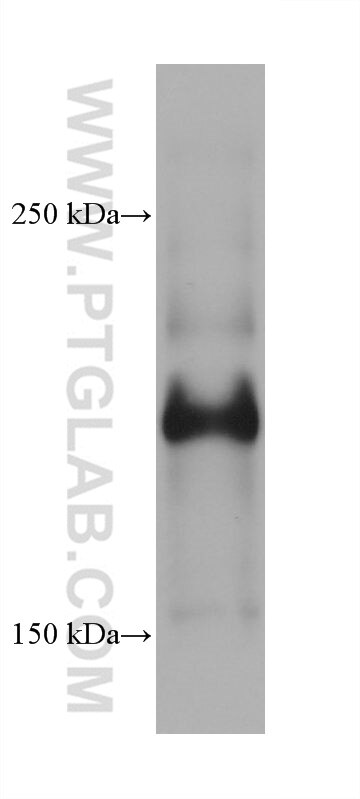
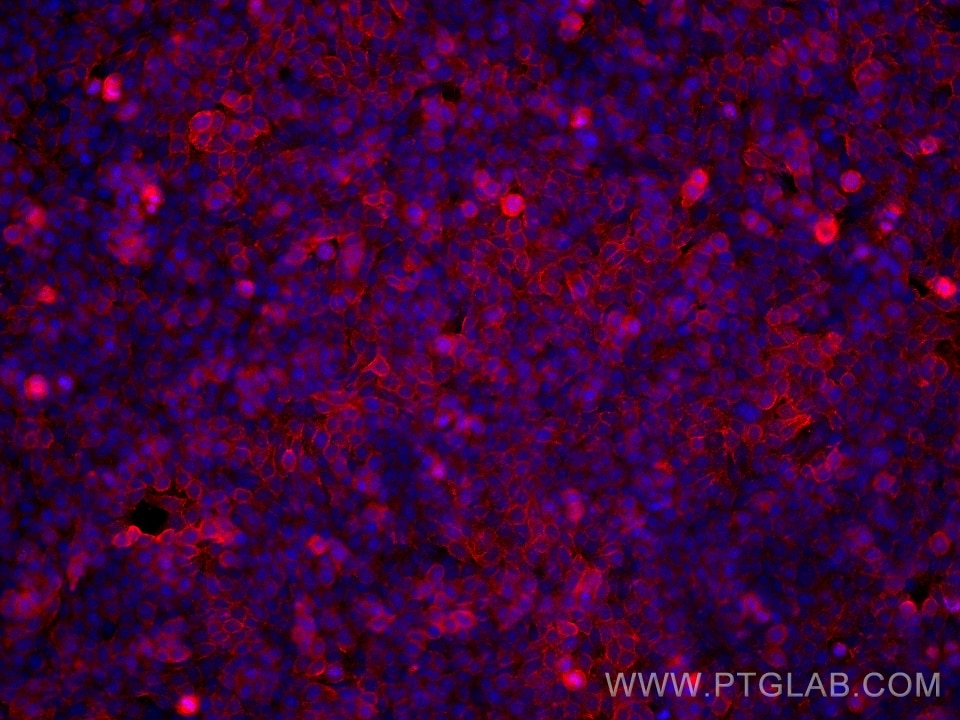
Informations sur le produit
68635-1-PBS cible PTPRH dans les applications de WB, IF/ICC, Indirect ELISA et montre une réactivité avec des échantillons Humain, porc
| Réactivité | Humain, porc |
| Hôte / Isotype | Mouse / IgG1 |
| Clonalité | Monoclonal |
| Type | Anticorps |
| Immunogène | PTPRH Protéine recombinante Ag17351 |
| Nom complet | protein tyrosine phosphatase, receptor type, H |
| Masse moléculaire calculée | 1115 aa, 122 kDa |
| Poids moléculaire observé | 200-210 kDa |
| Numéro d’acquisition GenBank | BC111716 |
| Symbole du gène | PTPRH |
| Identification du gène (NCBI) | 5794 |
| Conjugaison | Non conjugué |
| Forme | Liquide |
| Méthode de purification | Purification par protéine G |
| Tampon de stockage | PBS only |
| Conditions de stockage | Store at -80°C. 20ul contiennent 0,1% de BSA. |
Informations générales
PTPRH, also known as SAP-1 (Stomach Cancer-Associated Protein-Tyrosine Phosphatase-1), is a member of the protein tyrosine phosphatase (PTP) family. These enzymes regulate cellular signaling by dephosphorylating tyrosine residues on proteins, counterbalancing kinase activity (PMID: 11278335). PTPRH is classified as a receptor-type PTP, characterized by an extracellular domain, a transmembrane region, and intracellular catalytic domains. In colorectal, gastric, and hepatocellular cancers, PTPRH is often upregulated and linked to poor prognosis (PMID: 12101188). Paradoxically, it may suppress tumorigenesis in other contexts by stabilizing cell adhesion. Overexpression in certain cancers suggests utility as a diagnostic or prognostic marker. The molecular weight of PTPRH is 122 kDa, it is reported that it can form a dimer with a molecular weight of 210 kDa (PMID:15850787).


