- Phare
- Validé par KD/KO
Anticorps Polyclonal de lapin anti-PTPRJ
PTPRJ Polyclonal Antibody for WB, IHC, Indirect ELISA
Hôte / Isotype
Lapin / IgG
Réactivité testée
Humain
Applications
WB, IHC, Indirect ELISA
Conjugaison
Non conjugué
N° de cat : 55123-1-PBS
Synonymes
Galerie de données de validation
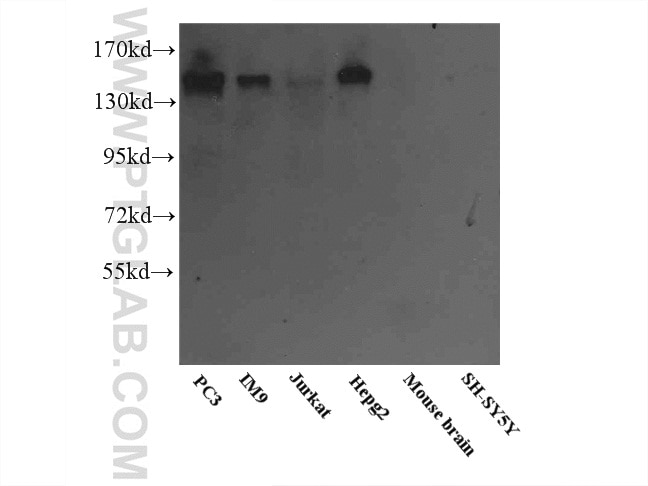
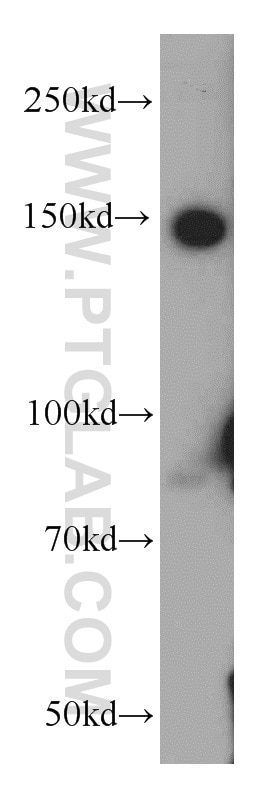
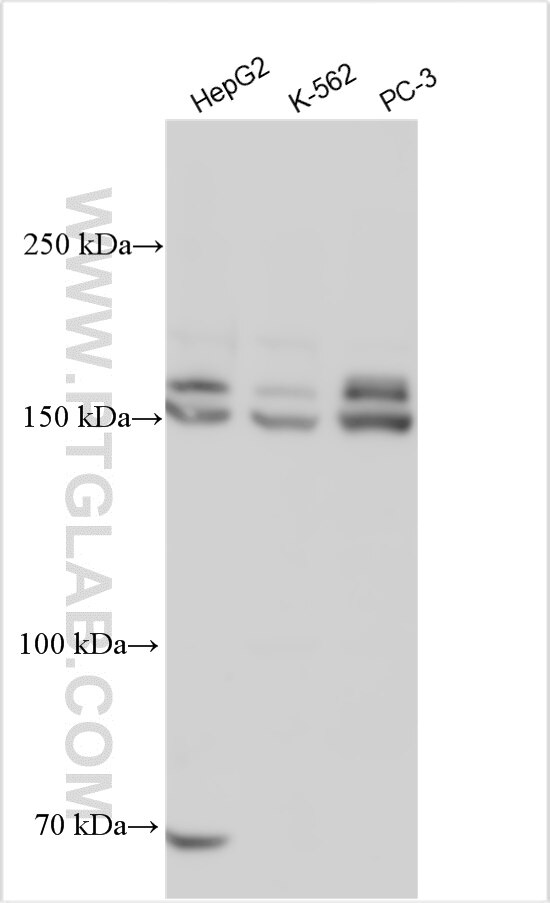
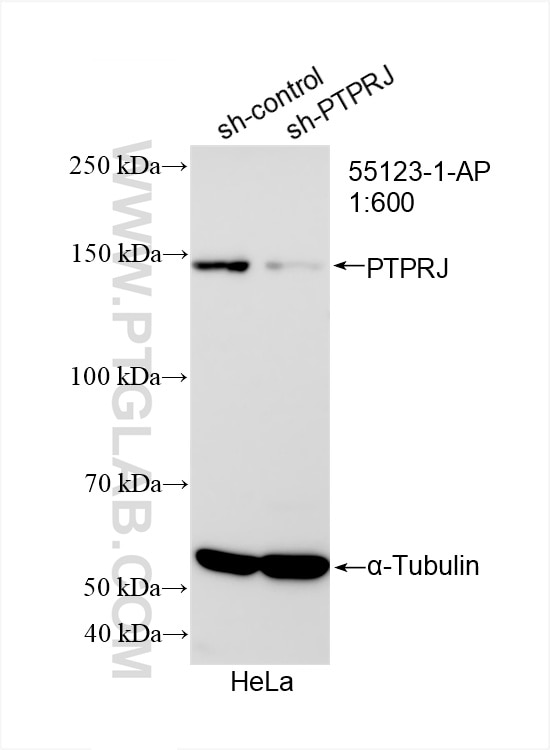
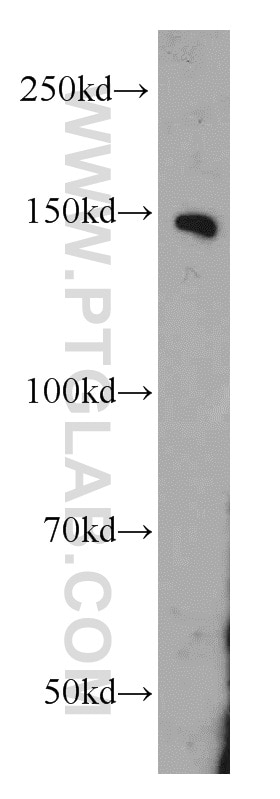
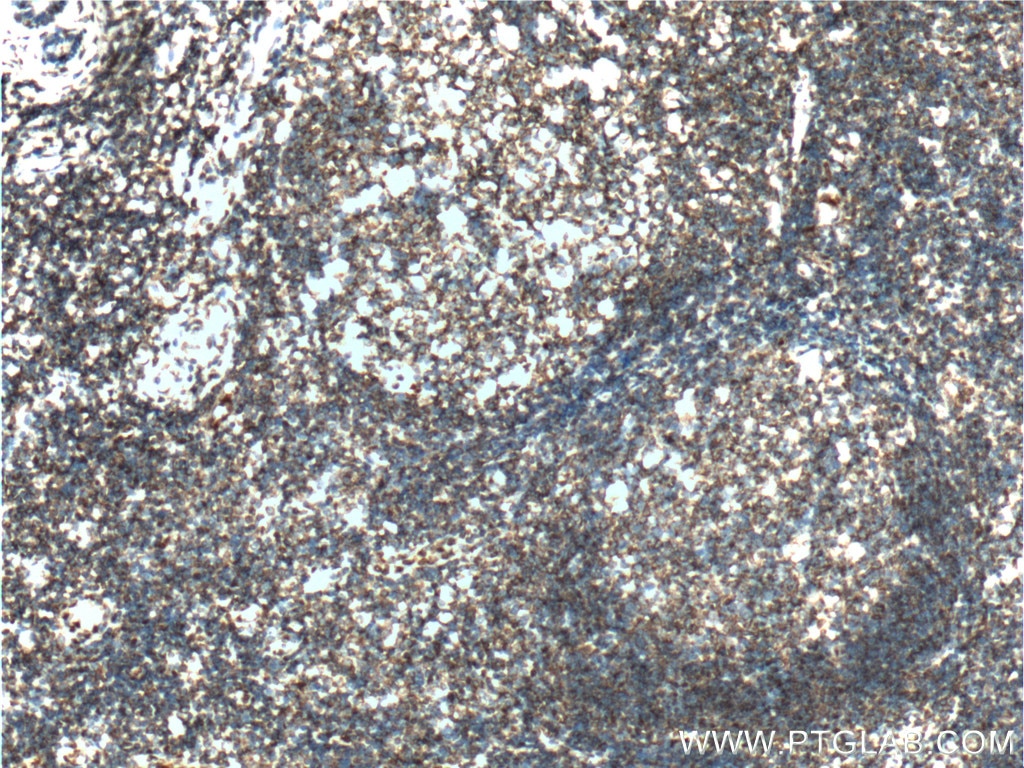
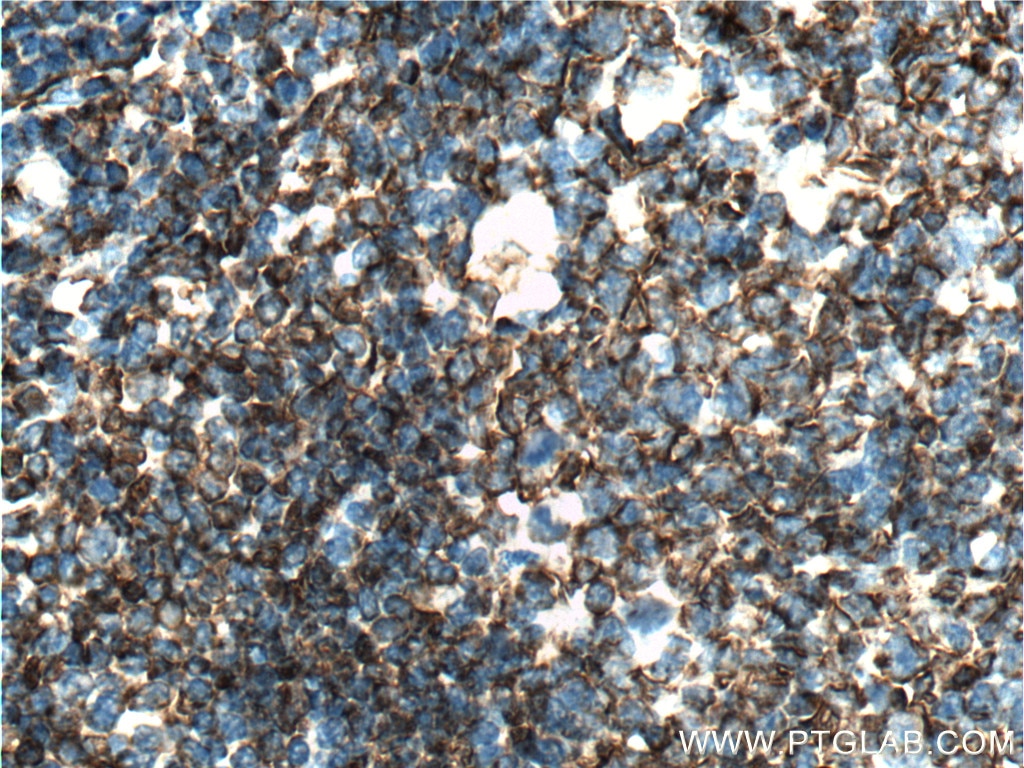
Informations sur le produit
55123-1-PBS cible PTPRJ dans les applications de WB, IHC, Indirect ELISA et montre une réactivité avec des échantillons Humain
| Réactivité | Humain |
| Hôte / Isotype | Lapin / IgG |
| Clonalité | Polyclonal |
| Type | Anticorps |
| Immunogène | Peptide |
| Nom complet | protein tyrosine phosphatase, receptor type, J |
| Masse moléculaire calculée | 146 kDa |
| Poids moléculaire observé | 146-170 kDa |
| Numéro d’acquisition GenBank | NM_002843 |
| Symbole du gène | PTPRJ |
| Identification du gène (NCBI) | 5795 |
| Conjugaison | Non conjugué |
| Forme | Liquide |
| Méthode de purification | Purification par affinité contre l'antigène |
| Tampon de stockage | PBS only |
| Conditions de stockage | Store at -80°C. 20ul contiennent 0,1% de BSA. |
Informations générales
PTPRJ, also named as CD148 and DEP1, belongs to the protein-tyrosine phosphatase family and Receptor class 3 subfamily. PTPs are known to be signaling molecules that regulate a variety of cellular processes including cell growth, differentiation, mitotic cycle, and oncogenic transformation. PTPRJ may contribute to the mechanism of contact inhibition of cell growth. PTPRJ is present in all hematopoietic lineages, and was shown to negatively regulate T cell receptor signaling possibly through interfering with the phosphorylation of Phospholipase C Gamma 1 (PLCG1) and Linker for Activation of T Cells (LAT). It was also found to dephosphorylate PDGF beta receptor, and may be involved in UV-induced signal transduction. The antibody is specific to PTPRJ.


