Anticorps Polyclonal de lapin anti-Phospho-P53 (Ser15)
Phospho-P53 (Ser15) Polyclonal Antibody for WB, IF/ICC, Indirect ELISA
Hôte / Isotype
Lapin / IgG
Réactivité testée
Humain
Applications
WB, IF/ICC, Indirect ELISA
Conjugaison
Non conjugué
N° de cat : 28961-1-PBS
Synonymes
Galerie de données de validation
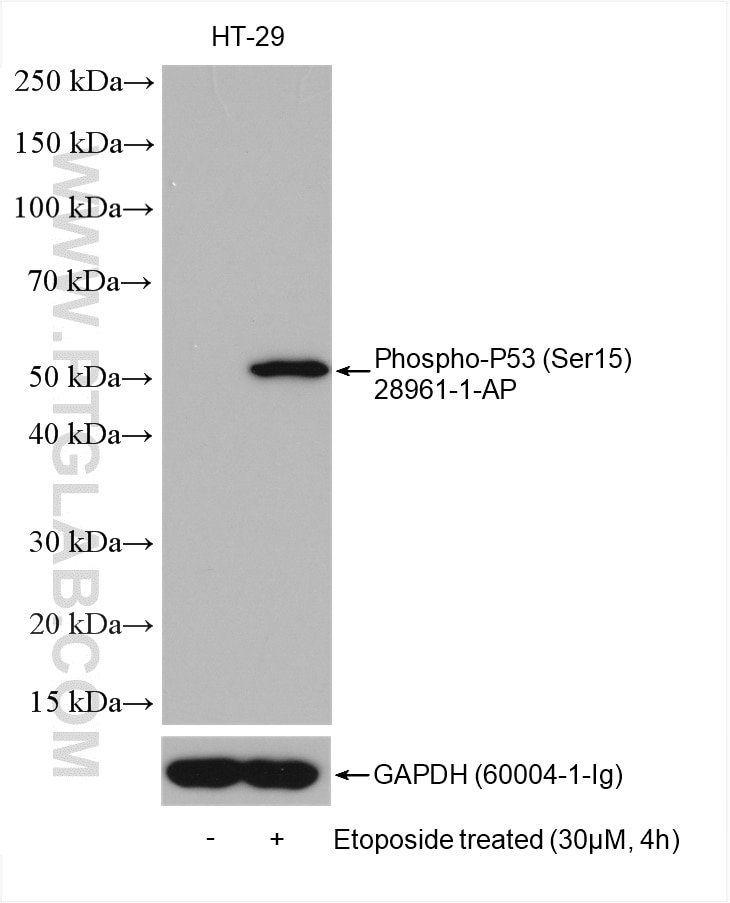
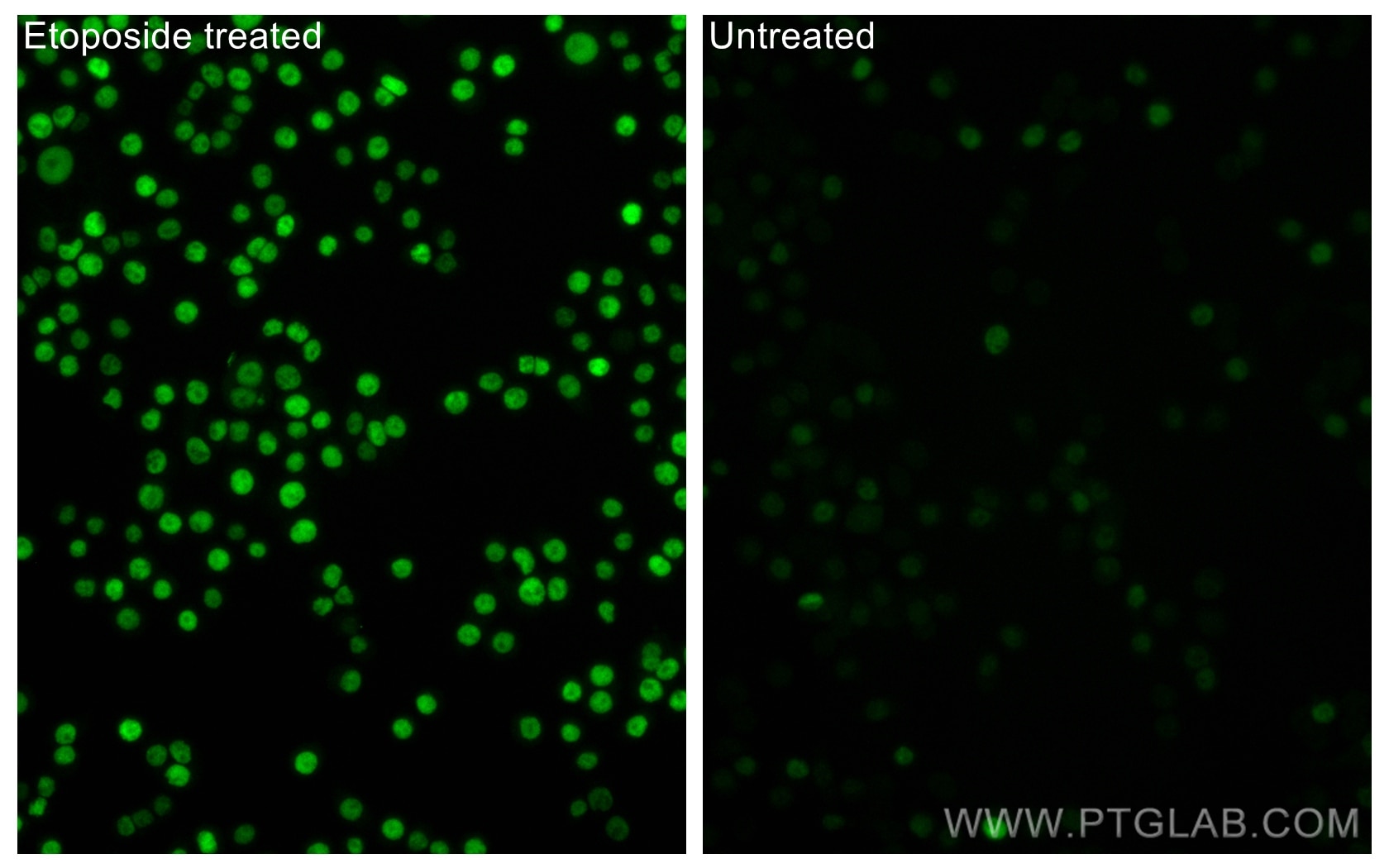
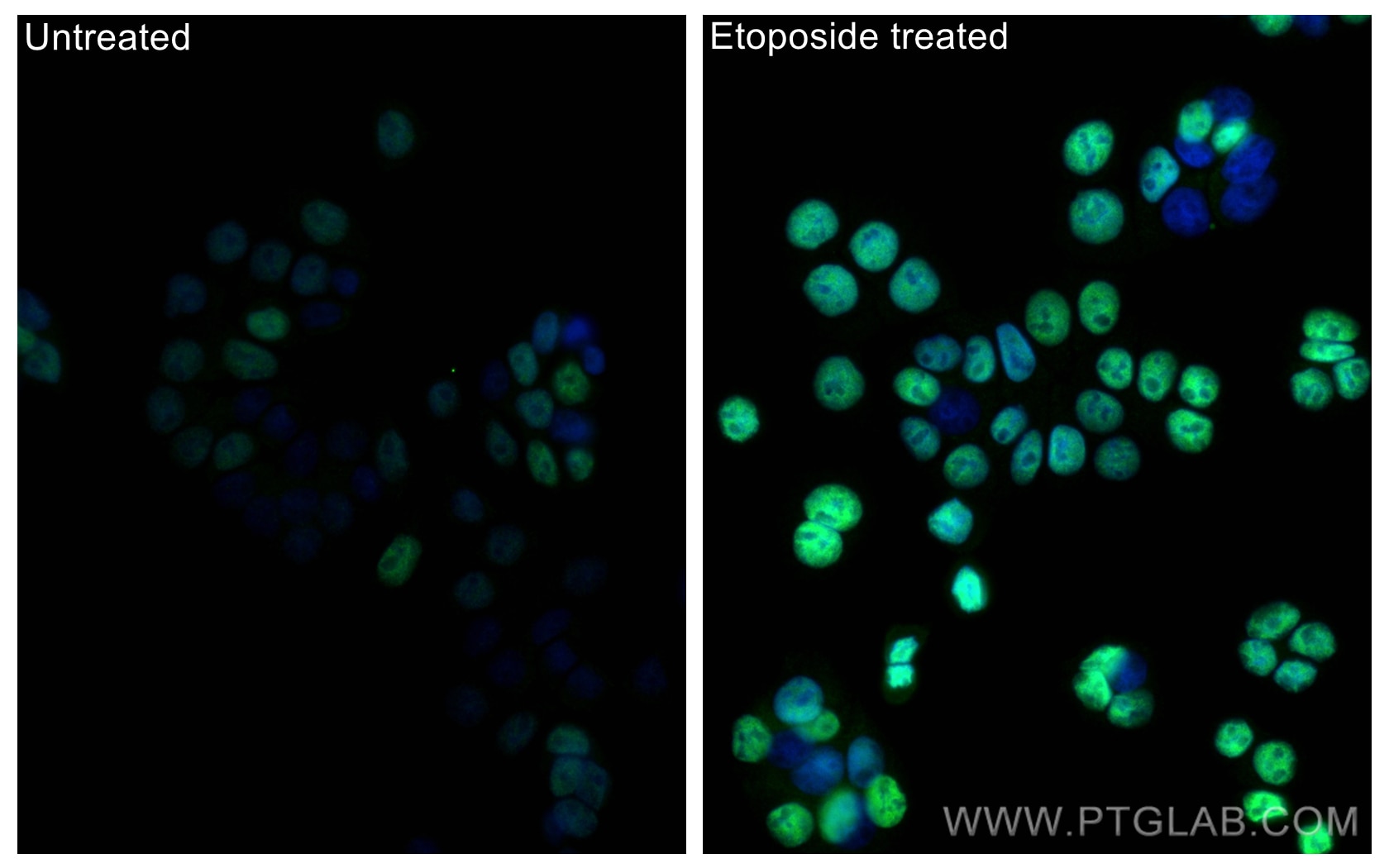
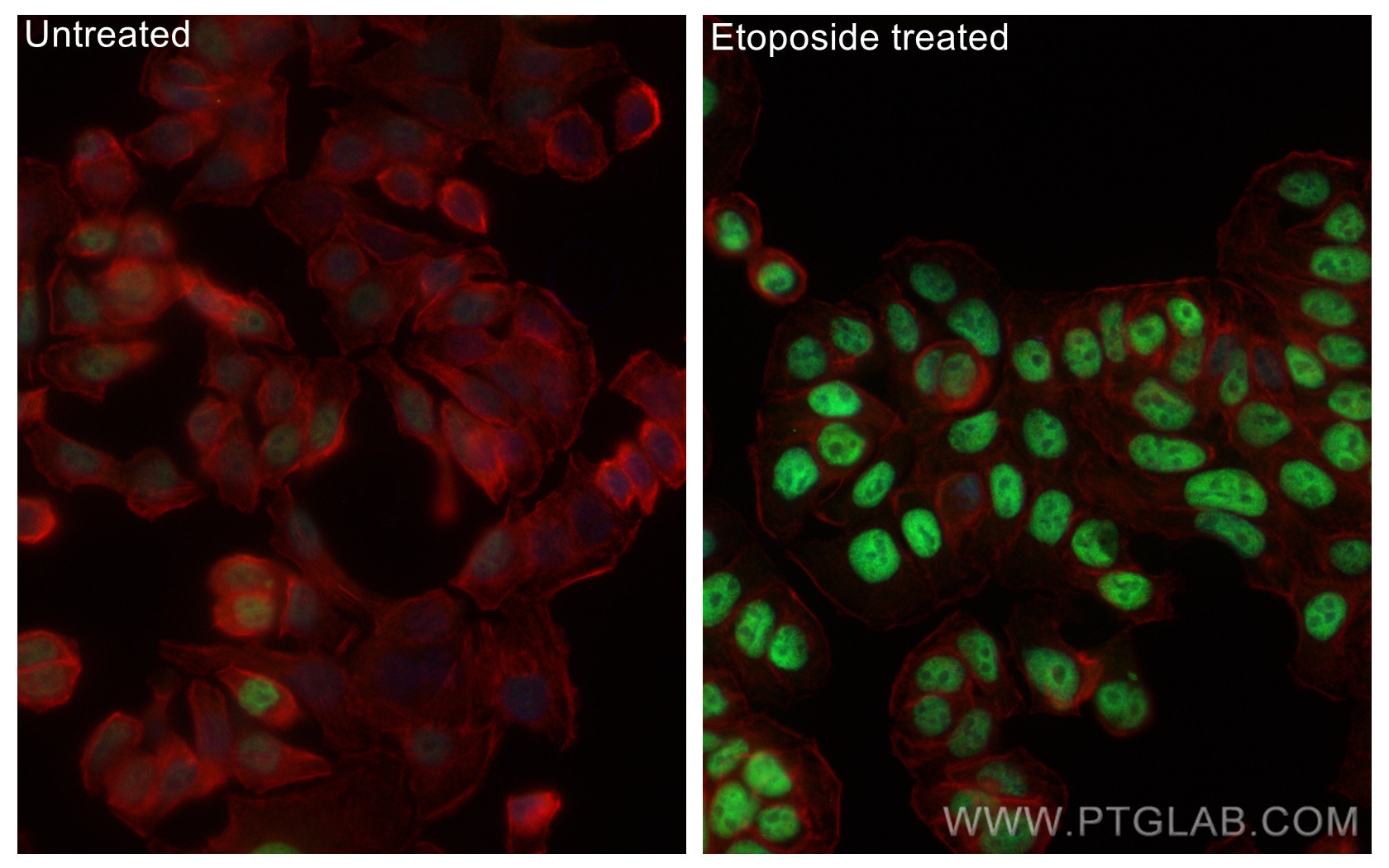
Informations sur le produit
28961-1-PBS cible Phospho-P53 (Ser15) dans les applications de WB, IF/ICC, Indirect ELISA et montre une réactivité avec des échantillons Humain
| Réactivité | Humain |
| Hôte / Isotype | Lapin / IgG |
| Clonalité | Polyclonal |
| Type | Anticorps |
| Immunogène | Peptide |
| Nom complet | tumor protein p53 |
| Masse moléculaire calculée | 44 kDa |
| Poids moléculaire observé | 53 kDa |
| Numéro d’acquisition GenBank | BC003596 |
| Symbole du gène | P53 |
| Identification du gène (NCBI) | 7157 |
| Conjugaison | Non conjugué |
| Forme | Liquide |
| Méthode de purification | Purification par affinité contre l'antigène |
| Tampon de stockage | PBS only |
| Conditions de stockage | Store at -80°C. 20ul contiennent 0,1% de BSA. |
Informations générales
The p53 tumor suppressor protein plays a major role in cellular response to DNA damage and other genomic aberrations. Activation of p53 can lead to either cell cycle arrest and DNA repair or apoptosis . DNA damage induces phosphorylation of p53 at Ser15 and Ser20 and leads to a reduced interaction between p53 and its negative regulator, the oncoprotein MDM2. p53 can be phosphorylated by ATM, ATR, and DNA-PK at Ser15 and Ser37. Phosphorylation impairs the ability of MDM2 to bind p53, promoting both the accumulation and activation of p53 in response to DNA damage.


