Anticorps Monoclonal anti-RENALASE
RENALASE Monoclonal Antibody for WB, IHC, Indirect ELISA
Hôte / Isotype
Mouse / IgG1
Réactivité testée
Humain
Applications
WB, IHC, Indirect ELISA
Conjugaison
Non conjugué
CloneNo.
3A12F5
N° de cat : 60128-1-PBS
Synonymes
Galerie de données de validation
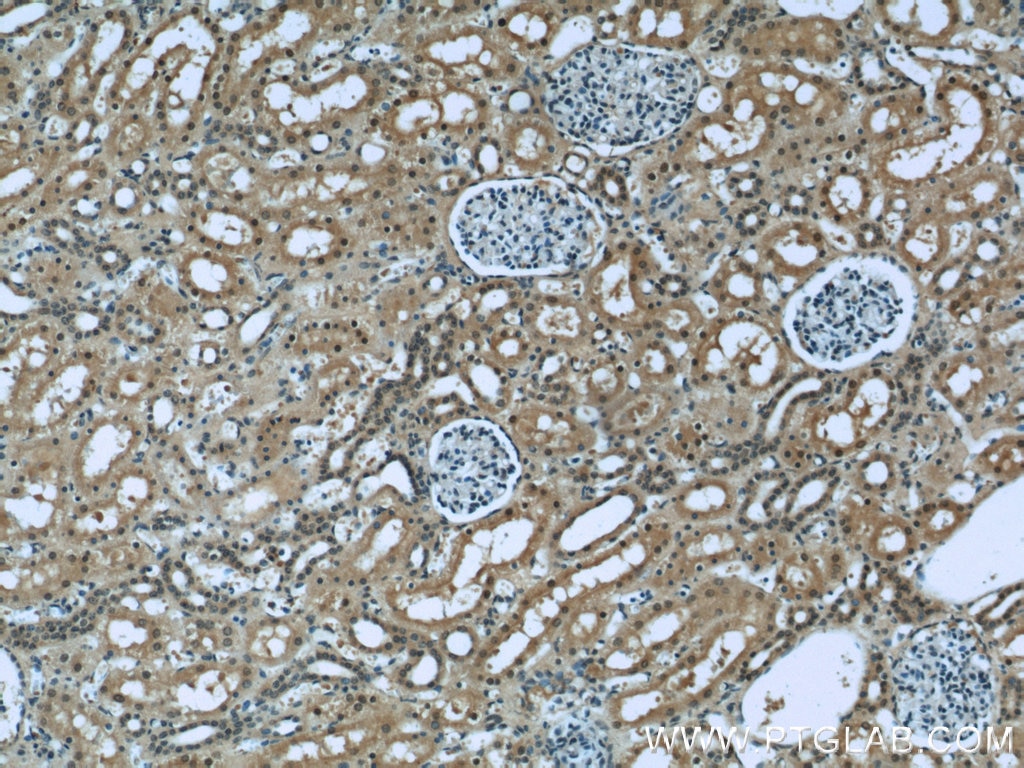
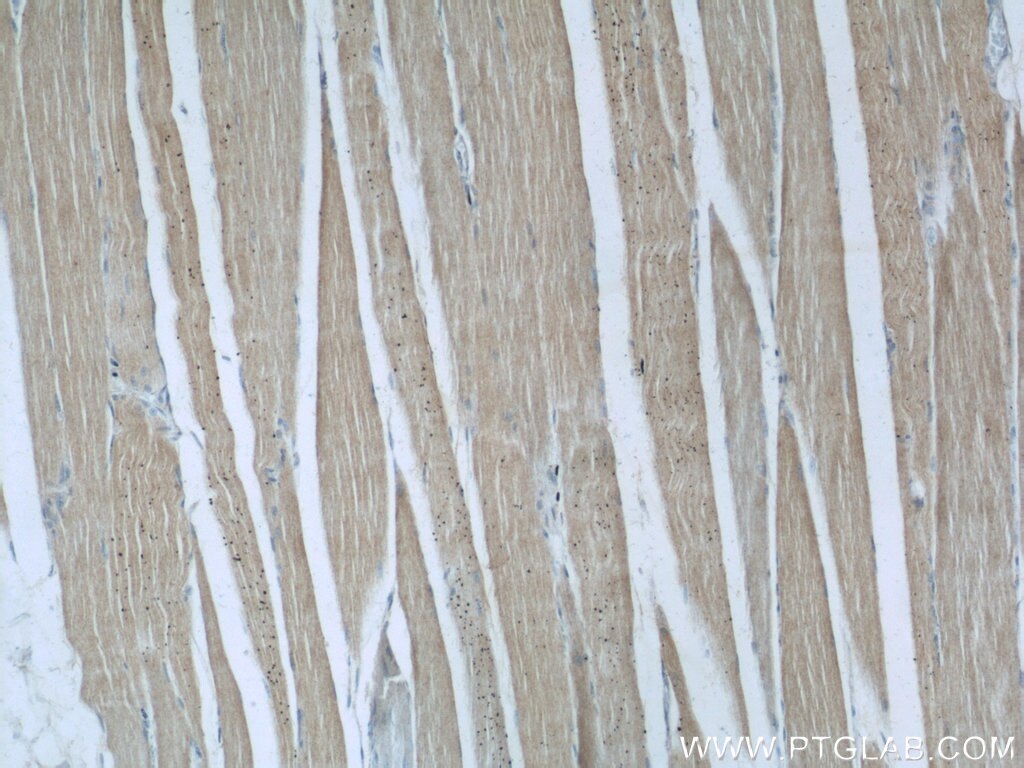
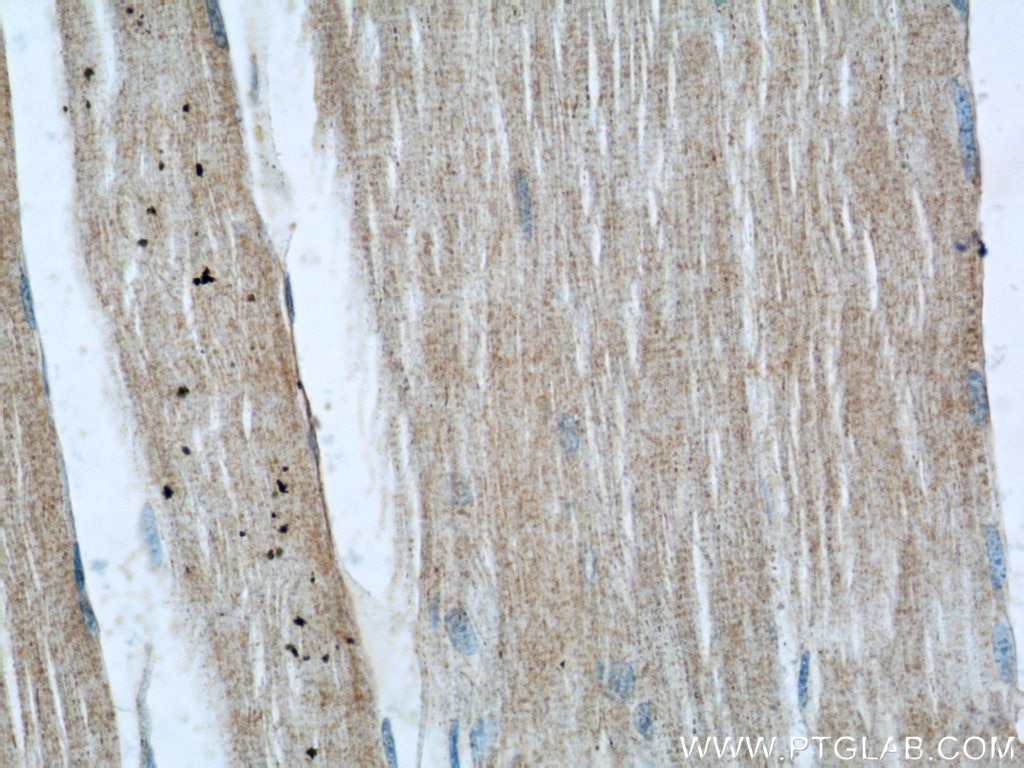
Informations sur le produit
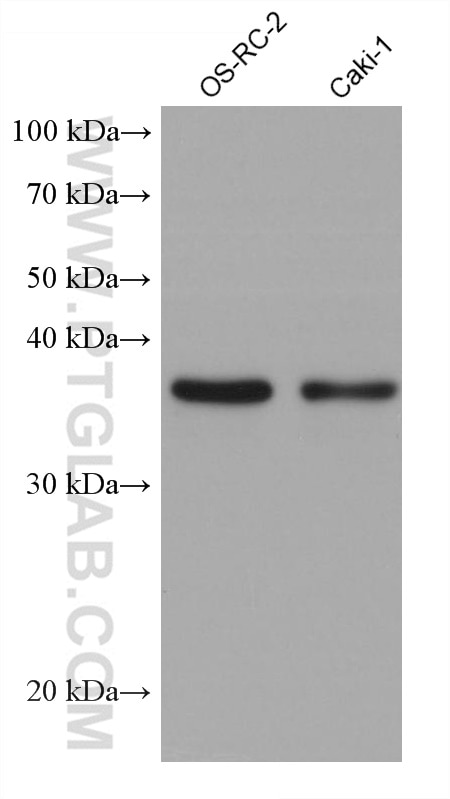
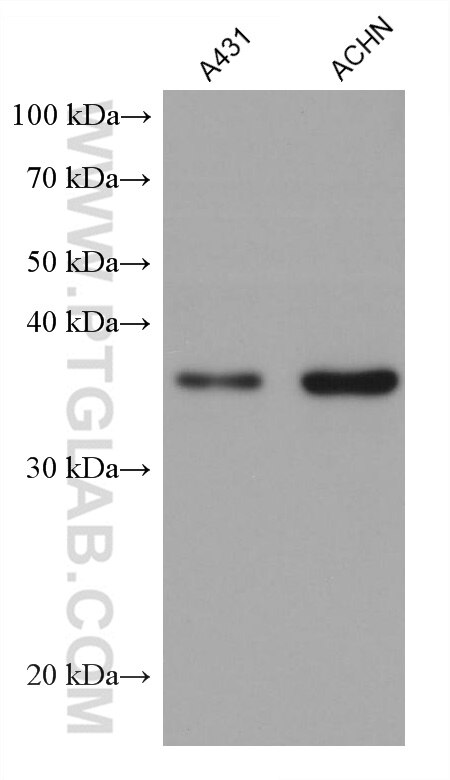
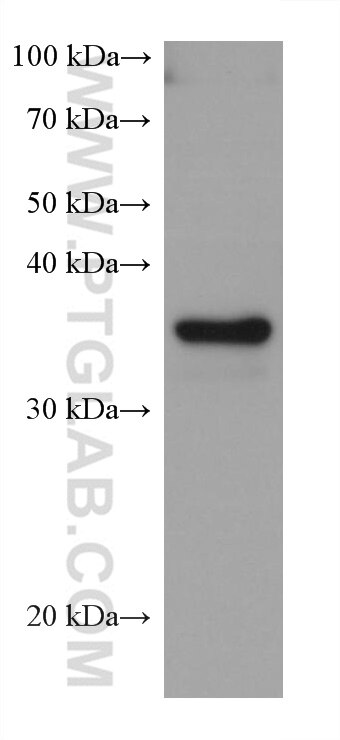
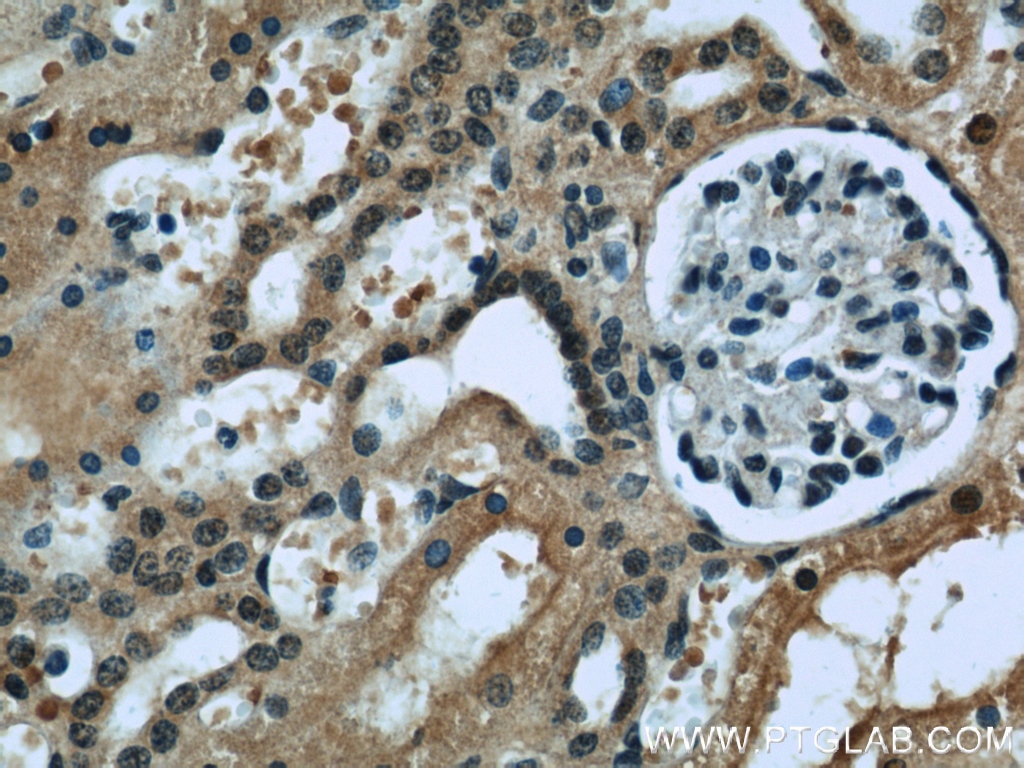
60128-1-PBS cible RENALASE dans les applications de WB, IHC, Indirect ELISA et montre une réactivité avec des échantillons Humain
| Réactivité | Humain |
| Hôte / Isotype | Mouse / IgG1 |
| Clonalité | Monoclonal |
| Type | Anticorps |
| Immunogène | RENALASE Protéine recombinante Ag13061 |
| Nom complet | chromosome 10 open reading frame 59 |
| Masse moléculaire calculée | 38 kDa |
| Poids moléculaire observé | 38 kDa |
| Numéro d’acquisition GenBank | BC005364 |
| Symbole du gène | RENALASE |
| Identification du gène (NCBI) | 55328 |
| Conjugaison | Non conjugué |
| Forme | Liquide |
| Méthode de purification | Purification par protéine G |
| Tampon de stockage | PBS only |
| Conditions de stockage | Store at -80°C. 20ul contiennent 0,1% de BSA. |
Informations générales
RNLS, also named as Renalase, C10orf59 and MAO-C, belongs to the renalase family. It is probable FAD-dependent amine oxidase secreted by the kidney, which circulates in blood and modulates cardiac function and systemic blood pressure. RNLS degrades catecholamines such as dopamine, norepinephrine and epinephrine in vitro. It lowers blood pressure in vivo by decreasing cardiac contractility and heart rate and preventing a compensatory increase in peripheral vascular tone, suggesting a causal link to the increased plasma catecholamine and heightened cardiovascular risk. High concentrations of catecholamines activate plasma renalase and promotes its secretion and synthesis. RNLS has physiologically relevant catecholamine-oxidizing activity. (PMID:15841207 ) This antibody is specific to RNLS.


