Anticorps Polyclonal de lapin anti-RGR
RGR Polyclonal Antibody for WB, IHC, IP, Indirect ELISA
Hôte / Isotype
Lapin / IgG
Réactivité testée
Humain, rat, souris
Applications
WB, IHC, IP, Indirect ELISA
Conjugaison
Non conjugué
N° de cat : 11904-1-PBS
Synonymes
Galerie de données de validation
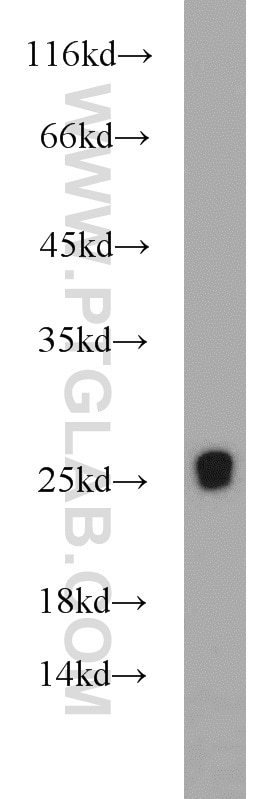
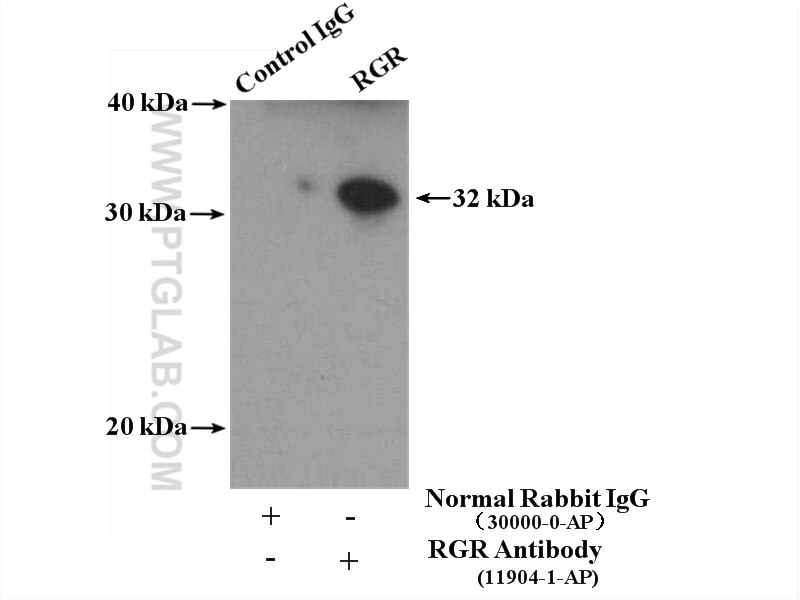
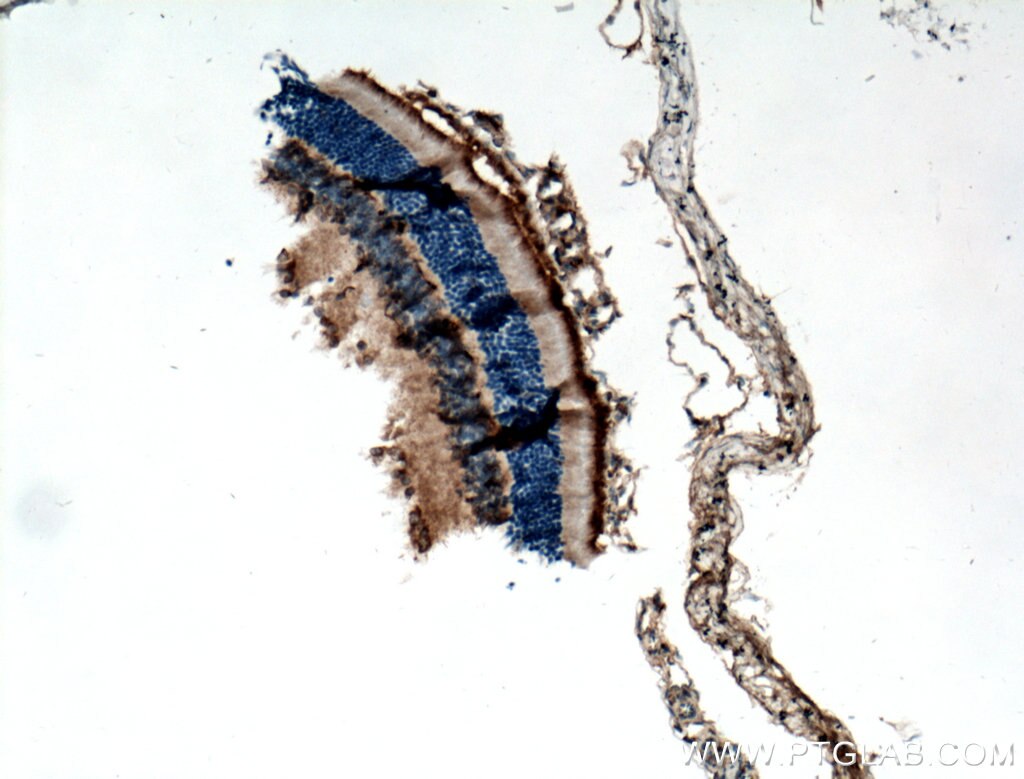
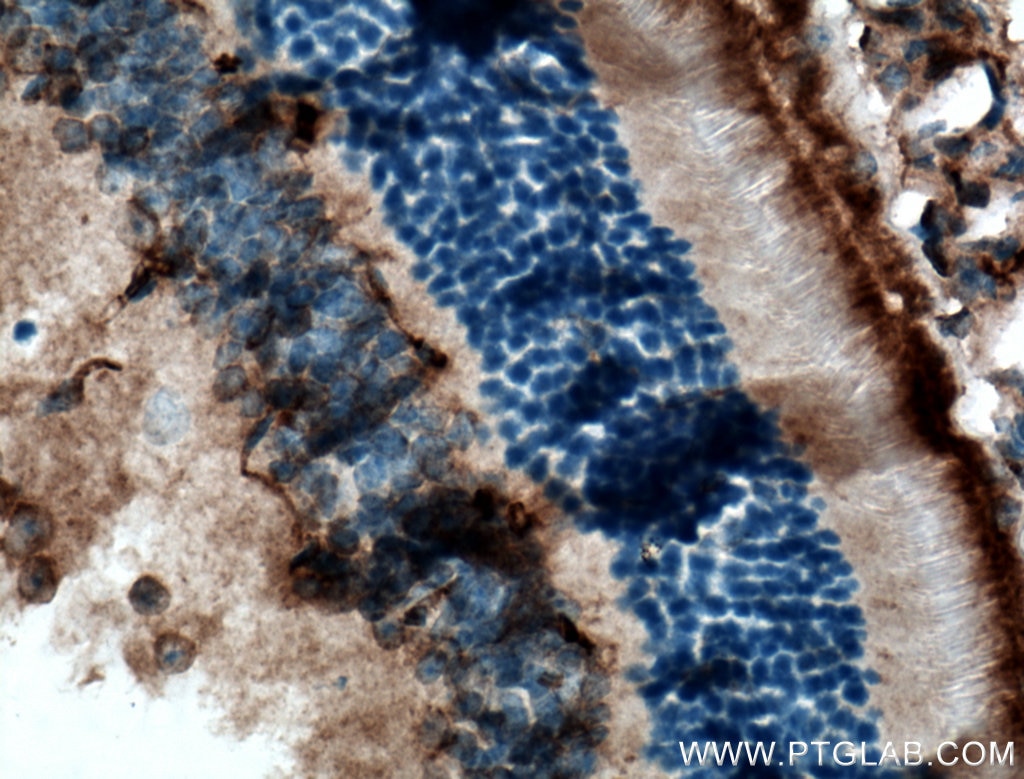
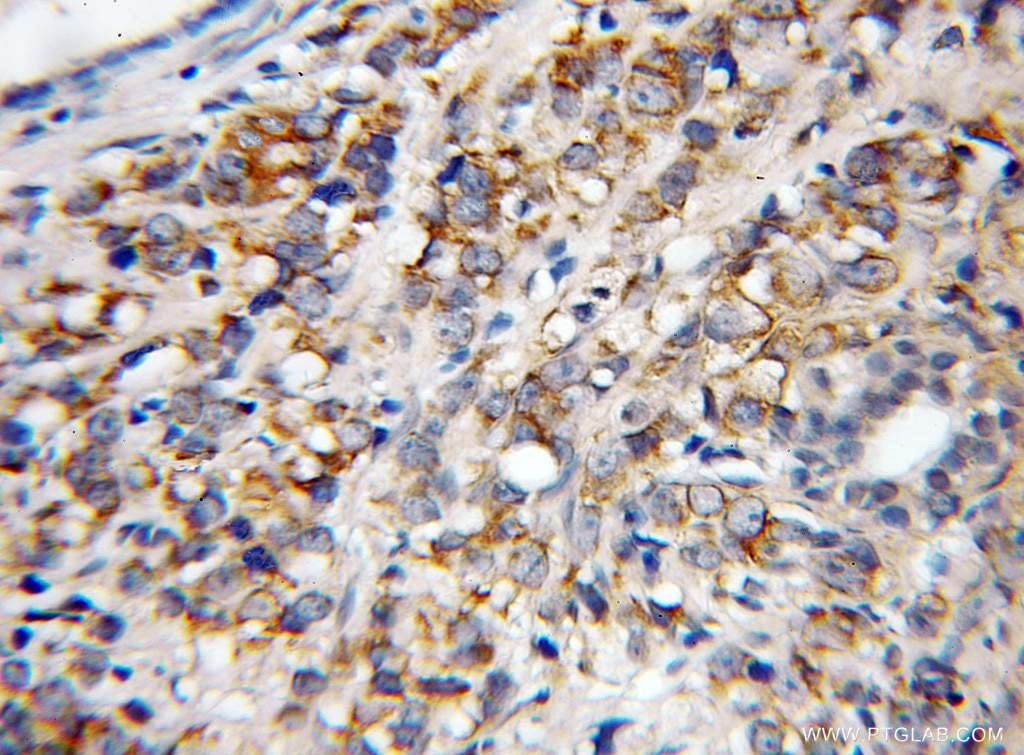
Informations sur le produit
11904-1-PBS cible RGR dans les applications de WB, IHC, IP, Indirect ELISA et montre une réactivité avec des échantillons Humain, rat, souris
| Réactivité | Humain, rat, souris |
| Hôte / Isotype | Lapin / IgG |
| Clonalité | Polyclonal |
| Type | Anticorps |
| Immunogène | RGR Protéine recombinante Ag2552 |
| Nom complet | retinal G protein coupled receptor |
| Masse moléculaire calculée | 32 kDa |
| Poids moléculaire observé | 32 kDa, 26 kDa |
| Numéro d’acquisition GenBank | BC008094 |
| Symbole du gène | RGR |
| Identification du gène (NCBI) | 5995 |
| Conjugaison | Non conjugué |
| Forme | Liquide |
| Méthode de purification | Purification par affinité contre l'antigène |
| Tampon de stockage | PBS only |
| Conditions de stockage | Store at -80°C. 20ul contiennent 0,1% de BSA. |
Informations générales
RGR is a G protein-coupled receptor preferentially expressed at high levels in the retinal pigment epithelium (RPE) and Mueller cells of the neural retina. Like other opsins which bind retinaldehyde, it contains a conserved lysine residue in the seventh transmembrane domain. RGR acts as a photoisomerase to catalyze the conversion of all-trans-retinal to 11-cis-retinal. The reverse isomerization occurs with rhodopsin in retinal photoreceptor cells. The gene of PGR may be associated with autosomal recessive and autosomal dominant retinitis pigmentosa (arRP and adRP, respectively). Alternative splicing results in multiple transcript variants encoding different isoforms.


