Anticorps Recombinant de lapin anti-RNF139
RNF139 Recombinant Antibody for WB, FC (Intra), ELISA
Hôte / Isotype
Lapin / IgG
Réactivité testée
Humain
Applications
WB, FC (Intra), ELISA
Conjugaison
Non conjugué
CloneNo.
240481G6
N° de cat : 83755-2-PBS
Synonymes
Galerie de données de validation
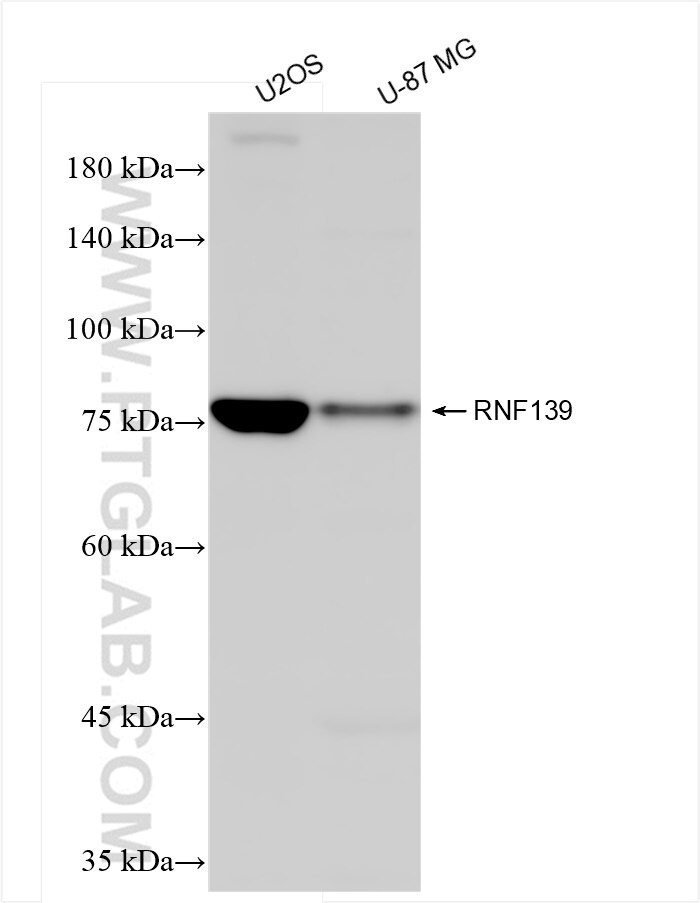
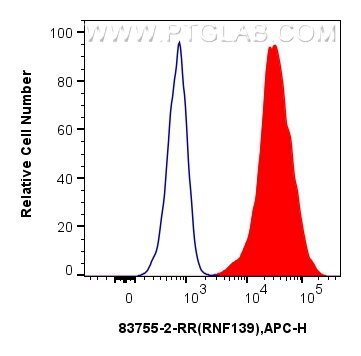
Informations sur le produit
83755-2-PBS cible RNF139 dans les applications de WB, FC (Intra), ELISA et montre une réactivité avec des échantillons Humain
| Réactivité | Humain |
| Hôte / Isotype | Lapin / IgG |
| Clonalité | Recombinant |
| Type | Anticorps |
| Immunogène | RNF139 Protéine recombinante Ag21530 |
| Nom complet | ring finger protein 139 |
| Masse moléculaire calculée | 664 aa, 76 kDa |
| Poids moléculaire observé | 76 kDa |
| Numéro d’acquisition GenBank | BC064636 |
| Symbole du gène | RNF139 |
| Identification du gène (NCBI) | 11236 |
| Conjugaison | Non conjugué |
| Forme | Liquide |
| Méthode de purification | Protein A purfication |
| Tampon de stockage | PBS only |
| Conditions de stockage | Store at -80°C. 20ul contiennent 0,1% de BSA. |
Informations générales
The RNF139 gene (ring-finger protein 139), also known as TRC8 (translocation in renal carcinoma from chromosome 8), was first identified from a family with 3;8 chromosomal translocation and hereditary renal cell carcinoma and thyroid cancer (PMID:22689053). RNF139 encodes an endoplasmic reticulum (ER) protein with 10 transmembrane segments that contain a sterol-sensing domain and a RING finger motif encoding an E3 ubiquitin ligase (PMID: 19706601). Northern blot and dot blot show that RNF139 is highly expressed in the testis, placenta, and adrenal gland and is expressed at lower levels in the heart, brain, liver, skeletal muscle, and pancreas (PMID: 9689122). It is reported that TRC8 suppresses tumorigenesis by targeting heme oxygenase-1 (HO-1), an antioxidant enzyme highly expressed in various cancers, for ubiquitination and degradation (PMID:22689053). TRC8 is also involved in cholesterol and fatty acid biosynthesis that are transcriptionally regulated by the sterol response element binding proteins (SREBPs) (PMID:17016439). Acetylation, phosphorylation, and autoubiquitination are common post-translational modifications of FNF139 protein.


