- Phare
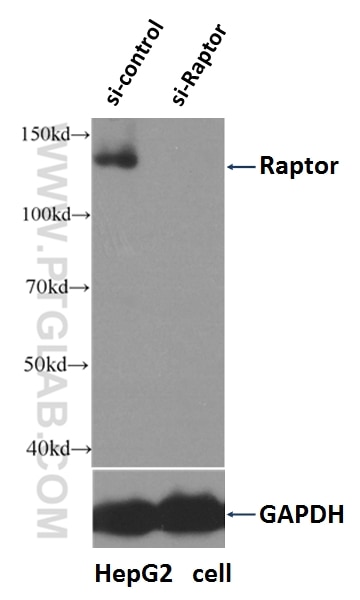
- Validé par KD/KO
Anticorps Polyclonal de lapin anti-Raptor
Raptor Polyclonal Antibody for WB, IF/ICC, IP, Indirect ELISA
Hôte / Isotype
Lapin / IgG
Réactivité testée
Humain, souris
Applications
WB, IF/ICC, IP, Indirect ELISA
Conjugaison
Non conjugué
N° de cat : 20984-1-PBS
Synonymes
Galerie de données de validation
Informations sur le produit
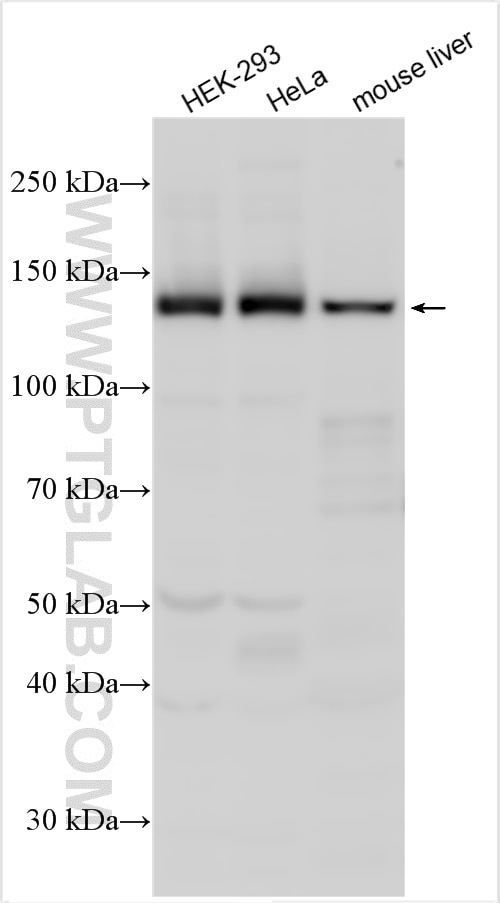
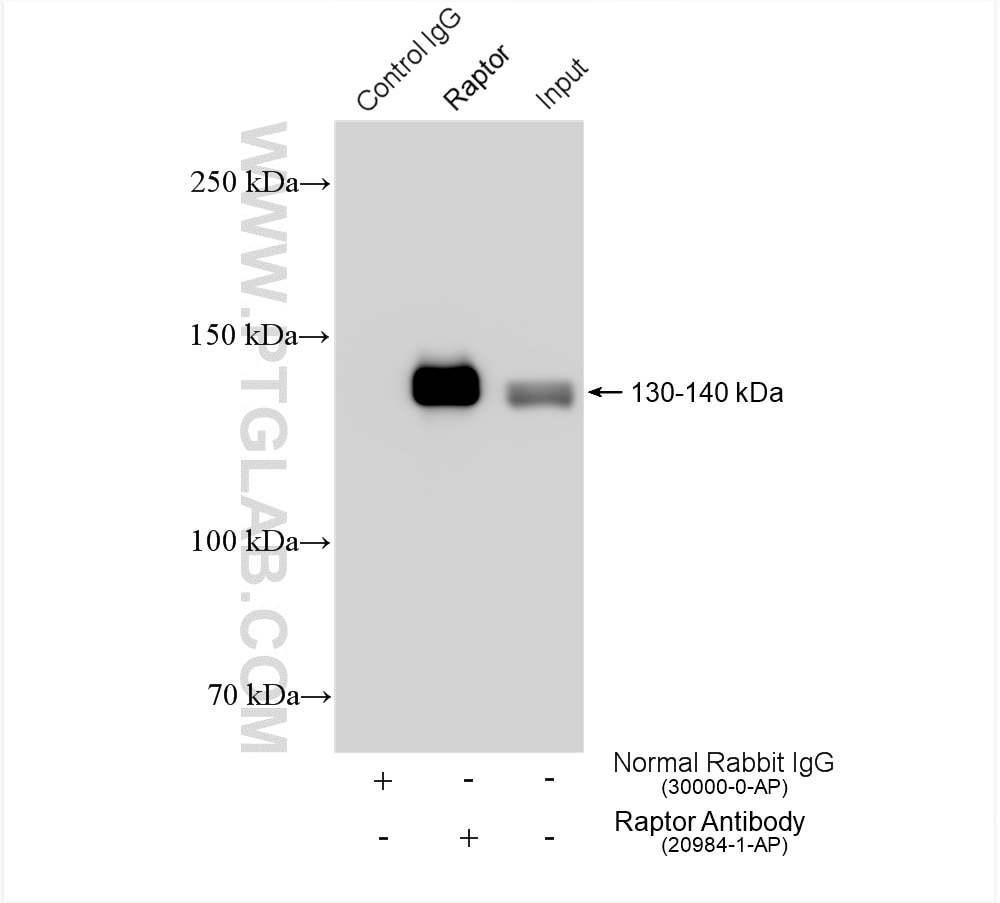
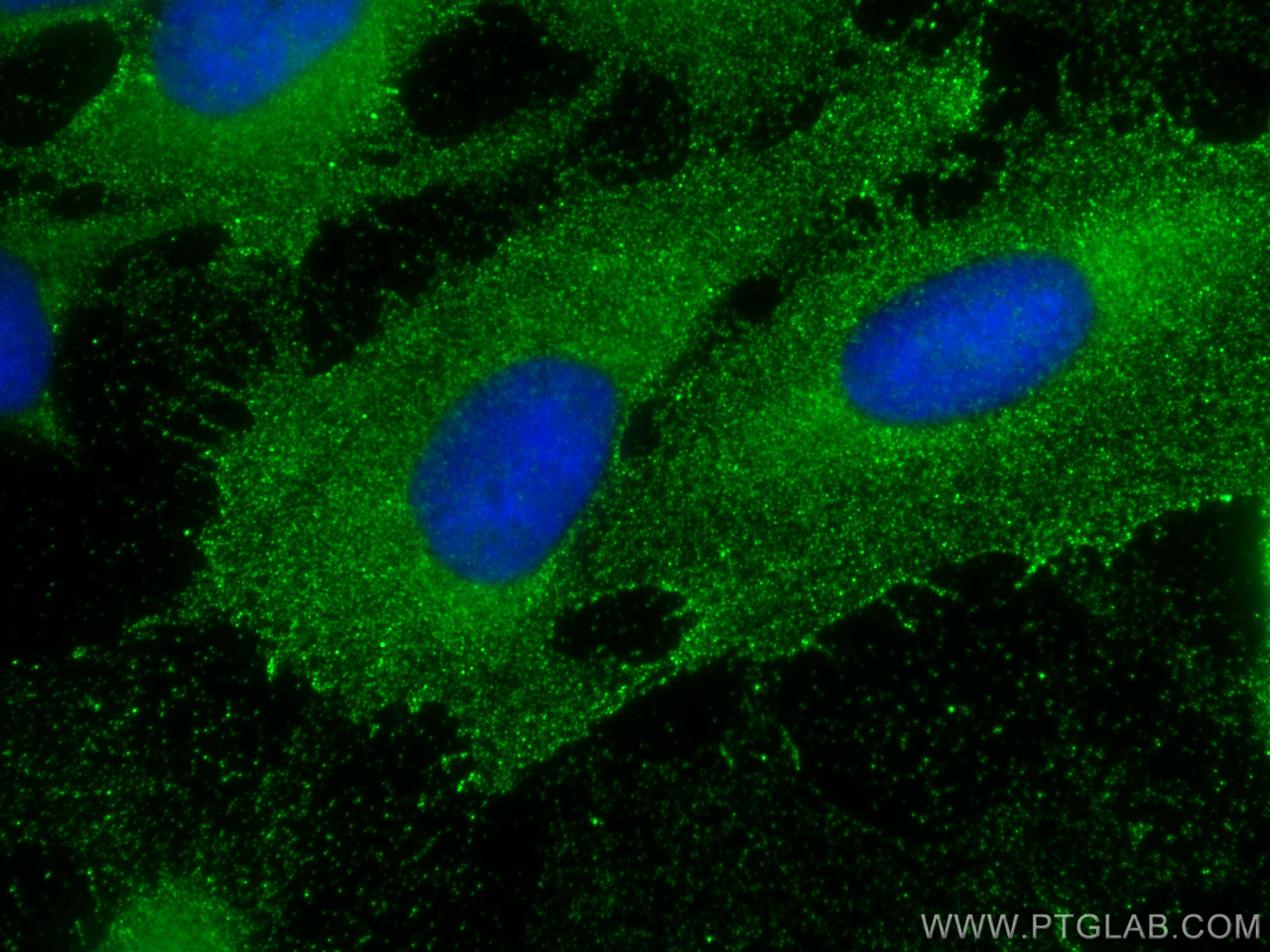
20984-1-PBS cible Raptor dans les applications de WB, IF/ICC, IP, Indirect ELISA et montre une réactivité avec des échantillons Humain, souris
| Réactivité | Humain, souris |
| Hôte / Isotype | Lapin / IgG |
| Clonalité | Polyclonal |
| Type | Anticorps |
| Immunogène | Peptide |
| Nom complet | raptor |
| Masse moléculaire calculée | 149 kDa |
| Poids moléculaire observé | 130-150 kDa |
| Numéro d’acquisition GenBank | NM_020761 |
| Symbole du gène | Raptor |
| Identification du gène (NCBI) | 57521 |
| Conjugaison | Non conjugué |
| Forme | Liquide |
| Méthode de purification | Purification par affinité contre l'antigène |
| Tampon de stockage | PBS only |
| Conditions de stockage | Store at -80°C. 20ul contiennent 0,1% de BSA. |
Informations générales
RPTOR, also named as KIAA1303 and RAPTOR Belongs to the WD repeat RAPTOR family. It is involved in the control of the mammalian target of rapamycin complex 1 (mTORC1) activity which regulates cell growth and survival, and autophagy in response to nutrient and hormonal signals; functions as a scaffold for recruiting mTORC1 substrates. mTORC1 is activated in response to growth factors or amino-acids. Amino-acid-signaling to mTORC1 is mediated by Rag GTPases, which cause amino-acid-induced relocalization of mTOR within the endomembrane system. Activated mTORC1 up-regulates protein synthesis by phosphorylating key regulators of mRNA translation and ribosome synthesis. mTORC1 phosphorylates EIF4EBP1 and releases it from inhibiting the elongation initiation factor 4E (eiF4E). mTORC1 phosphorylates and activates S6K1 at 'Thr-389', which then promotes protein synthesis by phosphorylating PDCD4 and targeting it for degradation. The antibody is specific to RPTOR.


