Anticorps Recombinant de lapin anti-SELPLG/CD162
SELPLG/CD162 Recombinant Antibody for FC
Hôte / Isotype
Lapin / IgG
Réactivité testée
Humain
Applications
FC
Conjugaison
Non conjugué
CloneNo.
241297F10
N° de cat : 98084-1-RR
Synonymes
Galerie de données de validation
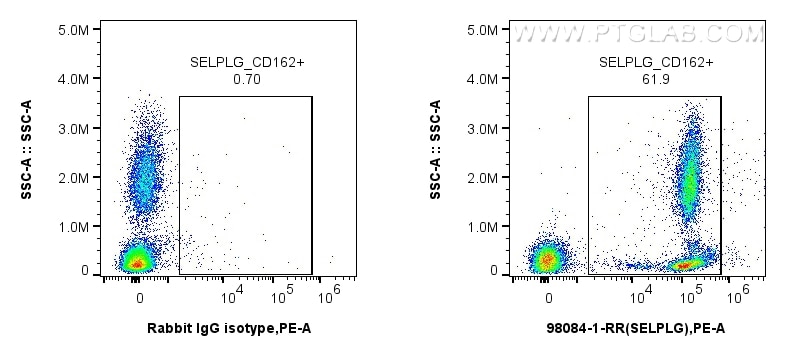
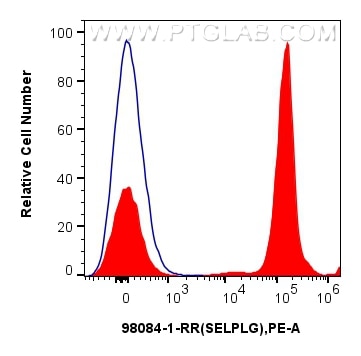
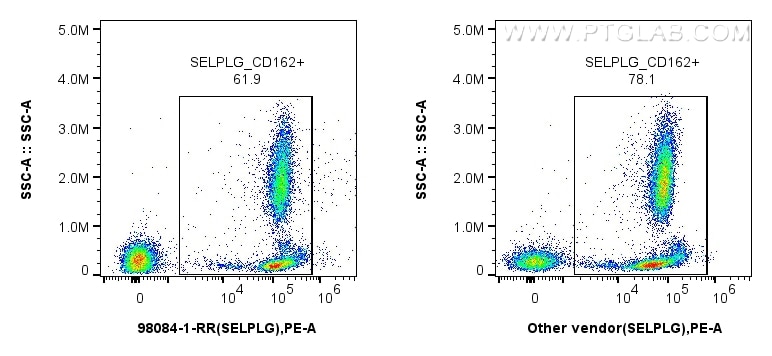
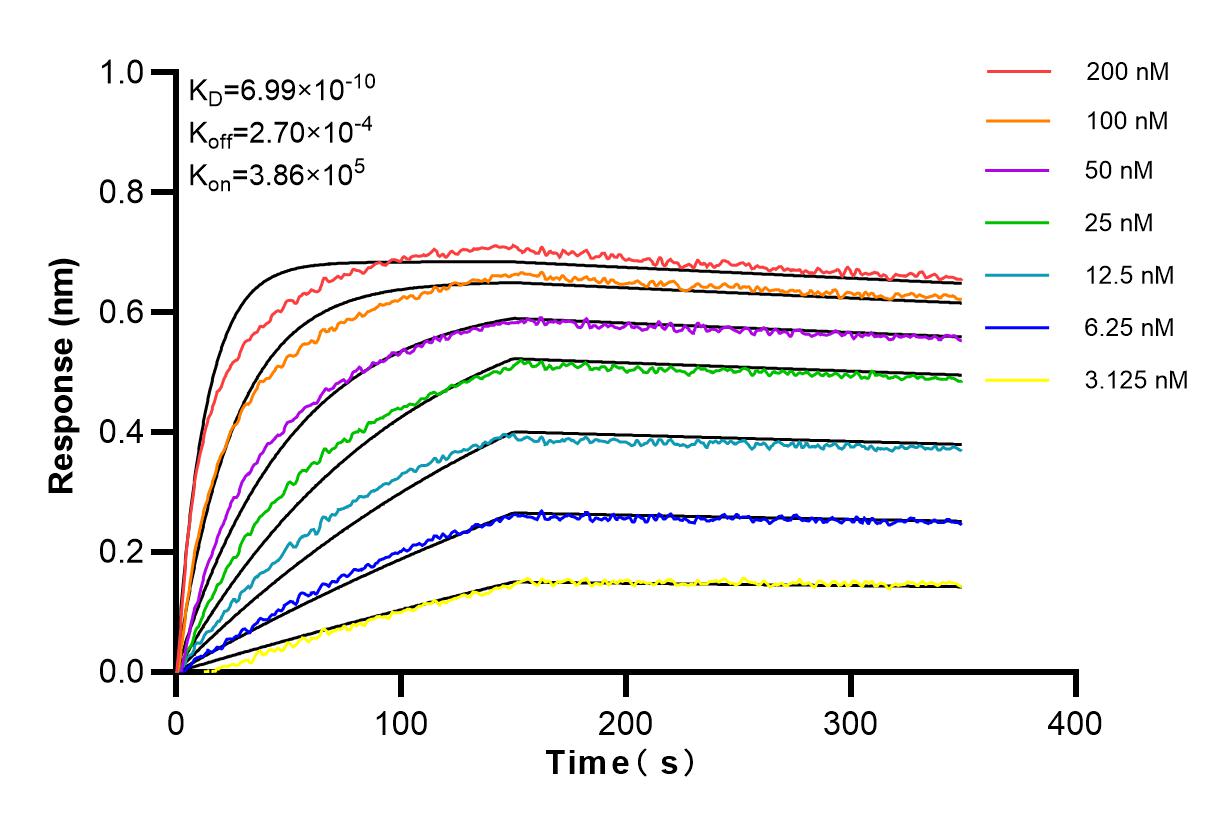
Applications testées
| Résultats positifs en cytométrie | human peripheral blood leukocytes |
Dilution recommandée
| Application | Dilution |
|---|---|
| This reagent has been tested for flow cytometric analysis. It is recommended that this reagent should be titrated in each testing system to obtain optimal results. | |
| Sample-dependent, check data in validation data gallery | |
Informations sur le produit
98084-1-RR cible SELPLG/CD162 dans les applications de FC et montre une réactivité avec des échantillons Humain
| Réactivité | Humain |
| Hôte / Isotype | Lapin / IgG |
| Clonalité | Recombinant |
| Type | Anticorps |
| Immunogène | Protéine recombinante |
| Nom complet | selectin P ligand |
| Masse moléculaire calculée | 412 aa, 43 kDa |
| Numéro d’acquisition GenBank | BC029782 |
| Symbole du gène | SELPLG |
| Identification du gène (NCBI) | 6404 |
| Conjugaison | Non conjugué |
| Forme | Liquide |
| Méthode de purification | Protein A purfication |
| Tampon de stockage | PBS with 0.09% sodium azide |
| Conditions de stockage | Store at 2 - 8°C. Stable for one year after shipment. |
Informations générales
SELPLG (selectin P ligand), also known as CD162 or PSGL-1, is a 120 kDa type I transmembrane mucin-like glycoprotein. It is an adhesion molecule expressed on the surface of neutrophils, monocytes, and most lymphocytes as a homodimer of approximately 230-250 kDa (PMID: 7545173; 1378449; 9353350). SELPLG plays a critical role in the early stages of inflammation due to its ability to bind E-selectin (CD62E), L-selectin (CD62L), and P-selectin (CD62P) (PMID: 35597982).
Protocole
| Product Specific Protocols | |
|---|---|
| FC protocol for SELPLG/CD162 antibody 98084-1-RR | Download protocol |
| Standard Protocols | |
|---|---|
| Click here to view our Standard Protocols |


