Anticorps Recombinant de lapin anti-SLIT2-Specific
SLIT2-Specific Recombinant Antibody for WB, IHC, Indirect ELISA
Hôte / Isotype
Lapin / IgG
Réactivité testée
Humain, souris
Applications
WB, IHC, Indirect ELISA
Conjugaison
Non conjugué
CloneNo.
250648A6
N° de cat : 82725-4-PBS
Synonymes
Galerie de données de validation
Informations sur le produit
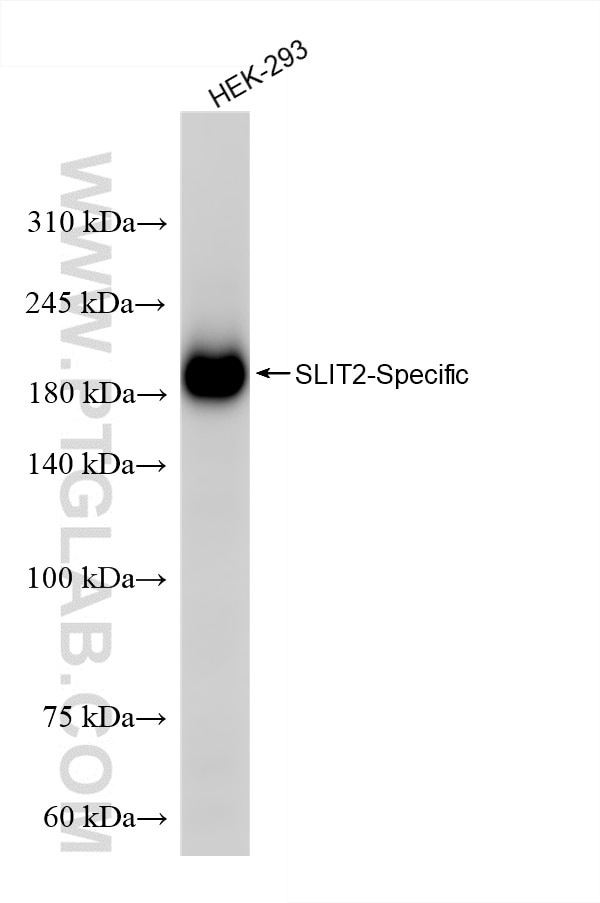
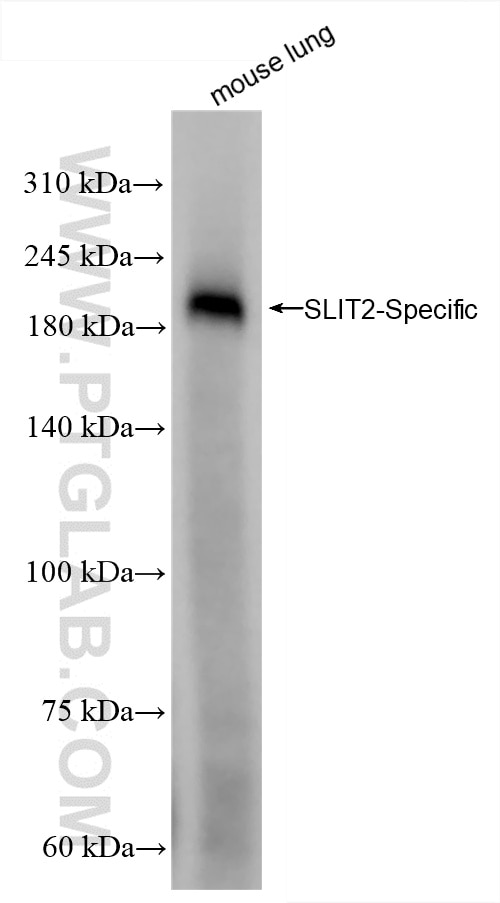
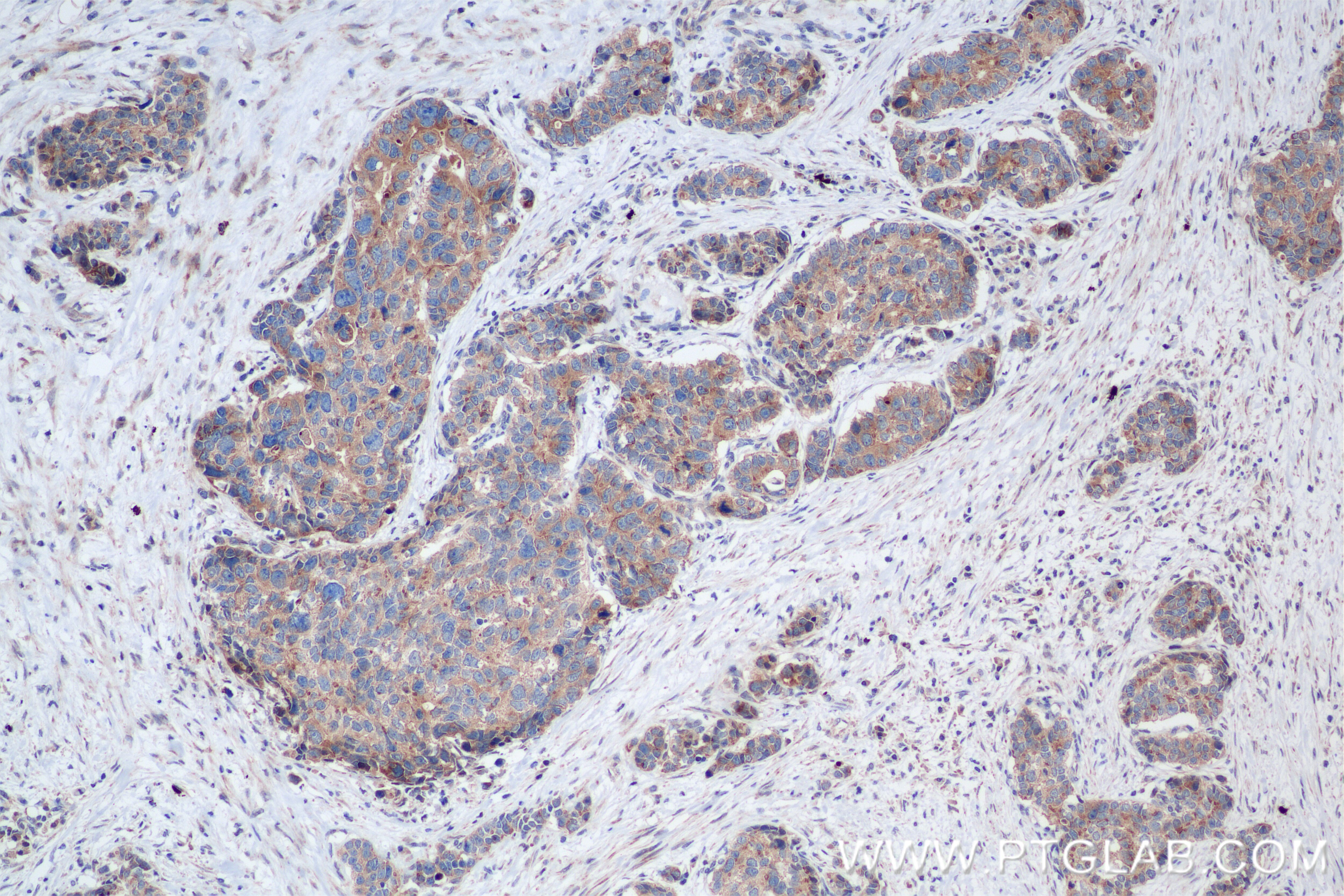
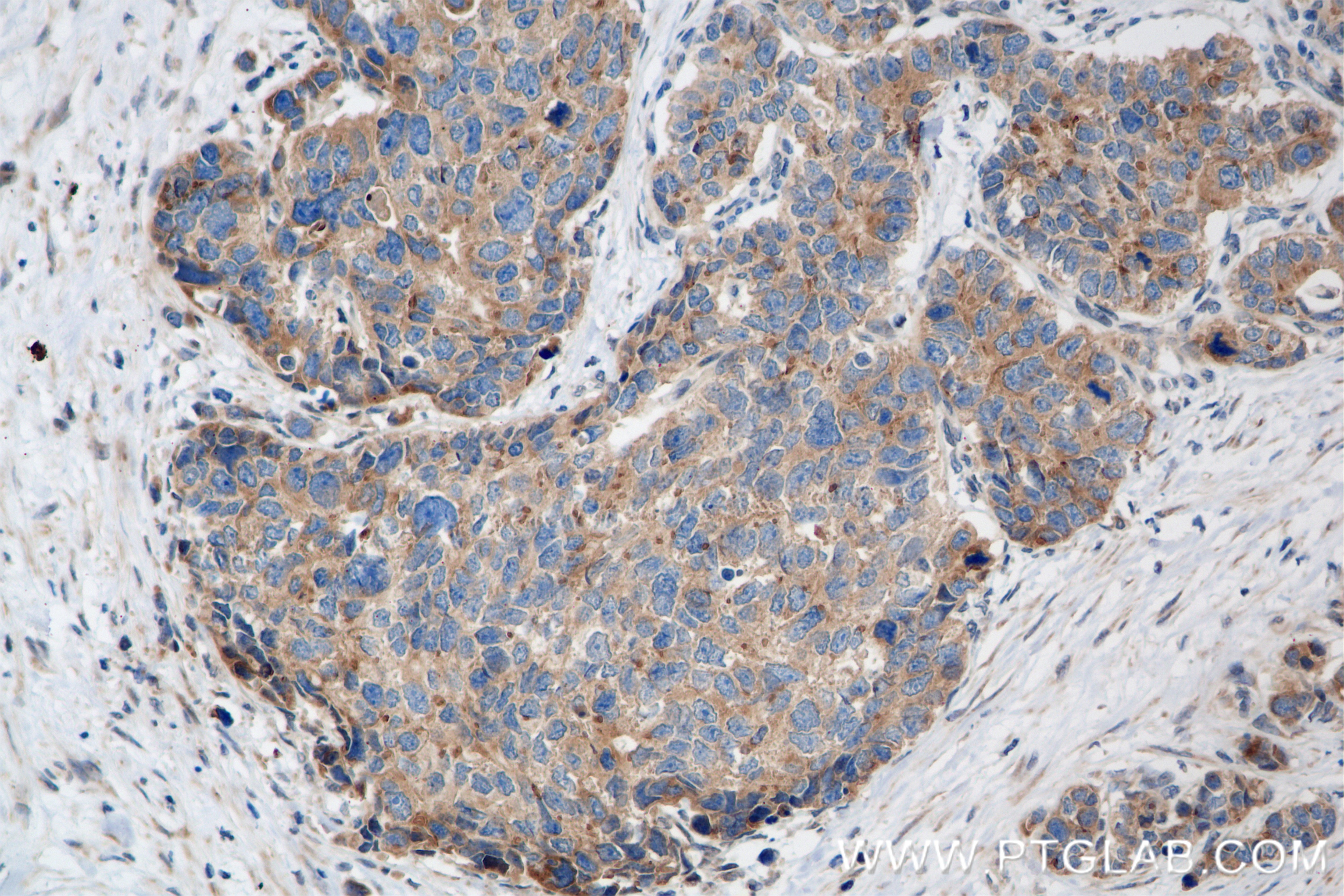
82725-4-PBS cible SLIT2-Specific dans les applications de WB, IHC, Indirect ELISA et montre une réactivité avec des échantillons Humain, souris
| Réactivité | Humain, souris |
| Hôte / Isotype | Lapin / IgG |
| Clonalité | Recombinant |
| Type | Anticorps |
| Immunogène | Peptide |
| Nom complet | slit homolog 2 (Drosophila) |
| Masse moléculaire calculée | 170 kDa |
| Poids moléculaire observé | 200 kDa |
| Numéro d’acquisition GenBank | NM_004787 |
| Symbole du gène | SLIT2 |
| Identification du gène (NCBI) | 9353 |
| Conjugaison | Non conjugué |
| Forme | Liquide |
| Méthode de purification | Purification par protéine A |
| Tampon de stockage | PBS only |
| Conditions de stockage | Store at -80°C. 20ul contiennent 0,1% de BSA. |
Informations générales
SLIT2, also named as SLIL3, is thought to act as molecular guidance cue in cellular migration, and function appears to be mediated by interaction with roundabout homolog receptors. During neural development it is involved in axonal navigation at the ventral midline of the neural tube and projection of axons to different regions. SLIT1 and SLIT2 seem to be essential for midline guidance in the forebrain by acting as repulsive signal preventing inappropriate midline crossing by axons projecting from the olfactory bulb. In spinal chord development, SLIT2 may play a role in guiding commissural axons once they reached the floor plate by modulating the response to netrin. SLIT2 may be implicated in spinal chord midline post-crossing axon repulsion. In vitro, only commissural axons that crossed the midline responded to SLIT2. In the developing visual system it appears to function as repellent for retinal ganglion axons by providing a repulsion that directs these axons along their appropriate paths prior to, and after passage through, the optic chiasm. In vitro, it collapses and repels retinal ganglion cell growth cones. SLIT2 seems to play a role in branching and arborization of CNS sensory axons, and in neuronal cell migration. It seems to be involved in regulating leukocyte migration. The antibody is specific to SLIT2.


