- Phare
- Validé par KD/KO
Anticorps Polyclonal de lapin anti-SMARCB1
SMARCB1 Polyclonal Antibody for WB, IHC, IP, Indirect ELISA
Hôte / Isotype
Lapin / IgG
Réactivité testée
Humain
Applications
WB, IHC, IP, Indirect ELISA
Conjugaison
Non conjugué
N° de cat : 20654-1-PBS
Synonymes
Galerie de données de validation
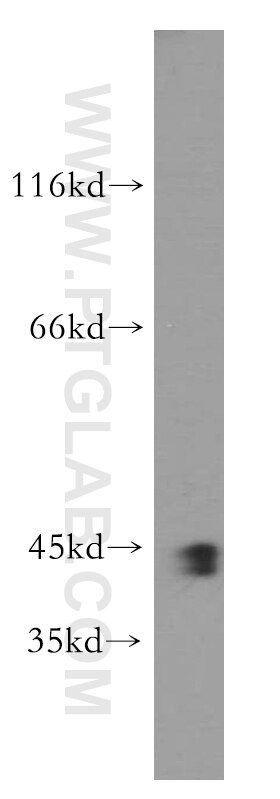
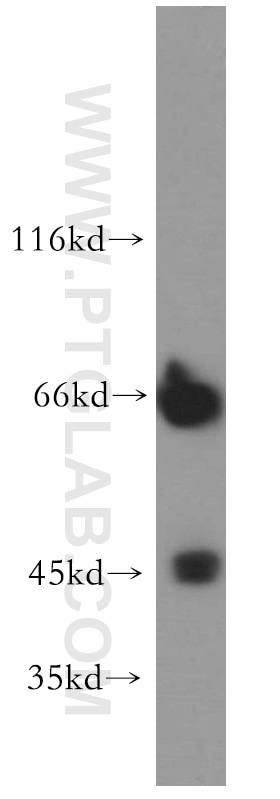
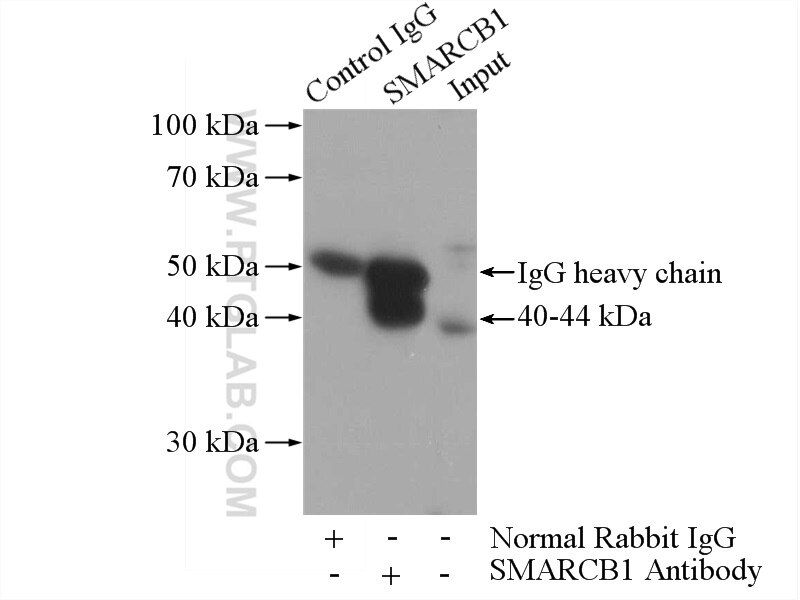
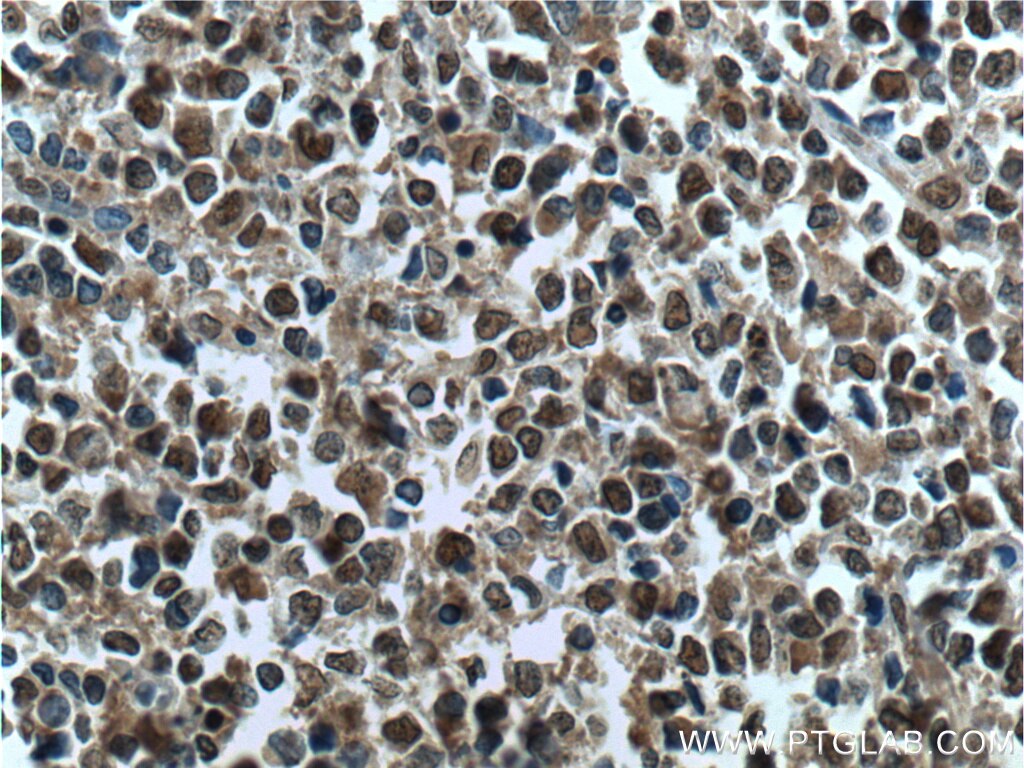
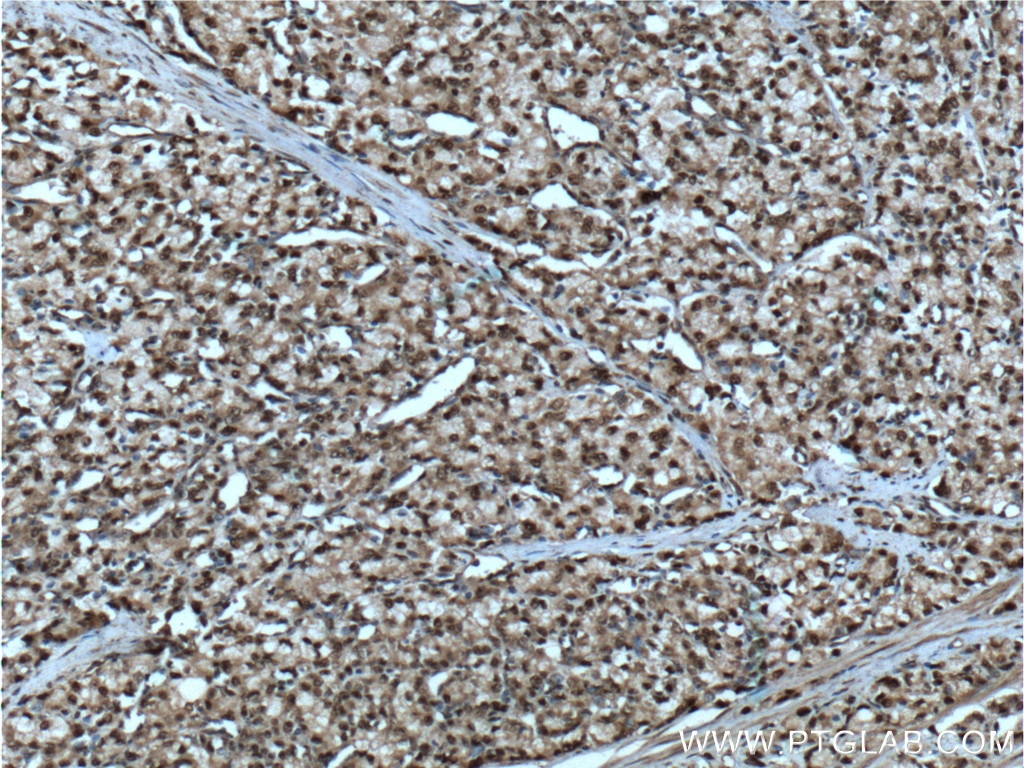
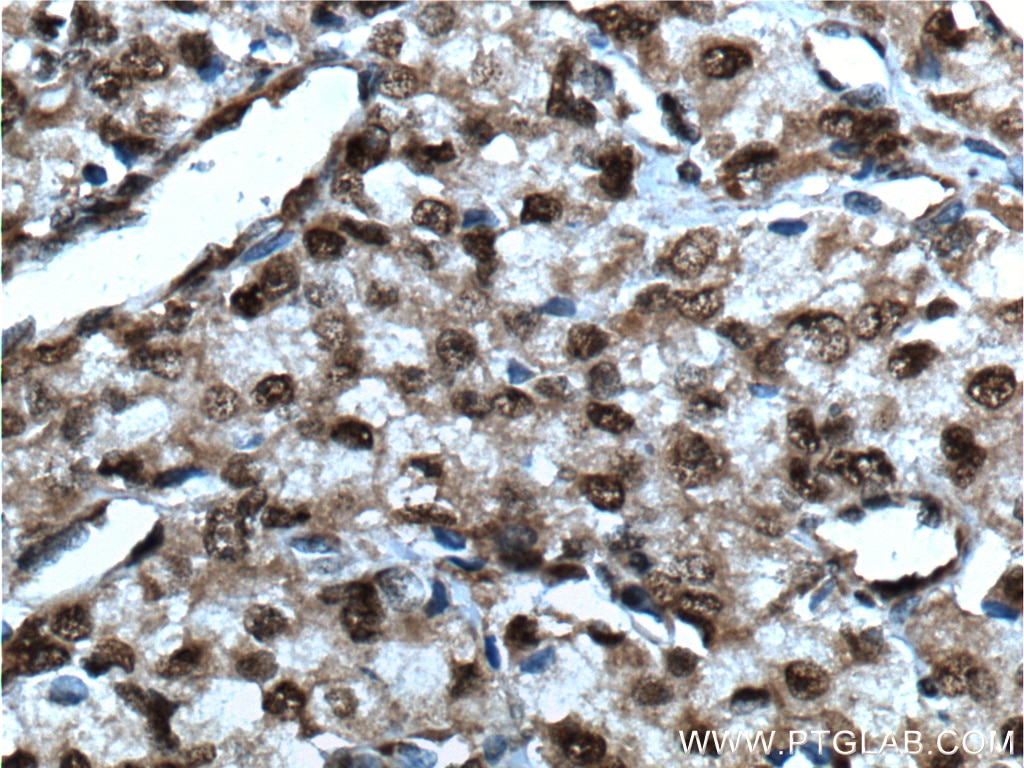
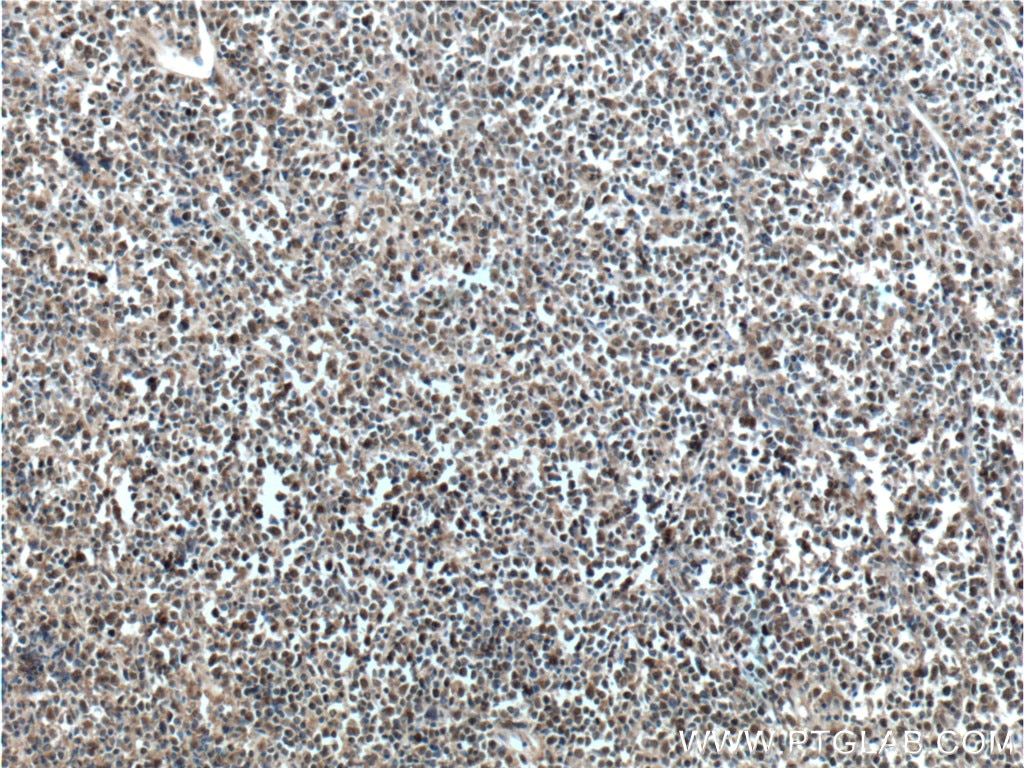
Informations sur le produit
20654-1-PBS cible SMARCB1 dans les applications de WB, IHC, IP, Indirect ELISA et montre une réactivité avec des échantillons Humain
| Réactivité | Humain |
| Hôte / Isotype | Lapin / IgG |
| Clonalité | Polyclonal |
| Type | Anticorps |
| Immunogène | Peptide |
| Nom complet | SWI/SNF related, matrix associated, actin dependent regulator of chromatin, subfamily b, member 1 |
| Masse moléculaire calculée | 44 kDa |
| Poids moléculaire observé | 40-45 kDa |
| Numéro d’acquisition GenBank | NM_003073 |
| Symbole du gène | SMARCB1 |
| Identification du gène (NCBI) | 6598 |
| Conjugaison | Non conjugué |
| Forme | Liquide |
| Méthode de purification | Purification par affinité contre l'antigène |
| Tampon de stockage | PBS only |
| Conditions de stockage | Store at -80°C. 20ul contiennent 0,1% de BSA. |
Informations générales
SMARCB1, also named as BAF47, INI1 and SNF5L1, belongs to the SNF5 family. It is a core component of the BAF (hSWI/SNF) complex. The BAF complex is able to create a stable, altered form of chromatin that constrains fewer negative supercoils than normal. SMARCB1 stimulates in vitro the remodeling activity of SMARCA4/BRG1/BAF190A. It is involved in activation of CSF1 promoter. SMARCB1 belongs to the neural progenitors-specific chromatin remodeling complex (npBAF complex) and the neuron-specific chromatin remodeling complex (nBAF complex). During neural development a switch from a stem/progenitor to a post-mitotic chromatin remodeling mechanism occurs as neurons exit the cell cycle and become committed to their adult state. SMARCB1 plays a key role in cell-cycle control and causes cell cycle arrest in G0/G1. It is also involved in vitamin D-coupled transcription regulation via its association with the WINAC complex, a chromatin-remodeling complex recruited by vitamin D receptor (VDR), which is required for the ligand-bound VDR-mediated transrepression of the CYP27B1 gene. Defects in SMARCB1 are a cause of rhabdoid tumor (RDT) which also known as malignant rhabdoid tumor (MRT). Defects in SMARCB1 are a cause of schwannomatosis. The antibody is specific to SMARCB1.


