- Phare
- Validé par KD/KO
Anticorps Polyclonal de lapin anti-SMARCD1
SMARCD1 Polyclonal Antibody for WB, IHC, IF/ICC, IP, Indirect ELISA
Hôte / Isotype
Lapin / IgG
Réactivité testée
Humain, rat, souris
Applications
WB, IHC, IF/ICC, IP, Indirect ELISA
Conjugaison
Non conjugué
N° de cat : 10998-2-PBS
Synonymes
Galerie de données de validation
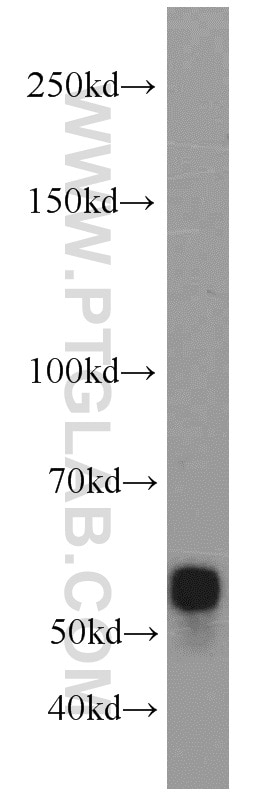
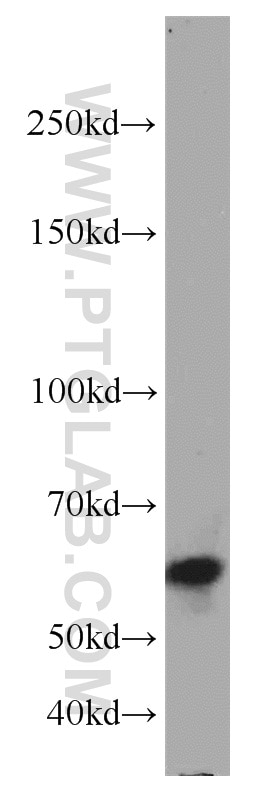
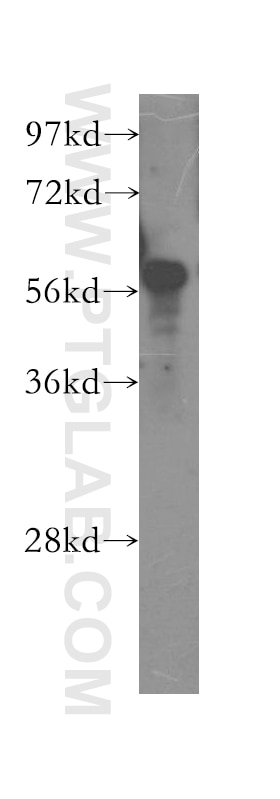
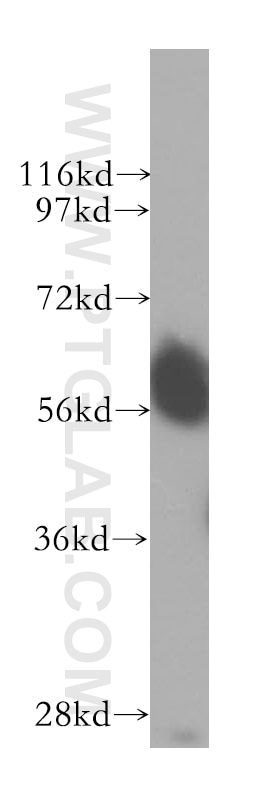
Informations sur le produit
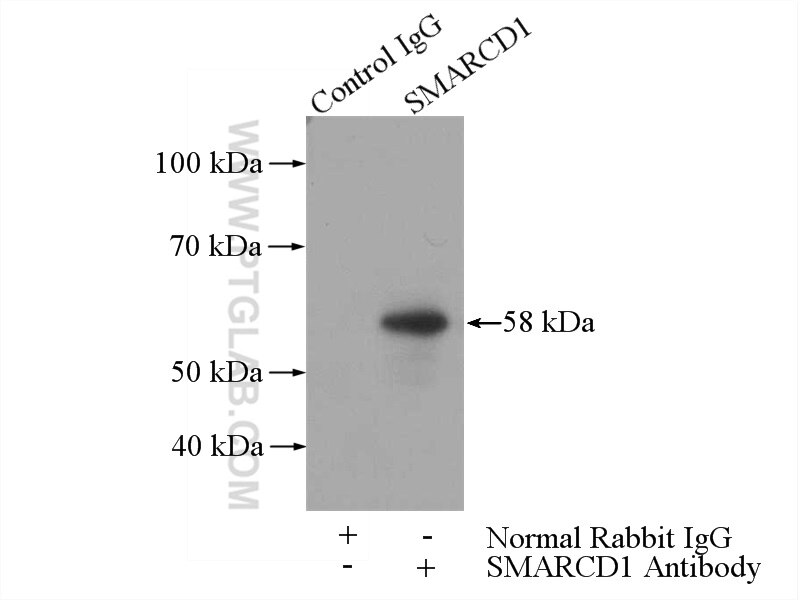
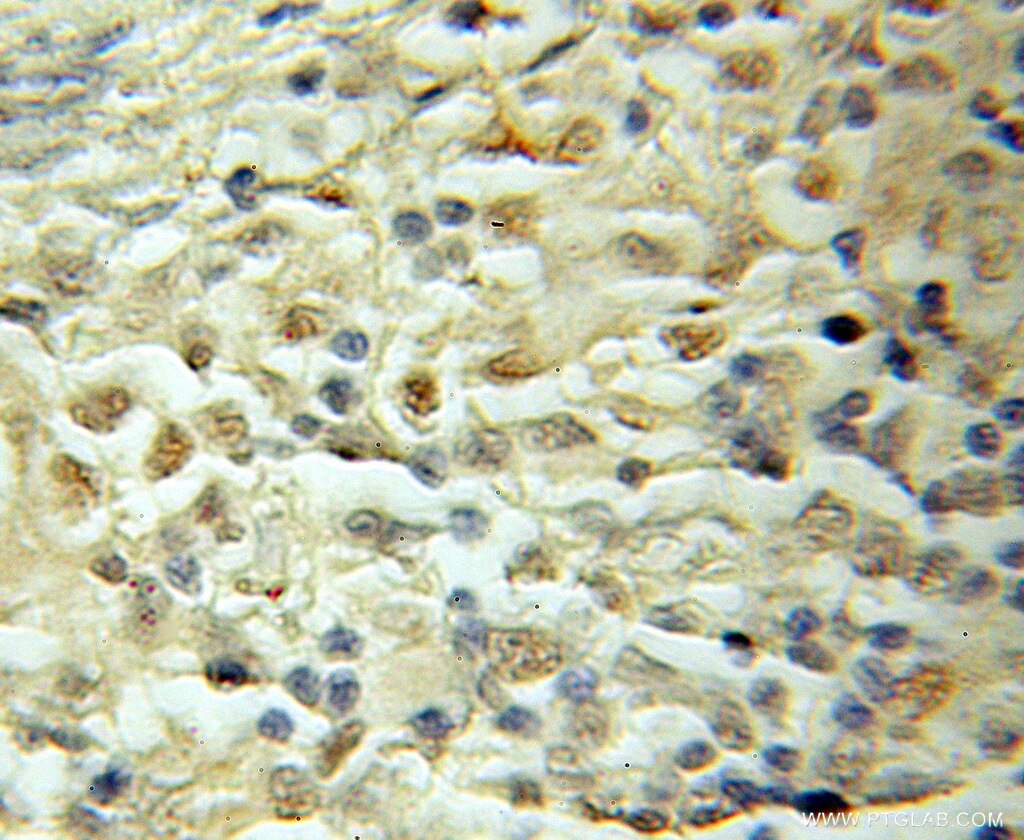
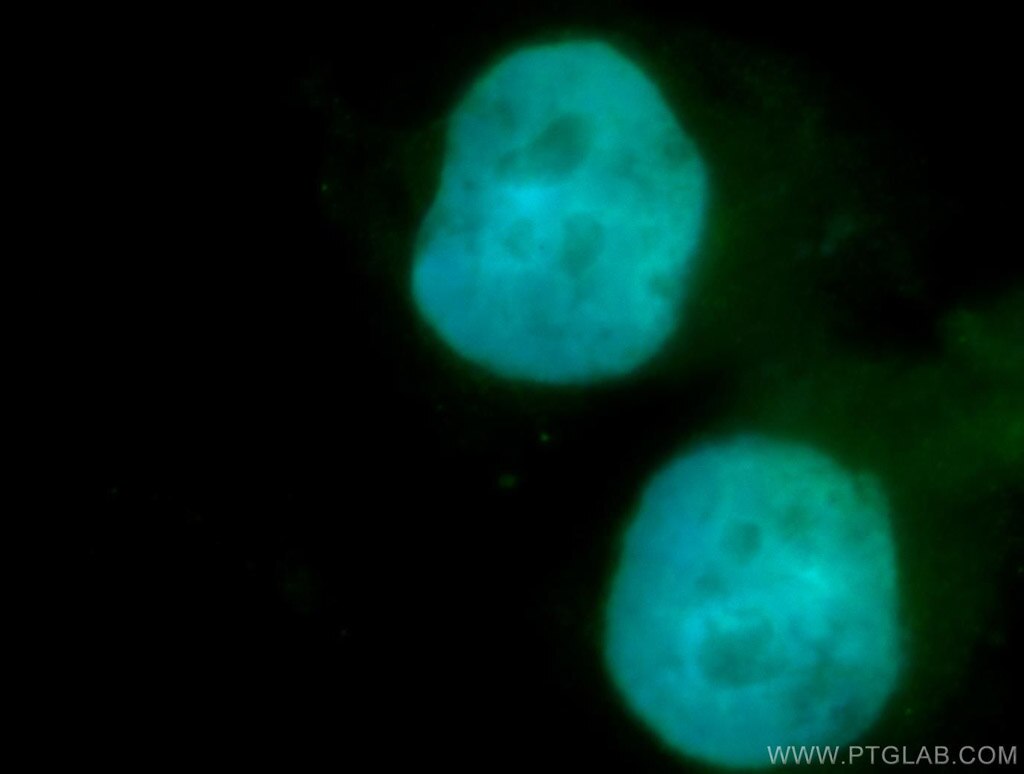
10998-2-PBS cible SMARCD1 dans les applications de WB, IHC, IF/ICC, IP, Indirect ELISA et montre une réactivité avec des échantillons Humain, rat, souris
| Réactivité | Humain, rat, souris |
| Hôte / Isotype | Lapin / IgG |
| Clonalité | Polyclonal |
| Type | Anticorps |
| Immunogène | SMARCD1 Protéine recombinante Ag1453 |
| Nom complet | SWI/SNF related, matrix associated, actin dependent regulator of chromatin, subfamily d, member 1 |
| Masse moléculaire calculée | 58 kDa |
| Poids moléculaire observé | 58 kDa |
| Numéro d’acquisition GenBank | BC009368 |
| Symbole du gène | SMARCD1 |
| Identification du gène (NCBI) | 6602 |
| Conjugaison | Non conjugué |
| Forme | Liquide |
| Méthode de purification | Purification par affinité contre l'antigène |
| Tampon de stockage | PBS only |
| Conditions de stockage | Store at -80°C. 20ul contiennent 0,1% de BSA. |
Informations générales
SMARCD1 belongs to the nuclear SWI/SNF chromatin remodeling complex, which regulates transcription and interacts with nucleolin in the nucleus. In addition, it's a member of the neural progenitors-specific chromatin remodeling complex (npBAF complex) and the neuron-specific chromatin remodeling complex (nBAF complex). It possesses a SWIB domain which is homologous to and shares a common fold with the p53-binding domain of MDM2, a cell cycle regulator which interacts with NPM1. SMARCD1 has a strong influence on the Vitamin D-mediated transcriptional activity from an enhancer Vitamin D receptor element (VDRE). And it can mediates critical interactions between nuclear receptors and the BRG1/SMARCA4 chromatin-remodeling complex for transactivation. This antibody may have across reaction with SMARCD2.


